

 Visualizar em escala
 Enviar
 Compartilhar
 Ver detalhes
 Guia de Obras do Aluno

 Baixar imagem
 Semelhantes
 Raio X
 Apresentação de slides
 Estatísticas
Hudson River Scene


 Ver mais
Reprodução em Óleo Feita à Mão
Óleo sobre tela pintado à mão no tamanho e moldura de sua escolha, feito sob encomenda pelos nossos artistas. ( Alternar para Impressão Ver Imagem Digital)




P118B €10

P118H €10

P118W €10

P438Z €10

P508JH €12

P508YH €12

P805H €10

P805Z €10

P919BZ €10

P919G €10

P919XJ €10

P959ZH €10

P968JZ €12

W106C €8

W218G €10

W218JH €8

W218Y €10

W307PJ €10

W316G €10

W316PJ €8

W316Y €10

W398PJ €8

W4111J €10

W500HY €15

W500JH €15

W692G €12

W849H €8

W940BG €15

W953PJ €8




Escolha entre os nossos tamanhos pré-definidos que respeitam as proporções originais da obra de arte.

Pode inserir as suas próprias dimensões para se adequar a uma moldura ou espaço específico. Se o tamanho selecionado não corresponder às proporções da imagem original, iremos cortar a obra de arte ou estender a pintura com elementos adicionais pintados à mão. Um esboço digital será enviado para sua aprovação antes do início da produção.
Tenha em atenção que a pré-visualização no ecrã não reflete o corte ou extensão real. Apenas o esboço mostrará com precisão a composição final.
Embora tamanhos personalizados estejam disponíveis, recomendamos selecionar uma dimensão da lista predefinida para preservar as proporções originais.
Após o pedido, a equipa OriginalUniqueArt.com enviará um e-mail ao cliente para solicitar instruções e fornecer uma prévia do esboço.
Entrega mundial () em 3 a 4 semanas, em vez das 5 semanas padrão. (11 Outubro). Sem comprometer a qualidade.

Envio expresso gratuito para todo o mundo

Tela de Linho Premium

Seguro de transporte total

Garantia de Reembolso de Impostos Alfandegários

Garantia de Fidelidade de Cor

Política de Devolução em 100 Dias (Apenas para Defeitos)

Garantia de reembolso de 100%

Desconto para múltiplas unidades
 A opção de vidro está disponível apenas para tamanhos inferiores a 110 cm

Hudson River Scene
Técnica de Reprodução
Dimensões da Reprodução
-


Preço Total
€ 259
A Serene Vision of the Hudson Valley: John Frederick Kensett’s “Hudson River Scene”
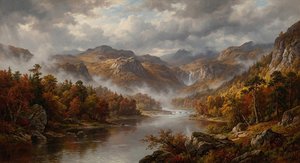
John Frederick Kensett's "Hudson River Scene," painted in 1857, isn’t merely a landscape; it’s a carefully constructed meditation on light, tranquility, and the sublime beauty of the American wilderness. Belonging to the illustrious Hudson River School, a movement that profoundly shaped the course of American art, this painting embodies the core tenets of Luminism – an approach prioritizing atmospheric effects and subtle tonal variations over dramatic detail. Kensett, deeply influenced by the Romantic ideals of his time, sought not to represent nature as it *is*, but rather as it *feels*—a source of profound spiritual resonance.
The scene unfolds along the banks of the Hudson River, a quintessential vista of the New York countryside. Rolling hills, draped in a soft, hazy blue, recede into the distance, their contours softened by atmospheric perspective. A meandering river reflects the muted light of the sky, creating an illusion of infinite depth and mirroring the serenity above. Two figures, rendered with remarkable delicacy, are positioned near the center of the composition, suggesting a quiet moment of contemplation amidst this idyllic setting. Their presence isn’t intrusive; rather, they serve to anchor the viewer in the scene, inviting us to share their peaceful observation.
The Language of Light and Color
Kensett's mastery lies not just in his depiction of the landscape but also in his innovative use of color. He eschewed the bold, vibrant hues favored by some of his contemporaries, opting instead for a palette dominated by cool blues, greens, and grays. This restrained approach creates a sense of stillness and quietude, emphasizing the subtle shifts in light and shadow. The artist’s brushwork is remarkably delicate—almost invisible—allowing the colors to blend seamlessly into one another, mimicking the hazy atmosphere of a summer afternoon. He employed a technique known as “broken color,” applying thin layers of paint that refract light and create shimmering effects, particularly noticeable in the water and sky.
The painting’s luminosity – its ability to seem to glow from within – is a hallmark of Luminism. Kensett meticulously studied the way light interacts with different surfaces, capturing the ephemeral quality of sunlight filtering through trees or reflecting off the river's surface. This pursuit of atmospheric effects was deeply influenced by his travels in Europe, particularly his admiration for the Dutch Masters who excelled at depicting light and shadow.
A Reflection of Transcendentalist Ideals
"Hudson River Scene" is inextricably linked to the broader philosophical currents of the mid-19th century. The Hudson River School artists, including Kensett, were deeply influenced by the Transcendentalist movement, which emphasized the inherent goodness of humanity and the importance of connecting with nature. For these artists, the landscape wasn’t simply a picturesque backdrop; it was a conduit to spiritual truth. Kensett's paintings, like this one, aim to evoke a sense of awe and wonder, prompting viewers to contemplate their place within the vastness of the natural world.
The inclusion of the two figures adds another layer of meaning. They represent humanity’s ability to find solace and connection in nature—a theme central to Transcendentalist thought. Their quiet contemplation suggests a harmonious relationship between humans and the environment, reflecting an ideal of balance and serenity.
Collecting a Legacy: Reproduction and Beyond
Reproductions of “Hudson River Scene” offer a remarkable opportunity to bring this timeless masterpiece into your home or office. OriginalUniqueArt’s hand-painted reproductions meticulously recreate Kensett's delicate brushwork and nuanced color palette, capturing the essence of his original vision. Whether you seek an authentic work of art or a high-quality reproduction that evokes the spirit of the Hudson River School, this painting remains a powerful symbol of American landscape artistry and its enduring appeal.
Consider how this serene scene can complement your interior design—bringing a touch of tranquility and natural beauty to any space. The subtle colors and atmospheric effects create a calming atmosphere, perfect for relaxation or contemplation. “Hudson River Scene” is more than just a painting; it’s an invitation to connect with the timeless allure of the American wilderness.
Perguntas e Respostas
Em que ano foi criado "Hudson River Scene"?
"Hudson River Scene" de John Frederick Kensett foi criado em 1857.
Como é construída a composição cromática de "Hudson River Scene" de John Frederick Kensett?
Em "Hudson River Scene", um Statement contraste é acompanhado por uma Unified Palette harmonia.
Qual era a idade de John Frederick Kensett ao criar "Hudson River Scene" em 1857?
Quando "Hudson River Scene" foi criada em 1857, John Frederick Kensett — nascido(a) em 1816 — tinha 41 anos.
A qual artista "Hudson River Scene" é atribuída?
"Hudson River Scene" é atribuída a John Frederick Kensett.
Que saturação e intensidade apresenta "Hudson River Scene" de John Frederick Kensett?
As cores de "Hudson River Scene" de John Frederick Kensett apresentam uma saturação Balanced Soft com uma intensidade Balanced.
Como "Hudson River Scene" de John Frederick Kensett pode ser utilizado na decoração de interiores?
O uso de (Harmony) e o espaço (Living Room) são as duas recomendações registradas para "Hudson River Scene" de John Frederick Kensett.
Quão clara é a obra "Hudson River Scene" no geral?
A luminosidade percebida de "Hudson River Scene" de John Frederick Kensett é balanced. Ela pode ser harmonizada com a iluminação do espaço pretendido.
Biografia do Artista
John Frederick Kensett (1816–1872) – Um Mestre da Luz e Tranquilidade na Paisagem Americana
John Frederick Kensett, um artista americano e gravador, nasceu em Cheshire, Connecticut, em 22 de março de 1816. Como membro da segunda geração da Escola Hudsoniana dos artistas, suas obras mais marcantes são caracterizadas pela serenidade e luminosidade, celebrando os aspectos transcendentais da natureza. Uma figura fundamental na história da arte americana, Kensett deixou um legado duradouro que continua a inspirar artistas contemporâneos e amantes da beleza natural.Vida Inicial e Formação
Kensett passou seus primeiros anos estudando na Academia de Cheshire e aprendendo gravura com seu pai, Thomas Kensett. Sua formação artística inicial foi influenciada pela tradição inglesa da época, onde o pai também trabalhava como engraver. Após concluir seus estudos acadêmicos, Kensett iniciou uma carreira profissional como gravador em Nova Haven até 1838, antes de se mudar para Nova York para trabalhar em projetos de impressão de notas bancárias. Essa experiência precoce com a arte gráfica moldou seu olhar artístico e sua compreensão da técnica de impressão, habilidades que ele aplicaria posteriormente em suas pinturas.A Escola Hudsoniana e o Estilo Luminista
Kensett encontrou na Escola Hudsoniana um ambiente intelectualmente estimulante e uma comunidade artística vibrante que compartilhavam seus valores estéticos e filosóficos. Inspirado pelas ideias transcendentalistas de figuras como Ralph Waldo Emerson, Kensett adotou um estilo único que buscava capturar a essência da luz natural e transmitir suas propriedades sensoriais em suas telas. Essa abordagem inovadora, conhecida como luminismo, revolucionou a pintura paisagística americana e estabeleceu Kensett como um dos principais representantes desse movimento artístico.Viagens Europeias e Desenvolvimento Artístico
Em 1840, Kensett embarcou em uma viagem para Europa, onde estudou pintura ao lado de Benjamin Champney e outros artistas renomados da época. Essas experiências internacionais ampliaram seus horizontes culturais e enriqueceram seu repertório artístico, permitindo que ele absorvesse novas influências estéticas e técnicas. Durante sua estadia na Itália, Kensett explorou cidades como Roma e Florença, buscando inspiração nas obras de arte clássica e renascentista, elementos que se refletiram em suas pinturas posteriores.Principais Obras e Legado
Kensett é considerado um dos artistas mais importantes da Escola Hudsoniana e seu trabalho permanece relevante até hoje devido à sua beleza estética e à profundidade filosófica. Entre suas obras mais emblemáticas destacam-se *Mont Washington desde o Vale de Conway*, uma paisagem monumental que captura a majestade das montanhas Apalaches em pleno inverno, e *Eaton’s Neck, Long Island*, um retrato da costa norteamericana que demonstra sua habilidade técnica e sensibilidade artística. Além disso, Kensett foi fundador do Museu Metropolitano de Arte e membro ativo da Academia Nacional de Desenho, contribuindo significativamente para o desenvolvimento da arte americana e deixando uma marca indelével na história da cultura artística mundial. Sua obra continua a inspirar artistas contemporâneos e a celebrar a beleza da natureza como fonte de inspiração espiritual e estética.
John Frederick Kensett
1816 - 1872 , Estados Unidos da América
Informações Rápidas
- Artistic Movement Or Style: Hudson River School & Luminismo
- Artists Who Influenced This Artist:
- Thomas Cole
- Benjamin Champney
- Date Of Birth: March 22, 1816
- Date Of Death: December 14, 1872
- Full Name: John Frederick Kensett
- Nationality: Americano
- Notable Artworks:
- Montanha Washington da Vale de Conway
- Eaton's Neck, Long Island
- Place Of Birth: Cheshire, Estados Unidos
Artigos Relacionados
As 10 Obras-Primas que Definiram a Escola do Rio Hudson | Arte e Decoração de Luxo
Descubra as 10 obras-primas da Escola do Rio Hudson! Explore a beleza das paisagens americanas de Thomas Cole, Frederic Church e outros mestres. Encontre reproduções de arte exclusivas para decorar sua casa com elegância em OriginalUniqueArt.com.

John Frederick Kensett: Luminosity, Landscape & the American Identity
Explore the luminous landscapes of John Frederick Kensett, a master of Luminism and key figure in the Hudson River School. Discover his serene paintings & enduring legacy with OriginalUniqueArt.

Robert Spencer: Luminism, Narrative & the American Landscape Tradition
Explore the captivating world of Luminism & the Hudson River School with our expert analysis. Discover the history, artists, and enduring beauty of 19th-century American landscape painting. Find museum-quality reproductions at OriginalUniqueArt.
Capturing the American Spirit: A Journey Through Iconic Landscapes and the Legacy of the Hudson River School
Explore the profound beauty of American art history. From the Hudson River School to iconic landscapes, discover a curated journey through the masterpieces that defined a nation's spirit and the enduring legacy of American Romanticism.

The Sublime Landscape: Exploring the Hudson River School Movement
Explore the captivating world of the Hudson River School! Discover the history, artists, and defining characteristics of this iconic American art movement. Learn about Romanticism's influence & find inspiration for your collection.


