() ·
A painting made for you, by hand
Reprodução em Óleo Feita à Mão
Óleo sobre tela pintado à mão no tamanho e moldura de sua escolha, feito sob encomenda pelos nossos artistas. ( Alternar para Impressão Alternar para Imagem Digital)
Biografia do Artista
Johann Moritz Rugendas (1802-1858) foi um pintor alemão que revolucionou a percepção da América Latina com paisagens deslumbrantes e estudos etnológicos meticulosos. Figura chave do Romantismo Tropical, influenciou artistas como Humboldt e Ender, destacando-se pela obra monumental 'Voyage Pittoresque dans le Brésil' e pelo retrato da cultura brasileira.
 Ler mais
from ·
Chapter 1
How large should it be?
Slide to change the size; the picture on the left shows the frame at its real width. The proportions of the original are kept.
Escolha entre os nossos tamanhos pré-definidos que respeitam as proporções originais da obra de arte.

Insira a largura e a altura desejadas para se ajustarem à sua moldura ou parede. Como esta obra é pintada à mão, para um tamanho com proporções diferentes, o artista poderá pintar um pouco mais ao redor da imagem ou reduzir ligeiramente a composição — você escolhe. Enviamos uma maquete digital para sua aprovação antes de iniciar a pintura. A imagem exibida nesta página não representa o resultado real — apenas a maquete mostra o resultado final.
Chapter 2
How should it arrive?
Choose the edges of the stretched canvas
Choose your frame

White €1

Blurside €1

Extended €1

P118B €10

P118H €10

P118W €10

P438Z €10

P508JH €12

P508YH €12

P805H €10

P805Z €10

P919BZ €10

P919G €10

P919XJ €10

P959ZH €10

P968JZ €12

W106C €8

W218G €10

W218JH €8

W218Y €10

W307PJ €10

W316G €10

W316PJ €8

W316Y €10

W398PJ €8

W4111J €10

W500HY €15

W500JH €15

W692G €12

W849H €8

W940BG €15

W953PJ €8

H24-GOLD €30

H24-SILVER €30

H36-GOLD €45

H36-SILVER €45
Com moldura
Moulding: . Overall size with the frame: .
Chapter 3
Who paints it, and should anything change?
After order, OriginalUniqueArt.com team will email client for instructions and provide a mockup preview
Entrega mundial () em 3 a 4 semanas, em vez das 5 semanas padrão. (2 Novembro). Sem comprometer a qualidade.
Chapter 4
The finishing touches
A nameplate, as in a museum?
Detalhes da Placa de Bronze Gravada
This elegant plaque features the artist's name and the title of the artwork, finely engraved for a timeless presentation.
It is made from bronze with a refined, elegant finish. The text is precisely laser-engraved for a sharp and permanent result. Measuring 9x2 cm, the plaque is compact yet easy to read. It's built to be durable and scratch-resistant, offering a professional, museum-quality look. Mounting is simple thanks to the included adhesive backing.
Detalhes da Placa de Acrílico Transparente
The plaque includes essential engraved details such as the artist's name, the title of the artwork, the date it was created, the type of media used-like oil on canvas or watercolor-a brief description of the piece, and a QR code that links to the complete artwork information.
It is crafted from clear acrylic, offering a sleek, modern appearance. The text is UV-engraved in black to ensure strong visual contrast. With a size of 10x15 cm, it ensures optimal readability. It comes equipped with two metal hooks for secure wall mounting. The plaque is designed to be weather-resistant, making it suitable for various environments, and it includes interactive features that work seamlessly with smartphone scanning.
Detalhes da Placa de Acrílico Preto
This elegant plaque includes engraved information such as the artist's name, the title of the artwork, the date it was created, the type of media used (like oil on canvas or watercolor), a short description of the artwork, and a QR code for quick access to more information.
The plaque itself is made from refined black acrylic with a premium finish. The text is laser-engraved in white for high contrast and readability. Its size is 10x15 cm, designed to be easy to read. It comes with two metal hooks for professional mounting. The design is sleek and fits any interior style. It is also weather-resistant and durable, with built-in digital integration for mobile compatibility.
A protective varnish?
When do you need it?
Chapter 5
Your painting, as you ordered it

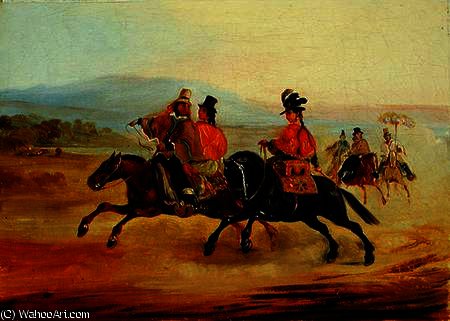
Chilean riders
Técnica de Reprodução
Tamanho da Reprodução
-

Artista Sênior de Elite
Mais detalhes, refinamento e tempo de produção adicional
-

Moldura para Reprodução
-
-
Para obras de arte ou reproduções com mais de 105 cm (aproximadamente 41 polegadas) em qualquer um dos lados, a moldura será enviada como um kit desmontado. Este método garante uma entrega segura e evita danos durante o transporte.
Montagem profissional necessária — este não é um produto DIY (faça você mesmo).
O kit deve ser montado e a tela esticada por um profissional de molduraria experiente, utilizando cola de madeira (não inclusa), um alicate de esticar tela e grampos para manter as travessas alinhadas enquanto a cola seca. A montagem incorreta ou a tensão desigual da tela podem danificar permanentemente a obra de arte e não estão cobertas pela nossa garantia.
 Para obras de arte ou reproduções com mais de 105 cm (aproximadamente 41 polegadas) em qualquer um dos lados, a moldura será enviada como um kit desmontado. Este método garante uma entrega segura e evita danos durante o transporte.
Todas as barras de madeira maciça estão incluídas, precisamente cortadas ao tamanho certo.
Montado com os parafusos fornecidos, além de cola para madeira para as junções dos cantos, que não está inclusa e deve ser providenciada pelo seu moldurista.
São necessárias ferramentas profissionais não incluídas: um alicate de estiramento de tela (esticador) e grampos para manter as ripas alinhadas enquanto a cola seca.
Importante:
As junções dos cantos requerem cola para madeira, as ripas devem ser mantidas com grampos até que a cola esteja completamente seca, e o estiramento da tela na moldura montada requer um alicate de esticar tela. Nenhum destes itens está incluído no kit. Por favor, certifique-se de contar com um profissional de molduraria experiente antes de encomendar este tamanho.

Etiqueta de identificação
-
-

Verniz de Proteção
Verniz brilhante (realça as cores e protege contra a luz e a umidade)
-

Personalizar minha obra
Exemplos de alterações possíveis: Substituir o rosto por uma foto do cliente; Adicionar um animal de estimação (ex.: substituir gato por cachorro); Incluir uma mensagem oculta no fundo; Alterar a paisagem ou os elementos do fundo.
-

Urgente
Entrega mundial () em 3 a 4 semanas, em vez das 5 semanas padrão. (2 Novembro). Sem comprometer a qualidade.
-
Envio Expresso
Entrega mundial para em 5 semanas. (9 Novembro).
Com envio incluído
Preço Total
€ 267
A opção de vidro está disponível apenas para tamanhos inferiores a 110 cm
Included with every order
- Envio expresso gratuito para todo o mundo
- Tela de Linho de Alta Qualidade
- Seguro de transporte completo
- Garantia de Reembolso de Impostos Alfandegários
- Garantia de Fidelidade Cromática
- Política de Devolução em 100 Dias (Apenas para Defeitos)
- Garantia de reembolso de 100%
- Oferta de desconto por quantidade


 Visualizar na parede
 Compartilhar
 Compartilhar
 Detalhes
 Guia
Guia

 Baixar imagem
 Semelhantes
 Raio X
 Ver diaporama
 Q&A
Q&A Estatísticas
In numbers
- 29frames to choose from
- standard sizes, in its own proportions
- 5weeks to paint and deliver it
About the original
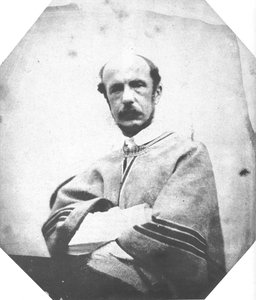
Johann Moritz Rugendas
1802 - 1858, Alemanha
Quick facts about Johann Moritz Rugendas
- Artistic Movement Or Style: Biedermeier / Empire; Late Romanticism
- Artists Who Influenced This Artist:
- Thomas Ender
- Alexander von Humboldt
- Date Of Birth: 29 de março de 1802
- Date Of Death: 29 de maio de 1858
- Full Name: Johann Moritz Rugendas
- Nationality: Alemanha
- Notable Artworks:
- Rio Jnhomerim
- Colonial hunter
- Place Of Birth: Augsburg, Alemanha
Biografia do Artista
O Visionário do Romantismo Tropical
Johann Moritz Rugendas destaca-se como uma figura singular na história da arte do século XIX — um pintor alemão que transformou irrevogavelmente a percepção da América Latina através de suas paisagens deslumbrantes e estudos etnográficos meticulosamente documentados. Nascido em Augsburg, na Baviera, em 1802, em uma família imersa na tradição artística, Rugendas carregava um legado profundo em seu sangue; seu bisavô, Georg Philipp Rugendas, já era um célebre pintor de batalhas. Essa linhagem instilou nele uma dedicação inabalável à representação visual e à precisão da observação, qualidades que acabariam por definir sua extraordinária carreira como cronista do Novo Mundo.
Sua jornada artística começou com um rigoroso treinamento formal sob a tutela de Albrecht Adam em Munique, seguido por uma imersão profunda na Academia de Artes de Munique, onde Lorenzo Quaglio II aperfeiçoou suas habilidades. No entanto, Rugendas possuía um espírito que transcendia os limites da instrução acadêmica tradicional. Ao reconhecer que a sala de aula, por si só, não poderia capturar a essência bruta do mundo natural — uma convicção alimentada pelo espírito científico pioneiro de Alexander von Humboldt e pelo domínio da paisagem de Thomas Ender — ele embarcou em um caminho de exploração independente. Esse compromisso com a observação direta e sem mediações provaria ser fundamental na formação de seu estilo distinto, caracterizado por paletas de cores vibrantes e uma sensibilidade inigualável aos detalhes minuciosos da flora, da fauna e da cultura humana.
Uma Jornada pelo Coração do Brasil
A Expedição Brasileira entre 1822 e 1825 representa, indiscutivelmente, o empreendimento mais ambicioso de Rugendas e consolidou sua reputação como um dos artistas europeus mais vitais a visitar a América Latina. Financiado pela expedição científica do Barão Freiherr von Langsdorff — uma missão que visava mapear a geografia, as populações indígenas e as riquezas naturais do Brasil — Rugendas viajou extensivamente por regiões como Minas Gerais e Rio de Janeiro. Foi durante este período que sua obra transitou da mera documentação para uma expressão profunda do Romantismo Tropical.
Em obras como Embarcação na Costa, Rio de Janeiro, pode-se testemunhar sua habilidade de fundir o detalhe marítimo com a grandiosidade expansiva da costa brasileira. Suas telas não apenas retratam cenários; elas capturam a atmosfera de um continente em mutação. Além das paisagens, Rugendas voltou seu olhar para as pessoas, produzindo retratos e estudos etnográficos que capturaram a dignidade das figuras indígenas e as complexidades da sociedade colonial. Seja através da precisão monocromática de um retrato como o do Padre Antonio Diogo Feijó ou das vastas narrativas históricas encontradas em Descoberta da América, seu trabalho serve como uma ponte visual entre as tradições acadêmicas do Velho Mundo e a energia vibrante e indomável das Américas.
Legado e Significado Histórico
A importância de Rugendas reside em seu papel duplo, tanto de artista quanto de historiador visual. Sua capacidade de sintetizar o rigor científico da era Humboldtiana com a profundidade emocional do Romantismo permitiu-lhe criar um corpo de trabalho que é tanto sobre o sentimento quanto sobre o fato. Ele não pintava simplesmente o que via; ele pintava o espírito de uma paisagem. Através de seus olhos, as florestas exuberantes do Brasil e os marcos históricos do México ganharam vida para o público europeu, alterando para sempre a imaginação cultural do Ocidente.
Hoje, o impacto de sua obra continua a ressoar nos domínios da pintura de paisagem e da arte etnográfica. Sua atenção meticulosa aos detalhes e seu domínio da luz e da cor permanecem como um testemunho de sua dedicação à verdade na arte. O legado de Rugendas encontra-se não apenas nos museus que abrigam suas obras-primas, mas na própria maneira como percebemos o esplendor histórico e natural do continente latino-americano.