

 Visualizar na parede
 Compartilhar
 Compartilhar
 Detalhes
 Guia
Guia

 Baixar imagem
 Semelhantes
 Raio X
 Ver diaporama
 Estatísticas
Untitled (D2X6GG)
 Oil On Canvas
- WallArt
- Baroque
 1626
1626- Early Modern
 99.0 x 126.0 cm
 Museu Metropolitano de Arte
 Ler mais
Reprodução em Óleo Feita à Mão
Óleo sobre tela pintado à mão no tamanho e moldura de sua escolha, feito sob encomenda pelos nossos artistas. ( Alternar para Impressão Alternar para Imagem Digital)




P118B €10

P118H €10

P118W €10

P438Z €10

P508JH €12

P508YH €12

P805H €10

P805Z €10

P919BZ €10

P919G €10

P919XJ €10

P959ZH €10

P968JZ €12

W106C €8

W218G €10

W218JH €8

W218Y €10

W307PJ €10

W316G €10

W316PJ €8

W316Y €10

W398PJ €8

W4111J €10

W500HY €15

W500JH €15

W692G €12

W849H €8

W940BG €15

W953PJ €8




Escolha entre os nossos tamanhos pré-definidos que respeitam as proporções originais da obra de arte.

Insira a largura e a altura desejadas para se ajustarem à sua moldura ou parede. Como esta obra é pintada à mão, para um tamanho com proporções diferentes, o artista poderá pintar um pouco mais ao redor da imagem ou reduzir ligeiramente a composição — você escolhe. Enviamos uma maquete digital para sua aprovação antes de iniciar a pintura. A imagem exibida nesta página não representa o resultado real — apenas a maquete mostra o resultado final.
Após o pedido, a equipa OriginalUniqueArt.com enviará um e-mail ao cliente para solicitar instruções e fornecer uma prévia do esboço.
Entrega mundial () em 3 a 4 semanas, em vez das 5 semanas padrão. (27 Outubro). Sem comprometer a qualidade.

Envio expresso gratuito para todo o mundo

Tela de Linho de Alta Qualidade

Seguro de transporte completo

Garantia de Reembolso de Impostos Alfandegários

Garantia de Fidelidade Cromática

Política de Devolução em 100 Dias (Apenas para Defeitos)

Garantia de reembolso de 100%

Oferta de desconto por quantidade
 A opção de vidro está disponível apenas para tamanhos inferiores a 110 cm

Untitled (D2X6GG)
Técnica de Reprodução
Tamanho da Reprodução
-


Preço Total
€ 264
A Moment Frozen in Time: The Quiet Drama of Saint Mary Magdalen
In the vast tapestry of the 17th-century Baroque era, where the theatrical shadows of Caravaggio and the luminous interiors of Vermeer often command the spotlight, there exists a more intimate, whispered form of storytelling. Johann Liss’s “The Temptation of Saint Mary Magdalen,” completed around 1626, serves as a profound testament to this subtle mastery. The painting captures a pivotal moment of spiritual and psychological tension, inviting the viewer into a sacred space where the boundary between the divine and the earthly becomes perilously thin. Rather than relying on grand, sweeping gestures, the work finds its power in the palpable stillness of a single, transformative breath.
The narrative unfolds through a delicate arrangement of three figures, each contributing to a complex web of desire and devotion. At the heart of the composition is Mary Magdalene, her gaze directed upward in a poignant expression that oscillates between vulnerability and a burgeoning defiance. She stands at a crossroads of the soul, confronted by a shadowy figure—an entity whose true nature as either an angel or a tempter remains tantalizingly ambiguous to the observer. As he proffers an apple, a universal symbol of original sin and worldly temptation, the tension in the room becomes almost tactile. A third woman watches from the periphery, her silent presence acting as a pillar of purity, grounding the scene in a sense of watchful, quiet sanctity.
The Mastery of Light and Texture
Technically, the work is a triumph of diffused light and meticulous surface detail. Eschewing the harsh, dramatic chiaroscuro that defined much of the period, the artist employs a softer, more atmospheric illumination. This gentle light source washes over the figures, casting subtle shadows that do not obscure but rather reveal the intricate textures of the scene. One can almost feel the heavy weight of the folds in Mary Magdalene’s robes and the delicate softness of her shawl, rendered with a precision that speaks to an extraordinary command of oil on canvas.
This focus on texture serves a deeper symbolic purpose; by emphasizing the physical reality of the drapery and the skin, the artist anchors the spiritual struggle in the tangible world. The rich, warm color palette enhances this effect, creating an atmosphere of contemplative warmth that draws the eye deep into the composition. For the collector or interior designer, such a piece offers more than mere decoration; it provides a focal point of profound depth, capable of anchoring a room with its sophisticated balance of light and shadow.
A Timeless Legacy for the Discerning Collector
To possess a reproduction of this caliber is to invite a piece of art history into one's personal sanctuary. The painting does not merely depict a biblical event; it explores the universal human condition—the eternal struggle between our higher aspirations and our earthly impulses. It is a work that rewards repeated viewing, revealing new layers of psychological complexity with every glance at the subtle interplay of expressions.
Whether placed in a curated gallery setting or as a centerpiece in a thoughtfully designed living space, this artwork brings an air of intellectual rigor and emotional resonance. It appeals to those who appreciate the understated elegance of the Dutch and German Baroque traditions—a style that finds the extraordinary within the ordinary, and the divine within the quietest moments of human existence.
Perguntas e Respostas
Como "Untitled (D2X6GG)" se posiciona entre os temas recorrentes de Johann Liss?
"Untitled (D2X6GG)" retrata saint mary magdalen, temptation, devil, apple, biblical scene, light, color palette, enquanto os temas recorrentes de Johann Liss são caravaggio influence, religious temptation, baroque style, biblical narrative, artist legacy. A comparação entre ambos revela como a obra se relaciona com os temas habituais do artista.
Qual é a saturação e a intensidade de "Untitled (D2X6GG)", de Johann Liss?
A cor de "Untitled (D2X6GG)" apresenta Subtle Color de saturação e Monochromatic de intensidade.
Quem é o autor de "Untitled (D2X6GG)" e a qual movimento pertence?
Johann Liss criou "Untitled (D2X6GG)" dentro do movimento Baroque.
Artigos Relacionados

Golden Age Reflections: Dutch Baroque Painting & Cultural Innovation
Explore the Dutch Golden Age of painting! Discover key artists like Vermeer & ter Borch, their innovative techniques, and the rich cultural context behind these Baroque masterpieces. Learn about collecting & appreciating this iconic art period.

Mastering Light and Shadow: A Definitive Guide to the Chiaroscuro of the Dutch Baroque Era
Explore the dramatic mastery of the Dutch Baroque era. Discover how masters like Rembrandt used chiaroscuro to manipulate light and shadow, creating profound emotional depth and timeless beauty in art history's most captivating masterpieces.

Os 10 Mestres do Barroco Holandês: Obras Essenciais para Decorar com Arte e História
Descubra os 10 mestres do Barroco Holandês! Explore a história e o legado de Rembrandt, Vermeer e outros artistas icônicos. Encontre reproduções de arte de alta qualidade para decorar sua casa com elegância em OriginalUniqueArt.com.
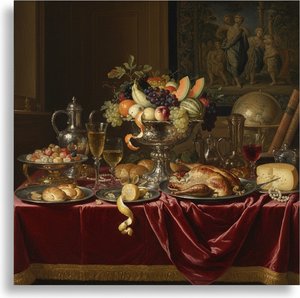
Abraham Hendricksz van Beyeren: Pioneering Dutch Still Life & the Banquet Tradition
Explore the captivating world of Dutch Golden Age still life with Abraham van Beyeren. Discover his innovative techniques, symbolic banquet scenes & lasting influence on art history. Learn about collecting these masterpieces.

Os 10 Mestres do Barroco: Obras-Primas que Moldaram a Arte e Decoram o Lar
Descubra os 10 maiores ícones do Barroco! Explore a história, técnica e emoção por trás de Caravaggio, Rembrandt, Bernini e outros mestres. Encontre reproduções de arte barroca para decorar seu lar com luxo em OriginalUniqueArt.com.

