Visualizar na parede
 Compartilhar
 Compartilhar
 Detalhes
 Guia
Guia

 Baixar imagem
 Semelhantes
 Raio X
 Ver diaporama
 Perguntas e Respostas
 Estatísticas
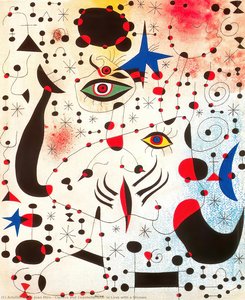
Constellation; Awakening at Dawn


 Ler mais
A obra de arte exibida nesta página é protegida por leis de direitos autorais, o que significa que não podemos criar ou vender legalmente uma reprodução idêntica. Esta proteção é aplicada por meio de acordos internacionais, tais como a Convenção de Berna e pelas leis nacionais, incluindo as estabelecidas por Lei de Direitos Autorais dos EUA - Título 17.
Este método cumpre plenamente as regulamentações de direitos autorais, pois não envolve a cópia ou duplicação da obra protegida. Em vez disso, trata-se de uma reinterpretação criativa — uma nova pintura que é influenciada pela original, mas não idêntica a ela.
Giclée / Impressão de Arte
Impressão giclée ou em tela de qualidade de museu, com produção rápida e opções flexíveis de acabamento. ( Comprar pintura feita à mão Alternar para Imagem Digital)




P118B €10

P118H €10

P118W €10

P438Z €10

P508JH €12

P508YH €12

P805H €10

P805Z €10

P919BZ €10

P919G €10

P919XJ €10

P959ZH €10

P968JZ €12

W106C €8

W218G €10

W218JH €8

W218Y €10

W307PJ €10

W316G €10

W316PJ €8

W316Y €10

W398PJ €8

W4111J €10

W500HY €15

W500JH €15

W692G €12

W849H €8

W940BG €15

W953PJ €8




Escolha entre os nossos tamanhos pré-definidos que respeitam as proporções originais da obra de arte.

Insira a largura e a altura desejadas para se ajustarem à sua moldura ou parede. Uma impressão pode ser apenas cortada, nunca ampliada além da imagem original; portanto, um tamanho com proporções diferentes resultará na perda de parte da imagem. Enviamos uma maquete digital para sua aprovação antes de realizarmos a impressão. A imagem exibida nesta página não mostra o corte real — apenas a maquete o faz.
Entrega mundial () em 2 semanas, em vez das 4/5 semanas padrão. (8 Novembro)

Envio expresso gratuito para todo o mundo

Tela de Linho de Alta Qualidade

Seguro de transporte completo

Garantia de Reembolso de Impostos Alfandegários

Garantia de Fidelidade Cromática

Política de Devolução em 100 Dias (Apenas para Defeitos)

Garantia de reembolso de 100%

Oferta de desconto por quantidade
 A opção de vidro está disponível apenas para tamanhos inferiores a 110 cm

Constellation; Awakening at Dawn
Giclée / Impressão de Arte
Tamanho da Reprodução
-


Preço Total
€ 72
Constellation; Awakening at Dawn: A Surrealist Journey Through the Cosmos
Within the captivating realm of abstract art lies “Constellation; Awakening at Dawn,” a mesmerizing oil painting by the visionary Spanish artist Joan Miró. More than just a depiction of a night sky, this work is an invitation to embark on a deeply personal and symbolic journey – a testament to the boundless imagination that defined Miró’s extraordinary career. Created in 1941 during a period of intense artistic exploration, it exemplifies his signature style, blending surrealism with a childlike wonder and a profound connection to the mysteries of existence.
Miró's contribution to the art world is monumental. Born in Barcelona in 1893, he initially pursued a more conventional path before dedicating himself fully to painting, sculpture, and ceramics. His early influences – including the expressive color palettes of Vincent van Gogh and the geometric explorations of Paul Cézanne – laid the groundwork for his unique approach. However, it was his relocation to Paris in 1920 that truly ignited his surrealist sensibilities, leading him to experiment with automatism and delve into the subconscious mind. The Fundació Joan Miró in Barcelona stands as a powerful monument to his legacy, preserving and showcasing the breadth of his artistic output.
“Constellation; Awakening at Dawn” is immediately striking for its vibrant color palette – a joyous explosion of blues, yellows, reds, and greens that evoke both the tranquility of dawn and the dynamism of the cosmos. The canvas is populated with an array of abstract shapes: circles of varying sizes dominate the composition, representing celestial bodies—stars and planets—scattered across the inky expanse. These aren’t merely representational; they possess a playful quality, suggesting a dreamlike state where familiar forms are distorted and reimagined. Interspersed amongst these cosmic elements are smaller, bird-like figures – a recurring motif in Miró's work – that seem to be emerging from the darkness, symbolizing the birth of new life and the promise of a fresh beginning. The overall effect is one of controlled chaos, a visual representation of the artist’s inner world.
The symbolism embedded within “Constellation; Awakening at Dawn” is rich and layered. Beyond the obvious references to stars and planets, the circles can be interpreted as portals – gateways to other realms or states of consciousness. The bird-like figures are often associated with freedom, hope, and renewal, aligning perfectly with the theme of awakening. Miró himself frequently used symbols drawn from Catalan folklore and mythology in his work, imbuing them with personal meaning. The painting isn’t simply a depiction of the physical universe; it's an exploration of the artist’s own internal landscape – a meditation on dreams, intuition, and the eternal quest for understanding.
Miró’s influence extends far beyond his immediate contemporaries. Artists like Marc Chagall, known for his emotionally charged depictions of biblical scenes and Jewish folklore, share a similar blend of surrealism and symbolism with Miró. The vibrant colors, dreamlike imagery, and exploration of the subconscious are hallmarks of both artists' styles. “Constellation; Awakening at Dawn” stands as a cornerstone of modern art, inspiring generations of creatives to embrace abstraction and delve into the depths of their imaginations. For those seeking to experience the magic of Miró’s vision firsthand, OriginalUniqueArt offers meticulously crafted oil painting reproductions that capture the essence and emotional power of this extraordinary masterpiece.
- Joan Miró: Constellation; Awakening at Dawn
- Marc Chagall: Song of Songs V
- Marc Chagall: Newlywedds with Eiffel Towel in the Background
- Joan Miró: Mural
Experience the timeless beauty of abstract art with OriginalUniqueArt’s handmade oil painting reproductions – a perfect addition to any home or gallery.
Perguntas e Respostas
"Constellation; Awakening at Dawn", de Joan Miró, está em domínio público? E por quê?
"Constellation; Awakening at Dawn", de Joan Miró, está em ainda protegido por direitos autorais. Os termos de direitos autorais são calculados a partir do falecimento do artista, e Joan Miró faleceu em 1983.
É possível fazer o download de "Constellation; Awakening at Dawn"?
"Constellation; Awakening at Dawn", de Joan Miró pode ser descarregado na página de Download da obra, como download de imagem digital em alta resolução.
Como é construída a composição cromática de "Constellation; Awakening at Dawn", de Joan Miró?
A composição cromática de "Constellation; Awakening at Dawn", de Joan Miró combina um contraste Equilibrado com uma harmonia Forte unidade cromática.
Biografia do Artista
A Catalan Visionary: The Life and Art of Joan Miró
Joan Miró i Ferrà, born in Barcelona in 1893, stands as one of the most significant figures in 20th-century art. His journey was not merely a progression through styles but an exploration of inner worlds, translating dreams, memories, and Catalan identity onto canvas with a uniquely poetic visual language. From humble beginnings marked by illness and initial parental reservations about his artistic pursuits, Miró persevered, driven by an innate need to express the intangible—the emotions, sensations, and subconscious currents that lie beneath the surface of reality. His early life was steeped in the traditions of Barcelona, a city brimming with architectural marvels thanks to Antoni Gaudí, whose organic forms would subtly influence Miró’s later abstractions. The goldsmithing profession of his father instilled an appreciation for meticulous craftsmanship, while the rugged Catalan landscape became a recurring motif and source of inspiration throughout his career.Early Influences and the Path to Surrealism
Miró's formal artistic training began at La Llotja in Barcelona, where he honed his skills in traditional techniques. However, it was exposure to the avant-garde movements sweeping through Paris that truly ignited his creative evolution. The vibrant colors of Fauvism and the fragmented forms of Cubism resonated deeply, prompting him to move to Paris in 1920. This period proved pivotal as he encountered artists like Pablo Picasso and began experimenting with increasingly abstract compositions. Yet, Miró didn’t simply adopt these styles; he synthesized them, forging a path toward his own distinctive aesthetic. He sought to distill forms to their essence, stripping away representational details in favor of symbolic shapes and evocative colors. This exploration led him to the Surrealist group in 1924, aligning him with artists such as Max Ernst and Salvador Dalí. While embracing the Surrealist interest in the subconscious, Miró maintained a unique sensibility—his work was less about shocking imagery or Freudian symbolism than it was about creating a world of playful forms and poetic suggestion. He believed that art should be free from rational constraints, allowing for spontaneous expression and imaginative exploration.The Language of Symbols: Key Works and Artistic Innovations
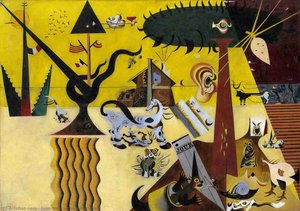
Throughout the 1920s and 30s, Miró developed his signature visual vocabulary—a universe populated by biomorphic shapes, floating forms, and vibrant colors. The Farm (1922), often considered a cornerstone of his oeuvre, exemplifies this transition. It’s not merely a depiction of rural life but an evocation of Catalan identity and a symbolic representation of the natural world. The painting utilizes earthy tones contrasted with bursts of crimson and yellow—colors that mirror the vibrancy of the Catalan countryside and imbue the scene with a sense of primal energy. His collaborative spirit led to innovative techniques like *grattage*, pioneered with Max Ernst in 1926 for designs intended for Sergei Diaghilev's ballet, where textures were revealed by scraping paint across canvas. This technique allowed Miró to liberate forms from conventional representation, emphasizing surface qualities and creating a tactile experience for the viewer. The Dutch Interiors (1928) series demonstrated his ability to reinterpret the Old Masters through a distinctly modern lens, transforming domestic scenes into dreamlike abstractions. He approached Rembrandt’s portraits with an eye attuned to the subtleties of emotion and gesture, distilling them into simplified geometric shapes—a bold departure from traditional portraiture. Painting (1933), with its striking palette and dynamic composition, encapsulates Miró’s exploration of the subconscious and his rejection of conventional artistic boundaries. The painting's swirling lines and amorphous forms convey a sense of movement and disorientation, mirroring the anxieties of the era while simultaneously celebrating the boundless potential of imagination. Beyond painting, Miró fearlessly experimented with sculpture, ceramics, and printmaking, expanding his creative horizons and demonstrating a remarkable versatility.Legacy and Enduring Influence
Joan Miró's impact on 20th-century art is undeniable. He wasn’t simply a painter; he was a visionary who challenged the very definition of artistic expression. His work paved the way for abstract expressionism and continues to inspire artists across disciplines. He established two foundations—the Fundació Joan Miró in Barcelona (1975) and the Fundació Pilar i Joan Miró in Palma de Mallorca (1981)—ensuring that his legacy would endure, providing spaces for artistic exploration and education. Throughout his long career, he remained committed to pushing boundaries, questioning conventions, and exploring the depths of human imagination. Miró’s art is a testament to the power of abstraction, symbolism, and poetic expression—a vibrant celebration of life, dreams, and the enduring spirit of Catalan culture. His work continues to resonate with audiences worldwide, inviting us to enter a world where anything is possible and the boundaries between reality and fantasy blur into a captivating dance of color and form. He died in Palma de Mallorca in 1983, leaving behind an unparalleled body of work that remains a beacon of creativity and innovation.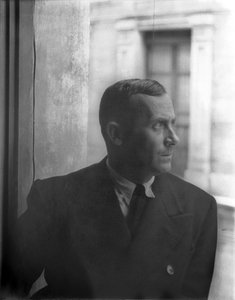
Joan Miró
1893 - 1983 , Espanha
Dados Rápidos
- Artistic Movement Or Style: Surrealismo
- Artists Who Influenced This Artist:
- Pablo Picasso
- Van Gogh
- Date Of Birth: 20 Abril 1893
- Date Of Death: 25 Dezembro 1983
- Full Name: Joan Miró i Ferrà
- Nationality: Espanhol
- Notable Artworks:
- A Fazenda
- La Poetisa
- Dutch Interiors
- Place Of Birth: Barcelona, Espanha
Artigos Relacionados
Surrealismo: 10 Obras-Primas que Definiram um Movimento Artístico Inovador | OriginalUniqueArt.com
Mergulhe no universo onírico do Surrealismo! Explore 10 obras-primas de Dalí, Magritte e outros artistas icônicos. Descubra a história, técnica e emoção por trás dessas pinturas revolucionárias. Encontre reproduções de arte exclusivas em OriginalUniqueArt.com.

Top 10 Obras-Primas do Expressionismo Abstrato: Arte para Decorar e Inspirar | OriginalUniqueArt.com
Descubra as 10 obras-primas do Expressionismo Abstrato com Jackson Pollock, Mark Rothko e mais! Explore a história, técnica e emoção por trás de cada pintura. Encontre reproduções de arte exclusivas para decorar sua casa em OriginalUniqueArt.com.

Joan Miró: As 25 Obras-Primas que Definem um Ícone da Arte Moderna | OriginalUniqueArt
Descubra as 25 obras-primas de Joan Miró que revolucionaram a arte moderna! Explore o surrealismo, cores vibrantes e a história por trás dos quadros mais famosos do artista catalão. Encontre reproduções de alta qualidade para decorar sua casa com OriginalUniqueArt.com.

Abstração Geométrica: 10 Obras-Primas que Moldaram a Arte Moderna | OriginalUniqueArt.com
Descubra as 10 obras-primas da Abstração Geométrica que revolucionaram a arte moderna! Explore Kandinsky, Mondrian e outros artistas icônicos. Encontre reproduções de alta qualidade para decorar sua casa com OriginalUniqueArt.com.

Kandinsky: As 25 Obras-Primas que Definem o Abstracionismo | OriginalUniqueArt
Descubra as 25 obras-primas de Wassily Kandinsky, pioneiro da arte abstrata! Explore a história, cores e significado por trás de cada pintura. Encontre reproduções de alta qualidade e inspire sua decoração em OriginalUniqueArt.com.