
 Visualizar na parede
 Compartilhar
 Compartilhar
 Detalhes
 Guia
Guia

 Baixar imagem
 Semelhantes
 Raio X
 Ver diaporama
 Perguntas e Respostas
 Estatísticas
Summer Scene (Bathers)

 Ler mais
Giclée / Impressão de Arte
Impressão giclée ou em tela de qualidade de museu, com produção rápida e opções flexíveis de acabamento. ( Comprar pintura feita à mão Alternar para Imagem Digital)




P118B €10

P118H €10

P118W €10

P438Z €10

P508JH €12

P508YH €12

P805H €10

P805Z €10

P919BZ €10

P919G €10

P919XJ €10

P959ZH €10

P968JZ €12

W106C €8

W218G €10

W218JH €8

W218Y €10

W307PJ €10

W316G €10

W316PJ €8

W316Y €10

W398PJ €8

W4111J €10

W500HY €15

W500JH €15

W692G €12

W849H €8

W940BG €15

W953PJ €8




Escolha entre os nossos tamanhos pré-definidos que respeitam as proporções originais da obra de arte.

Insira a largura e a altura desejadas para se ajustarem à sua moldura ou parede. Uma impressão pode ser apenas cortada, nunca ampliada além da imagem original; portanto, um tamanho com proporções diferentes resultará na perda de parte da imagem. Enviamos uma maquete digital para sua aprovação antes de realizarmos a impressão. A imagem exibida nesta página não mostra o corte real — apenas a maquete o faz.
Entrega mundial () em 2 semanas, em vez das 4/5 semanas padrão. (5 Novembro)

Envio expresso gratuito para todo o mundo

Tela de Linho de Alta Qualidade

Seguro de transporte completo

Garantia de Reembolso de Impostos Alfandegários

Garantia de Fidelidade Cromática

Política de Devolução em 100 Dias (Apenas para Defeitos)

Garantia de reembolso de 100%

Oferta de desconto por quantidade
 A opção de vidro está disponível apenas para tamanhos inferiores a 110 cm

Summer Scene (Bathers)
Giclée / Impressão de Arte
Tamanho da Reprodução
-


Preço Total
€ 72
A Moment of Provençal Bliss: Jean Frédéric Bazille’s "Summer Scene (Bathers)"
Jean Frédéric Bazille's “Summer Scene (Bathers)” captures a quintessential moment of leisure and joy, transporting the viewer to the sun-drenched landscapes of Provence. Painted in 1873, just months before his untimely death at the age of thirty-two, this work represents a pivotal point in Bazille’s artistic development and exemplifies the burgeoning Impressionist style that would soon revolutionize the art world. The scene unfolds with remarkable realism – yet imbued with an ethereal quality characteristic of the movement – depicting a group of individuals enjoying a carefree afternoon by the water's edge. It is a painting brimming with light, color, and a palpable sense of serenity.
Subject Matter and Composition
- The central focus is undeniably the group of bathers, both men and women, engaged in various activities – swimming, sunbathing, and simply relaxing.
- Bazille masterfully employs a pyramidal composition, drawing the eye upwards from the figures at the bottom to the shaded umbrella providing respite above.
- The inclusion of details like the scattered chairs and the carefully placed umbrella adds to the sense of domestic tranquility and reinforces the theme of an idyllic summer day.
Impressionist Technique and Color Palette
Bazille’s technique is a hallmark of Impressionism, prioritizing the immediate sensation of light and color over meticulous detail. He utilizes broken brushstrokes – short, choppy strokes of pure pigment – to capture the shimmering reflections on the water and the dappled sunlight filtering through the trees. The palette is dominated by vibrant greens, blues, and yellows, creating a luminous effect that evokes the warmth of the Provençal sun. Note the subtle gradations in color, particularly in the rendering of the figures’ skin tones, which contribute to the painting's overall sense of realism.
Historical Context and Artistic Influences
"Summer Scene (Bathers)" was created during a period of immense artistic experimentation. Bazille was deeply influenced by the works of Gustave Courbet, whose commitment to depicting everyday life with honesty and naturalism paved the way for Impressionist innovation. However, unlike Courbet’s often stark realism, Bazille infused his paintings with a delicate lyricism and an emphasis on capturing fleeting moments of beauty. The painting reflects the broader artistic trends of the time – a move away from academic conventions towards a more subjective and expressive approach to art.
Symbolism and Emotional Impact
Beyond its technical brilliance, “Summer Scene (Bathers)” resonates with profound emotional depth. The scene evokes a sense of nostalgia for simpler times, a longing for connection with nature, and the joy of shared experiences. The figures’ relaxed postures and expressions suggest a state of blissful contentment. Bazille's ability to capture this intangible quality – the feeling of warmth, light, and tranquility – is what elevates this painting beyond mere representation and transforms it into a timeless meditation on the beauty of life.
Perguntas e Respostas
Que sentimento "Summer Scene (Bathers)", de Jean Frédéric Bazille expressa dentro de Impressionist Movement?
"Summer Scene (Bathers)" carrega um tom emocional Romantic dentro do movimento Impressionist Movement.
Qual uso e espaço são recomendados para "Summer Scene (Bathers)", de Jean Frédéric Bazille?
"Summer Scene (Bathers)" é sugerida para Statement, e o espaço recomendado é um(a) Living Room.
Qual é o nível de contraste de "Summer Scene (Bathers)", de Jean Frédéric Bazille?
O contraste entre claro e escuro de "Summer Scene (Bathers)" é registrado como Bold. O contraste descreve a intensidade da diferença entre as áreas claras e escuras.
Biografia do Artista
The Brief Radiance of Jean Frédéric Bazille
Jean Frédéric Bazille’s story is one of immense promise tragically cut short, a fleeting yet significant contribution to the burgeoning Impressionist movement. Born in Montpellier, France, on December 6, 1841, into a prosperous Protestant family involved in wine production, Bazille initially seemed destined for a life far removed from the world of art. His parents, while supportive, insisted he pursue medical studies alongside his artistic inclinations – a compromise reflecting the societal expectations of the time and their desire for his financial security. This duality would shape his early years, dividing his attention between anatomical dissection and the captivating allure of color and light. However, it was within the vibrant atmosphere of Paris, where he relocated in 1862 to continue his medical training, that Bazille’s artistic path truly began to unfold.Forging a Path Amongst Giants
Paris proved to be a crucible for young Bazille. He quickly fell in with a circle of artists who would become synonymous with Impressionism: Claude Monet, Pierre-Auguste Renoir, and Alfred Sisley. Studying under Charles Gleyre provided him with formal training, but it was the shared passion and radical ideas exchanged amongst these friends that truly ignited his artistic vision. Bazille’s financial stability – a fortunate contrast to the often precarious existence of his companions – allowed him to generously support them, offering studio space and materials. This generosity wasn't merely practical; it stemmed from a deep camaraderie and belief in their collective potential. He became a vital hub for this emerging group, fostering an environment of experimentation and mutual encouragement. His early works, like *The Pink Dress* (c. 1864), already demonstrate a keen eye for capturing fleeting moments and the effects of light – hallmarks that would define Impressionism. He wasn’t simply mimicking established styles; he was actively participating in the creation of something entirely new.A Style Defined by Light and Friendship
Bazille's artistic style, though developing rapidly, possessed a unique character within the broader Impressionist aesthetic. While sharing their fascination with *plein air* painting – working outdoors to directly capture the nuances of natural light – his compositions often exhibited a more structured quality than Monet’s or Renoir’s. He frequently combined figure painting with landscape, placing his subjects thoughtfully within their environment, as seen in masterpieces like *Family Reunion* (1867-1868). This work is not merely a depiction of familial gathering; it's an exploration of light filtering through the trees, animating the scene and imbuing it with a sense of warmth and intimacy. His paintings weren’t just about *what* he saw, but *how* he saw it – the emotional resonance evoked by color, form, and light. He was deeply influenced by Eugène Delacroix, whose vibrant use of color resonated with his own artistic sensibilities, yet he moved beyond academic conventions to embrace a more modern sensibility.A Life Interrupted: Legacy and Remembrance
The blossoming career of Jean Frédéric Bazille was brutally interrupted by the Franco-Prussian War in 1870. Driven by a sense of patriotic duty, he joined a Zouave regiment just months after the conflict erupted. Tragically, he was killed in action on November 28, 1870, at the young age of 28, near Beaune-la-Rolande. His death sent shockwaves through the artistic community, robbing them of a talented friend and generous benefactor. His premature demise meant his work remained relatively unknown for many years. However, in recent decades, Bazille’s contributions have been increasingly recognized and celebrated. Today, his paintings are held in prestigious museums like the Musée d'Orsay in Paris, and reproductions allow art lovers worldwide to experience the beauty and innovation of his vision. Bazille’s legacy extends beyond his artistic output; he embodies the spirit of youthful idealism, unwavering dedication, and the power of friendship that defined the early days of Impressionism. He remains a poignant reminder of the potential lost, yet also a testament to the enduring impact of a brief but brilliant career.The Family and Early Influences
Born into a prominent Protestant family in Montpellier, Frédéric Bazille’s upbringing was steeped in both artistic appreciation and financial stability. His father, Jean François Gaston Bazille, was an agronomist and senator, while his mother, Camille Vialars, inherited wealth from her maternal lineage. This combination of privilege and cultural awareness provided him with a unique foundation for his artistic pursuits. The family’s connection to the wine trade instilled in him an appreciation for light, color, and the natural world – elements that would later become central to his work. His early years were marked by a balance between formal medical training and artistic exploration, a compromise driven by his parents' desire for his future security while acknowledging his innate talent. This duality shaped his perspective, allowing him to observe human behavior with both scientific detachment and empathetic understanding. The strong family ties and the vibrant social life of Montpellier undoubtedly contributed to his creative spirit, fostering a sense of community and belonging that would later inform his artistic vision.Key Works and Artistic Development
Bazille’s artistic development can be traced through a series of key works that reveal his evolving style and thematic interests. *The Pink Dress* (1864), one of his earliest paintings, exemplifies his early fascination with capturing fleeting moments and the effects of light on everyday subjects. The painting's delicate palette and intimate composition demonstrate his growing mastery of color and form. *Family Reunion* (1867-1868) is arguably his most significant work, showcasing his ability to integrate figure painting with landscape in a harmonious and evocative manner. This painting, depicting a family gathering in a sunlit garden, captures the warmth and intimacy of domestic life while simultaneously exploring the interplay of light and shadow. Later works, such as *Studio in Rue de Furstenberg* (1869), demonstrate his continued experimentation with composition and perspective, reflecting his engagement with contemporary artistic trends. Throughout his career, Bazille consistently sought to capture not just the appearance of a scene but also its emotional essence, imbuing his paintings with a sense of atmosphere and feeling.A Tragic End and Lasting Impact
The premature death of Frédéric Bazille in 1870 cut short a promising artistic career, leaving behind a legacy largely unknown for decades. His untimely demise during the Franco-Prussian War robbed the art world of a talented and generous artist. Despite his brief career, Bazille’s contributions to Impressionism are now widely recognized, and his paintings continue to inspire artists and viewers alike. His work stands as a testament to the power of friendship, dedication, and artistic vision – qualities that resonated deeply with his contemporaries and continue to captivate audiences today. His story serves as a poignant reminder of the fragility of life and the enduring impact of even the briefest of creative flames.
Jean Frédéric Bazille
1841 - 1870 , França
Dados Rápidos
- Artistic Movement Or Style: Impressionismo
- Artists Or Movements Influenced By This Artist: ['Impressionismo']
- Artists Who Influenced This Artist: ['Delacroix']
- Date Of Birth: 6 de dezembro de 1841
- Date Of Death: 28 de novembro de 1870
- Full Name: Jean Frédéric Bazille
- Nationality: Francês
- Notable Artworks:
- Vestido Rosa
- Reunião familiar
- Estúdio na Rue de Furstenberg
- Place Of Birth: Montpellier, França
Artigos Relacionados
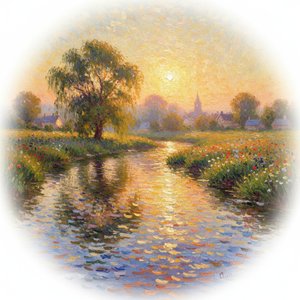
Capturing Light: A Masterclass in the Ethereal Beauty of Impressionistic Landscapes
Explore the ethereal beauty of Impressionist landscapes. Discover how masters like Monet captured fleeting light through color and texture, and learn to curate these timeless, luminous masterpieces for your home collection.

Os 10 Mestres do Impressionismo e a Paisagem que Mudou a Arte | OriginalUniqueArt
Descubra os 10 quadros impressionistas que revolucionaram a arte! Explore Monet, Renoir e outros mestres da paisagem francesa. Encontre reproduções de alta qualidade para decorar sua casa com beleza e história em OriginalUniqueArt.com.

Paisagens Impressionistas Icônicas: 10 Obras que Mudaram a Arte | OriginalUniqueArt
Descubra as 10 obras impressionistas que revolucionaram a arte! Explore Monet, Renoir e outros mestres da paisagem. Encontre reproduções de alta qualidade para decorar sua casa com a beleza do Impressionismo em OriginalUniqueArt.com.

Os 10 Mestres da Paisagem Romântica: Arte para Inspirar a Sua Casa
Descubra os 10 quadros mais emblemáticos da Paisagem Romântica! Explore a história de Turner, Friedrich e outros mestres. Encontre reproduções de arte exclusivas para inspirar sua decoração em OriginalUniqueArt.com.

Evocations of Place: A Historical Journey Through Landscape Art
Explore the rich history of landscape art with OriginalUniqueArt. Discover renowned artists, movements like Impressionism & Romanticism, and expert guidance for collecting timeless pieces. Find your perfect serene escape today!

