Neoclassical Sculpture
Voltaire (Jean-Antoine Houdon)
Jean-Antoine Houdon (1741–1828) criou Voltaire. Pertence ao movimento Neoclassical Sculpture. Está conservada no Metropolitan Museum of Art, em Nova York, Estados Unidos da América.

 Visualizar na parede

 Pintura a Óleo Feita à Mão
 Compartilhar
 Compartilhar
 Ficha técnica


 Baixar imagem
 Semelhantes
 Raio X
 Ver diaporama
 Perguntas e Respostas

 Estatísticas
Voltaire, em resumo
- Título
- Voltaire
- Artista
- Jean-Antoine Houdon (1741–1828)
- Artista nascido em
- Versailles, França
- Onde ver
- Metropolitan Museum of Art, Nova York, Estados Unidos da América
- Movimento
- Neoclassical Sculpture
- Tema
- voltaire, sculpture, enlightenment, philosophy, houdon, portrait
O que Voltaire retrata?
A Gaze of Enlightenment: Jean-Antoine Houdon’s “Voltaire”
Before you stands not merely a marble bust, but a captured intellect—a profound distillation of the spirit of the Enlightenment embodied in Jean-Antoine Houdon's "Voltaire." Crafted between 1781 and 1782, this remarkable sculpture transcends its material form to offer a glimpse into the mind of one of history’s most influential thinkers. Houdon, a pivotal figure bridging the Rococo and Neoclassical movements, possessed an extraordinary ability: he didn't simply replicate likenesses; he sought to reveal the very essence of his subjects—their character, their wisdom, and their inner life. This particular portrait is more than just a representation of Voltaire; it’s an attempt to embody his philosophical rigor and intellectual curiosity.
The sculpture itself is executed in the style of Neoclassicism, a movement deeply rooted in the ideals of ancient Greece and Rome. Houdon masterfully employed realistic proportions and idealized forms, yet he deliberately avoided the overly polished and artificial aesthetic favored by earlier Baroque sculptors. The result is a figure that possesses both dignified authority and an approachable humanity—a testament to Houdon’s skill in capturing not just physical appearance but also the subtle nuances of expression. Notice the careful attention to detail: the slight furrow of his brow, suggesting deep thought; the delicate curve of his lips hinting at a wry wit; and the overall posture that conveys both confidence and humility.
The Materials and Technique – A Testament to Craftsmanship
Houdon’s choice of material—marble—was deliberate. Marble was associated with classical antiquity, lending an air of gravitas and permanence to the sculpture. The process itself involved painstaking observation and modeling. Houdon began by creating a life mask of Voltaire, capturing the contours of his face with remarkable accuracy. This mask served as the foundation for the subsequent sculpting, allowing him to build up the form gradually, layer by layer. The smooth, polished surface of the marble is not merely decorative; it reflects the sculptor’s meticulous attention to detail and his mastery of technique. The subtle gradations in tone—from the deep charcoal of the pedestal to the lighter silver of the bust—create a sense of depth and volume, bringing the sculpture to life.
The pedestal, constructed from dark marble, is not simply a base; it’s an integral part of the composition. Its intricate carvings – reminiscent of classical motifs – serve to elevate the figure of Voltaire, symbolizing his intellectual stature. The use of contrasting materials—the luminous white of the bust against the somber tones of the pedestal—further emphasizes this dynamic. The lighting, as captured in the photograph, is carefully diffused, minimizing harsh shadows and highlighting the subtle details of the sculpture’s features. This gentle illumination allows us to appreciate the nuances of expression and the texture of the marble.
Symbolism and Emotional Resonance – A Portrait of a Mind
The slight smile on Voltaire's face is perhaps the most captivating element of this portrait. It isn’t a boisterous laugh, but rather a subtle, knowing expression—a hint of irony, intelligence, and perhaps even a touch of melancholy. This carefully rendered gesture speaks volumes about Voltaire’s character: he was a brilliant philosopher and satirist, yet also acutely aware of the complexities and contradictions of human nature. His dignified posture reinforces this sense of authority and intellectual prowess, suggesting a man who commanded respect through his intellect and unwavering commitment to reason.
Voltaire's image embodies the spirit of the Enlightenment—a period marked by a renewed interest in classical learning, a questioning of traditional authority, and a belief in the power of human reason. This sculpture serves as a powerful reminder of Voltaire’s enduring legacy as one of history’s most influential thinkers and writers. It invites us to contemplate his ideas, to reflect on the challenges of our own time, and to appreciate the profound impact that one individual can have on the course of human history.
Further Exploration – Delving Deeper into Houdon's World
To truly understand the significance of “Voltaire,” it’s helpful to explore the broader context of Jean-Antoine Houdon’s life and work. His sculptures of figures like George Washington, Benjamin Franklin, and Thomas Jefferson demonstrate his ability to capture not just likenesses but also the personalities and character of his subjects. The Wikipedia article on George Washington highlights Houdon's meticulous approach to portraiture, emphasizing his dedication to capturing the essence of his sitters. Furthermore, the WGA image provides a valuable visual reference, allowing you to appreciate the artistry and detail of this remarkable sculpture.
Em qual museu se encontra Voltaire?
Metropolitan Museum of Art
Nova York, Estados Unidos da América
Origens e História do Metropolitan Museum of Art O Metropolitan Museum of Art nasceu de uma visão compartilhada por um grupo de empresários, financistas e importantes artistas e pensadores. Após sua incorporação em 1870, a instituição buscou um lar permanente para abrigar suas crescentes aquisições. Antes de se estabelecer em sua localização atual, o museu residiu brevemente na propriedade da Mansão Douglas, na West 14th Street.


Imagens em alta resolução de Voltaire

Jean-Antoine Houdon, Voltaire, Metropolitan Museum of Art. Domínio público.
Perguntas sobre Voltaire respondidas
Em qual museu se encontra a obra original de "Voltaire"?
A obra original "Voltaire", de Jean-Antoine Houdon encontra-se no Metropolitan Museum of Art, Nova York, Estados Unidos da América. Uma reprodução permite que a obra seja exibida em sua casa.
O que representa "Voltaire"?
Os temas de "Voltaire" são voltaire, sculpture, enlightenment, philosophy, houdon, portrait, marble, france.
A imagem de "Voltaire", de Jean-Antoine Houdon pode ser reproduzida livremente?
Informação de direitos autorais para "Voltaire", de Jean-Antoine Houdon: a obra está em em domínio público — seus direitos autorais expiraram. Isso determina se reproduções da imagem podem ser feitas livremente.
Quem é o artista por trás de "Voltaire"?
"Voltaire" é atribuída a Jean-Antoine Houdon.
A qual estilo pertence "Voltaire"?
"Voltaire", de Jean-Antoine Houdon pertence ao movimento Neoclassical Sculpture. Este movimento fornece o contexto estilístico da obra.
A que período da carreira de Jean-Antoine Houdon pertence "Voltaire"?
"Voltaire" representa o Enlightenment Sculpture de Jean-Antoine Houdon.
Por que o status de direitos autorais de "Voltaire" é como é?
"Voltaire", de Jean-Antoine Houdon, está em em domínio público — seus direitos autorais expiraram. Os termos de direitos autorais são calculados a partir do falecimento do artista, e Jean-Antoine Houdon faleceu em 1828.
"Voltaire" permaneceu no país de origem do seu artista?
Não – a obra de arte encontra-se no exterior. Jean-Antoine Houdon nasceu em França, e o original de "Voltaire" encontra-se num museu em Estados Unidos da América.
Como "Voltaire" se insere na trajetória artística de Jean-Antoine Houdon?
"Voltaire" compartilha com as outras obras de Jean-Antoine Houdon o seu estilo Neoclassical Sculpture e os temas recorrentes: neoclassicism, enlightenment ideals, philosophical portraiture, french culture, houdon’s legacy.
Sobre o artista, Jean-Antoine Houdon

1741–1828, França
Jean-Antoine Houdon
A Sculptor of the Enlightenment Jean-Antoine Houdon, born in Versailles in 1741, stands as a pivotal figure bridging the Rococo and Neoclassical eras—a sculptor whose work embodies the intellectual fervor and evolving aesthetic sensibilities of the eighteenth century. His life unfolded amidst dramatic shifts in French society, from the waning opulence of the monarchy through the revolutionary upheaval and Napoleonic ascendance. Yet, Houdon remained remarkably consistent in his artistic vision: to capture not merely a likeness, but the very essence of his subjects—their intellect, character, and inner lives—in enduring marble and bronze. This dedication stemmed from an early aptitude for sculpture, nurtured by formal training at the Académie Royale de Peinture et de Sculpture beginning in 1752 under esteemed sculptors like René-Michel Slodtz, Jean-Baptiste Lemoyne, and Jean-Baptiste Pigalle.
Sobre Jean-Antoine Houdon Obras notáveis de Jean-Antoine Houdon
Também de Jean-Antoine Houdon
 George Washington1786
 Bust of Mirabeau1800
 St Bruno1766
 Seated Voltaire

Ensaios sobre Voltaire
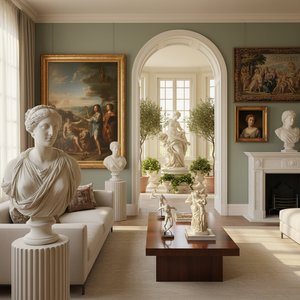 Os 10 Grandes Mestres do Neoclassicismo: Arte, História e DecoraçãoDescubra os 10 maiores mestres do Neoclassicismo! Explore a história, técnica e beleza de obras icônicas de David, Ingres e Canova. Encontr…
 The Revival of Antiquity: Exploring Ideals of Beauty & Power in Neoclassical PortraitureExplore the captivating world of Neoclassical portraiture! Discover the power & ideals behind masterpieces by David, Girodet & more. Expert…
 25 Must-See Artworks at the Museum of Fine Arts, Boston: A Curated GuideExplore 25 legendary works from the MFA Boston, from Sargent to European classics. Find museum-quality art at OriginalUniqueArt.com. Explor…