Alternar para Impressão
 Ler mais







































 Para obras de arte ou reproduções com mais de 105 cm (aproximadamente 41 polegadas) em qualquer um dos lados, a moldura será enviada como um kit desmontado. Este método garante uma entrega segura e evita danos durante o transporte.


A Silent Witness to Elamite Grandeur
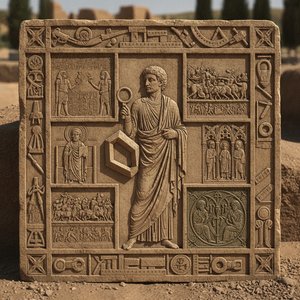
Perched high above the landscape, carved into a vertical niche some five and a half meters from the ground, the Kul-e Farah relief I stands as a profound testament to the enduring spirit of the Elamite highland tradition. This ancient masterpiece is not merely a carving on stone; it is a monumental dialogue between man and nature, frozen in time since approximately 500 BC. The relief serves as a vital historical link, embodying the sophisticated artistic language of an era that flourished in the ancient Near East. To gaze upon this work is to witness the intersection of political authority and artistic devotion, where every line etched into the rock face speaks of a civilization deeply rooted in its rugged, mountainous terrain.
The composition of the relief is both intricate and commanding, showcasing a scene of figures positioned with a deliberate sense of hierarchy and presence. The artistry lies in the way the carver utilized the natural contours of the rock to breathe life into the subjects, creating a sense of depth that invites the viewer to contemplate the lives of those depicted. Within the vertical niche, the relief integrates multiple elements of elite representation, drawing from much older traditions of valley carvings to assert the prestige of its creators. For the discerning collector or lover of antiquity, this piece offers a window into a world where art was used to solidify the identity of rulers and the sanctity of their lands.
The Language of Power and Inscription
Beyond its visual majesty, the Kul-e Farah relief I is a literary treasure, housing a complex narrative written in stone. The surface is adorned with twenty-four horizontal registers of an inscription that remains one of the most significant, yet enigmatic, archaeological finds of the region. This text provides a rare glimpse into the political landscape of the time, identifying the local ruler Hanni, son of Tahhi, who served as the "caretaker, protector, and ruler" of Ayapir. His role as a vassal to the Elamite king Shutur-Nahhunte highlights the intricate web of loyalty and governance that defined the period between 625 and 585 BC. The presence of nine additional epigraphs, delicately inscribed over the skirts of the carved figures, adds a layer of rhythmic detail that enhances the relief's textural complexity.
For interior designers and curators of historical reproductions, this artwork offers an unparalleled opportunity to introduce a sense of profound history and intellectual depth into a space. The interplay between the rugged texture of the stone and the precise, delicate epigraphs creates a visual tension that is both intellectually stimulating and aesthetically grounding. A high-quality reproduction of this relief does more than decorate a wall; it anchors a room with the weight of millennia, providing a conversation piece that bridges the gap between modern luxury and ancient heritage.
An Eternal Legacy in Stone
The emotional impact of the Kul-e Farah relief I stems from its sheer resilience. Despite the passage of over two thousand years, the figures and their stories remain remarkably well-preserved, offering a hauntingly beautiful connection to the Elamite civilization. The way the light plays across the carved surfaces—mimicking the natural sunlight that has illuminated this niche for centuries—creates an ever-changing aesthetic experience. It is a work that celebrates the concept of permanence in an impermanent world.
Owning or displaying a tribute to this relief allows one to participate in the preservation of human memory. Whether integrated into a contemporary gallery setting or used as a focal point in a sophisticated study, the piece evokes a sense of awe and reverence. It invites the observer to look upward, much like the original viewers did, and to find inspiration in the enduring strength of the Elamite spirit and the masterful hands that carved it into the very bones of the earth.
Perguntas e Respostas
Como é descrita a atmosfera de "Kul-e Farah relief I", de Javier Álvarez Mon?
"Kul-e Farah relief I", de Javier Álvarez Mon é descrito como tendo um clima Earthy. Esta classificação pode ajudar a combinar a obra com um ambiente.
Com qual sentimento "Kul-e Farah relief I" está associada?
"Kul-e Farah relief I" está associada a um sentimento Mysterious. O tom emocional descreve a impressão que a obra transmite.
Como posso adquirir uma impressão de "Kul-e Farah relief I", de Javier Álvarez Mon?
Uma impressão de "Kul-e Farah relief I", de Javier Álvarez Mon pode ser encomendada diretamente na sua página de Impressão Fine Art: uma impressão fine art em tela de algodão ou papel canvas de arquivo.
 Compartilhar
 Compartilhar
 Detalhes
 Guia
Guia

 Baixar imagem
 Semelhantes
 Ver diaporama
 Perguntas e Respostas
 Estatísticas