

 Visualizar na parede
 Compartilhar
 Compartilhar
 Detalhes
 Guia
Guia

 Baixar imagem
 Semelhantes
 Raio X
 Ver diaporama
 Estatísticas
Fruit and Flowers
 Oil On Canvas
- WallArt
- Dutch Golden Age
 1720
1720- Late Medieval
 81.0 x 60.0 cm
 Coleção Wallace
 Ler mais
Giclée / Impressão de Arte
Impressão giclée ou em tela de qualidade de museu, com produção rápida e opções flexíveis de acabamento. ( Comprar pintura feita à mão Alternar para Imagem Digital)




P118B €10

P118H €10

P118W €10

P438Z €10

P508JH €12

P508YH €12

P805H €10

P805Z €10

P919BZ €10

P919G €10

P919XJ €10

P959ZH €10

P968JZ €12

W106C €8

W218G €10

W218JH €8

W218Y €10

W307PJ €10

W316G €10

W316PJ €8

W316Y €10

W398PJ €8

W4111J €10

W500HY €15

W500JH €15

W692G €12

W849H €8

W940BG €15

W953PJ €8




Escolha entre os nossos tamanhos pré-definidos que respeitam as proporções originais da obra de arte.

Insira a largura e a altura desejadas para se ajustarem à sua moldura ou parede. Uma impressão pode ser apenas cortada, nunca ampliada além da imagem original; portanto, um tamanho com proporções diferentes resultará na perda de parte da imagem. Enviamos uma maquete digital para sua aprovação antes de realizarmos a impressão. A imagem exibida nesta página não mostra o corte real — apenas a maquete o faz.
Entrega mundial () em 2 semanas, em vez das 4/5 semanas padrão. (27 Outubro)

Envio expresso gratuito para todo o mundo

Tela de Linho de Alta Qualidade

Seguro de transporte completo

Garantia de Reembolso de Impostos Alfandegários

Garantia de Fidelidade Cromática

Política de Devolução em 100 Dias (Apenas para Defeitos)

Garantia de reembolso de 100%

Oferta de desconto por quantidade
 A opção de vidro está disponível apenas para tamanhos inferiores a 110 cm

Fruit and Flowers
Giclée / Impressão de Arte
Tamanho da Reprodução
-


Preço Total
€ 70
A Window Into Dutch Golden Age Brilliance: Jan van Huysum’s “Fruit and Flowers”
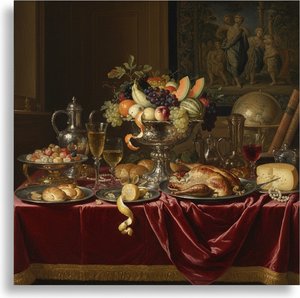
The world of still life painting often evokes images of meticulously arranged tables laden with delicacies – a testament to the opulence and abundance of 17th-century Dutch society. Yet, within this genre lies a profound depth, a subtle poetry in capturing the fleeting beauty of nature’s bounty. Jan van Huysum's “Fruit and Flowers,” painted around 1720, isn’t merely a depiction of a collection; it’s an immersive experience, a meticulously crafted illusion that invites the viewer to step into a world brimming with color, texture, and symbolic resonance. This particular piece, housed within the Wallace Collection in London, stands as a remarkable example of the artist's mastery – a testament to his dedication to realism and his profound understanding of light, form, and the very essence of beauty.
The Art of Illusion: Technique and Style
Van Huysum’s technique is nothing short of astonishing. He employed a masterful layering of thin glazes of oil paint, building up color and luminosity with painstaking precision. This approach, characteristic of the Dutch Golden Age, allowed him to achieve an unparalleled level of detail – from the velvety skin of a peach to the delicate veins of a leaf. Notice how he renders the textures: the smooth sheen of polished surfaces like the peaches contrasts sharply with the rougher bark of branches and the intricate details of foliage. The use of directional lighting, originating from an unseen source above and slightly to the left, dramatically enhances the three-dimensionality of the objects, casting deep shadows that add depth and realism. The composition itself is a carefully orchestrated dance of overlapping elements, creating a sense of overflowing richness and inviting the eye to explore every corner of the arrangement.
A Symphony of Symbolism: Fruit, Flowers, and Cherubs
Beyond its technical brilliance, “Fruit and Flowers” is rich in symbolic meaning. The abundance of fruit – grapes, peaches, pumpkins – speaks directly to themes of prosperity, fertility, and the bounty of nature. The inclusion of flowers like poppies and lilies further amplifies this symbolism, each carrying its own specific associations: poppies representing beauty and passion, lilies symbolizing purity and innocence. But perhaps the most intriguing element is the subtle presence of a small cherub figure nestled amongst the arrangement. This detail, a nod to classical allusion, adds a layer of narrative complexity, hinting at themes of grace, harmony, and the connection between humanity and the natural world. The butterflies fluttering around the composition contribute to the overall sense of movement and vitality, suggesting the ephemeral nature of beauty itself.
A Legacy of Blossoms: Context and Artistic Influence
Jan van Huysum’s artistic lineage is deeply rooted in his family's legacy. His father, Justus van Huysum the Elder, was a respected flower painter, and his brothers, Jacob and Michiel, followed suit, establishing a tradition of botanical illustration that flourished within the Dutch Golden Age. Van Huysum himself wasn’t initially drawn to floral subjects; he experimented with landscapes early in his career. However, he quickly discovered his true calling in still life, mastering the art of rendering nature with breathtaking realism and an almost obsessive attention to detail. His work reflects a deep appreciation for the natural world, combined with a sophisticated understanding of artistic technique – a potent combination that cemented his place as one of the most celebrated flower painters of his time. The influence of artists like Caravaggio, known for his dramatic use of light and shadow, is subtly evident in Van Huysum’s compositions, adding to the overall sense of drama and intensity.
Today, reproductions of “Fruit and Flowers” offer a remarkable opportunity to bring this exquisite masterpiece into your home or office. Each hand-painted rendition captures the essence of Van Huysum's original work, faithfully recreating his meticulous detail, vibrant colors, and evocative atmosphere. It’s more than just a painting; it’s a window into a bygone era – a celebration of beauty, abundance, and the enduring power of art.
Perguntas e Respostas
Qual é a cor predominante de "Fruit and Flowers", de Jan Van Huysum?
Espresso (#63574a) é a cor predominante de "Fruit and Flowers", de Jan Van Huysum.
Que sensação as cores de "Fruit and Flowers", de Jan Van Huysum transmitem?
A paleta Earthy de "Fruit and Flowers", de Jan Van Huysum harmoniza-se com seu tom emocional Reflective. A cor é uma das formas pelas quais uma obra transmite sentimento.
A que período da carreira de Jan Van Huysum pertence "Fruit and Flowers"?
Dentro da trajetória de Jan Van Huysum, "Fruit and Flowers" pertence ao período Mature Period. Esta fase permite compará-la com outras obras do artista.
Biografia do Artista
Jan van Huysum: Um Legado de Flores e Ilusão
Jan van Huysum, um nome que evoca a beleza requintada das naturezas-mortas florais da Idade de Ouro Holandesa, nasceu em Amsterdã em 15 de abril de 1682. Ele não era apenas um pintor de flores; era um mestre da ilusão, capaz de render pétalas e gotas com um realismo tão deslumbrante que os espectadores sentiam quase que podiam sentir seu perfume. Nascido em uma família artística – seu pai, Justus van Huysum, o Velho, também era um respeitado pintor de flores, e seus irmãos Jacob e Michiel seguiram seus passos – o caminho de Jan parecia predeterminado. No entanto, ele não foi imediatamente atraído por assuntos florais. No início de sua carreira, experimentou com paisagens, descritas como “convencionais e arcádicas”, mas foi no delicado mundo da natureza-morta que seu verdadeiro gênio floresceu.
A base da educação artística de Van Huysum foi lançada por seu pai, uma experiência formativa que lhe incutiu não apenas habilidade técnica, mas também uma compreensão do mercado de arte. Amsterdã, durante esse período, prosperava como um centro de comércio e cultura, fomentando a demanda por pinturas luxuosas e decorativas, como aquelas que retratavam arranjos florais opulentos. Esse ambiente moldou sua abordagem; ele não estava simplesmente replicando a natureza, mas criando visões idealizadas de beleza destinadas a deleitar e impressionar. Sua primeira obra datada, concluída em 1717 e agora residindo no Louvre, já revela uma maturidade notável e atenção aos detalhes, prenunciando a maestria que estava por vir.
A Arte do Detalhe: Técnica e Estilo
O que realmente distingue Van Huysum é sua técnica incomparável. Ele empregava pinceladas suaves e brilhantes, construindo camadas de tinta para criar uma superfície quase esmaltada que realçava a riqueza e a vivacidade de suas cores. Mas não era apenas sobre cor; era sobre luz – a maneira como ela brincava nas pétalas, iluminava as gotas d'água agarradas às folhas e criava uma sensação de profundidade e volume. Ele possuía um olhar extraordinário para o detalhe, capturando meticulosamente as texturas de cada flor, fruta e folha com precisão surpreendente. Circulavam histórias de que ele conseguia pintar detalhes como formigas e gotas de orvalho tão realisticamente que eram visíveis sem ampliação – um testemunho de sua dedicação e habilidade.
As composições de Van Huysum são caracterizadas por uma elegância refinada e equilíbrio. Ao contrário de alguns de seus contemporâneos que favoreciam arranjos lotados e transbordantes, ele consistentemente evitava o desequilíbrio ou a sobrecomposição. Seus trabalhos posteriores tornaram-se mais elaborados, certamente, mas sempre mantiveram um senso de harmonia e graça. Ele frequentemente incorporava elementos de fantasia em seu trabalho, particularmente em suas paisagens que apresentavam cenas imaginárias com detalhes arquitetônicos clássicos e árvores imóveis. Essas não eram tentativas de precisão topográfica, mas sim cenários evocativos projetados para mostrar a beleza das flores que continham.
Uma Reputação Crescente: Obras Principais e Legado
Ao longo de sua vida, Jan van Huysum desfrutou de considerável aclamação e sucesso financeiro. Suas pinturas eram muito procuradas por colecionadores, e ele comandava preços elevados por seu trabalho. Hoje, seus mestres podem ser encontrados em museus prestigiados ao redor do mundo, incluindo o Louvre em Paris, a Galeria Nacional em Londres e coleções em Berlim e Amsterdã. Entre suas obras mais celebradas estão Vaso de Terracota com Flores e Frutas, um deslumbrante display de cor e textura; Flores e Frutas, mostrando sua maestria da composição; e Buquê de Flores em uma Urna, um testemunho de sua capacidade de capturar a beleza efêmera da natureza.
A influência de Van Huysum se estendeu além de seu próprio tempo, inspirando gerações de artistas. Pintores como Jan van Os e Johannes de Bosch demonstram claramente seu impacto nas tradições posteriores de naturezas-mortas florais. Ele representa o auge da pintura holandesa da Idade de Ouro, um período definido por sua observação meticulosa da natureza e sua celebração da beleza. Seu legado não é apenas sobre as inúmeras pinturas que criou, mas também sobre o apelo duradouro de seu estilo – um estilo que continua a inspirar artistas e cativar públicos hoje. Seu trabalho permanece um lembrete poderoso da arte e da habilidade necessárias para transformar momentos fugazes de beleza natural em obras de arte atemporais.
Conexões Familiares & Linhagem Artística
- Justus van Huysum, o Velho (1659–1716): O pai de Jan, um pintor prolífico de peças florais e esquemas decorativos.
- Jacob van Huysum (1688–1740): Um irmão de Jan, também um artista notável especializado em ilustrações botânicas.
- Justus van Huysum, o Jovem (1685-1707): Outro dos irmãos de Jan que se dedicou à pintura, mas morreu jovem.
- Michiel van Huysum (1703–1777): Um meio-irmão, também pintor de flores.
- Francina Margaretha van Huysum: A filha de Jan, que o ajudou em seu trabalho e ela mesma era uma pintora floral habilidosa.
A família Van Huysum representa uma notável linhagem artística, contribuindo significativamente para a rica tapeçaria da pintura holandesa da Idade de Ouro. No entanto, Jan se destaca como o membro mais celebrado, deixando uma marca indelével na história da arte com suas obras-primas florais requintadas e duradouras.

Jan Van Huysum
1682 - 1749 , Países Baixos
Dados Rápidos
- Artistas Influenciados:
- Jan van Os
- Johannes de Bosch
- Artistas Que Influenciaram: ['Justus van Huysum']
- Data De Falecimento: 8 de fevereiro de 1749
- Data De Nascimento: 15 de abril de 1682
- Local De Nascimento: Amsterdã, Países Baixos
- Movimento Artístico: Barroco e Rococó
- Nacionalidade: Neerlandês
- Nome Completo: Jan van Huysum
- Obras Notáveis:
- Vaso Terracota com Flores
- Flores e Frutas
- Buquê em Urna
Artigos Relacionados

A Era de Ouro Holandesa: 10 Mestras-Obras Imperdíveis para Decorar com Arte
Descubra as 10 obras-primas da Era de Ouro Holandesa! Explore a história, técnica e beleza atemporal de Rembrandt, Vermeer e outros mestres. Encontre reproduções de arte exclusivas para decorar sua casa com elegância em OriginalUniqueArt.com.

Golden Light & Dutch Skies: The Timeless Magic of Dutch Golden Age Landscapes
Discover the breathtaking beauty of Dutch Golden Age landscapes. Explore the mastery of light, chiaroscuro, and 17th-century realism through an expert art history lens, celebrating the enduring legacy of the Dutch Masters for discerning collectors and art lovers.
Abraham Hendricksz van Beyeren: Pioneering Dutch Still Life & the Banquet Tradition
Explore the captivating world of Dutch Golden Age still life with Abraham van Beyeren. Discover his innovative techniques, symbolic banquet scenes & lasting influence on art history. Learn about collecting these masterpieces.

Rembrandt van Rijn: As 25 Obras-Primas que Definem um Mestre da Luz e Sombra | OriginalUniqueArt
Descubra as 25 obras-primas de Rembrandt van Rijn, o mestre da luz e sombra! Explore a história por trás de 'A Ronda Noturna', seus auto-retratos e muito mais. Encontre reproduções de arte exclusivas para decorar sua casa com OriginalUniqueArt.com.

Jan Jansz Wijnants: A Study in Dutch Golden Age Still Life & Floral Transience
Explore the captivating world of Jan Wijnants and Dutch Golden Age still life painting. Discover symbolism, masterful techniques & lasting influence on floral art history. Learn more!
