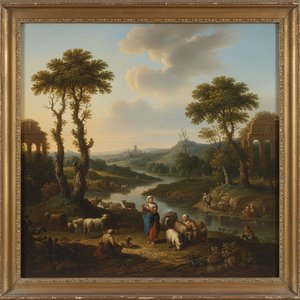
Jan Miel: A Ponte entre o Realismo Holandês e a Grandiosidade Barroca
Jan Miel (1599–1663) ergue-se como uma figura fundamental no cenário artístico do século XVII, personificando a fascinante confluência entre a tradição flamenga e a inovação italiana. Nascido em Beveren, na Bélgica — embora Antuérpia e 's-Hertogenbosch permaneçam como possíveis locais de seu nascimento — os primeiros anos de vida de Miel permanecem envoltos em uma relativa obscuridade, deixando detalhes biográficos escassos. No entanto, o que emerge das pesquisas acadêmicas é uma jornada artística notável, marcada por uma evolução estilística e esforços colaborativos que consolidaram seu lugar no vibrante meio cultural de Roma e Turim.
Seus anos formativos foram dedicados ao aperfeiçoamento de seu ofício, principalmente em Antuérpia, onde absorveu as influências de proeminentes mestres flamengos como Anthony van Dyck. Embora o alcance preciso de seu treinamento permaneça incerto, ele sem dúvida instilou nele um apreço pela observação meticulosa e por uma técnica refinada — qualidades que caracterizariam grande parte de sua obra subsequente. Essa base fundamental no desenho clássico e na retratística forneceu o conjunto de ferramentas essencial para uma carreira que, eventualmente, transcenderia as fronteiras regionais.
A Transformação Romana e o Espírito Bamboccianti
A chegada de Miel a Roma, por volta de 1636, sinalizou um momento transformador em sua trajetória artística. Ele rapidamente se juntou aos Bentvueghels, uma influente associação de artistas holandeses e flamengos residentes na Cidade Eterna. Dentro desta irmandade, ele adotou o memorável apelido de ‘bieco’, um monônimo que refletia seu olhar distintivo e semicerrado — uma característica que se tornaria sinônima de sua persona artística. Esta afiliação promoveu conexões profundas dentro de uma comunidade artística mais ampla, profundamente impactada pelo estilo Bamboccianti de Pieter van Laer.
Este movimento dedicava-se a retratar cenas da vida cotidiana entre as classes baixas em Roma e seus arredores, evitando a grandeza idealizada da arte do Alto Renascimento em favor de algo muito mais visceral e imediato. Miel abraçou essa tendência de todo o coração, produzindo pinturas de gênero cativantes que capturavam o espírito da existência urbana com um realismo e uma sensibilidade notáveis. Suas obras frequentemente apresentavam:
- Cenas de rua vivas, povoadas por viajantes, mercadores e trabalhadores.
- Um uso magistral da luz para evocar a atmosfera empoeirada e ensolarada dos becos romanos.
- O jogo sutil da emoção humana dentro de cenários lotados e caóticos.
- Uma atenção meticulosa às texturas de tecidos, pedras e terra.
Evolução rumo ao Classicismo e à Grandiosidade Palaciana
À medida que sua carreira progredia, a visão artística de Miel passou por uma metamorfose significativa. Embora tenha permanecido um mestre das cenas de gênero, ele começou a se afastar do realismo cru dos Bamboccianti em direção a pinturas históricas mais classicistas. Essa mudança refletia uma tendência mais ampla na arte europeia, onde a energia bruta do Barroco era cada vez mais temperada por um desejo de ordem, nobreza e alegoria clássica.
Esta evolução eventualmente o conduziu a nomeações prestigiosas, sendo a mais notável o serviço como artista da corte de Carlos Emanuel II, Duque de Saboia. A serviço da corte de Turim, o trabalho de Miel assumiu um caráter mais formal e magnífico. A intimidade de suas cenas romanas anteriores deu lugar a composições de maior escala e complexidade, projetadas para refletir o poder e o prestígio de seu patrono real. Este período representa o ápice de sua realização profissional, onde suas raízes flamengas no detalhe encontraram as narrativas grandiosas e abrangentes exigidas pela aristocracia europeia.
A importância histórica de Jan Miel reside em sua habilidade de navegar por esses mundos díspares. Ele foi um artista capaz de encontrar beleza nas lutas humildes de um menino de rua romano e dignidade nos contos épicos da antiguidade. Ao construir uma ponte entre o realismo meticuloso do Norte e o classicismo dramático do Sul, Miel deixou uma marca indelével no cânone do século XVII, garantindo seu legado como um verdadeiro cosmopolita da era Barroca.

 Alternar para Impressão
 Ler mais







































 Para obras de arte ou reproduções com mais de 105 cm (aproximadamente 41 polegadas) em qualquer um dos lados, a moldura será enviada como um kit desmontado. Este método garante uma entrega segura e evita danos durante o transporte.


 Visualizar na parede
 Compartilhar
 Compartilhar
 Detalhes
 Guia
Guia

 Baixar imagem
 Semelhantes
 Raio X
 Ver diaporama
 Perguntas e Respostas
 Estatísticas