
 Visualizar na parede
 Compartilhar
 Compartilhar
 Detalhes
 Guia
Guia

 Baixar imagem
 Semelhantes
 Raio X
 Ver diaporama
 Perguntas e Respostas
 Estatísticas
Copernicus in the tower at Frombork, or Conversations with God

- 221.0 x 315.0 cm


 Ler mais
Giclée / Impressão de Arte
Impressão giclée ou em tela de qualidade de museu, com produção rápida e opções flexíveis de acabamento. ( Comprar pintura feita à mão Alternar para Imagem Digital)




P118B €10

P118H €10

P118W €10

P438Z €10

P508JH €12

P508YH €12

P805H €10

P805Z €10

P919BZ €10

P919G €10

P919XJ €10

P959ZH €10

P968JZ €12

W106C €8

W218G €10

W218JH €8

W218Y €10

W307PJ €10

W316G €10

W316PJ €8

W316Y €10

W398PJ €8

W4111J €10

W500HY €15

W500JH €15

W692G €12

W849H €8

W940BG €15

W953PJ €8




Escolha entre os nossos tamanhos pré-definidos que respeitam as proporções originais da obra de arte.

Insira a largura e a altura desejadas para se ajustarem à sua moldura ou parede. Uma impressão pode ser apenas cortada, nunca ampliada além da imagem original; portanto, um tamanho com proporções diferentes resultará na perda de parte da imagem. Enviamos uma maquete digital para sua aprovação antes de realizarmos a impressão. A imagem exibida nesta página não mostra o corte real — apenas a maquete o faz.
Entrega mundial () em 2 semanas, em vez das 4/5 semanas padrão. (9 Novembro)

Envio expresso gratuito para todo o mundo

Tela de Linho de Alta Qualidade

Seguro de transporte completo

Garantia de Reembolso de Impostos Alfandegários

Garantia de Fidelidade Cromática

Política de Devolução em 100 Dias (Apenas para Defeitos)

Garantia de reembolso de 100%

Oferta de desconto por quantidade
 A opção de vidro está disponível apenas para tamanhos inferiores a 110 cm

Copernicus in the tower at Frombork, or Conversations with God
Giclée / Impressão de Arte
Tamanho da Reprodução
-


Preço Total
€ 72
The Visionary Canvas: Jan Matejko’s “Copernicus in the Tower at Frombork”
Jan Matejko's "Copernicus in the Tower at Frombork, or Conversations with God" isn’t merely a painting; it’s a potent distillation of intellectual fervor and spiritual contemplation. Completed in 1873, this monumental oil on canvas transports us to the heart of Renaissance Poland, capturing a pivotal moment not just in astronomical history but also in the nation's burgeoning sense of self-awareness. The scene unfolds within the austere yet majestic confines of Frombork Cathedral’s tower, a location imbued with both religious significance and scientific curiosity – a perfect embodiment of the painting’s central theme: the harmonious intersection of faith and reason.

A Masterpiece of Romantic Drama
Matejko, a towering figure in 19th-century Polish art, masterfully employs the tenets of Romanticism to elevate this historical subject. The painting pulsates with dramatic lighting – a chiaroscuro effect that sculpts the figures and emphasizes the solemnity of the scene. The deep blues and purples of the night sky contrast sharply with the warm hues of Copernicus’s study, creating a visual tension that mirrors the intellectual struggle he embodies. Notice how Matejko uses loose brushstrokes to convey movement and emotion, imbuing the composition with a sense of dynamism rarely found in earlier historical paintings. The figures are rendered with an almost theatrical intensity, their gestures and expressions conveying profound thought and perhaps even a touch of awe.
The Anatomy of Inquiry: Symbolism and Detail
Beyond its dramatic impact, “Copernicus” is rich in symbolic detail. Nicolaus Copernicus himself, depicted as a man of quiet contemplation, sits at his desk surrounded by the tools of his trade – astronomical instruments, charts, and open books. The globe, prominently displayed, speaks to his revolutionary heliocentric model of the universe, challenging the established geocentric view. A partially visible diagram of the solar system hints at the complex calculations he undertook. The inclusion of a skullcap suggests the weight of religious tradition alongside the pursuit of scientific truth. Even the brick wall in the background serves as a grounding element, anchoring the scene within the physical reality of Frombork and reminding us of the earthly context of this extraordinary intellectual journey.
A Legacy Forged in Faith and Reason
The painting’s creation coincided with the 400th anniversary of Copernicus' birth, a moment of national pride for Poland. Matejko’s decision to portray Copernicus not as a triumphant discoverer but as a man engaged in dialogue with something greater than himself—perhaps even God—resonates deeply within Polish cultural identity. The painting became a symbol of the nation’s intellectual and spiritual heritage, embodying the spirit of inquiry and the courage to challenge established dogma. Its eventual acquisition by the Jagiellonian University – a bastion of learning since the 14th century – underscores its enduring significance as a testament to the power of human intellect and the pursuit of knowledge. Today, this magnificent work continues to inspire contemplation on the relationship between science, faith, and the boundless mysteries of the universe.
Perguntas e Respostas
Posso ver "Copernicus in the tower at Frombork, or Conversations with God", de Jan Matejko na minha própria parede antes de comprar?
A página de Prévia em RA de "Copernicus in the tower at Frombork, or Conversations with God", de Jan Matejko utiliza realidade aumentada para mostrar a obra em seu próprio espaço, através de um dispositivo compatível.
Quem criou "Copernicus in the tower at Frombork, or Conversations with God" e em que ano?
"Copernicus in the tower at Frombork, or Conversations with God" foi criado por Jan Matejko em 1872.
Onde posso encontrar um guia sobre "Copernicus in the tower at Frombork, or Conversations with God"?
O guia para "Copernicus in the tower at Frombork, or Conversations with God" é a página de Ficha informativa da obra — uma ficha informativa imprimível que apresenta a obra com sua legenda, autoria e tabela de identificação (artista, datas, técnica, tamanho original, coleção).
Biografia do Artista
early life and education
Jan Alojzy Matejko, a name synonymous with Polish historical painting, was born on June 24th, 1838, in the heart of Kraków, Poland – a city steeped in history and brimming with artistic fervor. His father, Franciszek Ksawery Matejko, a Czech by birth, served as a tutor and music teacher, initially working for the Wodzicki family in Kościelniki before establishing himself in Kraków. This lineage exposed young Jan to both Polish and Czech cultural influences, shaping his early worldview. Jan’s childhood was profoundly marked by two pivotal events: the Kraków Revolution of 1846 and the subsequent Austrian siege of Kraków in 1848. These experiences, witnessing firsthand the struggles for national identity and independence, would become recurring themes throughout his artistic career, imbuing his works with a deep sense of patriotism and historical resonance. Matejko’s formal education began at St. Ann's High School, but he found it challenging to keep pace with the rigorous curriculum, ultimately dropping out in 1851. Despite this setback, his innate artistic talent shone brightly from an early age, a gift that would eventually lead him to the prestigious School of Fine Arts in Kraków. There, under the tutelage of esteemed masters like Wojciech Korneli Stattler and Władysław Łuszczkiewicz, he honed his skills specializing in historical painting – a genre that would become his lifelong passion.artistic career
Matejko’s artistic journey truly began to blossom with the completion of *Tsars Shuyski before Zygmunt III* in 1853, a monumental work that immediately established him as a rising star within the Kraków art scene. He quickly gained recognition for his ability to capture dramatic historical moments with remarkable detail and emotional intensity. His early exhibitions at the Kraków Society of Friends of Fine Arts showcased a growing mastery of composition, color, and narrative – elements he would continue to refine throughout his prolific career. Notable among his achievements are *Rejtan* (1866), a powerful depiction of a pivotal moment in Polish history; *Union of Lublin* (1869), a complex and meticulously rendered portrayal of the political unification of Poland; and, perhaps most famously, *Battle of Grunwald* (1878). This last masterpiece stands as a testament to Matejko’s extraordinary skill in conveying the chaos, heroism, and strategic brilliance of battle – an event that remains deeply ingrained in Polish national identity. Each painting wasn't merely a historical record; it was a carefully constructed narrative designed to evoke patriotism and inspire a sense of national pride.museological contributions and legacy
Beyond his artistic output, Jan Matejko played a significant role in shaping the cultural landscape of Kraków. He eventually assumed the position of director at the Jan Matejko Academy of Fine Arts (formerly known as the Kraków Academy of Fine Arts), an institution he profoundly influenced during his tenure. His leadership fostered a vibrant environment for artistic development, attracting and nurturing a cohort of talented students who would go on to become prominent figures in Polish art – including Maurycy Gottlieb, Jacek Malczewski, Józef Mehoffer, and Stanisław Wyspiański. These artists, deeply influenced by Matejko’s approach to historical painting, carried forward his legacy, ensuring that his artistic vision continued to resonate throughout the 20th century. Matejko's dedication extended beyond the classroom; he actively participated in civic life, contributing to the preservation and promotion of Polish cultural heritage.notable works available on OriginalUniqueArt
- Jan Matejko: Varna (romanticism) – A vibrant depiction of a scene from the Russo-Turkish War, showcasing Matejko’s masterful use of color and light to capture the drama of battle.
- Jan Matejko: Still Life (romanticism) – An intimate portrayal of everyday objects, demonstrating Matejko's versatility and his ability to convey emotion through seemingly simple subjects.
- Jan Matejko: The Union of Lublin (298 x 512 cm, romanticism, oil on canvas) – A monumental work that meticulously recreates the historic event of the union between Poland and Lithuania, a pivotal moment in Polish history. This painting is particularly notable for its scale and intricate detail.

Jan Matejko
1838 - 1893 , Polónia
Dados Rápidos
- Artistic Movement Or Style: Romantismo
- Artists Or Movements Influenced By This Artist: ['Maurycy Gottlieb']
- Artists Who Influenced This Artist:
- Wojciech Korneli Stattler
- Władysław Łuszczkiewicz
- Date Of Birth: 24 de junho de 1838
- Date Of Death: 1 de novembro de 1893
- Full Name: Jan Alojzy Matejko
- Nationality: Polaco
- Notable Artworks:
- Batalha de Grunwald
- União de Lublin
- Place Of Birth: Cracóvia, Polônia
Artigos Relacionados

The Enduring Legacy of Oil on Canvas: Technique, History & Aesthetic Impact
Explore the rich history & techniques of oil painting – from Renaissance masters to Impressionism. Discover pigments, layering methods, and why this timeless medium endures. Expert insights for artists & art enthusiasts.

O Legado Duradouro da Pintura a Óleo sobre Tela: Técnica, História e Prática Contemporânea
Explore a história e as técnicas da pintura a óleo com especialistas. Descubra os mestres, materiais essenciais e o futuro desta arte atemporal. Reproduções de qualidade museológica.

The Enduring Power of Painting: A Historical & Contemporary Exploration of Form and Emotion
Explore the rich history & enduring techniques of oil painting with OriginalUniqueArt. Discover masterpieces, learn about art collecting, and find authentic handmade reproductions crafted by skilled artists.

Oil on Canvas: A Historical & Technical Exploration of a Timeless Artistic Medium
Explore the rich history & enduring techniques of oil painting on canvas. Discover the science behind its longevity, conservation practices, and contemporary relevance. Expert insights for art enthusiasts.
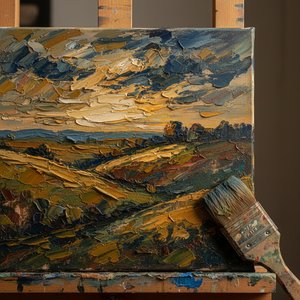
The Timeless Beauty of Oil on Canvas: A Masterclass in Texture, Impasto, and Artistic Mastery
Discover the profound allure of oil on canvas. Explore the mastery of impasto textures, the science of pigment longevity, and expert guides to selecting museum-quality reproductions that elevate your collection with timeless elegance and tactile depth.

