

 Visualizar na parede
 Compartilhar
 Compartilhar
 Detalhes
 Guia
Guia

 Baixar imagem
 Semelhantes
 Raio X
 Ver diaporama
 Estatísticas
Lochside Scene


 Ler mais
Reprodução em Óleo Feita à Mão
Óleo sobre tela pintado à mão no tamanho e moldura de sua escolha, feito sob encomenda pelos nossos artistas. ( Alternar para Impressão Alternar para Imagem Digital)




P118B €10

P118H €10

P118W €10

P438Z €10

P508JH €12

P508YH €12

P805H €10

P805Z €10

P919BZ €10

P919G €10

P919XJ €10

P959ZH €10

P968JZ €12

W106C €8

W218G €10

W218JH €8

W218Y €10

W307PJ €10

W316G €10

W316PJ €8

W316Y €10

W398PJ €8

W4111J €10

W500HY €15

W500JH €15

W692G €12

W849H €8

W940BG €15

W953PJ €8




Escolha entre os nossos tamanhos pré-definidos que respeitam as proporções originais da obra de arte.

Insira a largura e a altura desejadas para se ajustarem à sua moldura ou parede. Como esta obra é pintada à mão, para um tamanho com proporções diferentes, o artista poderá pintar um pouco mais ao redor da imagem ou reduzir ligeiramente a composição — você escolhe. Enviamos uma maquete digital para sua aprovação antes de iniciar a pintura. A imagem exibida nesta página não representa o resultado real — apenas a maquete mostra o resultado final.
Após o pedido, a equipa OriginalUniqueArt.com enviará um e-mail ao cliente para solicitar instruções e fornecer uma prévia do esboço.
Entrega mundial () em 3 a 4 semanas, em vez das 5 semanas padrão. (28 Outubro). Sem comprometer a qualidade.

Envio expresso gratuito para todo o mundo

Tela de Linho de Alta Qualidade

Seguro de transporte completo

Garantia de Reembolso de Impostos Alfandegários

Garantia de Fidelidade Cromática

Política de Devolução em 100 Dias (Apenas para Defeitos)

Garantia de reembolso de 100%

Oferta de desconto por quantidade
 A opção de vidro está disponível apenas para tamanhos inferiores a 110 cm

Lochside Scene
Técnica de Reprodução
Tamanho da Reprodução
-


Preço Total
€ 264
A Moment of Highland Grace: James William Giles’s “Lochside Scene”
James William Giles' "Lochside Scene," painted in 1838, isn’t merely a depiction of a Scottish landscape; it’s a carefully constructed tableau brimming with the quiet dignity and understated beauty characteristic of the artist’s oeuvre. The scene unfolds along the shores of a loch – likely Loch Lomond or a similar expanse of water – where two figures stand poised on the bank, seemingly lost in contemplation beneath the fading light of a sunset. This isn't a dramatic vista of towering mountains or violent storms; instead, Giles offers us a serene moment, a pocket of tranquility captured with remarkable precision and imbued with a palpable sense of melancholy and reflection.
Giles, born in Aberdeen in 1801, was deeply rooted in the artistic traditions of his region. His early training, largely self-directed within the domestic sphere under his father’s guidance, instilled a profound understanding of light, shadow, and the subtle nuances of color – skills he would later hone through commissions for royalty and aristocratic patrons. His work frequently draws upon the dramatic landscapes of northern Scotland, but it's in this particular piece that we see a shift towards a more intimate and contemplative style. The figures themselves are deliberately indistinct, their faces obscured by the gathering dusk, inviting the viewer to project their own emotions and experiences onto the scene.
The Language of Light and Color
Giles’s technique is characterized by a meticulous attention to detail and an almost photographic realism. He employs a restrained palette – predominantly muted blues, greens, and browns – that perfectly captures the atmospheric conditions of twilight. The light isn't aggressively bright; rather, it’s diffused and softened, creating a sense of gentle melancholy. Notice how he builds up layers of color with delicate brushstrokes, suggesting texture in the water, the foliage, and even the clothing of the figures. The use of chiaroscuro – the dramatic contrast between light and dark – is particularly effective in highlighting the forms and adding depth to the composition. The subtle gradations of tone create a sense of movement and atmosphere, as if the scene is slowly dissolving into the approaching night.
Furthermore, Giles’s mastery lies in his ability to evoke mood through color. The dominant blues and greens speak to the vastness and mystery of the loch, while the warm hues of the setting sun hint at a fleeting moment of beauty before darkness descends. The overall effect is one of quiet contemplation – an invitation to pause and appreciate the simple pleasures of nature.
Symbolism and Context
“Lochside Scene” was painted during a period of significant social and political change in Scotland, following the Highland Clearances and the rise of industrialization. While seemingly a straightforward landscape, the painting can be interpreted as a reflection on themes of loss, memory, and the passage of time. The indistinct figures suggest a sense of isolation and loneliness – perhaps representing individuals grappling with the uncertainties of their era. It’s also worth noting that Giles was commissioned by prominent Scottish families, including the Earl of Aberdeen, suggesting an interest in documenting and celebrating the beauty of his homeland.
The inclusion of the dog, partially obscured in the background, adds another layer of intrigue. Dogs were often associated with loyalty, companionship, and a connection to the natural world – elements that resonated deeply with the Scottish identity. It’s possible that Giles intended the animal to symbolize a bond between the figures or perhaps a longing for simpler times.
A Legacy in Reproduction
Today, “Lochside Scene” is readily available as a high-quality reproduction, allowing art lovers and interior designers alike to bring this evocative landscape into their homes. The meticulous detail and atmospheric quality of the original are faithfully reproduced, capturing the essence of Giles’s artistic vision. Whether adorning a study or a living room, this painting offers a timeless reminder of the beauty and tranquility of the Scottish Highlands – a moment frozen in time, inviting us to contemplate the mysteries of nature and the complexities of human experience.
Perguntas e Respostas
Que paleta e que sentimento "Lochside Scene" evoca?
Em "Lochside Scene", cores de Earthy acompanham um sentimento Tranquil.
Quem é o autor de "Lochside Scene" e a qual movimento pertence?
"Lochside Scene" foi criada por James William Giles no estilo Romanticism. O artista e o movimento identificam a tradição da obra.
Onde posso comprar uma impressão de "Lochside Scene", de James William Giles?
"Lochside Scene" está disponível como uma impressão fine art em tela de algodão ou papel canvas de arquivo. Os pedidos podem ser feitos na página de Impressão Fine Art, no tamanho de sua escolha.
Biografia do Artista
A Life Etched in Light: The Story of James William Giles
James William Giles, born in Glasgow in 1801 amidst the bustling textile industry, embarked on an artistic journey far removed from the grand halls of established academies. His formative years were shaped not by formal instruction alone, but by a profound connection to his father, a talented designer and artist who instilled within young James a deep appreciation for visual expression – a seed that blossomed with remarkable speed. This idyllic beginning, however, was tragically disrupted when his father abandoned the family, thrusting upon him the weighty responsibility of supporting his mother and sister. This early hardship forged not only resilience but also an unwavering dedication to honing his artistic talent. Even at the tender age of thirteen, James found solace and sustenance in art, meticulously decorating snuffbox lids with delicate portraits – miniature works that hinted at a skill far exceeding his years. These early commissions, coupled with teaching opportunities secured after relocating to Aberdeen around 1805, provided him with the means to care for his loved ones while simultaneously refining his craft. Formal training at the Aberdeen Art School offered foundational knowledge, yet it was an insatiable curiosity and a desire to explore beyond Scotland’s borders that propelled him towards London in 1823, seeking initial instruction, and subsequently to Paris to study under the esteemed Jean François Regnault.The Italian Awakening and Artistic Development
A pivotal year unfolded between 1824 and 1825 as Giles embarked on a transformative journey through Italy – a sojourn that transcended mere geographical relocation; it was an immersion into the very heart of artistic heritage, a dialogue with the masters of antiquity. He dedicated himself to meticulously copying forty masterpieces, works he later exhibited in Oxford – a testament to their enduring quality and his unwavering commitment to mastering technique. More profoundly, Italy gifted him with something intangible: an understanding of light unlike any he had previously encountered. The radiant Mediterranean sun, casting its golden hues upon ancient ruins, the subtle nuances of shadow dancing across weathered stone—these elements seeped into his artistic consciousness, becoming defining characteristics of his mature style. He studied the techniques of Venetian painters, absorbing their mastery of color and composition, while also drawing inspiration from the dramatic landscapes of the Tuscan countryside. This period marked a significant shift in Giles’s artistic sensibilities, moving him away from purely representational painting towards a more expressive and atmospheric approach. Upon his return to Scotland, he initially focused on portraiture, capturing the likenesses and character of prominent figures within Aberdeen society – a skill that quickly established him as a respected artist. However, it was his growing fascination with landscape that would ultimately define his legacy, leading him to explore the vast and varied terrains of his homeland.A Master of Atmosphere: Style and Influences
James William Giles carved a unique niche for himself as a painter of classic landscapes imbued with an exceptional sensitivity to atmospheric effects. He wasn’t simply depicting scenes; he was conveying *experiences* – the crisp chill of a Highland storm, the golden warmth of a sunset over rolling hills, the ethereal quality of mist clinging to ancient trees. His sky studies were particularly celebrated for their originality and boldness, demonstrating a keen understanding of meteorological phenomena and an ability to render them with breathtaking realism. The influence of J.M.W. Turner is undeniably present in Giles’s work; he admired Turner's daring use of color and his mastery of atmospheric perspective, incorporating similar techniques into his own compositions. However, Giles wasn’t merely imitating; he was synthesizing these influences with his own distinct vision, creating landscapes that were both dramatic and deeply personal. He possessed a remarkable ability to capture the fleeting moods of nature, translating them onto canvas with an almost palpable sense of immediacy. Beyond the grandeur of sweeping vistas, Giles also revealed a fondness for more intimate scenes – frequently depicting angling scenes – reflecting his lifelong passion for fishing and offering glimpses into the quiet beauty of rural life. His versatility extended beyond painting; he demonstrated considerable skill in landscape architecture, designing public gardens and monuments within Aberdeen, including the striking James McGrigor Monument in Duthie Park, and landscaping estates throughout Aberdeenshire.Royal Favor and Lasting Recognition
Giles’s talent didn't go unnoticed by those in positions of power. He received commissions from Queen Victoria and members of the Scottish aristocracy, a testament to his growing reputation and artistic merit. His views of Balmoral Castle proved particularly significant; they so captivated Queen Victoria and Prince Albert that they were convinced to lease – and later purchase – the estate. Giles played an integral role in shaping the grounds surrounding the castle, assisting with the layout of gardens and parkland, further cementing his connection to the royal family. In 1829, he achieved another milestone: election as an Academician of the Royal Scottish Academy, a prestigious honor that acknowledged his artistic contributions. He was also a founding member of the Aberdeen Artists Society in 1827 alongside Archibald Simpson, demonstrating his commitment to fostering a vibrant artistic community within his hometown. Despite this recognition during his lifetime, Giles’s work fell into relative obscurity after his death in 1870. Perhaps it was due to his decision to remain largely based in Aberdeen rather than seeking the spotlight of London's art scene. However, recent years have witnessed a resurgence of interest in his paintings, fueled by a growing appreciation for his unique style and his significant contribution to Scottish art. James William Giles remains a testament to the power of observation, the beauty of light, and the enduring allure of the Scottish landscape.Legacy and Notable Works
- A Falconer: A captivating example of Giles’s skill in capturing both animal grace and atmospheric detail.
- Figures By A Palace: Showcasing aristocratic leisure within a grand garden setting, demonstrating his Rococo/Neoclassical influences.
- A Sportsman With Gundogs On A Woodland Path: Reflecting his passion for angling and the beauty of rural life.
- Drawings of Aberdeenshire Castles: Commissioned by Lord Aberdeen, these watercolors reveal a fine impression of Scottish architecture.

James William Giles
1801 - 1870 , Reino Unido
Dados Rápidos
- Artistic Movement Or Style: Pintura de paisagem
- Artists Or Movements Influenced By This Artist: ['Escocês']
- Artists Who Influenced This Artist:
- Turner
- Regnault
- Date Of Birth: 1801
- Date Of Death: 1870
- Full Name: James William Giles
- Nationality: Escocês
- Notable Artworks:
- A Falconer
- Figures By A Palace
- Sportsman With Gundogs
- Place Of Birth: Glasgow, Reino Unido
Artigos Relacionados

Os 10 Mestres da Paisagem Romântica: Arte para Inspirar a Sua Casa
Descubra os 10 quadros mais emblemáticos da Paisagem Romântica! Explore a história de Turner, Friedrich e outros mestres. Encontre reproduções de arte exclusivas para inspirar sua decoração em OriginalUniqueArt.com.

James Abbott McNeill Whistler: As 25 Obras-Primas que Definem um Mestre da Arte
Descubra as 25 obras-primas de James Abbott McNeill Whistler, o mestre do Impressionismo e dos 'Nocturnes'. Explore a história por trás de cada pintura, cores e técnicas. Encontre reproduções de arte exclusivas para decorar sua casa com elegância em OriginalUniqueArt.com!

As 25 Obras-Primas de Alfred Munnings: Arte Equina e a Alma Inglesa | OriginalUniqueArt
Descubra as 25 obras-primas de Alfred Munnings, o mestre da pintura equina e da alma inglesa. Explore a história, técnica e beleza atemporal de cada quadro. Reproduções de arte exclusivas em OriginalUniqueArt.com! Explore a coleção online.

James Giles: Capturing Scottish Life Through the Lens of British Realism
Explore the life & work of James Giles (1801-1870), a master of Scottish landscape painting and favored artist of Queen Victoria. Discover his atmospheric realism & royal commissions.
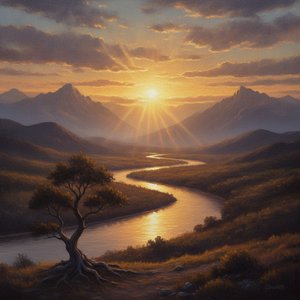
Golden Hour Magic: Capturing the Ethereal Beauty of Sunset Landscapes in Fine Art
Embark on a visual journey through the golden hour. Discover how master painters capture the ethereal glow of sunsets, from Monet's Impressionism to the Hudson River School. Explore timeless techniques and bring the magic of twilight into your home with exquisite fine art reproductions.
