
 Visualizar na parede
 Compartilhar
 Compartilhar
 Detalhes
 Guia
Guia

 Baixar imagem
 Semelhantes
 Raio X
 Ver diaporama
 Perguntas e Respostas
 Estatísticas
Still Life with Fruit


 Ler mais
Giclée / Impressão de Arte
Impressão giclée ou em tela de qualidade de museu, com produção rápida e opções flexíveis de acabamento. ( Comprar pintura feita à mão Alternar para Imagem Digital)




P118B €10

P118H €10

P118W €10

P438Z €10

P508JH €12

P508YH €12

P805H €10

P805Z €10

P919BZ €10

P919G €10

P919XJ €10

P959ZH €10

P968JZ €12

W106C €8

W218G €10

W218JH €8

W218Y €10

W307PJ €10

W316G €10

W316PJ €8

W316Y €10

W398PJ €8

W4111J €10

W500HY €15

W500JH €15

W692G €12

W849H €8

W940BG €15

W953PJ €8




Escolha entre os nossos tamanhos pré-definidos que respeitam as proporções originais da obra de arte.

Insira a largura e a altura desejadas para se ajustarem à sua moldura ou parede. Uma impressão pode ser apenas cortada, nunca ampliada além da imagem original; portanto, um tamanho com proporções diferentes resultará na perda de parte da imagem. Enviamos uma maquete digital para sua aprovação antes de realizarmos a impressão. A imagem exibida nesta página não mostra o corte real — apenas a maquete o faz.
Entrega mundial () em 2 semanas, em vez das 4/5 semanas padrão. (4 Novembro)

Envio expresso gratuito para todo o mundo

Tela de Linho de Alta Qualidade

Seguro de transporte completo

Garantia de Reembolso de Impostos Alfandegários

Garantia de Fidelidade Cromática

Política de Devolução em 100 Dias (Apenas para Defeitos)

Garantia de reembolso de 100%

Oferta de desconto por quantidade
 A opção de vidro está disponível apenas para tamanhos inferiores a 110 cm

Still Life with Fruit
Giclée / Impressão de Arte
Tamanho da Reprodução
-


Preço Total
€ 72
A Symphony of Color and Form: James Peale’s Still Life with Fruit
James Peale's Still Life with Fruit, painted circa 1821, is more than just a depiction of perishable bounty; it’s a meticulously crafted window into the burgeoning aesthetic sensibilities of early America. This remarkable work, now housed within the collections of museums and art institutions worldwide, reveals a masterful blend of Neoclassical restraint and Baroque exuberance – a testament to Peale's artistic versatility and his deep understanding of both European traditions and the evolving American visual landscape.
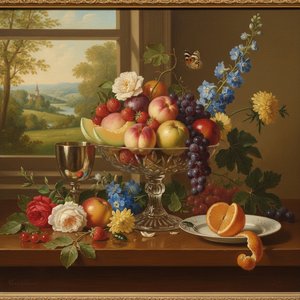
The painting immediately captivates with its rich palette. Deep crimson peaches glow alongside the vibrant yellows of ripe pears, while the verdant greens of grapes and leafy foliage provide a grounding counterpoint. Peale’s technique is characterized by an almost obsessive attention to detail; each fruit is rendered with astonishing realism – the subtle variations in skin texture, the delicate veins tracing across leaves, even the slight imperfections that speak to their natural origins. This commitment to accuracy wasn't merely technical; it reflected a broader fascination with the natural world prevalent during this period, fueled by advancements in scientific observation and botanical illustration.
The Miniature Master’s Grand Vision
While often associated with his exquisite miniature portraits – a genre where Peale truly excelled – Still Life with Fruit demonstrates his ambition to tackle larger-scale works. This shift reflects a growing interest in still life painting within the American art world, influenced by European trends and a desire to elevate the status of decorative arts. Peale’s background as a cabinetmaker undoubtedly informed his approach; he clearly valued craftsmanship and sought to imbue his paintings with a sense of tactile richness. The arrangement of the fruit itself is carefully considered – a deliberate composition designed to draw the eye across the canvas, creating a dynamic visual rhythm.
Interestingly, Peale’s career was punctuated by military service during the American Revolution, an experience that instilled in him a disciplined approach to observation and execution. This dedication translates into the painting's remarkable clarity and precision. The lighting is particularly noteworthy – a dramatic chiaroscuro effect that casts deep shadows and highlights the luminous surfaces of the fruit, adding depth and drama to the scene.
Symbolism and the American Spirit
Beyond its technical merits, Still Life with Fruit carries symbolic weight. Fruit, in this context, represents abundance, prosperity, and the rewards of labor – themes deeply resonant within the developing American identity. The variety of fruits—peaches, pears, grapes—suggests a connection to the land and a celebration of its bounty. It’s a visual affirmation of the nation's potential for growth and success.
Furthermore, the painting can be viewed as an embodiment of Neoclassical ideals – order, balance, and harmony. The carefully arranged composition, the restrained color palette, and the meticulous rendering of detail all contribute to this sense of formal elegance. However, Peale subtly infuses this formality with a touch of Baroque exuberance—the dramatic lighting, the rich colors, and the sheer abundance of fruit create an atmosphere of opulent delight.
A Timeless Appeal
Still Life with Fruit remains a captivating work of art, offering a glimpse into the artistic and cultural landscape of early America. Its meticulous detail, evocative symbolism, and masterful technique continue to resonate with viewers today. Whether admired for its historical significance or simply appreciated for its aesthetic beauty, this painting stands as a testament to James Peale’s artistry and his enduring legacy.
Perguntas e Respostas
De que forma o estilo de "Still Life with Fruit" se relaciona com a época de seu criador?
Em "Still Life with Fruit", de James Peale, o movimento Academic Realism encontra a era Idade Moderna.
Por quais outros nomes James Peale é conhecido(a)?
James Peale também é conhecido pelos nomes Charles Willson Peale, Raphaelle Peale, Rembrandt Peale.
Que harmonia de cores apresenta "Still Life with Fruit", de James Peale?
A harmonia de cores de "Still Life with Fruit" é definida como Strong Color Unity.
Biografia do Artista
Uma Vida Gravada em Miniatura e Quietude
James Peale, nascido na próspera paisagem colonial de Chestertown, Maryland, em 1749, ocupa uma posição fascinante e, muitas vezes, discreta no panteão da arte americana primitiva. Embora tenha sido ofuscado pela renome de seu irmão mais velho, Charles Willson Peale — uma figura fundamental no estabelecimento de uma identidade artística genuinamente americana — James esculpiio uma carreira distinta, marcada por miniaturas delicadas, naturezas-mortas luminosas e uma dedicação silenciosa em capturar a essência de sua era. Sua história de vida é entrelaçada com o legado familiar, o serviço militar e uma busca persistente pelo refinamento artístico. A perda precoce de seu pai impulsionou a família para Annapolis, onde o jovem James iniciou seu aprendizado em ofícios práticos — selaria e marcenaria — experiências que talvez tenham instilado nele um apreço pelo detalhe meticuloso e pelo artesanato, qualidades que mais tarde definiriam sua abordagem artística. Foi com o retorno de Charles de Londres, após estudar sob Benjamin West, que James encontrou sua verdadeira vocação, tornando-se assistente do irmão e embarcando em um caminho de treinamento artístico formal.Do Campo de Batalha à Pincelada
O fervor revolucionário crescente alterou dramaticamente o curso da vida de Peale. Em 1776, ele trocou o pincel pelo mosquete, aceitando uma comissão como alferes no regimento de William Smallwood, dentro do Exército Continental. Este não foi apenas um gesto patriótico; foi um período de experiências intensas que informariam sutilmente seu trabalho posterior. Ele ascendeu rapidamente às patentes de capitão, participando de batalhas cruciais — Long Island, White Plains, Trenton, Brandywine, Germantown, Princeton e Monmouth — testemunhando em primeira mão as dificuldades e o heroísmo da Revolução Americana. Este serviço militar instilou nele não apenas coragem, mas também uma aguda habilidade observacional, uma capacidade de registrar detalhes sob pressão, qualidades que lhe seriam muito úteis na retratística e na natureza-morta. Ao renunciar ao seu posto em 1779, retornou a Filadélfia, reunindo-se ao estúdio de Charles, mas agora possuindo uma perspectiva ampliada, moldada pelas realidades da guerra e da construção da nação. Uma colaboração notável com seu irmão ocorreu em 1788, no design de carros alegóricos para uma grande procissão celebrando a recém-ratificada Constituição dos Estados Unidos — um testemunho do compromisso compartilhado com os ideais da nova república.Um Legado de Destreza Delicada
O desenvolvimento artístico de Peale foi significativamente influenciado pela decisão de seu irmão de abandonar sua prática de retratos em miniatura, permitindo que James se dedicascasse inteiramente a esta exigente forma de arte. Ao longo da década de 1790 e início dos anos 1800, ele tornou-se um mestre da aquarela sobre marfim, criando retratos primorosamente detalhados que capturavam não apenas a semelhança, mas também um senso de personalidade e posição social. Essas miniaturas eram altamente procuradas, refletindo a crescente demanda por representações acessíveis e íntimas dos indivíduos na sociedade americana. No entanto, os talentos de Peale não se limitavam à pintura em miniatura. Ele se destacou em composições de natureza-morta, particularmente aquelas com frutas, demonstrando uma habilidade excepcional em renderizar texturas, luz e forma com um realismo notável. À medida que sua visão começou a declinar por volta de 1810, ele transitou para retratos e naturezas-mortas de maior escala, o que lhe permitiu continuar trabalhando apesar dos desafios da visão diminuída. Suas obras tardias são caracterizadas por uma audácia na execução e um compromisso contínuo com o detalhe meticuloso.Uma Família de Artistas e Influência Duradoura
O legado artístico da família Peale estende-se muito além do próprio James. Ele casou-se com Mary Claypoole em 1782, estabelecendo seu próprio lar e fomentando um ambiente que nutria a criatividade. Notavelmente, três de seus seis filhos — Anna Claypoole Peale, Margaretta Angelica Peale e Sarah Miriam Peale — também se tornaram pintoras talentosas, cada uma especializando-se em gêneros diferentes, mas todas herdando a dedicação do pai à excelência artística. Maria Peale também seguiu a pintura, embora com um reconhecimento menos difundido que o de suas irmãs. Esta constelação familiar de artistas ressalta a importância da mentoria e da transmissão de habilidades nos círculos da arte americana primitiva. A obra de James Peale, embora muitas vezes ofuscada por seu irmão Charles e por suas talentosas filhas, permanece como uma contribuidade significativa para o desenvolvimento da identidade artística americana. Ele capturou um momento crucial da história — o nascimento de uma nação — através de retratos que documentaram seus cidadãos e naturezas-mortas que celebraram a abundância de sua terra. Seu legado reside não apenas na beleza e na habilidade técnica de suas pinturas, mas também na influência duradoura que exerceu sobre gerações de artistas dentro de sua família e além. Ele faleceu em Filadélfia em 1831, deixando para trás um corpo de trabalho que continua a ressoar com os espectadores de hoje.
James Peale
1749 - 1831 , Estados Unidos
Dados Rápidos
- Artistic Movement Or Style: Neoclassical
- Artists Or Movements Influenced By This Artist: ['Charles Willson Peale']
- Artists Who Influenced This Artist: ['Benjamin West']
- Date Of Birth: 1749
- Date Of Death: 1831
- Full Name: James Peale
- Nationality: American
- Notable Artworks:
- Grupo na Escada
- Retrato de James Madison
- Place Of Birth: Chestertown, Maryland
Artigos Relacionados

As 25 Obras-Primas de Alfred Munnings: Arte Equina e a Alma Inglesa | OriginalUniqueArt
Descubra as 25 obras-primas de Alfred Munnings, o mestre da pintura equina e da alma inglesa. Explore a história, técnica e beleza atemporal de cada quadro. Reproduções de arte exclusivas em OriginalUniqueArt.com! Explore a coleção online.

James Abbott McNeill Whistler: As 25 Obras-Primas que Definem um Mestre da Arte
Descubra as 25 obras-primas de James Abbott McNeill Whistler, o mestre do Impressionismo e dos 'Nocturnes'. Explore a história por trás de cada pintura, cores e técnicas. Encontre reproduções de arte exclusivas para decorar sua casa com elegância em OriginalUniqueArt.com!
Severin Roesen: Evoking National Identity Through American Still Life Painting
Explore the captivating world of Severin Roesen, a major American still life painter influenced by Dutch masters. Discover his lush compositions and the symbolism within his art – a window into 19th-century America.

Charles Willson Peale: Portraiture, Enlightenment Ideals & Shaping American Identity
Explore the life & art of Charles Willson Peale – Revolutionary portraitist, scientist, and founder of America’s first museum. Discover his iconic paintings of Washington & the Enlightenment ideals that shaped a nation.
Titian Ramsay Peale II: A Legacy of Botanical Precision & Artistic Innovation
Explore the life & art of Titian Ramsay Peale II, a master of botanical precision and wildlife painting. Discover his legacy bridging art & natural history at OriginalUniqueArt.
