Expressionism
The Bad Doctors (James Ensor)
James Ensor (1860–1949) criou The Bad Doctors. Pertence ao movimento Expressionism. É feito em Oil On Panel. Está conservada no Fin-de-Siècle Museum, em Brussels, Belgium.
- Oil On Panel
- Fin-de-Siècle Museum, Brussels

 Visualizar na parede

 Pintura a Óleo Feita à Mão
 Compartilhar
 Compartilhar
 Ficha técnica


 Baixar imagem
 Semelhantes
 Raio X
 Ver diaporama
 Perguntas e Respostas

 Estatísticas
The Bad Doctors, em resumo
- Título
- The Bad Doctors
- Artista
- James Ensor (1860–1949)
- Artista nascido em
- Oostende, Bélgica
- Técnica
- Oil On Panel
- Onde ver
- Fin-de-Siècle Museum, Brussels, Belgium
- Movimento
- Expressionism
- Período
- 19th Century
- Tema
- doctors, horror, grotesque, time, symbolism, decay
O que The Bad Doctors retrata?
A Descent into Grotesque Symbolism
James Ensor’s The Bad Doctors is far more than a mere depiction of a room; it is a chilling, visceral descent into the depths of societal anxiety. Completed in the late nineteenth century, this masterpiece serves as a darkly satirical panorama, pulling the viewer into a claustrophobic interior that feels less like a physical space and more like a psychological trap. Within this unsettling scene, Ensor orchestrates a collection of distorted figures that seem to emerge from a fever dream, populated by characters that reflect his profound critique of the medical profession and the broader human condition. The composition is intentionally oppressive, with couches and chairs arranged in a way that hems in the viewer, mirroring the suffocating weight of moral decay and corruption that Ensor so masterfully captured.The Visceral Power of Expressionist Technique
To behold this work is to experience the raw power of early Expressionism. Ensor eschews objective reality in favor of a more profound, emotional truth, utilizing thick, palpable brushstrokes that lend a heavy, textural quality to the surface. The artist’s palette is deliberately jarring, dominated by sickly yellows, bruised reds, and murky greens—hues that evoke the very essence of illness and psychological distress. This use of color does not merely decorate the scene; it infects it, creating an atmosphere where decay feels almost tangible. Every stroke contributes to a sense of disorientation, as if the very air within the painting is thick with the scent of mortality and unrest.Symbolism and the Weight of Time
Beyond its striking visual impact, The Bad Doctors is laden with potent symbols that demand deep contemplation. Most haunting are the multiple clocks scattered throughout the room—reminders of time's relentless, indifferent march toward death. A large clock hangs prominently above a physician, acting as a silent witness to the inevitable confrontation with mortality that haunts every figure in the frame. For the discerning collector or interior designer, this piece offers an unparalleled opportunity to introduce a work of immense intellectual and emotional depth into a space. It is a painting that does not merely sit upon a wall; it commands the room, inviting conversation through its complex layers of meaning, from the grotesque masks of identity to the haunting shadows of social critique.Em qual museu se encontra The Bad Doctors?
Fin-de-Siècle Museum
Brussels, Belgium
The Fin-de-Siècle Museum Overview Located at 1, place Royale/Koningsplein in Brussels, Belgium, the Fin-de-Siècle Museum occupies a significant position within the Royal Museums of Fine Arts of Belgium. The institution was inaugurated on 6 December 2013. It is partly housed in the former halls of the Royal Museum of Modern Art, creating a physical connection between different eras of Belgian creative expression.


Imagens em alta resolução de The Bad Doctors

James Ensor, The Bad Doctors, Fin-de-Siècle Museum. Domínio público.
Perguntas sobre The Bad Doctors respondidas
Em qual museu se encontra a obra original de "The Bad Doctors"?
A obra original "The Bad Doctors" pode ser vista no Fin-de-Siècle Museum, Brussels, Belgium.
Qual técnica foi utilizada em "The Bad Doctors", de James Ensor?
A técnica de "The Bad Doctors", de James Ensor é Oil On Panel. As reproduções visam reproduzir a aparência desta técnica.
O que "The Bad Doctors", de James Ensor retrata?
Os temas de "The Bad Doctors" são doctors, horror, grotesque, time, symbolism, decay, medicine.
A imagem de "The Bad Doctors", de James Ensor pode ser reproduzida livremente?
Quanto aos direitos autorais, "The Bad Doctors" está em em domínio público — seus direitos autorais expiraram.
Quem criou "The Bad Doctors"?
"The Bad Doctors" é atribuída a James Ensor.
A qual movimento artístico "The Bad Doctors", de James Ensor pertence?
"The Bad Doctors", de James Ensor pertence ao movimento Expressionism. Este movimento fornece o contexto estilístico da obra.
A que fase da trajetória de James Ensor "The Bad Doctors" pertence?
Dentro da trajetória de James Ensor, "The Bad Doctors" pertence ao período Mature Period. Esta fase permite compará-la com outras obras do artista.
Por que o status de direitos autorais de "The Bad Doctors" é como é?
"The Bad Doctors", de James Ensor está em em domínio público — seus direitos autorais expiraram. O período de direitos autorais conta a partir do falecimento do artista, ocorrido em 1949.
"The Bad Doctors" permaneceu no país de origem do seu artista?
Não – a obra de arte encontra-se no exterior. O país de nascimento de James Ensor é Bélgica, e o museu que detém o original de "The Bad Doctors" está em Belgium.
Sobre o artista, James Ensor

1860–1949, Bélgica
James Ensor
Juventude, Família e Formação Artística James Ensor nasceu em 13 de abril de 1860, em Ostend, na Bélgica. Sua identidade foi moldada por uma intersecção cultural singular: seu pai, James Frederic Ensor, nasceu em Bruxelas, filho de pais ingleses, enquanto sua mãe, Maria Catherina Haegheman, era belga. Essa herança dual proporcionou a base para uma perspectiva que frequentemente se situava fora dos limites estreitos da tradição local. Ao crescer, o artista viveu entre as paredes de uma loja de souvenirs operada por seus pais em Ostend.
Também de James Ensor
 Entrada de Cristo em Bruxelas1888
 Autoportreto com Máscaras1899
 Os Banhos em Ostend
 Esqueletos Aquecendo-se1889

Ensaios sobre The Bad Doctors
 Transmutação Emocional na Arte Visual: Cor, Forma e Textura como Linguagem da AlmaExplore a profunda conexão entre emoção e arte visual. Descubra como cores, forma e textura expressam sentimentos, com análises de Caravagg…
 The Visceral Canvas: A Collector's Guide to the Emotional Power of ExpressionismMaster the emotional depth of Expressionism through expert analysis of color and form. Explore this visceral movement today.
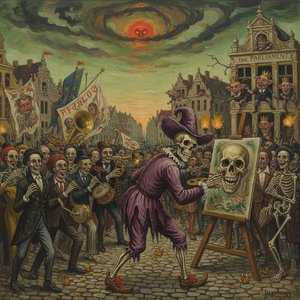 James Ensor's Grotesque Visions: Social Commentary & Artistic InnovationExplore the unsettling yet captivating world of James Ensor, a pioneer of Expressionism. Discover his satirical masterpieces, symbolic imag…