Menu
Text size

() ·

A painting made for you, by hand

Cranes Fleuris

Reprodução em Óleo Feita à Mão

Óleo sobre tela pintado à mão no tamanho e moldura de sua escolha, feito sob encomenda pelos nossos artistas. ( Alternar para Impressão Alternar para Imagem Digital)

Descrição do Item

Biografia do Artista

Descubra James Ensor (1860-1949), pintor belga pioneiro do Expressionismo e Surrealismo. Explore suas cenas perturbadoras de máscaras, carnavais e esqueletos.

from ·

Chapter 1

How large should it be?

Slide to change the size; the picture on the left shows the frame at its real width. The proportions of the original are kept.

Tamanho padrão
personalizado
CM
INCH

Escolha entre os nossos tamanhos pré-definidos que respeitam as proporções originais da obra de arte.

largura
altura

Insira a largura e a altura desejadas para se ajustarem à sua moldura ou parede. Como esta obra é pintada à mão, para um tamanho com proporções diferentes, o artista poderá pintar um pouco mais ao redor da imagem ou reduzir ligeiramente a composição — você escolhe. Enviamos uma maquete digital para sua aprovação antes de iniciar a pintura. A imagem exibida nesta página não representa o resultado real — apenas a maquete mostra o resultado final.

Chapter 2

How should it arrive?

Choose the edges of the stretched canvas

Choose your frame

Corner sample of the WhiteWrap canvas edge finish, stretched on madeira maciça bars
White €1
Corner sample of the BlurSideWrap canvas edge finish, stretched on madeira maciça bars
Blurside €1
Corner sample of the ExtendedWrap canvas edge finish, stretched on madeira maciça bars
Extended €1
Corner sample of the P118B picture frame: poliestireno moldado, 5 cm wide and 3 cm thick
P118B €10
Corner sample of the P118H picture frame: poliestireno moldado, 5 cm wide and 3 cm thick
P118H €10
Corner sample of the P118W picture frame: poliestireno moldado, 5 cm wide and 3 cm thick
P118W €10
Corner sample of the P438Z picture frame: poliestireno moldado, 5.5 cm wide and 3.5 cm thick
P438Z €10
Corner sample of the P508JH picture frame: poliestireno moldado, 7 cm wide and 3.5 cm thick
P508JH €12
Corner sample of the P508YH picture frame: poliestireno moldado, 7 cm wide and 3.5 cm thick
P508YH €12
Corner sample of the P805H picture frame: poliestireno moldado, 5 cm wide and 3.5 cm thick
P805H €10
Corner sample of the P805Z picture frame: poliestireno moldado, 5 cm wide and 3.5 cm thick
P805Z €10
Corner sample of the P919BZ picture frame: poliestireno moldado, 7 cm wide and 3.5 cm thick
P919BZ €10
Corner sample of the P919G picture frame: poliestireno moldado, 7 cm wide and 3.5 cm thick
P919G €10
Corner sample of the P919XJ picture frame: poliestireno moldado, 7 cm wide and 3.5 cm thick
P919XJ €10
Corner sample of the P959ZH picture frame: poliestireno moldado, 5 cm wide and 3 cm thick
P959ZH €10
Corner sample of the P968JZ picture frame: poliestireno moldado, 6 cm wide and 4 cm thick
P968JZ €12
Corner sample of the W106C picture frame: madeira maciça, 5 cm wide and 3 cm thick
W106C €8
Corner sample of the W218G picture frame: madeira maciça, 5 cm wide and 3 cm thick
W218G €10
Corner sample of the W218JH picture frame: madeira maciça, 5 cm wide and 3 cm thick
W218JH €8
Corner sample of the W218Y picture frame: madeira maciça, 5 cm wide and 3 cm thick
W218Y €10
Corner sample of the W307PJ picture frame: madeira maciça, 6 cm wide and 3 cm thick
W307PJ €10
Corner sample of the W316G picture frame: madeira maciça, 6 cm wide and 3 cm thick
W316G €10
Corner sample of the W316PJ picture frame: madeira maciça, 6 cm wide and 3 cm thick
W316PJ €8
Corner sample of the W316Y picture frame: madeira maciça, 6 cm wide and 3 cm thick
W316Y €10
Corner sample of the W398PJ picture frame: madeira maciça, 5 cm wide and 3 cm thick
W398PJ €8
Corner sample of the W4111J picture frame: madeira maciça, 6.5 cm wide and 3.5 cm thick
W4111J €10
Corner sample of the W500HY picture frame: madeira maciça, 7 cm wide and 5 cm thick
W500HY €15
Corner sample of the W500JH picture frame: madeira maciça, 7 cm wide and 5 cm thick
W500JH €15
Corner sample of the W692G picture frame: madeira maciça, 8 cm wide and 4 cm thick
W692G €12
Corner sample of the W849H picture frame: madeira maciça, 5 cm wide and 3 cm thick
W849H €8
Corner sample of the W940BG picture frame: madeira maciça, 7.5 cm wide and 4.5 cm thick
W940BG €15
Corner sample of the W953PJ picture frame: madeira maciça, 6 cm wide and 3.5 cm thick
W953PJ €8
Corner sample of the H24-GOLD picture frame: madeira entalhada com gesso, 10 cm wide and 6 cm thick
H24-GOLD €30
Corner sample of the H24-SILVER picture frame: madeira entalhada com gesso, 10 cm wide and 6 cm thick
H24-SILVER €30
Corner sample of the H36-GOLD picture frame: madeira entalhada com gesso, 15 cm wide and 6.5 cm thick
H36-GOLD €45
Corner sample of the H36-SILVER picture frame: madeira entalhada com gesso, 15 cm wide and 6.5 cm thick
H36-SILVER €45
Prévia da moldura
Com moldura

Moulding: . Overall size with the frame: .

Chapter 3

Who paints it, and should anything change?

Examples of what can be changed: Replace face with customer photo; Add pet (e.g., replace cat with dog); Include hidden message in background; Change background landscape or elements.
After order, OriginalUniqueArt.com team will email client for instructions and provide a mockup preview

Entrega mundial () em 3 a 4 semanas, em vez das 5 semanas padrão. (29 Outubro). Sem comprometer a qualidade.

Chapter 4

The finishing touches

A nameplate, as in a museum?

Detalhes da Placa de Bronze Gravada

This elegant plaque features the artist's name and the title of the artwork, finely engraved for a timeless presentation.

It is made from bronze with a refined, elegant finish. The text is precisely laser-engraved for a sharp and permanent result. Measuring 9x2 cm, the plaque is compact yet easy to read. It's built to be durable and scratch-resistant, offering a professional, museum-quality look. Mounting is simple thanks to the included adhesive backing.

Detalhes da Placa de Acrílico Transparente

The plaque includes essential engraved details such as the artist's name, the title of the artwork, the date it was created, the type of media used-like oil on canvas or watercolor-a brief description of the piece, and a QR code that links to the complete artwork information.

It is crafted from clear acrylic, offering a sleek, modern appearance. The text is UV-engraved in black to ensure strong visual contrast. With a size of 10x15 cm, it ensures optimal readability. It comes equipped with two metal hooks for secure wall mounting. The plaque is designed to be weather-resistant, making it suitable for various environments, and it includes interactive features that work seamlessly with smartphone scanning.

Detalhes da Placa de Acrílico Preto

This elegant plaque includes engraved information such as the artist's name, the title of the artwork, the date it was created, the type of media used (like oil on canvas or watercolor), a short description of the artwork, and a QR code for quick access to more information.

The plaque itself is made from refined black acrylic with a premium finish. The text is laser-engraved in white for high contrast and readability. Its size is 10x15 cm, designed to be easy to read. It comes with two metal hooks for professional mounting. The design is sleek and fits any interior style. It is also weather-resistant and durable, with built-in digital integration for mobile compatibility.

A protective varnish?

When do you need it?

Chapter 5

Your painting, as you ordered it

Cranes Fleuris

Técnica de Reprodução

Tamanho da Reprodução

-

Artista Sênior de Elite

Mais detalhes, refinamento e tempo de produção adicional

-

Moldura para Reprodução

-

-

Para obras de arte ou reproduções com mais de 105 cm (aproximadamente 41 polegadas) em qualquer um dos lados, a moldura será enviada como um kit desmontado. Este método garante uma entrega segura e evita danos durante o transporte.

Montagem profissional necessária — este não é um produto DIY (faça você mesmo).
O kit deve ser montado e a tela esticada por um profissional de molduraria experiente, utilizando cola de madeira (não inclusa), um alicate de esticar tela e grampos para manter as travessas alinhadas enquanto a cola seca. A montagem incorreta ou a tensão desigual da tela podem danificar permanentemente a obra de arte e não estão cobertas pela nossa garantia.

  • Todas as barras de madeira maciça estão incluídas, precisamente cortadas ao tamanho certo.

  • Montado com os parafusos fornecidos, além de cola para madeira para as junções dos cantos, que não está inclusa e deve ser providenciada pelo seu moldurista.

  • São necessárias ferramentas profissionais não incluídas: um alicate de estiramento de tela (esticador) e grampos para manter as ripas alinhadas enquanto a cola seca.

Importante:
As junções dos cantos requerem cola para madeira, as ripas devem ser mantidas com grampos até que a cola esteja completamente seca, e o estiramento da tela na moldura montada requer um alicate de esticar tela. Nenhum destes itens está incluído no kit. Por favor, certifique-se de contar com um profissional de molduraria experiente antes de encomendar este tamanho.

Etiqueta de identificação

-

-

Verniz de Proteção

Verniz brilhante (realça as cores e protege contra a luz e a umidade)

-

Personalizar minha obra

Exemplos de alterações possíveis: Substituir o rosto por uma foto do cliente; Adicionar um animal de estimação (ex.: substituir gato por cachorro); Incluir uma mensagem oculta no fundo; Alterar a paisagem ou os elementos do fundo.

-

Urgente

Entrega mundial () em 3 a 4 semanas, em vez das 5 semanas padrão. (29 Outubro). Sem comprometer a qualidade.

-

Envio Expresso

Entrega mundial para em 5 semanas. (5 Novembro).

Com envio incluído

Preço Total

€ 265

Preço Total € 265

A opção de vidro está disponível apenas para tamanhos inferiores a 110 cm

Included with every order

  • Envio expresso gratuito para todo o mundo
  • Tela de Linho de Alta Qualidade
  • Seguro de transporte completo
  • Garantia de Reembolso de Impostos Alfandegários
  • Garantia de Fidelidade Cromática
  • Política de Devolução em 100 Dias (Apenas para Defeitos)
  • Garantia de reembolso de 100%
  • Oferta de desconto por quantidade

A Portrait of Transient Beauty: Unpacking James Ensor's "Crane Fleuris"

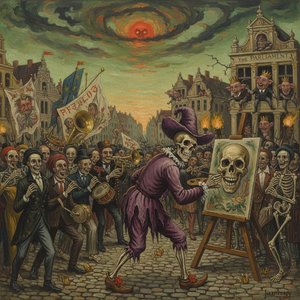
James Ensor’s “Crane Fleuris” isn’t merely a painting; it’s an unsettling encounter. Created in the early 20th century, this arresting work plunges the viewer into a world where life and death intertwine with unnerving beauty. Born in Ostend, Belgium, to an English father and Belgian mother – a heritage that undoubtedly shaped his artistic perspective – Ensor spent his career exploring themes of identity, social commentary, and, most powerfully, the ephemeral nature of existence. “Crane Fleuris,” painted around 1896, stands as a cornerstone of his Expressionist style, a bold declaration against academic tradition and a profound meditation on mortality.

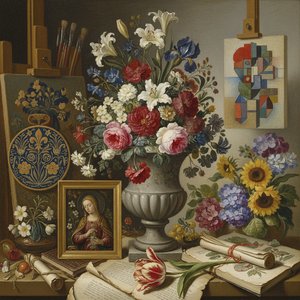
The painting immediately confronts us with its arresting central image: a woman whose head is replaced by a meticulously rendered skeleton. This isn’t a gruesome spectacle, however; rather, it's presented within an opulent tableau of flowers – roses, lilies, and other blooms – that seem to both adorn and engulf her. The blue ribbon encircling the skeletal neck adds a layer of poignant formality, suggesting a ritualistic preparation for departure. Ensor masterfully juxtaposes these elements, creating a visual paradox: death is not presented as frightening or terrifying, but rather as an integral part of life’s cycle, beautifully framed within the transient beauty of floral arrangements.

Expressionist Techniques and a Distorted Reality

Ensor's technique in “Crane Fleuris” is deliberately jarring. He employs thick, impasto brushstrokes that build up layers of color, creating a tactile surface that draws the eye into the painting’s depths. The palette is dominated by rich, saturated hues – deep reds, blues, and greens – intensified with touches of gold and silver. These colors aren't used to represent reality faithfully; instead, they are employed to evoke emotion, amplifying the sense of drama and unease that permeates the scene. The forms themselves are distorted, figures rendered with a deliberate lack of precision, contributing to the overall feeling of disorientation and psychological tension.

Notably, Ensor’s use of color and form aligns closely with the principles of Expressionism, an artistic movement that sought to convey subjective emotions rather than objective reality. He deliberately rejects naturalistic representation in favor of a more visceral and emotionally charged approach. The skeletal head, rendered with such detail, isn't simply a symbol of death; it’s a visual embodiment of vulnerability and the inevitability of decay.

Symbolism and the Weight of Mortality

Beyond its immediate visual impact, “Crane Fleuris” is laden with symbolism. The flowers themselves represent life, beauty, and the fleeting nature of earthly pleasures. Their presence around the skeleton suggests a poignant acceptance of mortality – a recognition that even in death, there can be a kind of grace or dignity. The scattered skulls and bones further reinforce this theme, creating a haunting reminder of our shared fate. The inclusion of potted plants, small pockets of life amidst the morbid setting, adds another layer of complexity, hinting at the persistence of nature’s cycle despite human mortality.

Furthermore, Ensor's background in theatrical design and his membership in the avant-garde group Les XX – a collective known for its experimentation with form and color – informed his approach to creating unsettling yet captivating imagery. “Crane Fleuris” echoes works like "Coquillages" and "Les pommes rouges," demonstrating Ensor’s consistent exploration of themes related to death, decay, and the human condition. It's a painting that invites contemplation on the fragility of existence and the beauty found within its inevitable end.

A Timeless Masterpiece: Reproduction Possibilities

OriginalUniqueArt offers meticulously crafted hand-painted reproductions of “Crane Fleuris,” allowing art lovers to experience Ensor’s masterpiece in stunning detail. Whether you're a collector, an interior designer seeking a thought-provoking statement piece, or simply someone captivated by the power of art, our reproductions capture the essence of this iconic work. Each reproduction is created using archival quality materials and techniques, ensuring that it will retain its beauty and vibrancy for generations to come. Explore our collection today and bring the haunting allure of “Crane Fleuris” into your space.

Perguntas e Respostas

Quão harmoniosas são as cores de "Cranes Fleuris" entre si?

As cores de "Cranes Fleuris", de James Ensor apresentam uma harmonia Discordant Palette. A harmonia descreve como as cores se relacionam entre si.

Qual é a situação dos direitos autorais de "Cranes Fleuris", de James Ensor?

O status de direitos autorais de "Cranes Fleuris" - em domínio público — seus direitos autorais expiraram - decorre do falecimento do artista em 1949.

Qual é a cor predominante em "Cranes Fleuris"?

"Cranes Fleuris" inclina-se para um tom Ochre to Sepia.

More about this painting

Visualizar na parede Visualizar em RA Alternar para Impressão Alternar para Imagem Digital Compartilhar
Detalhes Guia Adicionar aos favoritos Baixar imagem Semelhantes Raio X Ver diaporama Q&A Estatísticas

In numbers

  • 29frames to choose from
  • standard sizes, in its own proportions
  • 5weeks to paint and deliver it
James Ensor

James Ensor

1860 - 1949, Bélgica

Quick facts about James Ensor

  • Artistic Movement Or Style: Expressionismo, Surrealismo
  • Artists Or Movements Influenced By This Artist:
    • Expressionismo
    • Surrealismo
  • Artists Who Influenced This Artist:
    • Bruegel o Velho
    • Goya
    • Whistler
  • Date Of Birth: 13 de abril de 1860
  • Date Of Death: 19 de novembro de 1949
  • Full Name: James Sidney Edouard Ensor
  • Nationality: Belga
  • Notable Artworks:
    • Máscaras Escandalizadas
    • Esqueletos...
    • Entrada do Cristo
  • Place Of Birth: Ostend, Bélgica

Biografia do Artista

A Life Immersed in Masks and Shadows: The World of James Ensor

Nascido em Ostend, Bélgica, em 1860, James Sidney Edouard Ensor emergiu de uma fascinante convergência de culturas – seu pai inglês, sua mãe belga. Essa dualidade talvez prenunciasse a fascinação do artista por máscaras e disfarces, temas que viriam a dominar sua obra perturbadora, mas cativante. Crescendo em meio à energia vibrante de uma cidade-balneário, o jovem James foi profundamente afetado pela atmosfera de carnavais e curiosidades. Seus pais operavam uma loja de souvenirs repleta de conchas, máscaras de carnaval e objetos peculiares – um verdadeiro gabinete de maravilhas que acendeu sua imaginação e forneceu um rico vocabulário visual para sua futura arte. Embora inicialmente hesitante em abraçar os estudos acadêmicos tradicionais, Ensor acabou se matriculando na Académie Royale des Beaux-Arts em Bruxelas, mas encontrou sua estrutura rígida sufocante para sua visão artística emergente. Ele rapidamente percebeu que precisava forjar seu próprio caminho, um que o levaria muito além dos limites convencionais.

De Realismo Sombrio a Visões Grotescas

As primeiras pinturas de Ensor refletiam uma abordagem mais tradicional, retratando cenas da vida cotidiana em tons sombrios. Obras como *Russian Music* (1881) e *The Drunkards* (1883) revelam um talento promissor lutando com o realismo, mas mesmo nessas primeiras peças, há vislumbres da imagem perturbadora que viria a dominar sua obra. Uma mudança crucial ocorreu à medida que a paleta de Ensor se iluminava e seu assunto se tornava cada vez mais bizarro. Ele começou a povoar suas telas com carnavais, esqueletos, bonecos e figuras alegóricas – um mundo imbuído de fantasia e frequentemente beirando o grotesco. Isso não era apenas uma mudança estilística; era uma exploração deliberada dos aspectos mais sombrios da existência humana, uma rejeição aos padrões sociais e uma celebração do irracional. Seu estilo se tornou instantaneamente reconhecível por sua pincelada ousada, cores vibrantes e qualidade teatral – uma linguagem visual única.

Influências e Legado

Ensor foi influenciado por mestres como Pieter Bruegel the Elder, cujas cenas lotadas e narrativas moralizadoras ressoaram com sua própria visão, assim como Francisco Goya, cujos humor sombrio e representações sem compromisso da condição humana deixaram uma impressão duradoura. James Abbott McNeill Whistler’s ênfase no estética também desempenhou um papel na formação das sensibilidades artísticas de Ensor. No entanto, Ensor não era apenas um imitador; ele sintetizou essas influências em algo totalmente novo e original. Ele é agora amplamente reconhecido como uma figura fundamental na transição do Simbolismo do século XIX para o Expressionismo e Surrealismo da primeira metade do século XX – um verdadeiro pioneiro da arte moderna. Sua exploração audaciosa do inconsciente, sua aceitação de imagens grotescas e sua rejeição às convenções acadêmicas pavimentaram o caminho para futuras gerações de artistas que ousaram desafiar os limites artísticos. Apesar da resistência inicial, Ensor acabou ganhando reconhecimento em seus anos mais velhos, sendo nomeado Barão pelo Rei Albert I em 1929 e agraciado com a Legião Honorária em 1933. Ele morreu em Ostend em 1949, deixando para trás um corpo de trabalho que continua a cativar, perturbar e inspirar.

Obras-Primas de Perturbação: Obras Chave e Temas Recorrentes

Ao longo de sua carreira, Ensor produziu uma série de obras que continuam a surpreender e fascinar o público hoje. *The Scandalized Masks* (1883) é um testemunho precoce de seu fascínio pelo poder do disfarce e sua capacidade de revelar emoções ocultas. Talvez sua obra mais controversa, *Christ’s Entry into Brussels* (1888-1889), permanece um comentário satírico poderoso sobre a hipocrisia religiosa e a indiferença social – uma pintura inicialmente recebida com críticas severas, mas agora celebrada como uma obra-prima. A imagem perturbadora de Cristo entrando em uma cidade repleta de figuras mascaradas grotescas é um comentário poderoso sobre a desconexão entre os ideais espirituais e o comportamento humano. *Skeletons Fighting over a Hanged Man* (1891) oferece uma meditação sombria sobre a morte, a decadência e a futilidade da vida, enquanto *Tribulations of Saint Anthony* (1887) explora temas alegóricos complexos de tentação, pecado e luta espiritual. Temas recorrentes em sua obra incluem a morte, a crítica social, a sátira religiosa e o poder ilimitado da imaginação – temas que ressoam com uma relevância atemporal.

Um Pioneiro do Modernismo: Influências e Legado

Ensor resistiu à categorização fácil, mas sua linhagem artística é complexa e fascinante. Ele reconheceu influências de mestres como Pieter Bruegel the Elder, cujas cenas lotadas e narrativas moralizadoras ressoaram com sua própria visão, assim como Francisco Goya, cujos humor sombrio e representações sem compromisso da condição humana deixaram uma impressão duradoura. James Abbott McNeill Whistler’s ênfase no estética também desempenhou um papel na formação das sensibilidades artísticas de Ensor. No entanto, Ensor não era apenas um imitador; ele sintetizou essas influências em algo totalmente novo e original. Ele é agora amplamente reconhecido como uma figura fundamental na transição do Simbolismo do século XIX para o Expressionismo e Surrealismo da primeira metade do século XX – um verdadeiro pioneiro da arte moderna. Sua exploração audaciosa do inconsciente, sua aceitação de imagens grotescas e sua rejeição às convenções acadêmicas pavimentaram o caminho para futuras gerações de artistas que ousaram desafiar os limites artísticos.

Informações Rápidas

  • Subject or theme: Death, decay, life
  • Artist: James Ensor
  • Influences: Les XX
  • Medium: Oil on canvas

Quiz de Arte

Cada pergunta possui apenas uma resposta correta.

Pergunta 1:
What is the primary theme explored in James Ensor’s ‘Crane Fleuris’?
Pergunta 2:
Which artistic movement is ‘Crane Fleuris’ most closely associated with?
Pergunta 3:
What symbolic element is represented by the blue ribbon around the skeleton’s neck?
Pergunta 4:
The painting’s composition features a juxtaposition of life and death. What elements contribute to this contrast?