Alternar para Impressão
 Ler mais







































 Para obras de arte ou reproduções com mais de 105 cm (aproximadamente 41 polegadas) em qualquer um dos lados, a moldura será enviada como um kit desmontado. Este método garante uma entrega segura e evita danos durante o transporte.


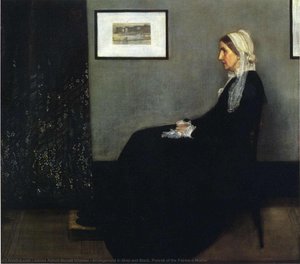
A Quiet Observation: James Abbott McNeill Whistler’s Bibi Valentin
James Abbott McNeill Whistler's “Bibi Valentin,” created in 1859, stands as a cornerstone of Tonalism—a movement that championed subtlety and nuance over bold color palettes. More than just a portrait, it embodies Whistler’s radical aesthetic philosophy: ‘art for art’s sake,’ prioritizing formal beauty and tonal harmony above narrative content or moral instruction.
- Subject Matter & Composition: The artwork depicts a young girl seated on a bed, capturing a moment of serene repose. Whistler employs a triangular composition, positioning the girl's head at its apex to create visual balance. Minimal background space emphasizes the subject’s presence and fosters intimacy.
- Style & Technique – Line Drawing Dominance: Whistler’s masterful technique relies heavily on line drawing—specifically hatching and cross-hatching—to achieve tonal variations and convey texture. Loose, sketchy lines define contours with remarkable precision, mirroring Whistler's belief in capturing essence rather than meticulous detail.
- Color Palette & Atmosphere: The palette is deliberately restrained, utilizing shades of brown and beige on tan paper to evoke a sense of quietude and understated elegance. Whistler’s deliberate avoidance of vibrant hues underscores the artwork’s contemplative mood.
- Symbolic Resonance – Gestural Expression & Emotion: The girl's direct gaze speaks volumes about observation and perhaps melancholy—elements that resonate deeply with Whistler’s artistic vision. The artist’s expressive style communicates a profound connection between himself and his subject, reflecting the humanist spirit of the era.
- Historical Context – Aestheticism & Whistler’s Legacy: “Bibi Valentin” emerged during the height of Aestheticism—a cultural movement that championed beauty for its own sake. Whistler's influence extends far beyond his immediate contemporaries, establishing him as a pivotal figure in modern art and inspiring generations of artists to prioritize form and tonal exploration.
The Detroit Institute of Arts holds one of the two impressions produced from Whistler’s plate, demonstrating the enduring appeal of this seminal work. Its reproduction offers an opportunity to appreciate Whistler's groundbreaking approach to painting—a testament to his unwavering commitment to artistic integrity and a captivating glimpse into the contemplative spirit of Victorian England.
Perguntas e Respostas
Quem é o autor de "Bibi Valentin" e a qual movimento pertence?
Por trás de "Bibi Valentin" estão James Abbott McNeill Whistler e o movimento Tonalism & Aestheticism.
De onde vêm os visitantes de "Bibi Valentin", de James Abbott McNeill Whistler?
Existe uma página de Estatísticas para "Bibi Valentin". Ela apresenta o gráfico de visitas mensais da obra e de outras obras do artista, com detalhamento por país e idioma.
"Bibi Valentin" está em domínio público?
"Bibi Valentin", de James Abbott McNeill Whistler está em em domínio público — seus direitos autorais expiraram. Este status determina como a imagem da obra pode ser reproduzida.
 Visualizar na parede
 Compartilhar
 Compartilhar
 Detalhes
 Guia
Guia

 Baixar imagem
 Semelhantes
 Raio X
 Ver diaporama
 Perguntas e Respostas
 Estatísticas