 Alternar para Impressão
 Ler mais







































 Para obras de arte ou reproduções com mais de 105 cm (aproximadamente 41 polegadas) em qualquer um dos lados, a moldura será enviada como um kit desmontado. Este método garante uma entrega segura e evita danos durante o transporte.


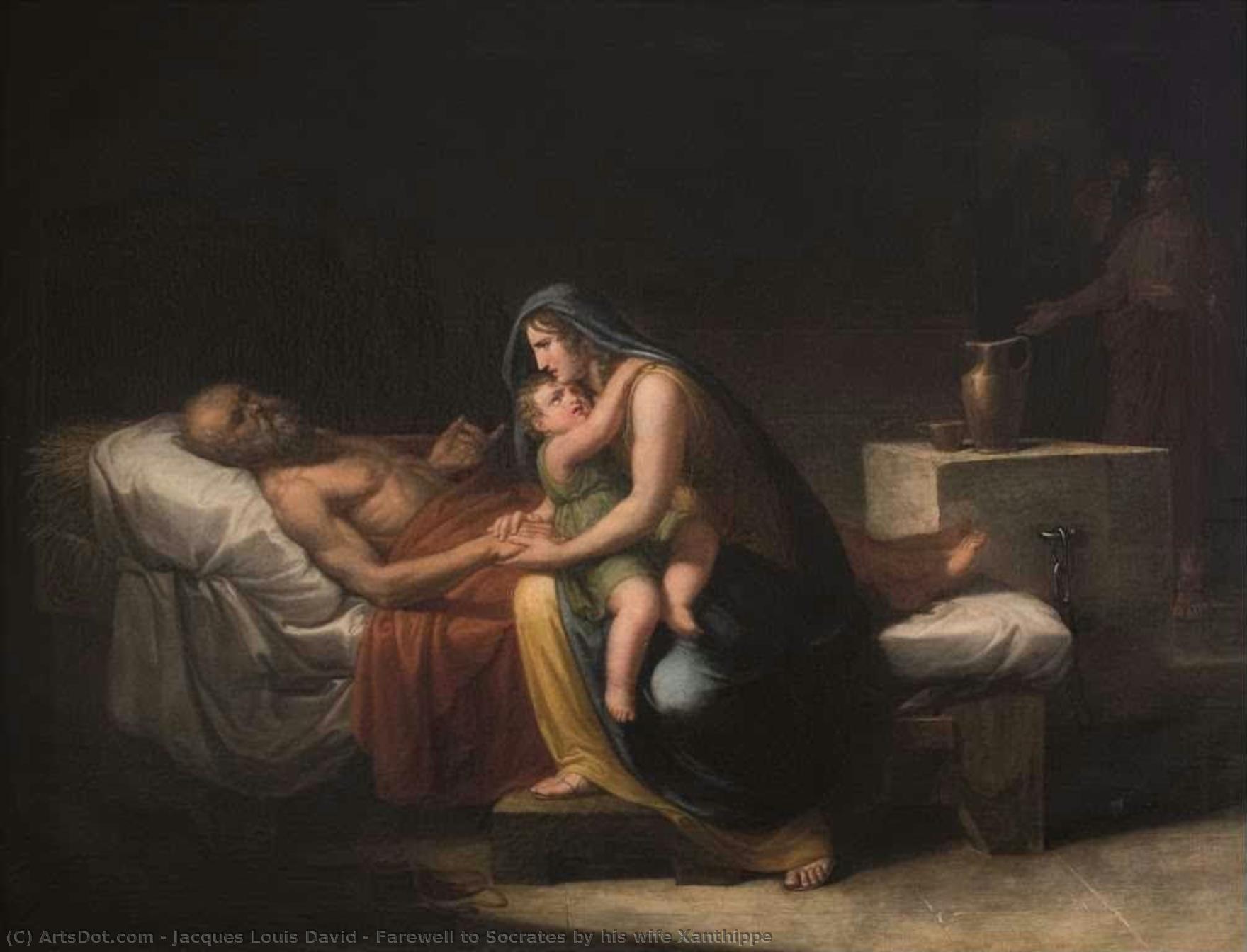
Farewell to Socrates by his wife Xanthippe: A Neoclassical Meditation on Virtue
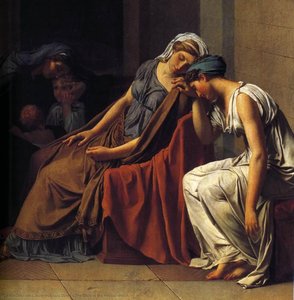
“On entering we found Socrates just released from chains, and Xanthippe [...] sitting by him, and holding his child in her arms. When she saw us she uttered a cry and said those things as women will”. This passage, taken from chapter III of Plato’s Phaedo is the literary source for the work that illustrates the death of the Greek philosopher, privileging the representation of an intimate and private rather than the narration of the suicide widely disseminated by artists due to its dramatic emphasis. The story of the just man who accepts with serenity his sentencing and death lent itself as an extraordinary exemplum virtutis for the major Neoclassical painters, from Gambettino Cignaroli to Jacques-Louis David, enjoying a vast consensus and a lasting fortune that extended throughout the first decade of the Nineteenth century. The painting is now in the collection of the Fondazione Cassa di Risparmio di Gorizia with the attribution to Franz Caugic, painter from Gorizia of solid Neoclassical training, who had finished his studies at the Fine Arts Academies of Vienna and Bologna, remembered as “a man of talent” by Johann Wolfgang von Goethe, in his work Winckelmann and his Century. During his sojourn in Rome from 1781 to 1787, he participated in the lively intellectual climate of the city, coming into contact with the most famous artists of the era, among them Jacques-Louis David and Antonio Canova. In this context he matured a complete adhesion to Neoclassicism that earned him, upon his return to Vienna, a leading role in the city’s artistic panorama, in addition to prestigious positions from high profile international patrons. The painting embodies the core tenets of Neoclassical art—a deliberate rejection of Rococo excess and ornamentation in favor of austere beauty rooted in ancient Greek ideals. Jacques-Louis David, deeply influenced by Johann Winckelmann's groundbreaking treatise on Greek sculpture, sought to recapture the spirit of antiquity through meticulous observation and idealized form. This pursuit of perfection is palpable in every detail, from the precise rendering of drapery folds to the subtle interplay of light and shadow—a technique honed during David’s formative years at the Academies of Vienna and Bologna. The artist's unwavering commitment to classical models ensured that *Farewell to Socrates* wouldn’t merely depict a historical event but rather elevate it into an emblem of moral virtue. David’s preparatory sketches reveal a profound engagement with the literary source—Plato’s Phaedo—and demonstrate his painstaking process of compositional refinement. Unlike many artists of the time who prioritized dramatic narrative, David focused on conveying serenity and dignity amidst suffering. The scene depicts Socrates, released from prison chains, accompanied by Xanthippe, his wife, cradling their child – a poignant tableau reflecting the profound bond between family and philosophical contemplation. The artist’s meticulous attention to detail extends beyond mere likeness; he meticulously recreated the textures of fabric and skin, striving for an unprecedented level of realism within the stylistic constraints of Neoclassicism. The composition itself is carefully calibrated to maximize emotional impact. A radiant ray of light illuminates Xanthippe's face, highlighting her serene expression and emphasizing her role as a symbol of maternal compassion—a deliberate choice that underscores the painting’s moral message. The color palette is restrained yet harmonious, dominated by muted tones that evoke the solemn atmosphere of the moment. David skillfully utilized chiaroscuro—the dramatic contrast between light and dark—to sculpt the figures and imbue them with depth and vitality. This technique elevates the scene beyond a simple depiction of death; it transforms it into an idealized meditation on human resilience and acceptance. The painting’s enduring appeal stems from its ability to resonate across centuries, capturing the essence of Neoclassical artistic principles while simultaneously conveying a timeless message about virtue and contemplation. Its presence in the Fondazione Cassa di Risparmio di Gorizia serves as a testament to David's legacy—a masterpiece that continues to inspire admiration for its intellectual rigor and aesthetic beauty. The artist’s unwavering dedication to classical ideals cemented his place as one of the foremost figures of his era, securing his reputation as “a man of talent” according to Goethe’s astute observation.Perguntas e Respostas
Como o meio e o movimento se combinam em "Farewell to Socrates por Xanthippe"?
Em "Farewell to Socrates por Xanthippe", a técnica de Acrílico sobre tela encontra o movimento Neoclassicism.
Qual é o nível de reconhecimento de "Farewell to Socrates por Xanthippe" de Jacques-Louis David?
"Farewell to Socrates por Xanthippe" é classificada como Icônico.
Quais temas aparecem em "Farewell to Socrates por Xanthippe", de Jacques-Louis David?
Os temas de "Farewell to Socrates por Xanthippe" são greek philosophy, death penalty, human suffering, classical art, moral virtue, philosopher socrates, roman influence.
 Visualizar na parede
 Compartilhar
 Compartilhar
 Detalhes
 Guia
Guia

 Baixar imagem
 Semelhantes
 Raio X
 Ver diaporama
 Q&A
Q&A Estatísticas