

 Visualizar em escala
 Enviar
 Compartilhar
 Ver detalhes
 Guia de Obras do Aluno

 Baixar imagem
 Semelhantes
 Raio X
 Apresentação de slides
 Estatísticas
Walter Richard Sickert
 Oil On Canvas
- WallArt
- Realism
 1898
1898- 19th Century
 81.0 x 65.0 cm
 Ver mais
Adquira uma imagem digital de alta resolução e aprimorada, muito superior à prévia online.
Cada arquivo é meticulosamente preparado por nossos especialistas internos, utilizando ferramentas avançadas e retoques manuais de alta precisão. Garantimos que cada imagem apresente clareza excepcional, fidelidade de cores e detalhes minuciosos.
O arquivo final é entregue por e-mail em até 72 horas, otimizado para uso imediato em ambientes profissionais, editoriais e de impressão. Esta é a mesma qualidade utilizada por estúdios de design de alto nível, editoras e galerias.
Imagem Digital
Baixe um arquivo de alta resolução para exibição pessoal, impressão e projetos criativos. ( Alternar para Impressão Encomendar reprodução pintada à mão)
Incluído em cada pedido de imagem digital
Entrega Digital Especializada e Garantida
Ao escolher o OriginalUniqueArt.com, você não está apenas adquirindo uma imagem — você está recebendo uma obra de arte digital profissionalmente aprimorada, elaborada com precisão e com garantia de satisfação. Aqui está tudo o que acompanha seu pedido, automaticamente:

Entrega rápida por e-mail
O seu arquivo de imagem digital em alta resolução será enviado por e-mail em até 72 horas após o pedido — pronto para uso imediato.

Arquivo Digital com IA Otimizado
Sua obra de arte é otimizada profissionalmente por meio de ferramentas avançadas de IA e edição manual, garantindo o máximo de detalhes, clareza e precisão de cores.

Reenvio gratuito vitalício
Apagou ou perdeu o seu ficheiro acidentalmente? Não se preocupe – nós reenviamos para si a qualquer momento, gratuitamente.

Sem Taxas de Importação - Sempre
Desfrute da sua obra de arte instantaneamente, sem taxas alfandegárias, impostos ou custos de entrega — downloads digitais são sempre isentos de taxas.

Garantia de Precisão de Cores
Garantimos que sua imagem digital reflita as cores originais com a maior fidelidade possível, utilizando ferramentas profissionais e gerenciamento de cores.

Garantia de satisfação de 100 dias
Se não estiver satisfeito com a sua imagem digital, nós a revisaremos ou reembolsaremos 100% dentro de 100 dias — sem perguntas.

Garantia de Reembolso 100%
Não está satisfeito? Receba o reembolso total em até 100 dias após o recebimento do seu arquivo digital — sem perguntas.

Descontos para pedidos em lote
Compre 3 imagens, economize 10% - Compre 5, economize 15% - Compre 10+, economize 20%. Ideal para projetos criativos, galerias e agências.
A Gaze Through Time: The Introspective Soul of Jacques-Émile Blanche
In the quiet, shadowed corners of late nineteenth-century Parisian art, few works capture the profound weight of identity as poignantly as this 1898 portrait. While the title suggests a connection to the gritty realism of Walter Richard Sickert, the hand behind this masterful oil on canvas is none other than Jacques-Élamile Blanche, a painter whose lineage and training placed him at the very heart of the French Belle Époque. This piece serves as more than just a depiction of a man; it is an invitation into a private moment of contemplation. The subject sits in a poised, seated pose, his presence commanding the space through a subtle, angled perspective that pulls the viewer directly into his steady, searching gaze. It is a composition that feels both intimate and monumental, perfect for a collector seeking a centerpiece that breathes life and history into a sophisticated interior.
The technique employed here is a masterclass in the use of light and texture, reminiscent of the great masters who preceded him. Blanche utilizes a directional light source originating from the upper left, a choice that does not merely illuminate but actively sculpts the subject's features. This chiaroscuro effect creates deep, dramatic shadows that define the contours of the face and the heavy folds of the clothing, lending the figure a three-dimensional vitality. The artist’s brushwork is remarkably tactile; through an impasto-like application of oil paint, he achieves a rich, layered texture that invites the eye to wander over the canvas. One can almost feel the weight of the fabric and the warmth of the skin, as the organic curves of the subject's hands and face are set against the more structured, geometric lines of his attire.
Beyond its technical brilliance, the painting resonates with a deep sense of psychological depth. The background is intentionally dark and indistinct, a void that strips away the distractions of the outside world to focus entirely on the subject's internal state. This stylistic choice fosters an atmosphere of introspection and perhaps a touch of artistic vanity, as if the sitter is acutely aware of his own legacy being captured for eternity. Subtle symbolic elements, such as the formal hat, hint at the social standing and professional dignity of the era, yet the overall mood remains grounded in a raw, human realism. For the interior designer or art enthusiast, this work offers a profound emotional impact—it is a piece that does not merely decorate a wall but anchors a room with its silent, powerful narrative of character and permanence.
Perguntas e Respostas
Em que ano foi criado "Walter Richard Sickert" de Jacques-Émile Blanche?
"Walter Richard Sickert" data de 1898. A data situa a obra na carreira de Jacques-Émile Blanche e em sua época.
"Walter Richard Sickert" de Jacques-Émile Blanche é uma obra de arte clara ou escura?
A luminosidade percebida de "Walter Richard Sickert" de Jacques-Émile Blanche é deep_shadow. Ela pode ser harmonizada com a iluminação do espaço pretendido.
Quem é o autor de "Walter Richard Sickert" e em qual movimento?
Por trás de "Walter Richard Sickert" estão Jacques-Émile Blanche e o movimento Realism.
Biografia do Artista
Early Life and Artistic Foundations
Jacques Émile Blanche, a figure of undeniable elegance and sensitivity in the world of French art, was born on January 1st, 1861, in the heart of Paris. His origins were deeply rooted in Parisian society; his father, Émile Blanche, was a distinguished pathologist – a medical doctor specializing in mental health – whose work profoundly shaped young Jacques’s upbringing. The family resided within the affluent neighborhood of Passy, an area renowned for its proximity to prominent artists and intellectuals. This environment fostered an early exposure to artistic discourse and creative expression, laying the groundwork for Blanche's future career. His father, recognizing his son’s innate artistic inclinations, encouraged him to pursue these interests, providing a nurturing atmosphere where creativity could flourish. Crucially, Jacques’s childhood was spent within the walls of the Blanche family clinic in Montmartre, a unique setting that offered an unparalleled education. This wasn't merely a place of healing; it was a vibrant hub of artistic and intellectual exchange, frequented by celebrated writers, musicians, and painters – figures like Jules Michelet, Ernest Renan, and even Henri Fantin-Latour. These encounters profoundly influenced Blanche’s worldview and artistic sensibilities, exposing him to diverse perspectives and inspiring his own creative explorations. The family's involvement with the clinic also provided a fascinating glimpse into the social dynamics of the time, blending the worlds of medicine, art, and society in a truly remarkable way.A Self-Taught Artist: Style and Influences
Despite lacking formal training at an established academy, Jacques Émile Blanche developed his artistic style through diligent self-study and observation. He was largely guided by his own instincts and a deep appreciation for the works of master painters. His distinctive approach can be characterized as a synthesis of several key influences. Notably, he drew inspiration from the Impressionist movement, particularly the loose brushwork and emphasis on capturing fleeting moments of light and atmosphere championed by artists like Edouard Manet. However, Blanche’s style also incorporated elements of 18th-century English portraiture, most notably the refined elegance and psychological depth evident in the works of Thomas Gainsborough. The influence of James McNeill Whistler is also undeniable, particularly in his use of color and composition to evoke mood and atmosphere. This eclectic blend resulted in a unique artistic voice – one that was both modern and deeply rooted in tradition. Blanche’s portraits are not merely representations of physical likeness; they are carefully constructed narratives that reveal the inner lives and personalities of his subjects. He possessed an extraordinary ability to capture subtle nuances of expression, conveying emotions with remarkable sensitivity and insight.Career in Paris and London: A Cosmopolitan Artist
Blanche's artistic career unfolded across two prominent cities – Paris and London. Beginning in 1882, he exhibited regularly at the Salon des Artistes Français, a prestigious venue that served as a barometer of contemporary art trends. He continued to exhibit with other reputable societies throughout his life, solidifying his position within the Parisian art scene. However, it was his time in London that proved particularly fruitful. From 1870 onwards, Blanche spent extended periods living and working in England, immersing himself in the vibrant cultural landscape of Victorian society. He quickly established a strong reputation as a portrait painter, capturing the elegance and sophistication of London’s elite – from socialites to prominent figures in literature and the arts. His portraits of Marcel Proust, Henry James, and other notable personalities are considered masterpieces of their time, showcasing his exceptional skill in conveying character and personality. Blanche's cosmopolitan lifestyle—navigating the artistic circles of both Paris and London—provided him with a broad perspective and enriched his artistic vision.Notable Works and Legacy
Jacques Émile Blanche’s oeuvre encompasses a diverse range of subjects, including landscapes, still lifes, and, most famously, portraits. Among his most celebrated works are “The Kreutzer Sonata,” a painting that powerfully captures the emotional intensity of music; "Portrait of Henry James," a nuanced depiction of the American author's character; and a series of evocative London views. These paintings, along with many others, can be found in prestigious collections worldwide, including the Musée d’Orsay in Paris and the National Gallery in London. Blanche’s legacy extends beyond his individual artworks. He was also a respected art critic and collector, actively involved in promoting and supporting emerging artists. His influence on subsequent generations of painters is undeniable, and his work continues to be admired for its elegance, sensitivity, and artistic innovation. Jacques Émile Blanche died on September 30th, 1942, leaving behind a rich and enduring body of work that reflects the spirit of a bygone era.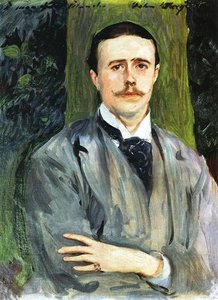
Jacques-Émile Blanche
1861 - 1942 , França
Informações Rápidas
- Artistic Movement Or Style: Impressionismo
- Artists Or Movements Influenced By This Artist: ['Thomas Gainsborough']
- Artists Who Influenced This Artist:
- Edouard Manet
- James Whistler
- Date Of Birth: 1 de fevereiro de 1861
- Date Of Death: 30 de setembro de 1942
- Full Name: Jacques Émile Blanche
- Nationality: Francês
- Notable Artworks:
- A Sonata do Kreutzer
- Retrato de Marcel Proust
- Place Of Birth: Paris, França