Visualizar em escala
 Enviar
 Compartilhar
 Ver detalhes
 Guia de Obras do Aluno

 Baixar imagem
 Semelhantes
 Raio X
 Apresentação de slides
 Estatísticas
L Hôte
 Acrylic On Canvas
- WallArt
- Cubism
 1892
1892 220.0 x 290.0 cm
 Musée des Beaux-Arts de Rouen
 Ver mais
Reprodução em Óleo Feita à Mão
Óleo sobre tela pintado à mão no tamanho e moldura de sua escolha, feito sob encomenda pelos nossos artistas. ( Alternar para Impressão Ver Imagem Digital)




P118B €10

P118H €10

P118W €10

P438Z €10

P508JH €12

P508YH €12

P805H €10

P805Z €10

P919BZ €10

P919G €10

P919XJ €10

P959ZH €10

P968JZ €12

W106C €8

W218G €10

W218JH €8

W218Y €10

W307PJ €10

W316G €10

W316PJ €8

W316Y €10

W398PJ €8

W4111J €10

W500HY €15

W500JH €15

W692G €12

W849H €8

W940BG €15

W953PJ €8




Escolha entre os nossos tamanhos pré-definidos que respeitam as proporções originais da obra de arte.

Digite a largura e a altura de que necessita, para se ajustar à sua moldura ou à sua parede. Esta obra é pintada à mão, por isso, para um tamanho com uma proporção diferente, o artista pode pintar um pouco mais ao redor da imagem ou cortar um pouco — você escolhe. Enviamos-lhe uma maquete digital para aprovação antes de a pintura começar. A imagem exibida nesta página não mostra o resultado real — apenas a maquete mostra.
Após o pedido, a equipa OriginalUniqueArt.com enviará um e-mail ao cliente para solicitar instruções e fornecer uma prévia do esboço.
Entrega mundial () em 3 a 4 semanas, em vez das 5 semanas padrão. (23 Outubro). Sem comprometer a qualidade.

Envio expresso gratuito para todo o mundo

Tela de Linho Premium

Seguro de transporte total

Garantia de Reembolso de Impostos Alfandegários

Garantia de Fidelidade de Cor

Política de Devolução em 100 Dias (Apenas para Defeitos)

Garantia de reembolso de 100%

Desconto para múltiplas unidades
 A opção de vidro está disponível apenas para tamanhos inferiores a 110 cm

L Hôte
Técnica de Reprodução
Dimensões da Reprodução
-


Preço Total
€ 264
L'Hôte by Jacques Emile Blanche – A Portrait of Parisian Elegance
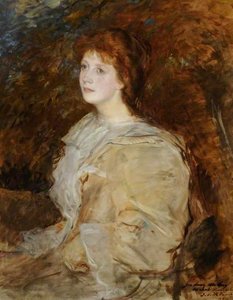
Jacques-Émile Blanche’s “L’Hôte” (The Host) stands as a quintessential emblem of Belle Époque Paris, capturing not merely a likeness but an atmosphere—a palpable sense of refined social interaction and intellectual curiosity. Painted in 1892, this monumental oil on canvas measuring 220 x 290 cm resides at the Musée Des Beaux Arts in Rouen, France, offering viewers a glimpse into a bygone era defined by artistic innovation and aristocratic refinement. Blanche’s distinctive style—characterized by loose brushwork and a muted palette—immediately distinguishes itself from the more polished conventions of his contemporaries. He eschewed meticulous detail in favor of conveying emotion and capturing the subtle nuances of human expression, techniques honed during his formative years alongside luminaries like Édouard Manet and Whistler.A Masterful Blend of Realism and Symbolism
Blanche’s artistic approach transcends mere representation; it delves into symbolism to illuminate deeper themes concerning identity and social dynamics. The composition itself is carefully orchestrated—the central figures seated around a dining table dominate the canvas, their gaze directed outwards, suggesting contemplation and engagement with the world beyond the immediate setting. Notably absent are chairs positioned strategically behind the guests, an element that has been interpreted as representing those excluded from this privileged circle – perhaps individuals deemed unworthy of inclusion or simply those whose presence wasn’t considered essential to the narrative. This deliberate omission underscores Blanche's astute observation of societal hierarchies and his ability to communicate complex ideas through visual cues.Technique and Color Palette: Echoes of Impressionism
The painting’s execution showcases Blanche’s mastery of Impressionist techniques. Thick, visible brushstrokes imbue the canvas with texture and movement, mirroring the fleeting impressions of light and atmosphere that were central to the artistic movement. Blanche employed a restrained color scheme—primarily dominated by warm browns and ochres—creating a cozy and inviting ambiance reminiscent of candlelight illumination. These muted hues contribute to the painting’s emotional resonance, fostering a sense of intimacy and conveying the quiet dignity of the subjects depicted. The artist skillfully blended pigments to achieve subtle gradations of tone, enhancing the illusion of depth and capturing the nuances of light reflecting off surfaces.Historical Context: Parisian Society at Its Zenith
“L’Hôte” was created during Paris's golden age—the Belle Époque (roughly 1871-1914)—a period marked by unprecedented artistic creativity, economic prosperity, and cultural dynamism. Blanche himself was deeply embedded in the intellectual milieu of his time, surrounded by writers, artists, and thinkers who championed progressive ideas and challenged traditional conventions. The painting reflects this spirit of experimentation and celebrates the pursuit of beauty and knowledge—values that were paramount to Parisian society during Belle Époque. It serves as a testament to Blanche’s ability to capture not only the visual appearance of his subjects but also the intellectual and social currents shaping their lives.Emotional Impact: Capturing Inner Life
Ultimately, “L’Hôte” succeeds in conveying profound emotional depth. Blanche's portraits are renowned for capturing the inner life of his subjects—their personalities, aspirations, and vulnerabilities—with remarkable sensitivity. The gaze of the figures is imbued with quiet contemplation, hinting at unspoken thoughts and emotions. This masterful portrayal speaks to the enduring power of art to illuminate human experience and transcends time, inviting viewers to contemplate themes of identity, social status, and the complexities of human relationships. Blanche’s legacy continues to inspire artists today who strive to achieve similar levels of psychological insight and artistic virtuosity.Perguntas e Respostas
Quais são os direitos de reprodução de "L Hôte" no Musée des Beaux-Arts de Rouen?
O status de direitos autorais de "L Hôte" de Jacques-Émile Blanche é claro: a obra está em em domínio público - seus direitos autorais expiraram. Sua presença no Musée des Beaux-Arts de Rouen não altera esse status.
Que atmosfera "L Hôte" traria para um ambiente?
"L Hôte" de Jacques-Émile Blanche possui uma atmosfera Elegant e é recomendado para um(a) Living Room. O clima é o que a obra traz para o espaço ao seu redor.
Que saturação e intensidade apresenta "L Hôte" de Jacques-Émile Blanche?
A cor de "L Hôte" possui Muted de saturação e Monochromatic de intensidade.
Biografia do Artista
Early Life and Artistic Foundations
Jacques Émile Blanche, a figure of undeniable elegance and sensitivity in the world of French art, was born on January 1st, 1861, in the heart of Paris. His origins were deeply rooted in Parisian society; his father, Émile Blanche, was a distinguished pathologist – a medical doctor specializing in mental health – whose work profoundly shaped young Jacques’s upbringing. The family resided within the affluent neighborhood of Passy, an area renowned for its proximity to prominent artists and intellectuals. This environment fostered an early exposure to artistic discourse and creative expression, laying the groundwork for Blanche's future career. His father, recognizing his son’s innate artistic inclinations, encouraged him to pursue these interests, providing a nurturing atmosphere where creativity could flourish. Crucially, Jacques’s childhood was spent within the walls of the Blanche family clinic in Montmartre, a unique setting that offered an unparalleled education. This wasn't merely a place of healing; it was a vibrant hub of artistic and intellectual exchange, frequented by celebrated writers, musicians, and painters – figures like Jules Michelet, Ernest Renan, and even Henri Fantin-Latour. These encounters profoundly influenced Blanche’s worldview and artistic sensibilities, exposing him to diverse perspectives and inspiring his own creative explorations. The family's involvement with the clinic also provided a fascinating glimpse into the social dynamics of the time, blending the worlds of medicine, art, and society in a truly remarkable way.A Self-Taught Artist: Style and Influences
Despite lacking formal training at an established academy, Jacques Émile Blanche developed his artistic style through diligent self-study and observation. He was largely guided by his own instincts and a deep appreciation for the works of master painters. His distinctive approach can be characterized as a synthesis of several key influences. Notably, he drew inspiration from the Impressionist movement, particularly the loose brushwork and emphasis on capturing fleeting moments of light and atmosphere championed by artists like Edouard Manet. However, Blanche’s style also incorporated elements of 18th-century English portraiture, most notably the refined elegance and psychological depth evident in the works of Thomas Gainsborough. The influence of James McNeill Whistler is also undeniable, particularly in his use of color and composition to evoke mood and atmosphere. This eclectic blend resulted in a unique artistic voice – one that was both modern and deeply rooted in tradition. Blanche’s portraits are not merely representations of physical likeness; they are carefully constructed narratives that reveal the inner lives and personalities of his subjects. He possessed an extraordinary ability to capture subtle nuances of expression, conveying emotions with remarkable sensitivity and insight.Career in Paris and London: A Cosmopolitan Artist
Blanche's artistic career unfolded across two prominent cities – Paris and London. Beginning in 1882, he exhibited regularly at the Salon des Artistes Français, a prestigious venue that served as a barometer of contemporary art trends. He continued to exhibit with other reputable societies throughout his life, solidifying his position within the Parisian art scene. However, it was his time in London that proved particularly fruitful. From 1870 onwards, Blanche spent extended periods living and working in England, immersing himself in the vibrant cultural landscape of Victorian society. He quickly established a strong reputation as a portrait painter, capturing the elegance and sophistication of London’s elite – from socialites to prominent figures in literature and the arts. His portraits of Marcel Proust, Henry James, and other notable personalities are considered masterpieces of their time, showcasing his exceptional skill in conveying character and personality. Blanche's cosmopolitan lifestyle—navigating the artistic circles of both Paris and London—provided him with a broad perspective and enriched his artistic vision.Notable Works and Legacy
Jacques Émile Blanche’s oeuvre encompasses a diverse range of subjects, including landscapes, still lifes, and, most famously, portraits. Among his most celebrated works are “The Kreutzer Sonata,” a painting that powerfully captures the emotional intensity of music; "Portrait of Henry James," a nuanced depiction of the American author's character; and a series of evocative London views. These paintings, along with many others, can be found in prestigious collections worldwide, including the Musée d’Orsay in Paris and the National Gallery in London. Blanche’s legacy extends beyond his individual artworks. He was also a respected art critic and collector, actively involved in promoting and supporting emerging artists. His influence on subsequent generations of painters is undeniable, and his work continues to be admired for its elegance, sensitivity, and artistic innovation. Jacques Émile Blanche died on September 30th, 1942, leaving behind a rich and enduring body of work that reflects the spirit of a bygone era.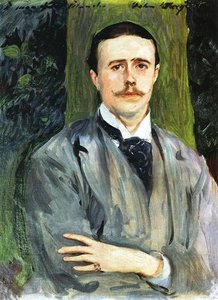
Jacques-Émile Blanche
1861 - 1942 , França
Informações Rápidas
- Artistic Movement Or Style: Impressionismo
- Artists Or Movements Influenced By This Artist: ['Thomas Gainsborough']
- Artists Who Influenced This Artist:
- Edouard Manet
- James Whistler
- Date Of Birth: 1 de fevereiro de 1861
- Date Of Death: 30 de setembro de 1942
- Full Name: Jacques Émile Blanche
- Nationality: Francês
- Notable Artworks:
- A Sonata do Kreutzer
- Retrato de Marcel Proust
- Place Of Birth: Paris, França
Artigos Relacionados

Echoes of 1875: Art, Culture & the Belle Époque's Pivotal Moment
Explore the art & culture of 1875 Paris – a pivotal year for Impressionism & the Belle Époque. Discover Degas, Béraud, Stewart & more with OriginalUniqueArt's expert insights.
Echoes of 1882: Art, Culture & the Belle Époque's Lasting Impression
Explore the art & culture of the Belle Époque! Discover Impressionism, Realism, and iconic Parisian paintings from Degas, Béraud & more. High-quality reproductions at OriginalUniqueArt.

Giovanni Boldini: A Study in Belle Époque Portraiture & the Cult of Personality
Explore the captivating world of Giovanni Boldini, master of Belle Époque portraiture. Discover his signature style, iconic works like 'Miss Bell,' and lasting influence on art history. Expert analysis for collectors.
Jean-Georges Béraud: Capturing Parisian Life in the Belle Époque
Explore the captivating world of Jean-Georges Béraud, master painter of Belle Époque Paris. Discover his iconic scenes, artistic evolution, and social commentary. A deep dive into 19th-century French art.
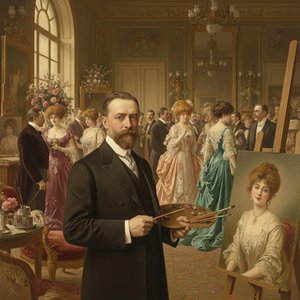
Jacques-Émile Blanche: Capturing Belle Époque Society & the Cult of Personality
Explore the captivating portraits of Jacques-Émile Blanche, a master Impressionist who captured the essence of Belle Époque society in Paris and London. Discover his unique style & lasting legacy.