

 Visualizar em escala
 Enviar
 Compartilhar
 Ver detalhes
 Guia de Obras do Aluno

 Baixar imagem
 Semelhantes
 Raio X
 Apresentação de slides
 Estatísticas
Virtue


 Ver mais
Giclée / Impressão de Arte
Impressão giclée ou em tela de qualidade de museu, com produção rápida e opções flexíveis de acabamento. ( Encomendar reprodução pintada à mão Ver Imagem Digital)




P118B €10

P118H €10

P118W €10

P438Z €10

P508JH €12

P508YH €12

P805H €10

P805Z €10

P919BZ €10

P919G €10

P919XJ €10

P959ZH €10

P968JZ €12

W106C €8

W218G €10

W218JH €8

W218Y €10

W307PJ €10

W316G €10

W316PJ €8

W316Y €10

W398PJ €8

W4111J €10

W500HY €15

W500JH €15

W692G €12

W849H €8

W940BG €15

W953PJ €8




Escolha entre os nossos tamanhos pré-definidos que respeitam as proporções originais da obra de arte.

Você pode inserir suas próprias dimensões para se ajustar a uma moldura ou espaço específico. Se o tamanho selecionado não corresponder às proporções da imagem original, iremos recortar a obra de arte ou estender a imagem com uma borda espelhada ou preenchimento sólido. Um mockup digital será enviado para sua aprovação antes do início da produção.
Por favor, observe que a visualização na tela não reflete o recorte ou a extensão real. Apenas o mockup mostrará com precisão a composição final.
Embora tamanhos personalizados estejam disponíveis, recomendamos selecionar uma dimensão da lista predefinida para preservar as proporções originais.
Entrega mundial () em 2 semanas, em vez das 4/5 semanas padrão. (7 Outubro)

Envio expresso gratuito para todo o mundo

Tela de Linho Premium

Seguro de transporte total

Garantia de Reembolso de Impostos Alfandegários

Garantia de Fidelidade de Cor

Política de Devolução em 100 Dias (Apenas para Defeitos)

Garantia de reembolso de 100%

Desconto para múltiplas unidades
 A opção de vidro está disponível apenas para tamanhos inferiores a 110 cm

Virtue
Giclée / Impressão de Arte
Dimensões da Reprodução
-


Preço Total
€ 69
Virtue: A Testament to Renaissance Idealism
Jacopo della Quercia’s “Virtue,” sculpted around 1414, stands as an emblem of the burgeoning humanist spirit that characterized early Renaissance Florence—a moment where classical ideals wrestled with Christian theology to forge a new aesthetic vision. This marble sculpture, housed in Siena Cathedral's Fonte Gaia fountain complex, isn’t merely a depiction of a woman; it’s a carefully crafted embodiment of Temperance, one of the Cardinal Virtues revered throughout Christendom and championed by philosophers like Pico della Mirandola as essential for achieving human flourishing. The sculpture itself is remarkably restrained in its composition. A seated female figure dominates the frame, positioned within an architectural niche that lends depth to the scene. Her gaze directs upwards, conveying a sense of serene contemplation—a deliberate choice reflecting the Renaissance fascination with inner reflection and moral virtue. The drapery clings to her form, rendered with flowing lines that contrast subtly with the angularity of her face and hands, demonstrating Quercia’s mastery of sculptural technique. Circular shapes are present in the folds of fabric, mirroring the harmonious balance sought by artists of the period. The artist skillfully employed subtractive sculpting—removing material from a block of Carrara marble—to reveal the idealized form he envisioned. The surface texture captures the subtle imperfections inherent in natural stone, yet maintains an overall smoothness that underscores the sculpture’s polished appearance. Light emanates from above and slightly to the left, casting shadows that accentuate the three-dimensionality of the figure and niche walls, creating a convincing illusion of space. This masterful use of lighting aligns perfectly with Renaissance artistic conventions, prioritizing realism while elevating the subject matter to spiritual significance. Beyond its technical prowess, “Virtue” resonates deeply with symbolic meaning. The book held by the woman symbolizes knowledge—a cornerstone of humanist thought—and represents divine guidance, mirroring the theological framework underpinning the sculpture’s creation. Her posture exudes dignity and wisdom, reflecting the Renaissance aspiration for moral excellence and intellectual enlightenment. Viewing this artwork evokes feelings of reverence and contemplation—a reminder that beauty can serve as a conduit to profound ethical considerations. The Fonte Gaia fountain complex itself is a testament to Siena's artistic ambition during the Quattrocento. Commissioned by Pope Pius II, it represents an extraordinary undertaking in civic art, aiming to elevate Siena’s prestige and commemorate its patron saint, Saint Catherine of Siena. Jacopo della Quercia’s contribution—along with other prominent sculptors—was intended to inspire piety and reinforce moral values within the city's populace. “Virtue,” therefore, isn’t just a standalone masterpiece; it’s an integral part of a larger artistic project designed to shape the cultural landscape of Renaissance Italy.- Artist: Jacopo della Quercia
- Born Year: 1374
- Death Year: 1438
- Birth City: Monteroni di Lecce
- Birth Country: Italy
- Material: Marble
- Technique: Subtractive Sculpting
- Style: Early Renaissance Sculpture
Perguntas e Respostas
Qual tamanho e orientação são recomendados para uma impressão de "Virtue" de Jacopo Da Quercia?
Tamanho Large, orientação Portrait: esta é a configuração de impressão sugerida para "Virtue" de Jacopo Da Quercia.
"Virtue" está disponível como uma impressão fine art?
Para obter uma impressão de "Virtue" de Jacopo Da Quercia, basta encomendá-la em esta página: uma impressão fine art em tela de algodão ou papel canvas de arquivo.
Qual é a data de criação de "Virtue" de Jacopo Da Quercia?
"Virtue" data de 1414. A data situa a obra na carreira de Jacopo Da Quercia e em sua época.
Com que idade Jacopo Da Quercia criou "Virtue"?
Quando "Virtue" foi criada em 1414, Jacopo Da Quercia — nascido(a) em 1374 — tinha 40 anos.
Quem é o artista por trás de "Virtue"?
O artista por trás de "Virtue" é Jacopo Da Quercia. A obra está catalogada sob o nome de Jacopo Da Quercia.
"Virtue" permaneceu no país de origem do seu artista?
Sim – a obra de arte encontra-se no país de origem do artista. O criador nasceu em Itália; a obra original está em Itália.
Que atmosfera "Virtue" traria para um ambiente?
"Virtue" de Jacopo Da Quercia possui uma atmosfera Serene e é recomendado para um(a) Living Room. O clima é o que a obra traz para o espaço ao seu redor.
Biografia do Artista
Jacopo della Quercia: Bridging the Gothic and Embracing Renaissance Vision
Jacopo della Quercia, a name inextricably linked to the transformative period of 15th-century Italy, stands as a pivotal figure – a master craftsman who skillfully navigated the transition from the lingering shadows of the Gothic era towards the burgeoning brilliance of the Italian Renaissance. Born in Monteroni di Lecce around 1374 and tragically passing away in Bologna in 1438, his life unfolded as a rich tapestry woven with demanding commissions, intense rivalries, and an unwavering engagement with both the enduring wisdom of classical antiquity and the evolving artistic sensibilities of his time. He wasn’t merely a sculptor; he was an architect of style, a translator between traditions, and ultimately, a harbinger of the revolutionary artistic shifts that would define the Renaissance.
His formative years were meticulously shaped by his father, Piero d'Angelo – a highly respected woodcarver and goldsmith. This early apprenticeship instilled in him not just technical proficiency but also an appreciation for the meticulous detail and enduring beauty inherent in traditional craftsmanship. However, Jacopo’s artistic journey took on a profound dimension through his exposure to the monumental works of Nicola Pisano and Arnolfo di Cambio, adorning the magnificent pulpit of Siena Cathedral. These encounters ignited within him a deep fascination with narrative sculpture – the power of storytelling through form – dynamic composition, and the expressive potential of human figures, elements that would become defining characteristics of his distinctive style.
The Early Years: Lucca and the Seeds of Innovation
Jacopo’s career truly blossomed in Lucca, a strategically positioned city at the heart of Italy's artistic crossroads. His relocation to Lucca with his father in 1386, driven by political instability and shifting allegiances, proved to be a catalyst for significant artistic development. It was here that he began to establish himself as a sculptor of considerable promise, undertaking projects that showcased both his technical skill and emerging creative vision. Among these early works are the poignant “Man of Sorrows” – a deeply moving depiction of Christ’s grief – crafted for the altar of the Sacrament, and a striking relief depicting St. Aniello on a tombstone.
These early creations already hinted at Jacopo's ability to imbue stone with emotional depth and narrative power, foreshadowing the more complex and emotionally resonant works that would follow. Crucially, these formative experiences exposed him to the influence of Roman sculpture, particularly through his study of the remarkable collection housed in the Camposanto (cemetery) of Pisa – a treasure trove of ancient sarcophagi and sculptures that profoundly shaped his understanding of classical aesthetics.
A Competition and the Rise of Florentine Influence
In 1401, Jacopo’s ambition led him to Florence, where he entered the prestigious competition to design the bronze doors for the Baptistery – a contest fiercely contested by some of Italy's most celebrated artists, including Filippo Brunelleschi and Lorenzo Ghiberti. Although he ultimately did not secure the commission, this experience proved invaluable, exposing him to the highest standards of Florentine artistry and fueling his desire to push the boundaries of sculptural expression. The designs themselves remain lost to history, adding an intriguing layer to Jacopo’s already fascinating story.
The move to Ferrara in 1403 marked a new chapter in Jacopo's career. He was commissioned by the city’s ruler, Paolo Guinigi, to create a magnificent marble sculpture of the Virgin and Child for the cathedral – a work that demonstrated his growing mastery of naturalism and classical influence. This piece, along with a small statuette of St. Maurice, showcased his ability to seamlessly blend Gothic sensibilities with the emerging ideals of the Renaissance.
Fonte Gaia: A Masterpiece of Civic Pride and Artistic Innovation
Perhaps Jacopo della Quercia’s most enduring legacy is undoubtedly Fonte Gaia – a monumental fountain commissioned in 1406 by Paolo Guinigi, the ruler of Lucca. This ambitious project represented not only a significant civic investment but also a bold artistic statement – a deliberate rejection of the pagan Venus statue that had previously adorned the square and been blamed for outbreaks of plague. The fountain itself is a marvel of engineering and artistry, constructed from gleaming white marble and adorned with numerous statues and spouts, creating a vibrant spectacle of water and light.
Fonte Gaia stands as a testament to Jacopo’s ability to synthesize diverse influences – Gothic elegance, classical proportion, and the burgeoning spirit of the Renaissance. The inclusion of nude putti flanking the fountain's base—a daring departure from traditional sculptural conventions—clearly signaled his embrace of classical ideals while retaining a distinctly humanistic sensibility. The project, however, was a protracted undertaking, spanning over a decade and reflecting the challenges inherent in managing multiple commissions simultaneously.
Later Works and a Legacy of Transition
Throughout the remainder of his career, Jacopo della Quercia continued to work on a diverse range of projects, including the Trenta Chapel in San Frediano, Lucca, and tomb slabs for Lorenzo Trenta and his wife. His involvement in the design of a hexagonal basin with bronze panels for Siena’s Baptistery, alongside his rival Ghiberti, resulted in the completion of only one relief – “The Annunciation to Zacharias” – due to his simultaneous commitments to other projects. This episode highlights his cautious approach to working with bronze and his preference for the more manageable medium of marble.
Jacopo della Quercia’s life was tragically cut short in 1438, but his artistic legacy endures as a bridge between the Gothic and Renaissance worlds. He wasn't simply a skilled craftsman; he was an innovator, a visionary, and a key figure in shaping the trajectory of Italian art. His work foreshadowed the revolutionary developments championed by Michelangelo, solidifying his place as one of the most important sculptors of the Early Renaissance.

Jacopo Da Quercia
1374 - 1438 , Itália
Informações Rápidas
- Artistic Movement Or Style: Renascimento Inicial
- Artists Or Movements Influenced By This Artist: ['Michelangelo']
- Artists Who Influenced This Artist:
- Pisano
- Arnolfo
- Date Of Birth: c. 1374
- Date Of Death: 1438
- Full Name: Jacopo di Pietro d'Agnolo di Guarnieri
- Nationality: Italiano
- Notable Artworks:
- Fonte Gaia
- Túmulo Ilaria
- Virgem Menino
- Place Of Birth: Siena, Itália
Artigos Relacionados

The Enduring Allure of Marble in Art History: From Classical Sculpture to Modern Abstraction
Explore the captivating history of marble sculpture from ancient Greece to modern art. Discover renowned artists like Canova & Michelangelo, carving techniques, and investment insights at OriginalUniqueArt.

As 10 Obras em Bronze Mais Icônicas que Transformaram a História da Arte | OriginalUniqueArt
Descubra as 10 esculturas em bronze mais influentes da história! Explore a arte de Rodin, Michelangelo e outros mestres. Reproduções de alta qualidade para decorar sua casa com elegância. OriginalUniqueArt.

Timeless Elegance: A Complete Guide to the Sublime Beauty and Artistry of Marble Sculpture
Discover the sublime beauty of marble art through an expert exploration of Renaissance and Neoclassical masterpieces. From the delicate textures of Carpeaux to the grandeur of Sansovino, immerse yourself in a guide to timeless elegance and sculptural perfection.

Esculturas em Bronze Icônicas: 10 Obras que Revolucionaram a Arte | OriginalUniqueArt
Descubra as 10 esculturas em bronze mais icônicas da história! Explore a arte de Rodin, Michelangelo e outros mestres. Encontre reproduções de alta qualidade para sua casa em OriginalUniqueArt.com.
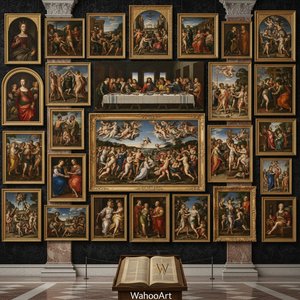
Jacopo Tintoretto: As 25 Obras-Primas do Mestre da Luz e Drama | OriginalUniqueArt
Descubra as 25 obras-primas de Jacopo Tintoretto, o mestre veneziano do Renascimento! Explore a história, técnica e emoção por trás de pinturas icônicas como 'O Milagre de São Marcos'. Encontre reproduções de arte exclusivas para decorar sua casa com OriginalUniqueArt.com.


