

 Visualizar na parede
 Compartilhar
 Compartilhar
 Detalhes
 Guia
Guia

 Baixar imagem
 Semelhantes
 Raio X
 Ver diaporama
 Estatísticas
Dublin Evening
 Oil On Canvas
- WallArt
- Expressionism
 1946
1946 23.0 x 36.0 cm
 Museu Ashmolean de Arte e Arqueologia
 Ler mais
A obra de arte exibida nesta página é protegida por leis de direitos autorais, o que significa que não podemos criar ou vender legalmente uma reprodução idêntica. Esta proteção é aplicada por meio de acordos internacionais, tais como a Convenção de Berna e pelas leis nacionais, incluindo as estabelecidas por Lei de Direitos Autorais dos EUA - Título 17.
Este método cumpre plenamente as regulamentações de direitos autorais, pois não envolve a cópia ou duplicação da obra protegida. Em vez disso, trata-se de uma reinterpretação criativa — uma nova pintura que é influenciada pela original, mas não idêntica a ela.
Giclée / Impressão de Arte
Impressão giclée ou em tela de qualidade de museu, com produção rápida e opções flexíveis de acabamento. ( Comprar pintura feita à mão Alternar para Imagem Digital)




P118B €10

P118H €10

P118W €10

P438Z €10

P508JH €12

P508YH €12

P805H €10

P805Z €10

P919BZ €10

P919G €10

P919XJ €10

P959ZH €10

P968JZ €12

W106C €8

W218G €10

W218JH €8

W218Y €10

W307PJ €10

W316G €10

W316PJ €8

W316Y €10

W398PJ €8

W4111J €10

W500HY €15

W500JH €15

W692G €12

W849H €8

W940BG €15

W953PJ €8




Escolha entre os nossos tamanhos pré-definidos que respeitam as proporções originais da obra de arte.

Insira a largura e a altura desejadas para se ajustarem à sua moldura ou parede. Uma impressão pode ser apenas cortada, nunca ampliada além da imagem original; portanto, um tamanho com proporções diferentes resultará na perda de parte da imagem. Enviamos uma maquete digital para sua aprovação antes de realizarmos a impressão. A imagem exibida nesta página não mostra o corte real — apenas a maquete o faz.
Entrega mundial () em 2 semanas, em vez das 4/5 semanas padrão. (27 Outubro)

Envio expresso gratuito para todo o mundo

Tela de Linho de Alta Qualidade

Seguro de transporte completo

Garantia de Reembolso de Impostos Alfandegários

Garantia de Fidelidade Cromática

Política de Devolução em 100 Dias (Apenas para Defeitos)

Garantia de reembolso de 100%

Oferta de desconto por quantidade
 A opção de vidro está disponível apenas para tamanhos inferiores a 110 cm

Dublin Evening
Giclée / Impressão de Arte
Tamanho da Reprodução
-


Preço Total
€ 70
Dublin Evening: A Portrait of Urban Solitude
Jack Butler Yeats’s “Dublin Evening,” painted in 1946, isn't merely a depiction of a street scene; it’s a poignant meditation on the quiet dignity and inherent loneliness of urban life. This oil painting, housed within the Ashmolean Museum in Oxford, captures a fleeting moment along St. Stephen’s Green, Dublin, rendered with Yeats’s signature blend of evocative realism and expressive abstraction. The work immediately draws the viewer into a scene populated by figures seemingly lost in their own thoughts – a cluster of men seated on benches, engaged in an unspoken ritual of observation. They are not grand heroes or dramatic characters; rather, they represent the everyday citizens of Dublin, quietly existing within the heart of the city.
Yeats’s style during this period is particularly compelling. He moved away from a purely illustrative approach, embracing a more gestural and emotionally charged technique. Notice how the paint itself seems to vibrate with energy – thick impasto strokes build up layers of color, creating a palpable sense of texture and movement. The figures are not sharply defined; instead, they’re suggested through loose brushwork and subtle shifts in tone, lending them an almost spectral quality. This deliberate ambiguity invites speculation about their individual stories and inner lives. The muted palette – dominated by blues, greens, and browns – reinforces the painting's melancholic mood, mirroring the subdued light of a late evening.
A Celtic Visionary: Context and Influences
To fully appreciate “Dublin Evening,” it’s crucial to understand Jack Butler Yeats’s broader artistic context. Born in London but deeply rooted in Irish culture, Yeats spent much of his life navigating the complexities of identity as an Anglo-Irish artist. His childhood experiences in Sligo profoundly shaped his work, imbuing it with a deep connection to the landscape and folklore of Ireland. He was heavily influenced by the Romantic movement, particularly its emphasis on emotion and the sublime beauty of nature – qualities he translated into his depictions of the Irish countryside.
However, Yeats’s artistic journey took an unexpected turn in the 1920s, as he embraced Expressionism. This shift is powerfully evident in “Dublin Evening.” He began to experiment with bolder colors, distorted forms, and a more direct approach to conveying emotion. His work became increasingly concerned with capturing the psychological states of his subjects – their anxieties, hopes, and vulnerabilities. The painting’s quiet intensity reflects this evolving artistic sensibility.
Symbolism and Narrative Resonance
The title itself, “Dublin Evening,” is laden with symbolic weight. It evokes a sense of transition, of twilight and reflection. The men on the benches can be interpreted as representatives of Dublin society – perhaps observing the city’s changing fortunes, contemplating their own place within it, or simply seeking solace in shared silence. The act of sitting together, yet remaining largely apart, speaks to the inherent isolation that can exist even amidst human connection.
There's a subtle nod to James Joyce’s “Ulysses,” which was published just a few years later. The painting shares with the novel a focus on the mundane details of everyday life and a sense of searching for meaning within the ordinary. The figures, like Bloom, are caught in a moment of contemplation, grappling with the complexities of existence. Yeats’s masterful use of light and shadow further enhances this narrative resonance, creating an atmosphere of mystery and intrigue.
A Legacy of Quiet Intensity
“Dublin Evening” stands as one of Jack Butler Yeats's most enduring works – a testament to his ability to capture the essence of human experience with remarkable sensitivity and skill. It’s not a painting that shouts for attention; rather, it invites quiet contemplation and rewards repeated viewing. Its understated beauty and profound emotional depth continue to resonate with audiences today, solidifying Yeats’s place as one of Ireland's most important artists.
Perguntas e Respostas
A que período da carreira de Jack Butler Yeats pertence "Dublin Evening"?
"Dublin Evening" representa o Mature Period de Jack Butler Yeats.
Existem obras semelhantes a "Dublin Evening"?
Obras semelhantes a "Dublin Evening" estão listadas na página de Obras semelhantes desta obra.
Como o meio e o movimento se combinam em "Dublin Evening"?
"Dublin Evening", de Jack Butler Yeats combina a técnica de Oil On Canvas com o estilo Expressionism. Técnica e movimento descrevem a execução e o estilo da obra.
Biografia do Artista
Jack Butler Yeats (1871–1957): Ireland's Olympic medalist & leading 20th-century painter
Jack Butler Yeats, born in London, England, on August 29, 1871, was more than just a painter; he was a storyteller, a poet of the canvas, and a uniquely Irish voice resonating within the broader currents of modern art. Though initially overshadowed by his celebrated brother, the poet W.B. Yeats (William Butler Yeats), Jack carved out an artistic identity entirely his own—one deeply rooted in the landscapes, people, and spirit of Ireland. His journey began amidst a family steeped in creativity; his father, John Butler Yeats, was also a painter, instilling in young Jack a love for art from an early age. However, it was his formative years spent with his maternal grandparents in Sligo that truly shaped his artistic vision. The rugged beauty of the Irish countryside, the folklore whispered through generations, and the everyday lives of its inhabitants became enduring themes woven into the fabric of his work.- Early Life
- Romantic Echoes to Expressionist Fire
- A Champion of Irish Life & Olympic Glory
- Legacy & Enduring Influence
Early Life
Yeats was born in London, England. He was the youngest son of the Irish portraitist John Butler Yeats and Susan Yeats (née Pollexfen). He grew up in Sligo with his maternal grandparents, before returning to London in 1887 to live with his parents.He attended the Chiswick School of Artwith his sisters Elizabeth Yeats and Susan Yeats,learning “Freehand drawing in all its branches, practical Geometry and perspective, pottery"Romantic Echoes to Expressionist Fire
His early paintings were characterized by a lyrical romanticism, reminiscent of the Irish landscape tradition but imbued with a personal sensitivity. These works often depicted tranquil scenes of rural life, bathed in soft light and gentle hues.However, around 1920,his style underwent a dramatic transformation.Influenced by the burgeoning Expressionist movement in Europe, Yeats abandoned representational accuracy in favor of conveying raw emotion and subjective experience. His canvases erupted with vibrant, often jarring colors, bold brushstrokes, and distorted forms.This shift wasn’t merely stylistic; it reflected a deeper engagement with the complexities of modern life and the anxieties of a nation grappling with political upheaval and social change. He didn't simply paint what he *saw*; he painted what he *felt*. Recurring motifs emerged—horses galloping across windswept fields, bustling circus scenes brimming with energy, traveling players embodying both joy and melancholy—each serving as a vehicle for exploring universal themes of human existence: loneliness, suffering, resilience, and the search for meaning.A Champion of Irish Life & Olympic Glory
Central to Yeats’s artistic vision was his unwavering commitment to depicting Irish life in all its multifaceted glory.He wasn't interested in idyllic pastoral scenes or romanticized nationalism;instead, he sought to capture the gritty reality of everyday existence—the hardships faced by ordinary people, the vibrancy of street life, and the enduring spirit of a nation steeped in history and folklore. His paintings are populated with figures who embody this resilience: laborers, musicians, gamblers, and dreamers, each rendered with empathy and psychological depth.Yeats won a silver medal in the arts and culture segment at the 1924 Summer Olympicsin Paris for his painting *The Liffey Swim*, cementing his status not only as Ireland’s leading artist but also as a cultural ambassador.Legacy & Enduring Influence
Yeats stands as a towering figure in 20th-century Irish art, an artist who defied categorization and forged his own unique path.He was elected to the Royal Hibernian Academy in 1916,further solidifying his position within the Irish art establishment. Beyond painting, he was a prolific writer,producing novels, plays performed at the Abbey Theatre, and insightful essays. His stream-of-consciousness writing style even influenced literary giants like James Joyce.Critics have drawn comparisons between his work and that of Austrian Expressionist Oskar Kokoschka,recognizing a shared intensity of emotion and experimentation with form. Samuel Beckett lauded Yeats as one of the “greatest of our time,” while John Berger praised him as a “great painter” possessing a remarkable sense of the future.His legacy continues to inspire artists today,reminding us of the power of art to capture not just what is seen, but what is *felt*—the very essence of the human condition.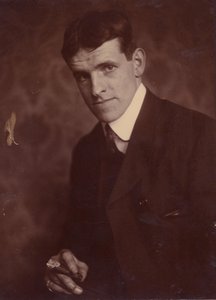
Jack Butler Yeats
1871 - 1957 , Reino Unido
Dados Rápidos
- Artistic Movement Or Style: Expressionismo
- Artists Or Movements Influenced By This Artist: ['Oskar Kokoschka']
- Artists Who Influenced This Artist:
- John Butler Yeats
- William Butler Yeats
- Date Of Birth: Londres, 29 agosto de 1871
- Date Of Death: Dublin, 28 março de 1957
- Full Name: Jack Butler Yeats
- Nationality: Irlandês
- Notable Artworks:
- A Rose Among Many Waters
- The Liffey Swim
- Place Of Birth: Londres, Reino Unido
Artigos Relacionados

Aquarelas Imortais: 10 Obras-Primas que Revolucionaram a Arte | OriginalUniqueArt
Descubra as 10 obras-primas em aquarela que revolucionaram a arte! Explore a história de Turner, Cézanne e outros mestres. Encontre reproduções de alta qualidade para decorar sua casa com elegância. OriginalUniqueArt: arte atemporal ao seu alcance.

Ephemeral Visions: Exploring the Artistic Legacy & Contemporary Practice of Watercolor Painting
Explore the captivating world of watercolor painting! Discover its rich history, essential techniques, influential artists & collecting tips. A comprehensive guide for art enthusiasts from OriginalUniqueArt.

Ephemeral Visions: Exploring the History & Emotional Resonance of Watercolor Painting
Explore the captivating history of watercolor painting, from ancient techniques to modern masters like Kandinsky & Blake. Discover essential artists, collecting tips & the emotional power of this luminous medium. Expert insights for art enthusiasts.

Ephemeral Visions: Exploring the Artistic Legacy & Nuances of Watercolor Painting
Explore the captivating world of watercolor painting! Discover its rich history, essential techniques, influential artists & collecting tips from art experts. A comprehensive guide for enthusiasts.

Aquarela Através dos Séculos: História, Técnicas e Prática Contemporânea
Explore a história da aquarela, domine técnicas essenciais e descubra artistas renomados. Guia completo para iniciantes e profissionais apaixonados por esta arte!