Visualizar na parede
 Compartilhar
 Compartilhar
 Detalhes
 Guia
Guia

 Baixar imagem
 Semelhantes
 Raio X
 Ver diaporama
 Q&A
Q&A Estatísticas
Marina


 Ler mais
Giclée / Impressão de Arte
Impressão giclée ou em tela de qualidade de museu, com produção rápida e opções flexíveis de acabamento. ( Comprar pintura feita à mão Alternar para Imagem Digital)




P118B €10

P118H €10

P118W €10

P438Z €10

P508JH €12

P508YH €12

P805H €10

P805Z €10

P919BZ €10

P919G €10

P919XJ €10

P959ZH €10

P968JZ €12

W106C €8

W218G €10

W218JH €8

W218Y €10

W307PJ €10

W316G €10

W316PJ €8

W316Y €10

W398PJ €8

W4111J €10

W500HY €15

W500JH €15

W692G €12

W849H €8

W940BG €15

W953PJ €8




Escolha entre os nossos tamanhos pré-definidos que respeitam as proporções originais da obra de arte.

Insira a largura e a altura desejadas para se ajustarem à sua moldura ou parede. Uma impressão pode ser apenas cortada, nunca ampliada além da imagem original; portanto, um tamanho com proporções diferentes resultará na perda de parte da imagem. Enviamos uma maquete digital para sua aprovação antes de realizarmos a impressão. A imagem exibida nesta página não mostra o corte real — apenas a maquete o faz.
Entrega mundial () em 2 semanas, em vez das 4/5 semanas padrão. (30 Outubro)

Envio expresso gratuito para todo o mundo

Tela de Linho de Alta Qualidade

Seguro de transporte completo

Garantia de Reembolso de Impostos Alfandegários

Garantia de Fidelidade Cromática

Política de Devolução em 100 Dias (Apenas para Defeitos)

Garantia de reembolso de 100%

Oferta de desconto por quantidade
 A opção de vidro está disponível apenas para tamanhos inferiores a 110 cm

Marina
Giclée / Impressão de Arte
Tamanho da Reprodução
-


Preço Total
€ 71
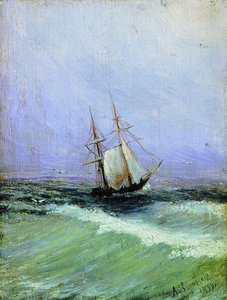
Marina: Uma Sinfonia de Movimento e Luz na Tela Ivan Aivazovsky
Este impressionista épico, “Marina,” pelo renomado artista russo Ivan Konstantinovich Aivazovsky, não é apenas uma pintura; é um testemunho da capacidade humana para capturar a beleza sublime e o poder inquietante do oceano. Criada em 1892, esta obra monumental apresenta uma pequena embarcação navegando sob uma atmosfera carregada de nuvens, uma cena que parece calma à primeira vista, mas que revela uma força motriz implícita na interação entre o espírito humano e a natureza selvagem. A escolha cuidadosa da composição – linhas horizontais dominantes representando a superfície do mar e o casco do barco – enfatiza a vastidão do oceano e convida o espectador a uma jornada sensorial.Estilo Impressionista: Uma Busca pela Essência da Luz
Aivazovsky abraçou o estilo impressionista com fervor, rejeitando os rígidos limites do realismo acadêmico em favor de uma abordagem que privilegiava a percepção sensorial e emocional. Como mencionado anteriormente, essa estética se caracteriza por pinceladas largas e visíveis, especialmente na água e no céu, criando uma sensação de fluxo constante e movimento. O artista não buscava reproduzir meticulosamente cada detalhe; ao contrário, ele empregou variações sutis de cor e tonalidade para sugerir profundidade e distância, capturando a atmosfera como ela realmente é naquele momento específico. Essa técnica inovadora refletiu o espírito da época, influenciado pelas ideias dos irmãos Monet e Renoir sobre como representar o mundo exterior.Contexto Histórico: O Romantismo Russo e a Celebração do Mar
A obra de Aivazovsky floresceu durante o período romântico russo, um movimento artístico que exaltava emoções intensas, imaginação livre e uma profunda conexão com a natureza. Em contraste com o racionalismo iluminista precedente, o romantismo buscava expressar os sentimentos mais profundos da alma humana, muitas vezes através de temas como aventura, liberdade e beleza sublime. Aivazovsky viveu em Feodosia, Crimea, onde encontrou inspiração constante na paisagem marítima circundante e recebeu apoio significativo do estado russo, consolidando seu lugar entre os artistas mais importantes do século XIX. Sua obra reflete o desejo da época de explorar novos horizontes estéticos e filosóficos, buscando beleza e significado além das fronteiras da razão.A Técnica Olhada Através dos Olhos do Impressionismo
O uso magistral de óleo sobre tela por Aivazovsky é fundamental para compreender a força emocional da pintura. As pinceladas largas e aparentemente aleatórias não são apenas uma escolha estética; elas refletem uma abordagem científica que buscava registrar os efeitos fugazes da luz e da atmosfera. O artista aplicou camadas de tinta com precisão, buscando criar uma textura rica e vibrante que capturasse a sensação do mar em movimento. Além disso, o método utilizado permitiu obter resultados surpreendentes na reprodução de detalhes como ondas e espuma, onde o olho humano teria dificuldade em perceber todos os elementos presentes. Essa técnica inovadora demonstra o profundo conhecimento científico dos artistas românticos sobre princípios ópticos e físicos.Um Legado Duradouro: A Beleza Eternizada da Natureza Selvagem
“Marina” permanece como um símbolo da beleza eterna da natureza selvagem e uma obra-prima do impressionismo russo, inspirando artistas e amantes da arte até hoje. Sua capacidade de transmitir emoções profundas e capturar a essência da luz e do movimento garante seu lugar entre os maiores feitos da pintura universal. Uma reprodução de alta qualidade permite apreciar todos os detalhes dessa magnífica criação artística e transportar o espectador para um momento mágico na história da arte.Perguntas e Respostas
Qual cor mais se destaca em "Marina"?
A cor que mais se destaca em "Marina" é Celadon (#b7c7db). A cor dominante é útil ao combinar uma obra de arte com um ambiente interno.
Qual o tamanho e a orientação de impressão sugeridos para "Marina", de Ivan Aivazovsky?
Recomenda-se uma impressão de "Marina", de Ivan Aivazovsky no tamanho Grande formato com orientação Orientação vertical.
Quão clara é a obra "Marina" no geral?
No geral, "Marina" é registrado como brilhante. A luminosidade percebida descreve o quão clara ou escura a obra parece ser.
Biografia do Artista
A Life Embraced by the Waves
Ivan Konstantinovich Aivazovsky, born Hovhannes Aivazian in 1817, was more than a painter of seascapes; he was a conduit to the ocean’s soul. His very existence seemed inextricably linked to the Black Sea—a vast, unpredictable expanse that would forever dominate his artistic vision and fuel an extraordinary career spanning nearly six decades. Born in the Crimean port city of Feodosia, Aivazovsky didn't merely observe the sea; he felt it – its raw energy, sublime beauty, and inherent danger becoming the very essence of his art. From a young age, this connection was nurtured, initially by local architect Jacob Koch who recognized the boy’s talent, then blossoming within the rigorous academic environment of the Imperial Academy of Arts in Saint Petersburg. Yet, formal training alone couldn't account for the depth of Aivazovsky’s understanding; it was the constant presence of salt-laced air and the cries of gulls that truly shaped his artistic sensibility. His Armenian heritage also played a significant role, as he was baptized at the St. Sargis Armenian Church in Feodosia and maintained strong cultural ties throughout his life, occasionally incorporating Armenian themes into his expansive body of work.The Early Years and Artistic Foundations
Aivazovsky’s early years were steeped in the maritime traditions of Feodosia, a bustling port city with deep roots in trade and seafaring. His family, of Armenian descent, had migrated from Western Armenia to Crimea centuries earlier, establishing themselves as merchants and artisans. This exposure to the sea—the ships, the sailors, the rhythms of coastal life—proved formative, shaping his artistic sensibilities long before he entered the formal training of the Imperial Academy of Arts in Saint Petersburg. There, he honed his skills under the tutelage of established masters, mastering techniques of perspective, composition, and color theory. However, Aivazovsky’s unique vision extended beyond traditional academic principles. He sought to capture not just the *appearance* of the sea, but its very *spirit*, its power, and its emotional resonance. This desire for authenticity led him to spend countless hours observing the Black Sea firsthand, sketching scenes from memory, and immersing himself in the sensory experience of the maritime world. His early works, often depicting coastal towns and harbors, demonstrated a remarkable ability to capture light and atmosphere—qualities that would become hallmarks of his mature style.The Italian Interlude: Refining the Vision
In the early 1840s, Aivazovsky embarked on a transformative journey to Italy, a period considered crucial in the development of his artistic voice. He spent several months exploring the landscapes and light of Venice, Florence, Naples, and Rome, absorbing the techniques of Italian masters such as Canaletto and Turner. This immersion in a new artistic environment broadened his horizons, allowing him to experiment with different color palettes, brushstrokes, and compositional approaches. The vibrant colors and dramatic lighting of the Italian landscape profoundly influenced his work, adding a richness and intensity that characterized many of his later seascapes. He began to incorporate elements of Romanticism into his paintings—a heightened sense of emotion, an emphasis on nature’s power, and a fascination with sublime landscapes. It was during this period that he developed his signature style: loose brushstrokes, vibrant colors, and a dynamic use of light and shadow to convey the movement and energy of the sea.Service to the Russian Navy and Artistic Recognition
Upon returning to Russia in 1844, Aivazovsky’s artistic talents quickly gained recognition. He was appointed as the main painter of the Russian Navy—a position that provided him with unparalleled access to naval life, ship battles, and firsthand observation of maritime activity. This appointment not only secured his financial stability but also profoundly influenced his work, leading to a series of powerful paintings depicting naval engagements, such as *The Battle of Navarino* (1846), a monumental depiction of the pivotal 1827 battle that effectively ended the Ottoman Empire’s dominance in the Eastern Mediterranean. His depictions were not merely historical records; they were imbued with a sense of drama, heroism, and the raw power of naval warfare. Aivazovsky's work became synonymous with Russian naval prowess, solidifying his reputation as one of Russia’s greatest artists. He continued to serve the Navy for decades, producing countless paintings that celebrated the nation’s maritime achievements.A Legacy of Seascapes: Style and Influence
Ivan Konstantinovich Aivazovsky's artistic legacy is primarily defined by his extraordinary seascapes—paintings that capture the essence of the ocean with unparalleled skill and emotional depth. His technique involved layering thin washes of paint to create luminous effects, capturing the shimmering play of light on the waves and seafoam. He was a master of atmospheric perspective, creating a sense of distance and depth through subtle variations in color and tone. Aivazovsky’s paintings are characterized by their dynamic compositions, vibrant colors, and evocative mood—a blend of realism and Romanticism that continues to captivate viewers today. His influence on subsequent generations of Russian landscape painters is undeniable, establishing a new standard for depicting the sea as both a powerful force of nature and a source of sublime beauty. Works like *The Ninth Wave* (1850), with its depiction of a devastating shipwreck, remain iconic examples of his artistic vision—a testament to his ability to convey both terror and awe through his art. His paintings are exhibited in museums worldwide, ensuring that the legacy of this remarkable artist will endure for generations to come.- Key Characteristics: Loose brushstrokes, vibrant colors, dynamic compositions, atmospheric perspective, evocative mood.
- Notable Works: *The Ninth Wave*, *Battle of Navarino*, *Seascape with Full Moon*.
- Historical Significance: Aivazovsky’s paintings helped to shape the image of Russia as a major naval power and influenced generations of Russian artists.

Ivan Aivazovsky
1817 - 1900 , Ucrânia
Dados Rápidos
- Artistic Movement Or Style: Romantismo, Arte Marinha
- Artists Or Movements Influenced By This Artist: Pintura Romântica Russa
- Artists Who Influenced This Artist: Pintura de paisagens russas
- Date Of Birth: 1817
- Date Of Death: 1900
- Full Name: Ivan Konstantinovich Aivazovsky
- Nationality: Russo-Armênio
- Notable Artworks:
- Oitava Onda
- Navio em Tempestade
- Paisagem com Lua Cheia
- Place Of Birth: Feodosia, Rússia
Artigos Relacionados
Navigating the Depths of Representation: A Historical Exploration of Marine Painting
Explore the rich history of marine painting with OriginalUniqueArt. Discover Dutch Masters, Romantic seascapes & renowned artists like Wyllie and Harris. Expert guidance for collectors & custom reproductions.
The Allure of the Horizon: A Comprehensive Exploration of Seascape Art Through History & Emotion
Explore the captivating world of seascape art! Discover its history, key artists & movements – from Dutch Masters to Impressionism. Expert insights for collectors and enthusiasts at OriginalUniqueArt.

Envio e Devoluções
APS oferece envio de arte internacional com o cuidado de nível museu, rastreamento completo e garantia de reembolso em 100 dias. Do suporte aduaneiro ao Priority Production, confie em um serviço transparente, embalagem segura e entrega confiável para colecionadores, designers e galerias.
Ivan Aivazovsky: Mastering Light & Emotion in 19th-Century Marine Painting
Explore the captivating world of Ivan Aivazovsky, a master of 19th-century marine painting. Discover his techniques, iconic artworks & lasting legacy in this expert guide.
The Azure Depths: Exploring Representations of the Ocean in Art History
Explore the rich history of ocean art! Discover Romantic seascapes, renowned artists like Aivazovsky & Harris, and expert guidance for collectors at OriginalUniqueArt.com.