Visualizar na parede
 Compartilhar
 Compartilhar
 Detalhes
 Guia
Guia

 Baixar imagem
 Semelhantes
 Raio X
 Ver diaporama
 Q&A
Q&A Estatísticas
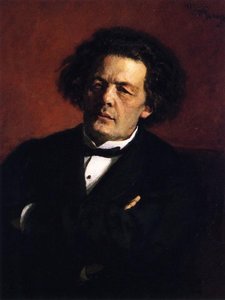
Portrait of Dmitry Mendeleev

- 58.0 x 46.0 cm


 Ler mais
Giclée / Impressão de Arte
Impressão giclée ou em tela de qualidade de museu, com produção rápida e opções flexíveis de acabamento. ( Comprar pintura feita à mão Alternar para Imagem Digital)




P118B €10

P118H €10

P118W €10

P438Z €10

P508JH €12

P508YH €12

P805H €10

P805Z €10

P919BZ €10

P919G €10

P919XJ €10

P959ZH €10

P968JZ €12

W106C €8

W218G €10

W218JH €8

W218Y €10

W307PJ €10

W316G €10

W316PJ €8

W316Y €10

W398PJ €8

W4111J €10

W500HY €15

W500JH €15

W692G €12

W849H €8

W940BG €15

W953PJ €8




Escolha entre os nossos tamanhos pré-definidos que respeitam as proporções originais da obra de arte.

Insira a largura e a altura desejadas para se ajustarem à sua moldura ou parede. Uma impressão pode ser apenas cortada, nunca ampliada além da imagem original; portanto, um tamanho com proporções diferentes resultará na perda de parte da imagem. Enviamos uma maquete digital para sua aprovação antes de realizarmos a impressão. A imagem exibida nesta página não mostra o corte real — apenas a maquete o faz.
Entrega mundial () em 2 semanas, em vez das 4/5 semanas padrão. (2 Novembro)

Envio expresso gratuito para todo o mundo

Tela de Linho de Alta Qualidade

Seguro de transporte completo

Garantia de Reembolso de Impostos Alfandegários

Garantia de Fidelidade Cromática

Política de Devolução em 100 Dias (Apenas para Defeitos)

Garantia de reembolso de 100%

Oferta de desconto por quantidade
 A opção de vidro está disponível apenas para tamanhos inferiores a 110 cm

Portrait of Dmitry Mendeleev
Giclée / Impressão de Arte
Tamanho da Reprodução
-


Preço Total
€ 71
A Portrait of Scientific Genius: Repin’s ‘Portrait of Dmitry Mendeleev’
This meticulously rendered portrait, measuring 58 x 46 cm and dating back to 1885, offers a captivating glimpse into the mind of Dmitri Ivanovich Mendeleev, the visionary chemist who formulated the periodic table – arguably one of the most influential scientific achievements of all time. Painted by the masterful Ilya Repin, a cornerstone of Russian Realism, this work transcends a simple likeness; it’s an embodiment of intellectual rigor and quiet contemplation. The subject, seated with a book in hand amidst a carefully arranged collection of volumes, exudes an aura of profound concentration, inviting us to share in his world of elemental relationships. Repin's ability to capture not just physical appearance but also the very essence of a man deeply engaged in thought is strikingly evident here.The Artist’s Vision: Repin and the Russian Realist Movement
Ilya Yefimovich Repin, born in 1844 in Chuguev, Russia, was a pivotal figure in the development of Russian art. His early life, steeped in rural Ukrainian traditions through his parents' influence, profoundly shaped his artistic perspective. Repin’s commitment to Realism – a movement rejecting idealized depictions in favor of portraying everyday subjects with unflinching honesty – is powerfully demonstrated in this portrait. Unlike the polished portraits commissioned by the aristocracy, Repin sought to capture the character and intellect of individuals like Mendeleev, reflecting a growing interest within Russian art at the time in depicting the lives of ordinary people and intellectual pursuits. His apprenticeship under icon painter Ivan Bunakov provided him with a foundational understanding of composition and technique, which he skillfully adapted to his burgeoning Realist style.Symbolism Within the Scene: Books and Intellectual Pursuit
The carefully arranged books surrounding Mendeleev are not merely decorative elements; they are potent symbols of his intellectual world. The presence of numerous volumes suggests a deep engagement with scientific literature, representing the vast knowledge he had absorbed and synthesized. The open book in his hand likely contains notes or observations related to his groundbreaking work on atomic weights and their relationships – the very foundation of the periodic table. The scattered books further emphasize the process of discovery, hinting at the countless hours spent researching, experimenting, and theorizing. This deliberate arrangement elevates the portrait beyond a simple representation of a man; it’s an exploration of the mind itself.Technique and Impression: Repin's Masterful Brushwork
Repin employed his characteristic technique – characterized by loose brushstrokes and a vibrant, almost luminous palette – to capture the texture of Mendeleev’s clothing and the subtle nuances of his expression. The use of light and shadow creates a sense of depth and volume, drawing the viewer's eye directly to the subject's face. The slightly blurred edges and soft focus contribute to an impressionistic effect, suggesting not just a static image but also the fleeting nature of thought and observation. This masterful execution, combined with Repin’s keen understanding of human psychology, results in a portrait that is both visually stunning and emotionally resonant. NonePerguntas e Respostas
Qual é a cor predominante de "Portrait of Dmitry Mendeleev", de Ilia Repin?
A cor dominante de "Portrait of Dmitry Mendeleev", de Ilia Repin é Phthalo Green (#1f2f2d).
Qual é a intensidade do contraste em "Portrait of Dmitry Mendeleev", de Ilia Repin?
O contraste entre claro e escuro de "Portrait of Dmitry Mendeleev" é registrado como Balanced. O contraste descreve a intensidade da diferença entre as áreas claras e escuras.
Qual é a orientação de "Portrait of Dmitry Mendeleev", de Ilia Repin?
"Portrait of Dmitry Mendeleev", de Ilia Repin é uma composição em Portrait. Vale a pena conferir as proporções antes de escolher o tamanho da impressão.
Biografia do Artista
Early Life and the Seeds of Realism
Ilya Yefimovich Repin, a name that resonates deeply within the heart of Russian art, was born in 1844 in the unassuming Ukrainian town of Chuguev. His origins were far removed from the opulent circles often associated with artistic patronage; his father, a former soldier who traded horses, and his mother, rooted firmly in local traditions, instilled in young Ilya a profound connection to the land and its people – an understanding that would become the very foundation of his artistic vision. Formal education began at a modest school overseen by his mother, but this was followed by a period at a military cantonist school, an experience he later recalled with a touch of melancholy. Yet, even within the strict confines of military discipline, his innate talent for drawing blossomed, revealing a nascent gift that would soon take shape under the guidance of skilled mentors. At sixteen, he embarked on an apprenticeship with Ivan Bunakov, an icon painter, immersing himself in the meticulous techniques and rich symbolism of religious art. This formative period wasn’t merely about mastering brushstrokes; it was a crucial immersion into the visual language of Russian culture – a deep dive into its history, beliefs, and traditions that would inform his later explorations of national identity and social commentary. Through restoring ancient icons and fulfilling portrait commissions for various patrons, Repin began to observe humanity with an observant eye, honing his ability to capture not just appearances but also the essence of human character—a skill he would refine throughout his illustrious career.St. Petersburg and the Embrace of Social Consciousness
Driven by an unyielding ambition, Ilya Yefimovich Repin journeyed to St. Petersburg in 1863, seeking admission to the prestigious Imperial Academy of Fine Arts. Initial rejection didn’t deter him; instead, he diligently audited classes, absorbing the vibrant artistic atmosphere of the city and engaging with its leading figures. It was here that he encountered Ivan Kramskoi, a pivotal figure within the Peredvizhniki movement – a collective of realist artists who boldly rejected the rigid conventions of academic art and sought to depict Russian life with unflinching honesty and social awareness. Kramskoi became Repin’s mentor, guiding him towards a more politically engaged approach to his work. The influence of critic Vladimir Stasov was also instrumental, encouraging Repin to focus on contemporary themes, the lives of ordinary people, and the injustices prevalent in Tsarist Russia. This period marked a significant shift in Repin's artistic trajectory – he began to see art as a tool for social commentary and reform. His talent quickly gained recognition, earning him awards and accolades, including gold medals for his paintings “Job and His Friends” (1869) and "The Raising of Jairus’ Daughter" (1871). These early successes signaled the arrival of a powerful new voice in Russian art – one that would challenge established norms and capture the struggles and triumphs of the common people. A particularly formative experience was his journey along the Volga River in 1870, sketching the arduous lives of barge haulers—a scene that would later inspire his most celebrated masterpiece.Masterpieces of Realism and Historical Drama
Repin’s name became inextricably linked with realism through a series of paintings that unflinchingly portrayed the realities of Russian society. “Barge Haulers on the Volga” (1873), a monumental canvas depicting exhausted laborers dragging boats along the river, shocked and captivated audiences. It wasn't merely a depiction of physical hardship; it was a searing indictment of social injustice, exploitation, and the plight of the working class—a powerful statement rendered with remarkable detail and emotional intensity. This painting launched Repin into national prominence and firmly established him as a leading voice for the marginalized. He continued to explore themes of Russian life in works such as *“Religious Procession in Kursk Province”* (1883), which offered a nuanced portrayal of faith, superstition, and social hierarchy, revealing the complexities of rural Russian society. However, Repin’s artistic vision extended beyond contemporary issues; he also tackled historical subjects with dramatic flair. “Ivan the Terrible and His Son Ivan” (1885), depicting the horrifying moment when Tsar Ivan IV orders the execution of his son, is a psychologically intense portrayal of grief, remorse, and the devastating consequences of unchecked power—a chilling reminder of human fallibility. Perhaps his most celebrated painting is *“Reply of the Zaporozhian Cossacks”* (1880-91), a vibrant and dynamic scene capturing the defiant spirit of Ukrainian Cossacks composing a satirical letter to the Ottoman Sultan – a symbol of resistance, national pride, and the enduring strength of the human will. These paintings were not simply historical recreations; they were imbued with psychological depth, emotional intensity, and a profound understanding of the human condition, bringing the past vividly to life for viewers.Legacy and Enduring Influence
Throughout his long and prolific career, Repin continued to paint portraits of prominent figures – Leo Tolstoy, Modest Mussorgsky, Pavel Tretyakov – capturing their personalities with remarkable insight and empathy. He also served as a teacher at the Academy of Arts in St. Petersburg, shaping the artistic sensibilities of generations of young painters. His commitment to realism and social commentary resonated deeply within Russia and beyond, establishing him as a major figure in European art. Initially embracing the February Revolution of 1917, Repin was profoundly disillusioned by the subsequent violence and terror unleashed by the Bolsheviks following the October Revolution. He retreated to his estate, Penates, in Kuokkala (now Repino), Finland, where he continued to paint until his death in 1930. Repin’s legacy extends far beyond his individual paintings. He helped define Russian realism, paving the way for Socialist Realism and inspiring countless artists to use their work as a means of social critique. His ability to capture the human condition with both empathy and unflinching honesty continues to resonate with audiences today, ensuring his place among the masters of 19th-century art. Penates, his beloved country home, now stands as a museum, preserving not only his artistic legacy but also offering a glimpse into the life of one of Russia’s most important cultural figures—a testament to a man who used his art to illuminate the complexities and contradictions of his time.
Ilia Repin
1844 - 1930 , Rússia
Dados Rápidos
- Artistic Movement Or Style: Realismo
- Artists Or Movements Influenced By This Artist: ['Peredvizhniki']
- Artists Who Influenced This Artist:
- Kramskoi
- Stasov
- Date Of Birth: 1844
- Date Of Death: 1930
- Full Name: Ilya Yefimovich Repin
- Nationality: Russo-Ucraniano
- Notable Artworks:
- Volga Barge Haulers
- Resposta dos Zaporozhianos
- Ivan o Terrível...
- Place Of Birth (City And Country): Chuguev, Rússia
Artigos Relacionados

Ivan Bilibin: A Synthesis of Folklore, Modernism & National Identity in Russian Illustration
Explore the enchanting world of Ivan Bilibin, a master Russian illustrator who synthesized folklore, Art Nouveau & national identity. Discover his iconic fairy tale illustrations and legacy with OriginalUniqueArt.
Transforming Spaces: A Comprehensive Exploration of Wall Decor Through Art History & Contemporary Practice
Explore the art of transforming spaces with our comprehensive guide to wall decor. From historical movements to contemporary trends, discover how to curate impactful interiors and commission bespoke artwork for a truly personalized aesthetic.

Vladimir Makovsky: Realism, Social Commentary & Russian Life in Late 19th-Century Painting
Explore the captivating world of Vladimir Makovsky, a leading Russian realist painter. Discover his insightful depictions of 19th-century life, social commentary & legacy with OriginalUniqueArt.
Século XIX na Arte: 10 Obras que Definem uma Era | OriginalUniqueArt
Mergulhe no século XIX com 10 obras de arte icônicas! Explore Monet, Renoir e Van Gogh. Descubra a história, técnica e emoção por trás dos mestres do Impressionismo e Realismo. Encontre reproduções de alta qualidade em OriginalUniqueArt.com.
Ilya Repin: Realism, Revolution & the Russian Soul – A Comprehensive Exploration of Life and Legacy
Explore the life & legacy of Ilya Repin, Russia's leading realist painter. Discover his iconic works like 'Barge Haulers on the Volga,' social commentary, and profound portraits. A comprehensive guide for art enthusiasts.