Romanticism · 1800
Architecture with Figures (Hubert Robert, 1800)
Hubert Robert (1733–1808) criou Architecture with Figures. Data de 1800. Pertence ao movimento Romanticism. É feito em Oil On Paper. Está conservada no Statens Museum For Kunst, em Copenhague, Dinamarca. Mede 86 × 106 cm.
- 1800
- Oil On Paper
- 86 × 106 cm
- Statens Museum For Kunst, Copenhague

 Visualizar na parede

 Pintura a Óleo Feita à Mão
 Compartilhar
 Compartilhar
 Ficha técnica


 Baixar imagem
 Semelhantes
 Raio X
 Ver diaporama
 Perguntas e Respostas

 Estatísticas
Architecture with Figures, em resumo
- Título
- Architecture with Figures
- Artista
- Hubert Robert (1733–1808)
- Artista nascido em
- Paris, França
- Data
- 1800
- Técnica
- Oil On Paper
- Dimensões
- 86 × 106 cm
- Onde ver
- Statens Museum For Kunst, Copenhague, Dinamarca
- Movimento
- Romanticism
- Período
- 19th Century
- Tema
- architecture, figures, columns, ruins, sky, stone
O que Architecture with Figures retrata?
Identification of Architecture with Figures
Architecture with Figures is a painting by the French artist Hubert Robert. This work dates to about 1800. The artist, who was a member of the school of Romanticism, produced this piece during a period of significant transition in French art. Robert's background in both sculpture and painting informs the structural presence of the subjects within this composition.
The artwork depicts a scene of monumental classical ruins. The subject matter focuses on three figures—a standing man, a seated woman, and an older seated figure—who interact near a stone basin or altar. These figures are positioned amidst large-scale architectural elements, including massive columns and an arched structure. The scene is set under a vast, cloudy sky, with an obelisk visible in the distance to establish depth.
The visual presentation of the work relies on a monochromatic palette. It utilizes various shades of grey, black, and white to define the forms. This approach emphasizes the interplay of light and shadow across the textures of weathered stone, smooth marble, and soft fabric. The composition uses strong vertical lines from the columns and the obelisk to contrast with the curved lines of the arches and the draped clothing of the figures.
The Composition and Visual Elements
The composition is organized around large-scale architectural elements that establish a sense of monumental scale. On the right side, massive columns rise vertically, while an arched structure on the left side of the frame creates a boundary for the central scene. These structural components frame a central group of three figures positioned near a stone basin or altar. This group consists of a standing man, a seated woman, and an older seated figure engaged in interaction. In the background, an obelisk is placed in the distance, contributing to the receding perspective and the depth of the scene.
The color palette is monochromatic, utilizing various shades of grey, black, and white. This lack of hue emphasizes the interplay of light and shadow across the various surfaces. Dramatic lighting originates from a directional source, casting deep shadows and creating bright highlights on the textures of the weathered stone, the smooth marble, and the soft fabric of the draped clothing. The arrangement of lines reinforces the structural order, using strong verticality through the columns and the obelisk, contrasted by the curved lines of the classical arches and the organic forms of the figures and scattered flowers.
Technique and Artistic Method
The medium of this work appears to be a monochrome painting, likely executed in oil or wash on paper. The artist employs fine brushwork to render the intricate details of the architectural elements and the folds of the drapery. These precise strokes define the textures of the weathered stone and the soft surfaces of the fabric worn by the figures.
Robert frequently utilized the alla prima technique in his practice. This method involves applying paint in a direct and spontaneous manner. Such an approach allows for a sense of immediacy in the execution of the composition. The application of pigment creates a clear distinction between the solid, geometric forms of the columns and the more organic, fluid shapes of the human figures and scattered flowers.
The Artistic Style of Hubert Robert
Hubert Robert is noted for his landscape paintings and his development of the capriccio. These works consist of semi-fictitious, picturesque depictions of ruins located in Italy and France. His approach to these subjects involves a specific method of blending careful observation with a heightened imagination. This combination allows for the construction of theatrical atmospheres within the landscape. He often uses atmospheric perspective to soften distant horizons, which creates a sense of depth and space.
The artist's technique is characterized by a versatility that moves between the precision of a draftsman and the fluid touch of a painter. He frequently employed the alla prima technique, applying paint in a direct and spontaneous manner. This method contributes to the immediacy of his compositions. His work often utilizes light and shadow to manipulate the perception of space, using these elements to suggest a sense of history within the architectural forms.
Em qual museu se encontra Architecture with Figures?
Statens Museum For Kunst
Copenhague, Dinamarca
A História e as Origens do SMK O Statens Museum For Kunst remonta a sua linhagem às coleções de arte privadas acumuladas pelos monarcas dinamarqueses. Estes tesouros reais serviram de alicerce para o que viria a ser o maior museu de arte da Dinamarca. Embora as raízes da instituição estejam ligadas a estas coleções soberanas, a sua fundação formal é marcada por dois momentos cruciais: o museu foi estabelecido em 1824 e, mais tarde, em 1896, assumiu a sua identidade atual.


Imagens em alta resolução de Architecture with Figures

Hubert Robert, Architecture with Figures (1800), Statens Museum For Kunst. Domínio público.
Perguntas sobre Architecture with Figures respondidas
Onde posso ver a obra original "Architecture with Figures", de Hubert Robert?
A obra original "Architecture with Figures" pode ser vista no Statens Museum For Kunst, Copenhague, Dinamarca.
Em que ano foi criado "Architecture with Figures", de Hubert Robert?
"Architecture with Figures", de Hubert Robert foi criado em 1800.
Qual técnica foi utilizada em "Architecture with Figures", de Hubert Robert?
A técnica de "Architecture with Figures", de Hubert Robert é Oil On Paper. As reproduções visam reproduzir a aparência desta técnica.
Quais são as dimensões de "Architecture with Figures", de Hubert Robert na vida real?
As dimensões registradas de "Architecture with Figures", de Hubert Robert são 86.0 x 106.0cm. Reproduções podem ser encomendadas em outros tamanhos, mantendo as mesmas proporções.
O que representa "Architecture with Figures"?
"Architecture with Figures", de Hubert Robert retrata: architecture, figures, columns, ruins, sky, stone, drapery.
A imagem de "Architecture with Figures", de Hubert Robert pode ser reproduzida livremente?
"Architecture with Figures", de Hubert Robert está em em domínio público — seus direitos autorais expiraram. Este status determina como a imagem da obra pode ser reproduzida.
Quem criou "Architecture with Figures"?
"Architecture with Figures" é atribuída a Hubert Robert.
A qual movimento artístico "Architecture with Figures", de Hubert Robert pertence?
"Architecture with Figures" é uma obra do Romanticism. O movimento indica a tradição artística da qual a obra faz parte.
A que fase da trajetória de Hubert Robert "Architecture with Figures" pertence?
"Architecture with Figures" representa o Late Period de Hubert Robert.
Sobre o artista, Hubert Robert
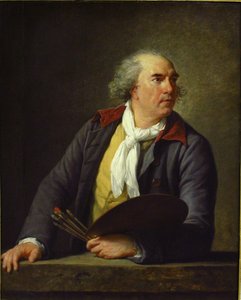
1733–1808, França
Hubert Robert
Vida Inicial, Família e Formação Artística Nascido em Paris em 1733, Hubert Robert ingressou em um mundo onde o status social de sua família estava intrinsecamente ligado ao serviço a outrem. Seu pai, Nicolas Robert, ocupava uma posição na residência de uma figura proeminente, uma conexão que, eventualmente, facilitaria a ascensão do jovem pelos escalões superiores da sociedade francesa. Essa estabilidade precoce forneceu o alicerce para uma educação formal, que ele buscou através do ambiente estruturado do Collège de Navarre. Por volta de 1751, ele já havia concluído seus estudos sob a tutela dos Jesuítas, adquirindo um sólido e disciplinado repertório intelectual antes de voltar sua atenção para as artes visuais.
Também de Hubert Robert
 The Pont du Gard1787
 The Finding of the Laocoön1773
 Le port de Ripetta
 PROJET D'AMENAGEMENT DE LA GRANDE GALERIE DU LOUVRE

Ensaios sobre Architecture with Figures
 Hubert Robert: Picturing Ruins, Preserving Memory – A Study of Romantic Antiquarianism & Artistic InnovationExplore the captivating world of Hubert Robert, master of Romantic landscape painting & 'capriccio' ruins. Discover his historical context,…
 Vedute and Capriccio: Distinguishing Topographical Views from Architectural FantasyMaster the difference between veduta and capriccio through expert art history analysis. Explore the masters of Italian landscape art today.
 French artworks of the 1880sFrench Impressionist masterpieces by Claude Monet, Pierre-Auguste Renoir, and Georges Seurat. Find museum-quality reproductions on Original…