() ·

A painting made for you, by hand

The Dance Lesson

Reprodução em Óleo Feita à Mão

Óleo sobre tela pintado à mão no tamanho e moldura de sua escolha, feito sob encomenda pelos nossos artistas. ( Alternar para Impressão Alternar para Imagem Digital)

Descrição do Item

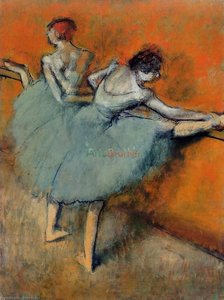
A mesmerizing pastel capture of ballet training by Edgar Degas brings the delicate movement and discipline of the Belle Époque to life, inviting you to explore this masterpiece of realist precision for your collection.

Biografia do Artista

Edgar Degas: um revolucionário artista francês, conhecido por seus deslumbrantes bailarinas, cenas parisienses e técnicas inovadoras – um mestre da arte moderna.

from ·

Chapter 1

How large should it be?

Slide to change the size; the picture on the left shows the frame at its real width. The proportions of the original are kept.

Tamanho padrão
personalizado
CM
INCH

Escolha entre os nossos tamanhos pré-definidos que respeitam as proporções originais da obra de arte.

largura
altura

Insira a largura e a altura desejadas para se ajustarem à sua moldura ou parede. Como esta obra é pintada à mão, para um tamanho com proporções diferentes, o artista poderá pintar um pouco mais ao redor da imagem ou reduzir ligeiramente a composição — você escolhe. Enviamos uma maquete digital para sua aprovação antes de iniciar a pintura. A imagem exibida nesta página não representa o resultado real — apenas a maquete mostra o resultado final.

Chapter 2

How should it arrive?

Choose the edges of the stretched canvas

Choose your frame

Corner sample of the WhiteWrap canvas edge finish, stretched on madeira maciça bars
White €1
Corner sample of the BlurSideWrap canvas edge finish, stretched on madeira maciça bars
Blurside €1
Corner sample of the ExtendedWrap canvas edge finish, stretched on madeira maciça bars
Extended €1
Corner sample of the P118B picture frame: poliestireno moldado, 5 cm wide and 3 cm thick
P118B €10
Corner sample of the P118H picture frame: poliestireno moldado, 5 cm wide and 3 cm thick
P118H €10
Corner sample of the P118W picture frame: poliestireno moldado, 5 cm wide and 3 cm thick
P118W €10
Corner sample of the P438Z picture frame: poliestireno moldado, 5.5 cm wide and 3.5 cm thick
P438Z €10
Corner sample of the P508JH picture frame: poliestireno moldado, 7 cm wide and 3.5 cm thick
P508JH €12
Corner sample of the P508YH picture frame: poliestireno moldado, 7 cm wide and 3.5 cm thick
P508YH €12
Corner sample of the P805H picture frame: poliestireno moldado, 5 cm wide and 3.5 cm thick
P805H €10
Corner sample of the P805Z picture frame: poliestireno moldado, 5 cm wide and 3.5 cm thick
P805Z €10
Corner sample of the P919BZ picture frame: poliestireno moldado, 7 cm wide and 3.5 cm thick
P919BZ €10
Corner sample of the P919G picture frame: poliestireno moldado, 7 cm wide and 3.5 cm thick
P919G €10
Corner sample of the P919XJ picture frame: poliestireno moldado, 7 cm wide and 3.5 cm thick
P919XJ €10
Corner sample of the P959ZH picture frame: poliestireno moldado, 5 cm wide and 3 cm thick
P959ZH €10
Corner sample of the P968JZ picture frame: poliestireno moldado, 6 cm wide and 4 cm thick
P968JZ €12
Corner sample of the W106C picture frame: madeira maciça, 5 cm wide and 3 cm thick
W106C €8
Corner sample of the W218G picture frame: madeira maciça, 5 cm wide and 3 cm thick
W218G €10
Corner sample of the W218JH picture frame: madeira maciça, 5 cm wide and 3 cm thick
W218JH €8
Corner sample of the W218Y picture frame: madeira maciça, 5 cm wide and 3 cm thick
W218Y €10
Corner sample of the W307PJ picture frame: madeira maciça, 6 cm wide and 3 cm thick
W307PJ €10
Corner sample of the W316G picture frame: madeira maciça, 6 cm wide and 3 cm thick
W316G €10
Corner sample of the W316PJ picture frame: madeira maciça, 6 cm wide and 3 cm thick
W316PJ €8
Corner sample of the W316Y picture frame: madeira maciça, 6 cm wide and 3 cm thick
W316Y €10
Corner sample of the W398PJ picture frame: madeira maciça, 5 cm wide and 3 cm thick
W398PJ €8
Corner sample of the W4111J picture frame: madeira maciça, 6.5 cm wide and 3.5 cm thick
W4111J €10
Corner sample of the W500HY picture frame: madeira maciça, 7 cm wide and 5 cm thick
W500HY €15
Corner sample of the W500JH picture frame: madeira maciça, 7 cm wide and 5 cm thick
W500JH €15
Corner sample of the W692G picture frame: madeira maciça, 8 cm wide and 4 cm thick
W692G €12
Corner sample of the W849H picture frame: madeira maciça, 5 cm wide and 3 cm thick
W849H €8
Corner sample of the W940BG picture frame: madeira maciça, 7.5 cm wide and 4.5 cm thick
W940BG €15
Corner sample of the W953PJ picture frame: madeira maciça, 6 cm wide and 3.5 cm thick
W953PJ €8
Corner sample of the H24-GOLD picture frame: madeira entalhada com gesso, 10 cm wide and 6 cm thick
H24-GOLD €30
Corner sample of the H24-SILVER picture frame: madeira entalhada com gesso, 10 cm wide and 6 cm thick
H24-SILVER €30
Corner sample of the H36-GOLD picture frame: madeira entalhada com gesso, 15 cm wide and 6.5 cm thick
H36-GOLD €45
Corner sample of the H36-SILVER picture frame: madeira entalhada com gesso, 15 cm wide and 6.5 cm thick
H36-SILVER €45
Prévia da moldura
Com moldura

Moulding: . Overall size with the frame: .

Chapter 3

Who paints it, and should anything change?

Examples of what can be changed: Replace face with customer photo; Add pet (e.g., replace cat with dog); Include hidden message in background; Change background landscape or elements.
After order, OriginalUniqueArt.com team will email client for instructions and provide a mockup preview

Entrega mundial () em 3 a 4 semanas, em vez das 5 semanas padrão. (2 Novembro). Sem comprometer a qualidade.

Chapter 4

The finishing touches

A nameplate, as in a museum?

Detalhes da Placa de Bronze Gravada

This elegant plaque features the artist's name and the title of the artwork, finely engraved for a timeless presentation.

It is made from bronze with a refined, elegant finish. The text is precisely laser-engraved for a sharp and permanent result. Measuring 9x2 cm, the plaque is compact yet easy to read. It's built to be durable and scratch-resistant, offering a professional, museum-quality look. Mounting is simple thanks to the included adhesive backing.

Detalhes da Placa de Acrílico Transparente

The plaque includes essential engraved details such as the artist's name, the title of the artwork, the date it was created, the type of media used-like oil on canvas or watercolor-a brief description of the piece, and a QR code that links to the complete artwork information.

It is crafted from clear acrylic, offering a sleek, modern appearance. The text is UV-engraved in black to ensure strong visual contrast. With a size of 10x15 cm, it ensures optimal readability. It comes equipped with two metal hooks for secure wall mounting. The plaque is designed to be weather-resistant, making it suitable for various environments, and it includes interactive features that work seamlessly with smartphone scanning.

Detalhes da Placa de Acrílico Preto

This elegant plaque includes engraved information such as the artist's name, the title of the artwork, the date it was created, the type of media used (like oil on canvas or watercolor), a short description of the artwork, and a QR code for quick access to more information.

The plaque itself is made from refined black acrylic with a premium finish. The text is laser-engraved in white for high contrast and readability. Its size is 10x15 cm, designed to be easy to read. It comes with two metal hooks for professional mounting. The design is sleek and fits any interior style. It is also weather-resistant and durable, with built-in digital integration for mobile compatibility.

A protective varnish?

When do you need it?

Chapter 5

Your painting, as you ordered it

The Dance Lesson

Técnica de Reprodução

Tamanho da Reprodução

-

Artista Sênior de Elite

Mais detalhes, refinamento e tempo de produção adicional

-

Moldura para Reprodução

-

-

Para obras de arte ou reproduções com mais de 105 cm (aproximadamente 41 polegadas) em qualquer um dos lados, a moldura será enviada como um kit desmontado. Este método garante uma entrega segura e evita danos durante o transporte.

Montagem profissional necessária — este não é um produto DIY (faça você mesmo).
O kit deve ser montado e a tela esticada por um profissional de molduraria experiente, utilizando cola de madeira (não inclusa), um alicate de esticar tela e grampos para manter as travessas alinhadas enquanto a cola seca. A montagem incorreta ou a tensão desigual da tela podem danificar permanentemente a obra de arte e não estão cobertas pela nossa garantia.

  • Todas as barras de madeira maciça estão incluídas, precisamente cortadas ao tamanho certo.

  • Montado com os parafusos fornecidos, além de cola para madeira para as junções dos cantos, que não está inclusa e deve ser providenciada pelo seu moldurista.

  • São necessárias ferramentas profissionais não incluídas: um alicate de estiramento de tela (esticador) e grampos para manter as ripas alinhadas enquanto a cola seca.

Importante:
As junções dos cantos requerem cola para madeira, as ripas devem ser mantidas com grampos até que a cola esteja completamente seca, e o estiramento da tela na moldura montada requer um alicate de esticar tela. Nenhum destes itens está incluído no kit. Por favor, certifique-se de contar com um profissional de molduraria experiente antes de encomendar este tamanho.

Etiqueta de identificação

-

-

Verniz de Proteção

Verniz brilhante (realça as cores e protege contra a luz e a umidade)

-

Personalizar minha obra

Exemplos de alterações possíveis: Substituir o rosto por uma foto do cliente; Adicionar um animal de estimação (ex.: substituir gato por cachorro); Incluir uma mensagem oculta no fundo; Alterar a paisagem ou os elementos do fundo.

-

Urgente

Entrega mundial () em 3 a 4 semanas, em vez das 5 semanas padrão. (2 Novembro). Sem comprometer a qualidade.

-

Envio Expresso

Entrega mundial para em 5 semanas. (9 Novembro).

Com envio incluído

Preço Total

€ 267

Preço Total € 267

A opção de vidro está disponível apenas para tamanhos inferiores a 110 cm

Included with every order

  • Envio expresso gratuito para todo o mundo
  • Tela de Linho de Alta Qualidade
  • Seguro de transporte completo
  • Garantia de Reembolso de Impostos Alfandegários
  • Garantia de Fidelidade Cromática
  • Política de Devolução em 100 Dias (Apenas para Defeitos)
  • Garantia de reembolso de 100%
  • Oferta de desconto por quantidade

A Moment Frozen in Motion: The Soul of Degas’s Mastery

In the quiet, sun-drenched corners of the late 19th-century Parisian studio, Edgar Degas found his most profound inspiration. His masterpiece, “The Dance Lesson,” completed in 1879, serves as a breathtaking window into a world defined by discipline and grace. Unlike many of his contemporaries who sought to capture the fleeting shimmer of light on water, Degas turned his gaze inward toward the human form in motion. This work is not merely a depiction of ballet training; it is a meticulously crafted meditation on the intersection of effort and elegance. Through his expert use of pastel, Degas invites the viewer to step into the room, feeling the stillness of the air and the focused intensity of a young dancer caught in a singular, transformative moment of practice.

The composition centers on a young girl, her form poised with a delicate balance of vulnerability and strength. As she stands on one leg, gripping the wooden barre for stability, the viewer witnesses the raw reality of artistic pursuit. Beside her, an older figure—perhaps an instructor or a seasoned observer—provides a grounding presence, embodying the weight of experience and guidance. The inclusion of a violin in the background adds a subtle, melodic layer to the visual narrative, suggesting that the rhythm of the music is inseparable from the rhythm of the dance. Every element, from the soft folds of her pink dress to the textured surface of the studio floor, contributes to a scene that feels both intimately private and universally resonant.

Technique and the Impressionist Paradox

While history often labels Degas as an Impressionist, he famously resisted the term, preferring to identify as a realist. This distinction is palpable in the technique of “The Dance Lesson.” Rather than relying on the broad, atmospheric strokes of oil paint, Degas utilized the unique properties of pastel to achieve a level of nuance that few could replicate. The medium allowed him to layer soft, powdery tones, creating subtle gradations that mimic the softness of skin and the ethereal quality of light filtering through studio windows. This tactile approach creates a surface that is rich with texture, inviting the eye to linger on the fine details of the dancers' movements and the atmospheric depth of the room.

His mastery of draftsmanship—honed through years of studying classical works in the Louvre—is evident in the precision of his lines. Even within the soft, blurred edges characteristic of the era, there is an unmistakable structural integrity to every limb and gesture. This tension between the softness of the medium and the rigor of the composition mirrors the subject matter itself: the softness of the ballet aesthetic contrasted with the grueling, disciplined reality of the dancer's life. For collectors and designers, this duality makes the piece a versatile treasure, capable of adding both a sense of classical sophistication and a modern, emotive energy to any curated space.

A Timeless Legacy for the Discerning Collector

Beyond its technical brilliance, “The Dance Lesson” carries a profound emotional weight that transcends time. It speaks to the universal themes of aspiration, perseverance, and the quiet beauty found in the pursuit of perfection. The painting captures the "Belle Époque" not through grand spectacles, but through the intimate, unvarnished truth of daily practice. It is a tribute to the unseen hours of toil that precede the public glory of the stage.

For those looking to adorn a home or gallery with art that inspires contemplation, a high-quality reproduction of this work offers more than just decoration; it offers a narrative. Whether placed in a contemporary minimalist setting where its soft pastels can provide warmth, or within a traditional study to highlight its historical depth, Degas’s vision remains as potent today as it was in 1879. To possess such a piece is to hold a fragment of Parisian history, a silent symphony of movement and light that continues to captivate the human spirit.

Perguntas e Respostas

Que sentimento transmite "The Dance Lesson", de Hilaire-Germain-Edgar Degas?

Em "The Dance Lesson", um clima Elegant acompanha uma emoção Calm.

Quão clara é a obra "The Dance Lesson" no geral?

No geral, "The Dance Lesson" é registrado como balanced. A luminosidade percebida descreve o quão clara ou escura a obra parece ser.

A que período da carreira de Hilaire-Germain-Edgar Degas pertence "The Dance Lesson"?

Dentro da trajetória de Hilaire-Germain-Edgar Degas, "The Dance Lesson" pertence ao período Mature Impressionism. Esta fase permite compará-la com outras obras do artista.

More about this painting

Visualizar na parede Visualizar em RA Alternar para Impressão Alternar para Imagem Digital Compartilhar
Detalhes Guia Adicionar aos favoritos Baixar imagem Semelhantes Raio X Ver diaporama Q&A Estatísticas

In numbers

  • 1879the year it was painted
  • 29frames to choose from
  • standard sizes, in its own proportions
  • 5weeks to paint and deliver it
Hilaire-Germain-Edgar Degas

Hilaire-Germain-Edgar Degas

1834 - 1917, França

Quick facts about Hilaire-Germain-Edgar Degas

  • Artistic Movement Or Style: Impressionismo, Realismo
  • Artists Or Movements Influenced By This Artist:
    • Picasso
    • Matisse
  • Artists Who Influenced This Artist:
    • Ingres
    • Courbet
    • Pissarro
  • Date Of Birth: 1834
  • Date Of Death: 1917
  • Full Name: Hilaire-Germain Edgar Degas
  • Nationality: Francês
  • Notable Artworks:
    • Dançarina e Tamborim
    • A Aula de Dança
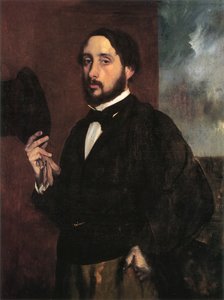
    • Degas no Casaco Verde
    • O Colecionador
    • Mulheres penteando seus cabelos
  • Place Of Birth: Paris, França

Biografia do Artista

A Life Immersed in Movement

Edgar Degas, born Hilaire-Germain-Edgar De Gas in Paris on July 19, 1834, stands as a captivating enigma within the annals of art history. Often categorized alongside the Impressionists—Monet, Renoir, and others who revolutionized painting in the late 19th century—Degas fiercely resisted this label, preferring to identify himself as a realist. This commitment stemmed from his unwavering dedication to meticulous observation of the world around him, translating it onto canvas with an honesty that was both startling and profoundly insightful. His early life unfolded within the comfortable confines of a bourgeois upbringing; his father, a banker, and his mother, hailing from a Creole family in New Orleans, afforded him access to education and artistic training—though he often felt constrained by the rigid expectations of academic tradition. Initially enrolled at the Lycée Louis-le-Grand, Degas’s true education began when he immersed himself in the Louvre, meticulously copying works by masters like Raphael and Michelangelo, honing his skills and igniting a lifelong passion for classical art. However, this early training wasn't simply about imitation; it was a springboard for constant questioning and reevaluation of artistic norms—a defining characteristic that would shape his entire career. He possessed an independent spirit, refusing to be confined by convention, and this rebellious streak fueled his unique artistic vision.

Beyond Impressionism: A Distinct Artistic Voice

While contemporaries like Monet chased the ephemeral beauty of light outdoors, capturing fleeting moments in plein air, Degas largely maintained a studio-based practice. His process involved constructing scenes from careful observation and memory, often working from sketches and studies made at a distance. This deliberate approach allowed him to analyze forms and compositions with an unparalleled level of detail. His subject matter deliberately shifted away from the historical or mythological themes favored by many academic painters, instead focusing on the vibrant, often gritty reality of Parisian life. He found inspiration in the everyday experiences of ordinary people: laundresses hauling their heavy loads, cabaret singers captivating audiences with their performances, milliners crafting elaborate hats, and, most famously, dancers—particularly those performing at the Paris Opera Ballet. Degas didn’t merely paint beautiful ballerinas; he sought to capture the grueling reality of their profession – the endless rehearsals, the physical strain, the fleeting moments of grace amidst a world of relentless labor. His compositions were frequently unconventional, cropping figures in unexpected ways and utilizing asymmetrical arrangements that created a sense of dynamism and immediacy. He was a master of capturing movement, not through blurred lines or hazy effects, but through precise observation and careful rendering of form. Works like *Dancer, A Group of Dancers*, *Women Combing Their Hair*, and *The Dance Class* exemplify this dedication to portraying the human figure in motion and revealing the complexities of modern life. He wasn’t interested in superficial beauty; he sought to expose the truth beneath the surface.

Influences and Artistic Development

Degas's artistic journey was a rich tapestry woven from diverse influences. His early training instilled in him a deep respect for classical principles, particularly the work of Jean-Auguste-Dominique Ingres, whose emphasis on draftsmanship and precise form profoundly impacted his style. However, he also drew inspiration from Realist painters like Gustave Courbet, who challenged academic conventions and championed the depiction of contemporary life with unflinching honesty. A pivotal moment in his development occurred through his association with Camille Pissarro, a leading Impressionist who encouraged him to experiment with new techniques and broadened his artistic horizons. Degas was particularly captivated by Japanese prints—Ukiyo-e—which exerted a significant influence on his compositions, inspiring him to embrace asymmetrical arrangements, flattened perspectives, and bold patterns. He also keenly observed photography, recognizing its potential as a tool for studying movement and capturing fleeting moments in time. This willingness to incorporate diverse influences into his work – from classical art to Japanese prints to the burgeoning field of photography – is what truly distinguishes Degas and contributes to the unique character of his art. He wasn’t afraid to borrow from different sources, synthesizing them into something entirely new.

Major Achievements and Legacy

Edgar Degas died in Paris on September 27, 1917, leaving behind a remarkably diverse body of work that continues to captivate and inspire audiences worldwide. His innovative approach to composition, his masterful draftsmanship, and his unflinching portrayal of modern life have had a profound impact on the course of art history. He wasn’t simply a painter of dancers or racehorses; he was a keen observer of human nature, a master of form and movement, and a true innovator who redefined the possibilities of art. His influence can be seen in the work of Pablo Picasso and Henri Matisse, among others, demonstrating his lasting legacy as a pivotal figure in the transition from realism to modernism. Museums across the globe—including the Musée d'Orsay and the Musée de l’Orangerie in Paris—house significant collections of his paintings, pastels, sculptures, and prints, ensuring that his artistic vision will continue to be appreciated for generations to come.
  • A Master of Line: Degas's exceptional draftsmanship set him apart.
  • Modern Life as Subject: He focused on contemporary Parisian scenes, breaking from tradition.
  • Influence on Future Artists: His work profoundly impacted Picasso and Matisse.

Key Works

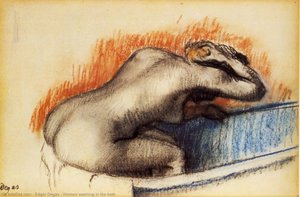
Among his most celebrated works are *Dancer and Tambourine*, a vibrant depiction of a ballerina in mid-performance; *The Ballet Class*, offering an intimate glimpse into the rigorous training of young dancers; *Degas in a Green Jacket*, capturing a candid moment of leisure; *The Collector*, showcasing a portrait of a wealthy art collector; and *Women Combing Their Hair*, a study of domestic life. These works, along with countless others, reveal Degas’s remarkable ability to capture the essence of his subjects – their beauty, their struggles, and their humanity.

Informações Rápidas

  • Dimensions: 65 x 56 cm
  • Subject or theme: Dance lesson; Ballet
  • Year: 1879
  • Medium: Pastel
  • Title: The Dance Lesson
  • Notable elements or techniques: Detailed observation; Pastel shading