Contemporary Realism · 1957
Falling Warrior (Henry Moore, 1957)
Henry Moore (1898–1986) criou Falling Warrior. Data de 1957. Pertence ao movimento Contemporary Realism. É feito em Bronze. Está conservada no National Museums Liverpool, em Liverpool, Reino Unido. Mede 48 × 147 cm.
- 1957
- Bronze
- 48 × 147 cm
- National Museums Liverpool

 Pintura a Óleo Feita à Mão
 Compartilhar
 Compartilhar
 Ficha técnica


 Baixar imagem
 Semelhantes
 Ver diaporama
 Perguntas e Respostas

 Estatísticas
Falling Warrior, em resumo
- Título
- Falling Warrior
- Artista
- Henry Moore (1898–1986)
- Artista nascido em
- Castleford, Reino Unido
- Data
- 1957
- Técnica
- Bronze
- Dimensões
- 48 × 147 cm
- Onde ver
- National Museums Liverpool, Liverpool, Reino Unido
- Movimento
- Contemporary Realism
- Período
- Modern
- Tema
- bronze sculpture, female figure, reclining pose, minimalism, organic form, tranquility
O que Falling Warrior retrata?
A Symphony of Bronze and Bone: The Essence of Falling Warrior
In the quiet halls of Tate Britain, there exists a moment of profound stillness captured in bronze—a masterpiece that breathes with the weight of history and the lightness of spirit. Henry Moore’s “Falling Warrior,” created between 1956 and 1957, is far more than a mere sculpture; it is a meditation on the very nature of existence. As one approaches this monumental work, the eye is immediately drawn to the fluid, undulating lines that define the female form. The figure lies horizontally, her body a landscape of soft curves and deliberate voids, evoking a sense of both immense strength and heartbreaking vulnerability. It is a piece that does not merely occupy space but commands it, inviting the viewer into a silent dialogue about resilience in the face of inevitable decline.
The brilliance of Moore’s technique lies in his ability to marry the tactile reality of metal with the ethereal quality of movement. Through a masterful process of modeling clay and subsequent bronze casting, Moore achieved a surface texture that feels alive. One can trace the subtle depressions and ridges that mimic the contours of flesh and bone, creating a rhythmic vitality that suggests the figure is caught in a single, breathless moment of transition. His pioneering use of negative space—the intentional piercing of the form—allows light to pass through the sculpture, integrating the surrounding environment into the artwork itself. This interplay of solid mass and hollow void creates a dynamic tension, making the bronze appear deceptively supple, as if the warrior might stir at any moment.
Modernism Rooted in the Earth
To understand the soul of “Falling Warrior,” one must look to the rugged landscapes of Yorkshire, where Henry Moore first learned to see the world. The rolling hills and weathered stones of his youth are echoed in the organic abstractions of this piece. While the sculpture sits firmly within the mid-century movements of Abstract Expressionism and Surrealism, it avoids the coldness often associated with pure abstraction. Instead, Moore utilizes a semi-abstract language to explore deep psychological states. The pose—a female figure with an arm outstretched in what could be interpreted as either defiance or surrender—serves as a universal symbol for the human condition. It captures the duality of our existence: the struggle to remain upright and the eventual, graceful acceptance of our own mortality.
For the discerning collector or interior designer, “Falling Warrior” represents an unparalleled opportunity to introduce a sense of timelessness and intellectual depth into a space. A high-quality reproduction of this work brings with it the prestige of British Modernism and the calming influence of organic form. Whether placed in a sunlit gallery, a sophisticated study, or as a focal point in a contemporary living space, the sculpture’s presence is transformative. It offers more than decoration; it provides a window into a profound aesthetic experience, where the boundaries between the human body and the natural world dissolve into a single, hauntingly beautiful expression of life.
Em qual museu se encontra Falling Warrior?
National Museums Liverpool
Liverpool, Reino Unido
A Legacy Etched in Stone and Canvas: Unveiling National Museums Liverpool Nestled within the vibrant heart of Liverpool, a city pulsating with maritime history, industrial grit, and an undeniable artistic spirit, lies National Museums Liverpool – an institution far more than simply a repository of artifacts. It’s a living chronicle, a profound testament to Merseyside's evolution, and a celebration of human creativity that spans millennia. Unlike the grand, centralized museums often confined to the orbit of London’s cultural sphere, NML thrives on its distinct regional identity, rooted in the Northwest’s resilient spirit and an unwavering commitment to accessibility for all.


Imagens em alta resolução de Falling Warrior

Protected by copyright: these files are for personal reference, not a licence to republish.
Henry Moore, Falling Warrior (1957), National Museums Liverpool.
Perguntas sobre Falling Warrior respondidas
Em qual museu se encontra a obra original de "Falling Warrior"?
A obra original "Falling Warrior", de Henry Moore encontra-se no National Museums Liverpool, Liverpool, Reino Unido. Uma reprodução permite que a obra seja exibida em sua casa.
Em que ano foi criada a obra "Falling Warrior", de Henry Moore?
"Falling Warrior", de Henry Moore foi criado em 1957.
Qual técnica foi utilizada em "Falling Warrior", de Henry Moore?
Henry Moore utilizou a técnica de Bronze para "Falling Warrior". A técnica define a natureza material da obra original.
Quais são as dimensões da obra original "Falling Warrior", de Henry Moore?
A obra original "Falling Warrior", de Henry Moore mede 147 x 48 cm.
O que "Falling Warrior", de Henry Moore retrata?
Os temas de "Falling Warrior" são bronze sculpture, female figure, reclining pose, minimalism, organic form, tranquility, monumental art.
A imagem de "Falling Warrior", de Henry Moore pode ser reproduzida livremente?
Informação de direitos autorais para "Falling Warrior", de Henry Moore: a obra está em ainda protegido por direitos autorais. Isso determina se reproduções da imagem podem ser feitas livremente.
Quem criou "Falling Warrior"?
"Falling Warrior" foi criado por Henry Moore. As informações nesta página descrevem a obra original de Henry Moore.
A qual movimento artístico pertence "Falling Warrior", de Henry Moore?
O movimento associado a "Falling Warrior", de Henry Moore é Contemporary Realism. Esta classificação situa a obra entre artistas e obras de arte relacionados.
A que período da carreira de Henry Moore pertence "Falling Warrior"?
"Falling Warrior" representa o Mature Period de Henry Moore.
Sobre o artista, Henry Moore

1898–1986, Reino Unido
Henry Moore
A Life Sculpted in Form: The World of Henry Moore Henry Spencer Moore, nascido na pequena cidade mineira de Castleford em 1898, tornou-se um dos escultores mais significativos e celebrados do século XX. Sua jornada, desde as origens humildes até o reconhecimento global, é uma prova da sua dedicação inabalável à exploração artística e à sua profunda conexão com a forma humana e o mundo natural. O pai de Moore, um homem autodidata com uma paixão por aprender, instilou nele a crença no poder da educação, afastando-o da vida de mineiro para uma formação formal. Desde tenra idade, Moore demonstrou um talento inato para modelar argila e esculpir madeira, prenunciando o caminho que sua vida seguiria.
Também de Henry Moore
 Reclining Figure
 Sculptural Objects (Cramer 47)
 Sheep 1
 A Miner at Work1942
Ensaios sobre Falling Warrior
 Romantic Realism's Finest: 10 Masterpieces for Your Home | OriginalUniqueArtExplore 10 defining masterpieces of Romantic Realism! Discover Courbet, Millet & Daumier's powerful paintings—capturing emotion and social …
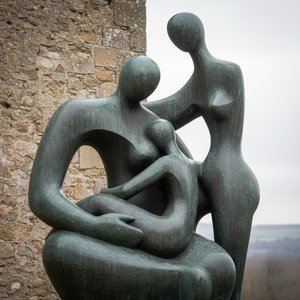 Henry Moore: Sculpting Modernity – Form, Emotion & the Human ConditionExplore the revolutionary sculptures of Henry Moore – abstract forms, reclining figures & powerful expressions of the human condition. Disc…
 Cubismo Expressionista: 10 Obras-Primas que Moldaram a Arte Moderna | OriginalUniqueArtDescubra as 10 obras-primas do Cubismo Expressionista que revolucionaram a arte moderna! Explore Picasso, Braque e outros mestres. Reproduç…