
() ·
Uma pintura feita para você, à mão
Reprodução em Óleo Feita à Mão
Óleo sobre tela pintado à mão no tamanho e moldura de sua escolha, feito sob encomenda pelos nossos artistas. ( Alternar para Impressão Alternar para Imagem Digital)
Descrição do Item
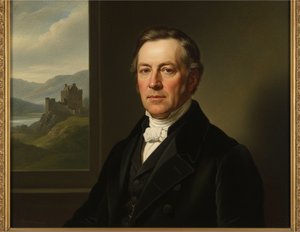
Admire 'Those Were the Days' by Henry Macbeth Raeburn – a poignant 1946 portrait in a muted palette. Explore this realist masterpiece & discover its rich history.
Biografia do Artista
Discover Henry Macbeth Raeburn’s intricate embroidery & design work! A Glasgow Movement artist known for suffragette banners & educational textiles, influencing craft education.
 Ler mais
de ·
Capítulo 1
Qual deve ser o tamanho?
Deslize para alterar o tamanho; a imagem à esquerda mostra a moldura em sua largura real. As proporções originais são mantidas.
Escolha entre os nossos tamanhos pré-definidos que respeitam as proporções originais da obra de arte.

Insira a largura e a altura desejadas para se ajustarem à sua moldura ou parede. Como esta obra é pintada à mão, para um tamanho com proporções diferentes, o artista poderá pintar um pouco mais ao redor da imagem ou reduzir ligeiramente a composição — você escolhe. Enviamos uma maquete digital para sua aprovação antes de iniciar a pintura. A imagem exibida nesta página não representa o resultado real — apenas a maquete mostra o resultado final.
Capítulo 2
Como deve chegar?
Escolha as bordas da tela esticada
Escolha sua moldura

Branco €1

Bordas esfumaçadas €1

Bordas estendidas €1

P118B €10

P118H €10

P118W €10

P438Z €10

P508JH €12

P508YH €12

P805H €10

P805Z €10

P919BZ €10

P919G €10

P919XJ €10

P959ZH €10

P968JZ €12

W106C €8

W218G €10

W218JH €8

W218Y €10

W307PJ €10

W316G €10

W316PJ €8

W316Y €10

W398PJ €8

W4111J €10

W500HY €15

W500JH €15

W692G €12

W849H €8

W940BG €15

W953PJ €8

H24-GOLD €30

H24-SILVER €30

H36-GOLD €45

H36-SILVER €45
Com moldura
Moldura: . Dimensões totais com a moldura: .
Capítulo 3
Quem o pinta, e deveria algo mudar?
Após o pedido, a equipe da OriginalUniqueArt.com enviará um e-mail ao cliente para instruções e fornecerá uma prévia da montagem
Entrega mundial () em 3 a 4 semanas, em vez das 5 semanas padrão. (7 Novembro). Sem comprometer a qualidade.
Capítulo 4
Os retoques finais
Uma placa de identificação, como em um museu?
Detalhes da Placa de Bronze Gravada
This elegant plaque features the artist's name and the title of the artwork, finely engraved for a timeless presentation.
It is made from bronze with a refined, elegant finish. The text is precisely laser-engraved for a sharp and permanent result. Measuring 9x2 cm, the plaque is compact yet easy to read. It's built to be durable and scratch-resistant, offering a professional, museum-quality look. Mounting is simple thanks to the included adhesive backing.
Detalhes da Placa de Acrílico Transparente
The plaque includes essential engraved details such as the artist's name, the title of the artwork, the date it was created, the type of media used-like oil on canvas or watercolor-a brief description of the piece, and a QR code that links to the complete artwork information.
It is crafted from clear acrylic, offering a sleek, modern appearance. The text is UV-engraved in black to ensure strong visual contrast. With a size of 10x15 cm, it ensures optimal readability. It comes equipped with two metal hooks for secure wall mounting. The plaque is designed to be weather-resistant, making it suitable for various environments, and it includes interactive features that work seamlessly with smartphone scanning.
Detalhes da Placa de Acrílico Preto
This elegant plaque includes engraved information such as the artist's name, the title of the artwork, the date it was created, the type of media used (like oil on canvas or watercolor), a short description of the artwork, and a QR code for quick access to more information.
The plaque itself is made from refined black acrylic with a premium finish. The text is laser-engraved in white for high contrast and readability. Its size is 10x15 cm, designed to be easy to read. It comes with two metal hooks for professional mounting. The design is sleek and fits any interior style. It is also weather-resistant and durable, with built-in digital integration for mobile compatibility.
Um verniz protetor?
Para quando você precisa?
Capítulo 5
A sua pintura, conforme encomendada

Those Were the Days
Técnica de Reprodução
Tamanho da Reprodução
-

Artista Sênior de Elite
Mais detalhes, refinamento e tempo de produção adicional
-

Moldura para Reprodução
-
-
Para obras de arte ou reproduções com mais de 105 cm (aproximadamente 41 polegadas) em qualquer um dos lados, a moldura será enviada como um kit desmontado. Este método garante uma entrega segura e evita danos durante o transporte.
Montagem profissional necessária — este não é um produto DIY (faça você mesmo).
O kit deve ser montado e a tela esticada por um profissional de molduraria experiente, utilizando cola de madeira (não inclusa), um alicate de esticar tela e grampos para manter as travessas alinhadas enquanto a cola seca. A montagem incorreta ou a tensão desigual da tela podem danificar permanentemente a obra de arte e não estão cobertas pela nossa garantia.
 Para obras de arte ou reproduções com mais de 105 cm (aproximadamente 41 polegadas) em qualquer um dos lados, a moldura será enviada como um kit desmontado. Este método garante uma entrega segura e evita danos durante o transporte.
Todas as barras de madeira maciça estão incluídas, precisamente cortadas ao tamanho certo.
Montado com os parafusos fornecidos, além de cola para madeira para as junções dos cantos, que não está inclusa e deve ser providenciada pelo seu moldurista.
São necessárias ferramentas profissionais não incluídas: um alicate de estiramento de tela (esticador) e grampos para manter as ripas alinhadas enquanto a cola seca.
Importante:
As junções dos cantos requerem cola para madeira, as ripas devem ser mantidas com grampos até que a cola esteja completamente seca, e o estiramento da tela na moldura montada requer um alicate de esticar tela. Nenhum destes itens está incluído no kit. Por favor, certifique-se de contar com um profissional de molduraria experiente antes de encomendar este tamanho.

Etiqueta de identificação
-
-

Verniz de Proteção
Verniz brilhante (realça as cores e protege contra a luz e a umidade)
-

Personalizar minha obra
Exemplos de alterações possíveis: Substituir o rosto por uma foto do cliente; Adicionar um animal de estimação (ex.: substituir gato por cachorro); Incluir uma mensagem oculta no fundo; Alterar a paisagem ou os elementos do fundo.
-

Urgente
Entrega mundial () em 3 a 4 semanas, em vez das 5 semanas padrão. (7 Novembro). Sem comprometer a qualidade.
-
Envio Expresso
Entrega mundial para em 5 semanas. (14 Novembro).
Com envio incluído
Preço Total
€ 268
A opção de vidro está disponível apenas para tamanhos inferiores a 110 cm
Incluído em todos os pedidos
- Envio expresso gratuito para todo o mundo
- Tela de Linho de Alta Qualidade
- Seguro de transporte completo
- Garantia de Reembolso de Impostos Alfandegários
- Garantia de Fidelidade Cromática
- Política de Devolução em 100 Dias (Apenas para Defeitos)
- Garantia de reembolso de 100%
- Oferta de desconto por quantidade


 Visualizar na parede
 Compartilhar
 Compartilhar
 Detalhes
 Guia
Guia

 Baixar imagem
 Semelhantes
 Raio X
 Ver diaporama
 Perguntas e Respostas
 Estatísticas
Em números
- 1946o ano em que foi pintada
- 29molduras para escolher
- tamanhos padrão, em suas próprias proporções
- 5semanas para pintar e entregar
Sobre o original

- 92.0 x 61.0 cm


Henry Macbeth Raeburn
1860 - 1947
Informações rápidas sobre Henry Macbeth Raeburn
- Full Name: Henry Macbeth-Raeburn
- Nationality: British
- Date Of Birth: 1860
- Date Of Death: 1947
- Place Of Birth: Helensburgh, Scotland
- Notable Artworks:
- Sir John Sinclair
- Dr Nathaniel Spens
- Artistic Movement Or Style: Glasgow Movement
- Artists Who Influenced This Artist: ['Henry Raeburn']
- Artists Or Movements Influenced By This Artist:
- Margaret MacDonald
- Charles Rennie Mackintosh
Biografia do Artista
Henry Macbeth-Raeburn: A Glasgow Movement Master of Light and Line
Henry Macbeth-Raeburn (1860-1947) stands as a quietly significant figure within the vibrant tapestry of late 19th and early 20th century British art. Born in Helensburgh, Scotland, into an artistic lineage tracing back to Norman Macbeth, a renowned portraitist, Henry’s journey was one of dedicated craft, evolving from a student of the Royal Academy to a respected printmaker deeply connected with the Glasgow Movement. His work, often characterized by meticulous detail and a subtle yet powerful use of light and shadow, reflects both his formal training and his engagement with the innovative spirit of his time.
Early life provided Henry with an immediate immersion in artistic practice. His father’s profession as a mechanical engineer instilled a keen eye for precision, while his family's artistic heritage—including his uncle Robert Walker Macbeth and grandfather Norman Macbeth – fostered a deep appreciation for the visual arts. He began his formal training at the Glasgow School of Art, absorbing the influences of masters like William Cruikshank and developing a distinctive style that blended academic rigor with a growing interest in contemporary trends. Crucially, he adopted “Macbeth-Raeburn” as his surname, a deliberate choice to honor both his artistic idol, Henry Raeburn, and distinguish himself within his family’s established artistic circle.
The Glasgow Movement and the Rise of a Printmaker
Henry Macbeth-Raeburn's career truly flourished during his association with the Glasgow Movement – a collective of artists, designers, and craftspeople centered around Charles Rennie Mackintosh and Margaret MacDonald. This movement sought to revitalize British design through a synthesis of craftsmanship, functionality, and artistic expression, rejecting the prevailing Victorian aesthetic in favor of a more modern and democratic approach. Macbeth-Raeburn’s work became inextricably linked with this ethos, particularly his contributions to the production of suffragette banners for the Women's Social and Political Union. These bold, graphic designs—characterized by their striking imagery and powerful messages – demonstrated his commitment to social causes and showcased his burgeoning skills in reproductive engraving.
His involvement extended beyond mere decoration; he actively taught needlework at the Glasgow School of Art, disseminating his innovative techniques and advocating for a shift in perceptions of craft. He championed the use of humble materials like cotton and linen, arguing that beauty could be found not only in luxurious fabrics but also in the skillful manipulation of everyday resources. This philosophy reflected a broader movement towards accessibility and inclusivity within the art world.
Technique and Subject Matter
Macbeth-Raeburn’s technical prowess is immediately apparent in his prints, which demonstrate an extraordinary command of mezzotint and etching techniques. He meticulously rendered details with remarkable precision, capturing subtle nuances of light and texture. His subjects ranged from portraits – often inspired by the works of Henry Raeburn himself—to scenes of Scottish landscapes and historical figures. A key element of his style was his ability to evoke atmosphere through careful manipulation of tonal values and line weight. He frequently employed a limited palette, prioritizing clarity and impact over excessive color.
His portraiture, in particular, reveals an astute understanding of character and psychological depth. Rather than simply replicating surface appearances, he sought to capture the essence of his subjects—their personalities, emotions, and inner lives. This is evident in works such as his print after Raeburn’s “Dr. Nathaniel Spens,” where Macbeth-Raeburn skillfully translated the master's masterful use of light and shadow into a contemporary medium.
Legacy and Recognition
Despite often working behind the scenes, Henry Macbeth-Raeburn earned considerable recognition during his lifetime. He was elected an Associate of the Royal Academy in 1922 and a full member in 1933, solidifying his place within the established British art world. His work has been exhibited at prestigious institutions including the Royal Academy and the Ipswich Art Club, and is now held by collections such as the British Museum. His influence can be seen in the work of subsequent generations of printmakers and designers, particularly those associated with the Glasgow Movement.
Today, Henry Macbeth-Raeburn’s legacy endures as a testament to the power of dedication, innovation, and social engagement. His meticulous prints offer a window into a fascinating period of British art history—a time of experimentation, reform, and a renewed appreciation for the beauty of craft.
Artigos Relacionados

Henry Raeburn Dobson: A Scottish Colourist Bridging Tradition & Modernity
Explore the life & work of Henry Raeburn Dobson, a key figure bridging Scottish tradition & modern art. Discover his neoclassical portraits, landscapes, and connection to the Colourists. Learn about collecting his works.

Oil on Canvas: A Historical & Technical Exploration of a Timeless Artistic Medium
Explore the rich history & enduring techniques of oil painting on canvas. Discover the science behind its longevity, conservation practices, and contemporary relevance. Expert insights for art enthusiasts.
Henry Raeburn: A Scottish Portraitist's Mastery of Light, Character & National Identity
Explore the life & work of Henry Raeburn, a master Scottish portraitist. Discover his innovative techniques, captivating portraits of the Enlightenment era, and lasting legacy in art history. Learn more at OriginalUniqueArt.

Henri Matisse: As 25 Obras-Primas que Definem um Mestre da Cor | OriginalUniqueArt
Descubra as 25 obras-primas de Henri Matisse que revolucionaram a arte moderna! Explore o Fauvismo, cores vibrantes e a história por trás dos quadros mais famosos do artista. Encontre reproduções de alta qualidade para decorar sua casa com OriginalUniqueArt.com.