

 Visualizar em escala
 Enviar
 Compartilhar
 Ver detalhes
 Guia de Obras do Aluno

 Baixar imagem
 Semelhantes
 Raio X
 Apresentação de slides
 Estatísticas
Apollo Killing the Python
 Engraving
- Baroque Mannerism
 1589
1589 21.0 x 29.0 cm
 Museu de Arte do Condado de Los Angeles
 Ver mais
Reprodução em Óleo Feita à Mão
Óleo sobre tela pintado à mão no tamanho e moldura de sua escolha, feito sob encomenda pelos nossos artistas. ( Alternar para Impressão Ver Imagem Digital)




P118B €10

P118H €10

P118W €10

P438Z €10

P508JH €12

P508YH €12

P805H €10

P805Z €10

P919BZ €10

P919G €10

P919XJ €10

P959ZH €10

P968JZ €12

W106C €8

W218G €10

W218JH €8

W218Y €10

W307PJ €10

W316G €10

W316PJ €8

W316Y €10

W398PJ €8

W4111J €10

W500HY €15

W500JH €15

W692G €12

W849H €8

W940BG €15

W953PJ €8




Escolha entre os nossos tamanhos pré-definidos que respeitam as proporções originais da obra de arte.

Digite a largura e a altura de que necessita, para se ajustar à sua moldura ou à sua parede. Esta obra é pintada à mão, por isso, para um tamanho com uma proporção diferente, o artista pode pintar um pouco mais ao redor da imagem ou cortar um pouco — você escolhe. Enviamos-lhe uma maquete digital para aprovação antes de a pintura começar. A imagem exibida nesta página não mostra o resultado real — apenas a maquete mostra.
Após o pedido, a equipa OriginalUniqueArt.com enviará um e-mail ao cliente para solicitar instruções e fornecer uma prévia do esboço.
Entrega mundial () em 3 a 4 semanas, em vez das 5 semanas padrão. (19 Outubro). Sem comprometer a qualidade.

Envio expresso gratuito para todo o mundo

Tela de Linho Premium

Seguro de transporte total

Garantia de Reembolso de Impostos Alfandegários

Garantia de Fidelidade de Cor

Política de Devolução em 100 Dias (Apenas para Defeitos)

Garantia de reembolso de 100%

Desconto para múltiplas unidades
 A opção de vidro está disponível apenas para tamanhos inferiores a 110 cm

Apollo Killing the Python
Técnica de Reprodução
Dimensões da Reprodução
-


Preço Total
€ 261
Hendrik Goltzius’s Apollo Killing the Python: A Masterpiece of Mannerist Drama
Apollo Killing the Python is more than just an image; it's a distillation of Renaissance mythology into a powerfully expressive engraving by Hendrik Goltzius, completed in 1589. This artwork stands as a testament to Goltzius’s innovative approach to printmaking and his ability to convey complex narratives with breathtaking visual clarity—a skill that cemented his place among the foremost artists of the Baroque era. The piece captures a pivotal moment from Ovid's Metamorphoses, depicting Apollo, god of music and poetry, engaged in a brutal confrontation with Python, representing primordial chaos and evil.- Composition & Style: Goltzius’s masterful use of perspective creates a dynamic scene that draws the viewer into the drama unfolding before them. The engraving adheres to the principles of Mannerism—a stylistic movement characterized by elongated figures, stylized poses, and dramatic contrasts of light and shadow—reflecting a desire to transcend realism and explore psychological states rather than simply depicting observable reality.
- Technique: Goltzius employed a technique known as ‘swelling line,’ which he developed himself, resulting in lines that appear thicker than they actually are. This method dramatically enhances the visual impact of the engraving, emphasizing contours and creating an illusion of depth—a hallmark of Baroque art. The meticulous detail achieved through hatching and shading contributes to the overall sense of realism despite the stylized figures.
- Symbolism: The confrontation between Apollo and Python carries profound symbolic weight. Apollo embodies reason, order, and divine authority, battling against the forces of darkness and irrationality. The serpent symbolizes primordial chaos, representing the struggle between good and evil that underlies all human experience. Goltzius’s depiction underscores the enduring themes of heroism, triumph over adversity, and the victory of intellect over instinct.
- Historical Context: Created during a period of artistic experimentation and intellectual ferment—the early Baroque—Apollo Killing the Python reflects the broader cultural anxieties surrounding religious reform and the burgeoning humanist spirit. Goltzius’s engraving aligns with the prevailing aesthetic sensibilities of the time, demonstrating an artist's engagement with contemporary philosophical ideas.
- Emotional Impact: The engraving evokes a palpable sense of tension and drama—a hallmark of Mannerist art. Goltzius skillfully captures the physicality of the struggle between gods and serpent, conveying both violence and nobility. The image resonates with viewers today due to its exploration of universal themes concerning conflict, resilience, and the pursuit of enlightenment.
Perguntas e Respostas
Onde posso comprar uma imagem digital de "Apollo Killing the Python" de Hendrik Goltzius?
"Apollo Killing the Python" está disponível como download de imagem digital em alta resolução, podendo ser adquirido diretamente em sua página de Imagem Digital.
Qual ambiente é sugerido para "Apollo Killing the Python" de Hendrik Goltzius?
Uma reprodução de "Apollo Killing the Python" fica muito bem em um(a) Living Room.
As cores de "Apollo Killing the Python" de Hendrik Goltzius são saturadas ou suaves?
A paleta de "Apollo Killing the Python" possui uma saturação Muted.
Biografia do Artista
Early Life and Training
Hendrik Goltzius, a figure of immense importance in the history of Dutch art, emerged from the vibrant cultural landscape of Braunschweig, Germany, in 1558. His early years were steeped in artistic tradition; his family’s lineage included painters who had worked in Venlo, and his father, Jan Goltz II, was a skilled glass painter in Duisburg. This familial connection to art provided him with an initial foundation, but it was the guidance of Dirck Volckertszoon Coornhert, a renowned printmaker and polymath residing nearby, who truly shaped his artistic trajectory. Coornhert’s workshop in Xanten became Goltzius's first formal training ground, where he immersed himself in the intricacies of copperplate engraving – a technique that would become synonymous with his name. A defining moment occurred when he was just three years old; an accident involving fire left him with a permanently deformed right hand. Remarkably, this physical challenge didn’t hinder his artistic development but instead fostered a unique dexterity and control over the burin, contributing to the distinctive “swelling line” technique that would characterize his work. His ambition and determination led him to become ambidextrous, mastering both left and right-hand engraving with equal skill.Artistic Career and Influences
In 1577, Goltzius embarked on a pivotal chapter of his life by relocating to Haarlem, the thriving center of the Dutch Republic, alongside Coornhert. This move marked the beginning of his independent career as an engraver and print publisher. Initially, he worked for established printers like Philips Galle, Maarten de Vos, and Johannes Stradanus, producing prints based on designs from various masters – a period where he meticulously honed his skills by replicating the styles of Albrecht Dürer, Lucas van Leyden, and others. However, his ambition quickly led him to establish his own workshop, allowing him to pursue his own creative vision. His artistic style was profoundly influenced by the Mannerist movement, drawing inspiration from Italian artists like Bartholomeus Spranger and Annibale Carracci, whose dynamic compositions and dramatic use of light and shadow resonated deeply with Goltzius. He wasn’t merely a copyist; he skillfully integrated elements of classicism and archaic styles into his work, creating a unique synthesis that distinguished him within the Dutch art scene. His patronage extended to prominent figures across Europe, including the Holy Roman Emperor Rudolf II, who recognized and championed his talent.Technique and Innovation
Hendrik Goltzius’s contribution to engraving is marked by several groundbreaking innovations. Perhaps most notably, he developed what became known as the “swelling line” technique – a masterful manipulation of the burin that allowed him to create varying thicknesses of lines, generating a remarkable sense of tonal depth and volume from a distance. This technique, combined with his pioneering use of the "dot and lozenge" method—strategically placed dots within lozenge-shaped spaces created through cross-hatching—further refined his ability to render shading and texture with unparalleled precision. His command of the burin was often compared to that of Albrecht Dürer, a testament to his exceptional skill and artistry. He frequently undertook the challenging task of engraving works by other artists, notably Bartholomeus Spranger’s paintings, significantly elevating their fame and solidifying his own reputation as a leading printmaker.Legacy and Recognition
Throughout his career, Goltzius produced an astonishing output – approximately 500 drawings and around 50 paintings, alongside over 160 individual prints featuring both original designs and collaborative projects. His works are now housed in major museums worldwide, including the Rijksmuseum in Amsterdam, the British Museum in London, the Metropolitan Museum of Art in New York, and the Los Angeles County Museum of Art. Despite facing periods of relative obscurity following his death in 1617, Goltzius’s legacy has experienced a remarkable resurgence in recent decades. He is now widely recognized as one of the most important printmakers of the Northern Renaissance, celebrated for his technical brilliance, innovative techniques, and profound influence on subsequent generations of artists. His distinctive style continues to captivate art lovers and scholars alike, cementing his place as a pivotal figure in the history of European art.
Hendrik Goltzius
1558 - 1617 , Alemanha
Informações Rápidas
- Artistic Movement Or Style: Manerismo e gravura Barroca
- Artists Or Movements Influenced By This Artist: ['Jacques Bellange']
- Artists Who Influenced This Artist: ['Dirck Volckertszoon Coornhert']
- Date Of Birth: Janeiro/Fevereiro 1558
- Date Of Death: 1 de Janeiro 1617
- Full Name: Hendrik Goltzius
- Nationality: Holandês
- Notable Artworks:
- Adoração dos Pastores
- Paisagem Arcádica
- Cabeça de Sirene
- Place Of Birth: Braunschweig, Itália
Artigos Relacionados

Chiaroscuro and Character: A Definitive Guide to Light and Shadow in the Dutch Baroque Era
Explore the dramatic mastery of the Dutch Baroque era. Discover how masters like Rembrandt used chiaroscuro to transform everyday life into timeless art. An expert guide for collectors and enthusiasts seeking to understand the profound interplay of light and shadow.
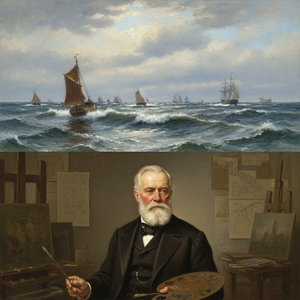
Hendrik Willem Mesdag: Pioneering Impressionism & the Dutch Maritime Tradition
Explore the life & work of Hendrik Willem Mesdag, a pioneer of Dutch Impressionism and leading figure of the Hague School. Discover his captivating seascapes and the immersive Panorama Mesdag – a true masterpiece.

Golden Light & Dutch Skies: The Timeless Magic of Dutch Golden Age Landscapes
Discover the breathtaking beauty of Dutch Golden Age landscapes. Explore the mastery of light, chiaroscuro, and 17th-century realism through an expert art history lens, celebrating the enduring legacy of the Dutch Masters for discerning collectors and art lovers.
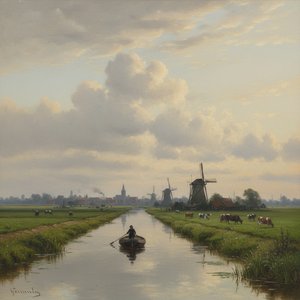
Johan Hendrik Weissenbruch: Capturing Dutch Light & Atmosphere – A Master of Realism
Discover Johan Hendrik Weissenbruch (1824-1903), a leading Dutch Hague School painter renowned for his atmospheric watercolours & oil landscapes. Explore his beautiful depictions of the Dutch countryside and skies – a master of light & detail.

Hendrick Goltzius: Master Engraver & the Flourishing of Dutch Mannerism
Explore the life & art of Hendrick Goltzius, a master engraver of Dutch Mannerism. Discover his innovative techniques, iconic engravings like 'Jahel', and lasting influence on Baroque art. Learn about collecting Goltzius today.

