
 Visualizar na parede
 Compartilhar
 Compartilhar
 Detalhes
 Guia
Guia

 Baixar imagem
 Semelhantes
 Raio X
 Ver diaporama
 Perguntas e Respostas
 Estatísticas
Winter Landscape with Skaters

- 30.0 x 30.0 cm


 Ler mais
Giclée / Impressão de Arte
Impressão giclée ou em tela de qualidade de museu, com produção rápida e opções flexíveis de acabamento. ( Comprar pintura feita à mão Alternar para Imagem Digital)




P118B €10

P118H €10

P118W €10

P438Z €10

P508JH €12

P508YH €12

P805H €10

P805Z €10

P919BZ €10

P919G €10

P919XJ €10

P959ZH €10

P968JZ €12

W106C €8

W218G €10

W218JH €8

W218Y €10

W307PJ €10

W316G €10

W316PJ €8

W316Y €10

W398PJ €8

W4111J €10

W500HY €15

W500JH €15

W692G €12

W849H €8

W940BG €15

W953PJ €8




Escolha entre os nossos tamanhos pré-definidos que respeitam as proporções originais da obra de arte.

Insira a largura e a altura desejadas para se ajustarem à sua moldura ou parede. Uma impressão pode ser apenas cortada, nunca ampliada além da imagem original; portanto, um tamanho com proporções diferentes resultará na perda de parte da imagem. Enviamos uma maquete digital para sua aprovação antes de realizarmos a impressão. A imagem exibida nesta página não mostra o corte real — apenas a maquete o faz.
Entrega mundial () em 2 semanas, em vez das 4/5 semanas padrão. (5 Novembro)

Envio expresso gratuito para todo o mundo

Tela de Linho de Alta Qualidade

Seguro de transporte completo

Garantia de Reembolso de Impostos Alfandegários

Garantia de Fidelidade Cromática

Política de Devolução em 100 Dias (Apenas para Defeitos)

Garantia de reembolso de 100%

Oferta de desconto por quantidade
 A opção de vidro está disponível apenas para tamanhos inferiores a 110 cm

Winter Landscape with Skaters
Giclée / Impressão de Arte
Tamanho da Reprodução
-


Preço Total
€ 72
Winter Landscape with Skaters – A Frozen Moment of Dutch Brilliance
Hendrick Avercamp’s “Winter Landscape with Skaters” isn't merely a depiction of winter; it’s a masterful encapsulation of the spirit of the Dutch Golden Age, frozen in time on oak canvas. Painted around 1608-09 during the Little Ice Age—a period characterized by unusually harsh winters—this artwork transcends its visual beauty to offer a profound glimpse into daily life and artistic innovation of the era. Avercamp’s genius lies in his ability to convey both meticulous realism and an underlying sense of wonder, establishing him as one of the foremost landscape painters of his time.A Symphony of Detail: Observation and Technique
The painting's immediate impact is its astonishing level of detail. Avercamp meticulously renders a bustling village scene—a frozen canal or river teeming with skaters, children playing games, merchants conducting business, and animals navigating the icy terrain. Each figure is rendered with remarkable precision, capturing subtle expressions and postures that speak volumes about human interaction. This painstaking observation is underpinned by a sophisticated technique: layered brushstrokes create texture and depth, simulating the glistening surface of ice, the rough bark of windmills, and the warm glow emanating from chimneys. Avercamp’s masterful use of perspective—primarily shallow—draws the viewer into the scene, emphasizing the immediacy of the winter day. The muted color palette—dominated by blues, browns, and whites—further enhances the atmosphere of quiet contemplation and reinforces the painting's connection to its historical context.Echoes of Bruegel: Artistic Influence and Shared Vision
Avercamp’s work bears a striking resemblance to Pieter Bruegel the Elder’s celebrated “Winter Landscape with Ice Skaters” (1565), demonstrating the influence of Northern Renaissance painting on Dutch art. Like Bruegel, Avercamp deliberately chose to depict everyday life—a seemingly unremarkable activity transformed into an emblem of resilience and adaptation. The inclusion of a dead horse in the foreground serves as a poignant reminder of mortality amidst the vibrancy of winter’s beauty – a subtle yet powerful symbolic gesture. Avercamp's careful composition mirrors Bruegel’s approach, highlighting shared artistic sensibilities and furthering our understanding of the broader cultural landscape of the period.Symbolism Beyond the Surface: Capturing the Essence of Winter
“Winter Landscape with Skaters” speaks to more than just the visual spectacle of a frozen winter day. It embodies the Dutch humanist ethos—a fascination with observing and representing the natural world alongside human activity. The windmills, prominent in the background, represent not only agricultural productivity but also the industrious spirit of the Netherlands. The smoke rising from a chimney symbolizes warmth and domestic comfort against the backdrop of icy conditions – offering a comforting counterpoint to the harsh realities of survival. Ultimately, Avercamp’s painting invites us to contemplate the beauty found within adversity and celebrates the enduring human capacity for joy and connection.A Legacy Enduring Through Reproduction
Today, OriginalUniqueArt offers exceptional reproductions of “Winter Landscape with Skaters,” allowing art enthusiasts worldwide to experience the grandeur and intricacy of Avercamp's masterpiece. These high-quality prints capture the painting’s luminous colors and textural nuances, transporting viewers back to a pivotal moment in Dutch artistic history—a testament to the enduring power of observation, technique, and symbolic representation.Perguntas e Respostas
As cores de "Winter Landscape with Skaters", de Hendrick Avercamp são saturadas ou suaves?
As cores de "Winter Landscape with Skaters", de Hendrick Avercamp possuem uma saturação Subtle Color. A saturação descreve o quão vívidas ou suaves são as cores.
Quem é o artista por trás de "Winter Landscape with Skaters"?
"Winter Landscape with Skaters" é atribuída a Hendrick Avercamp.
Quem é o autor de "Winter Landscape with Skaters" e a qual movimento pertence?
Hendrick Avercamp criou "Winter Landscape with Skaters" dentro do movimento Northern Renaissance.
Biografia do Artista
Hendrick Avercamp (1585 - 1634)
Hendrick Avercamp, a name synonymous with the shimmering, frozen landscapes of the Dutch Golden Age, was born in Amsterdam on January 27, 1585. His life story is as intriguing as his art—a tale marked by both artistic innovation and personal circumstance. From an early age, it became apparent that Avercamp lived within a world experienced differently than most; he was mute, and likely deaf, earning him the affectionate yet defining moniker “de Stomme van Kampen” – the Mute of Kampen. This perceived limitation, however, did not stifle his artistic voice but perhaps sharpened his observational skills, allowing him to translate the nuances of the Dutch winter onto canvas with unparalleled clarity and charm. He initially studied in Amsterdam under Pieter Isaacsz, a portrait painter, and possibly also received guidance from David Vinckboons, whose influence can be seen in Avercamp’s early works. In 1608, he relocated to Kampen, where he would spend the majority of his life and establish himself as a unique and celebrated artist.Capturing a Frozen World: Artistic Style and Innovation
Avercamp stands out as one of the first dedicated landscape painters in 17th-century Holland, a period traditionally dominated by portraiture, history painting, and still life. He carved his niche by specializing in winter scenes—a subject rarely explored with such consistent focus before him. His paintings aren’t merely depictions of cold weather; they are vibrant snapshots of Dutch life unfolding on the ice. Figures skate, sled, play *kolf* (a form of golf played on ice), and simply enjoy the frozen waterways, creating a lively tapestry of human activity against the stark beauty of the winter landscape. Avercamp's skill lies in his ability to convey both the chill of the season and the warmth of communal enjoyment. He masterfully employed aerial perspective, subtly shifting colors and details to create a convincing sense of depth, drawing the viewer into these icy worlds. His technique often involved applying watercolor washes over pen and ink drawings, creating delicate and luminous effects. These smaller works were frequently sold as finished pieces intended for inclusion in collectors’ albums—a testament to their intimate scale and appeal.Influences and Development: From Bruegel to Dutch Realism
While Avercamp forged his own distinctive style, he wasn't working in a vacuum. The influence of Flemish masters like Pieter Bruegel the Elder is evident in his early compositions—the bustling scenes filled with numerous figures engaged in everyday activities. However, Avercamp moved beyond mere imitation, developing a uniquely Dutch sensibility characterized by meticulous detail and a keen observation of light and atmosphere. He embraced the growing trend towards realism within Dutch painting, accurately portraying the clothing, tools, and customs of his time. His work also reflects the climatic conditions of the Little Ice Age, a period of unusually cold winters in Europe, which undoubtedly fueled his fascination with frozen landscapes. Unlike some contemporaries who might idealize their subjects, Avercamp presented a realistic—and often humorous—view of life, including playful details that hint at human foibles and everyday occurrences.Legacy and Historical Significance
Hendrick Avercamp’s impact on Dutch painting is considerable. He not only popularized the winter landscape as a legitimate subject for artistic exploration but also helped to define a distinctly Dutch approach to landscape painting—one that emphasized realism, atmospheric effects, and the depiction of everyday life. His work provided inspiration for later generations of artists and continues to captivate audiences today. Notable collections showcasing his artistry include the Rijksmuseum in Amsterdam, which holds a significant number of his paintings, and the Mauritshuis in The Hague. Avercamp’s legacy extends beyond his artistic achievements; he represents a triumph over adversity, demonstrating that creative expression can flourish even in the face of personal challenges. He died in Kampen on May 15, 1634, leaving behind a body of work that continues to offer a window into the vibrant and often-overlooked world of 17th-century Holland—a world frozen in time, yet brimming with life. ## Notable Works- Winter Landscape with Skaters: Perhaps his most iconic work, this painting exemplifies Avercamp’s mastery of capturing the energy and atmosphere of a Dutch winter scene.
- Street in Delfi: A rare example of Avercamp venturing beyond landscapes, showcasing his skill in depicting town life.
- Enjoying the Ice near a Town: Demonstrates his ability to create dynamic compositions filled with numerous figures engaged in various activities.

Hendrick Avercamp
1585 - 1634 , Países Bajos
Dados Rápidos
- Artistic Movement Or Style: Dutch Golden Age painting
- Artists Who Influenced This Artist:
- Pieter Isaacsz
- David Vinckboons
- Date Of Birth: 1585
- Full Name: Hendrick Avercamp
- Nationality: Dutch
- Notable Artworks:
- Winter Landscape with Skaters
- Street in Delfi
- Place Of Birth: Amsterdam, Netherlands
Artigos Relacionados

Golden Light & Dutch Skies: Bringing the Magic of Dutch Golden Age Landscapes into Your Home
Transform your home with the breathtaking light of Dutch Golden Age landscapes. Discover how hand-painted oil reproductions of masterworks like Ruisdael and Vermeer bring timeless elegance, atmosphere, and soulful texture to modern interiors. Elevate your space with museum-quality art.
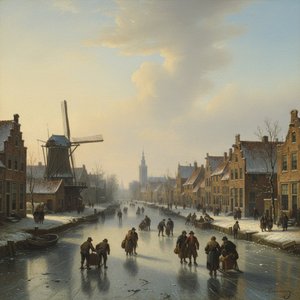
Charles Leickert: Capturing the Dutch Golden Age Light – A Comprehensive Study of Technique, Context, and Legacy
Explore the captivating winter landscapes of Charles Leickert, a master of Dutch Golden Age light & atmosphere. Discover his techniques, symbolism, and lasting legacy – a comprehensive study for art enthusiasts and collectors.

Golden Light & Dutch Skies: The Timeless Magic of Dutch Golden Age Landscapes
Discover the breathtaking beauty of Dutch Golden Age landscapes. Explore the mastery of light, chiaroscuro, and 17th-century realism through an expert art history lens, celebrating the enduring legacy of the Dutch Masters for discerning collectors and art lovers.

A Era de Ouro Holandesa: 10 Mestras-Obras Imperdíveis para Decorar com Arte
Descubra as 10 obras-primas da Era de Ouro Holandesa! Explore a história, técnica e beleza atemporal de Rembrandt, Vermeer e outros mestres. Encontre reproduções de arte exclusivas para decorar sua casa com elegância em OriginalUniqueArt.com.
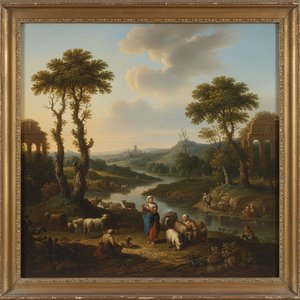
Nicolaes Berchem: Dutch Golden Age Pastoralism & the Evolution of Landscape Painting
Explore the captivating world of Nicolaes Berchem, a leading Dutch Golden Age painter. Discover his idyllic landscapes, masterful technique & lasting influence on art history. Learn more at OriginalUniqueArt.


