Visualizar na parede
 Compartilhar
 Compartilhar
 Detalhes
 Guia
Guia

 Baixar imagem
 Semelhantes
 Raio X
 Ver diaporama
 Q&A
Q&A Estatísticas
Study for Landscape with Waterfall


 Ler mais
Giclée / Impressão de Arte
Impressão giclée ou em tela de qualidade de museu, com produção rápida e opções flexíveis de acabamento. ( Comprar pintura feita à mão Alternar para Imagem Digital)




P118B €10

P118H €10

P118W €10

P438Z €10

P508JH €12

P508YH €12

P805H €10

P805Z €10

P919BZ €10

P919G €10

P919XJ €10

P959ZH €10

P968JZ €12

W106C €8

W218G €10

W218JH €8

W218Y €10

W307PJ €10

W316G €10

W316PJ €8

W316Y €10

W398PJ €8

W4111J €10

W500HY €15

W500JH €15

W692G €12

W849H €8

W940BG €15

W953PJ €8




Escolha entre os nossos tamanhos pré-definidos que respeitam as proporções originais da obra de arte.

Insira a largura e a altura desejadas para se ajustarem à sua moldura ou parede. Uma impressão pode ser apenas cortada, nunca ampliada além da imagem original; portanto, um tamanho com proporções diferentes resultará na perda de parte da imagem. Enviamos uma maquete digital para sua aprovação antes de realizarmos a impressão. A imagem exibida nesta página não mostra o corte real — apenas a maquete o faz.
Entrega mundial () em 2 semanas, em vez das 4/5 semanas padrão. (29 Outubro)

Envio expresso gratuito para todo o mundo

Tela de Linho de Alta Qualidade

Seguro de transporte completo

Garantia de Reembolso de Impostos Alfandegários

Garantia de Fidelidade Cromática

Política de Devolução em 100 Dias (Apenas para Defeitos)

Garantia de reembolso de 100%

Oferta de desconto por quantidade
 A opção de vidro está disponível apenas para tamanhos inferiores a 110 cm

Study for Landscape with Waterfall
Giclée / Impressão de Arte
Tamanho da Reprodução
-


Preço Total
€ 71
A Symphony of Stone and Stream
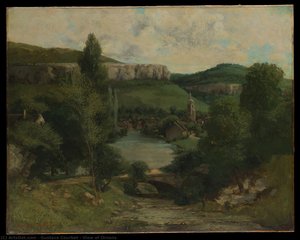
In the quiet intensity of Gustave Courbet's Study for Landscape with Waterfall, we find ourselves standing on the precipice of a world where nature speaks in whispers and roars alike. This captivating work is far more than a mere topographical record; it is a profound meditation on the raw, unyielding majesty of the natural landscape. The composition is masterfully anchored by the vertical drama of rugged cliffs and towering trees, which command the viewer's gaze before leading it downward along the cascading white veil of the waterfall. A winding stream meanders through a tranquil meadow, its horizontal flow providing a serene counterpoint to the imposing geological structures. It is a scene that invites deep contemplation, drawing the observer into the very heart of an untamed wilderness that feels both ancient and immediate.
As a pioneer of the Realism movement, Courbet utilized this study to bridge the gap between the emotional grandeur of Romanticism and his own revolutionary commitment to truth. While the painting retains the atmospheric soul of the preceding era, it rejects the polished, idealized landscapes of the Academy in favor of something far more visceral. There is no attempt to beautify the ruggedness; instead, Courbet celebrates the honest texture of the earth. This piece served as a vital preparatory step for his larger-scale works, acting as a laboratory where he could experiment with the interplay of light and shadow, ensuring that when he finally approached a grand canvas, the essence of the terrain was already etched into his mind.
The Mastery of Texture and Light
To gaze upon this oil on canvas is to witness a masterclass in tactile painting. Courbet’s technique is remarkably physical, employing visible, purposeful brushstrokes that breathe life into the inanimate. One can almost feel the abrasive grit of the rocky precipices and the dense, damp weight of the forest foliage through his skillful use of impasto and layering. He employs atmospheric perspective with great subtlety, allowing colors to soften and details to blur in the distance, which creates a breathtaking sense of depth and vastness. This technique ensures that the viewer does not merely look at a flat surface but feels transported into a three-dimensional space where the air itself seems heavy with mist.
The color palette is a sophisticated arrangement of cool tones—deep blues, mossy greens, and slate grays—all grounded by warm, earthy undertones. This selection creates a mood that is simultaneously serene and dramatic, reminiscent of the soft, diffused light found during an overcast morning or the golden hush of twilight. The lighting does not strike the scene with harshness but rather bathes it in a gentle glow, highlighting the fluidity of the water and the permanence of the stone. For the discerning collector or interior designer, this painting offers a versatile emotional anchor; its muted yet rich tones provide a sense of calm sophistication that can elevate a room, offering a window into a world of enduring natural beauty.
Symbolism and Lasting Resonance
Beyond its physical attributes, the work carries a subtle layer of symbolic resonance that speaks to the human condition. The waterfall, in its eternal descent, serves as a powerful metaphor for flow, renewal, and the unstoppable passage of time. In contrast, the massive cliffs stand as symbols of strength, resilience, and permanence against the elements. This duality—the ephemeral movement of water against the enduring weight of rock—creates a tension that is both intellectually stimulating and emotionally grounding. It is this very balance that makes Courbet's work so enduringly relevant to modern spaces.
For those seeking to incorporate fine art into their surroundings, a high-quality reproduction of this study offers more than just decoration; it offers an experience. Whether placed in a sunlit library or a contemporary living space, the painting acts as a focal point of quiet strength. It brings the restorative power of the outdoors inside, reminding us of the beauty found in the unadorned and the real. To own such a piece is to possess a fragment of art history's great rebellion, a testament to the moment when artists decided to stop dreaming of perfection and start painting the magnificent truth of the world around them.
Perguntas e Respostas
Qual é a técnica utilizada em "Study for Landscape with Waterfall", de Gustave Courbet?
"Study for Landscape with Waterfall" é executada em Oil On Canvas.
Onde posso comprar uma reprodução pintada à mão de "Study for Landscape with Waterfall", de Gustave Courbet?
"Study for Landscape with Waterfall" está disponível como uma reprodução a óleo pintada à mão sobre tela de linho. O pedido pode ser feito em sua página de Reprodução Pintada à Mão, com escolha de tamanhos.
Onde e para qual finalidade é recomendado "Study for Landscape with Waterfall"?
"Study for Landscape with Waterfall", de Gustave Courbet é recomendado para Accent, idealmente em um(a) Living Room. O uso e o espaço juntos orientam onde uma reprodução se encaixa.
Biografia do Artista
A Rebel’s Brush: The Life and Legacy of Gustave Courbet
Jean Désiré Gustave Courbet (1819–1877) stands as a monumental figure in the history of art, recognized unequivocally as the progenitor of Realism—a movement that irrevocably altered the trajectory of nineteenth-century painting. More than simply capturing visual impressions; his artistic endeavor was imbued with profound social and political convictions, fueled by an unwavering dedication to portraying reality without embellishment or sentimentality. Born in Ornans, France, a modest village nestled in Burgundy, Courbet’s upbringing instilled within him a spirit of independence that would become synonymous with his revolutionary approach to artmaking.Early Life and Artistic Training
Courbet's familial circumstances fostered an environment conducive to artistic pursuits. His mother, a woman of considerable intellect and conviction, actively encouraged his burgeoning talent—a nurturing gesture that defied the prevailing societal expectations for young men during his era. Despite initial reservations from some family members regarding his unconventional ambitions, Courbet persevered in his pursuit of formal training at the École des Beaux-Arts in Paris in 1839. However, he swiftly recognized the limitations imposed by the academy’s rigid doctrines and Romantic idealism—a disillusionment that propelled him toward forging his own distinctive artistic path. While acknowledging influences from luminaries like Eugène Delacroix and Théodore Géricault – artists who championed dramatic emotion and historical narrative – Courbet deliberately distanced himself from these stylistic conventions, prioritizing observation over imagination and truthfulness above tradition.The Birth of Realism: Challenging Artistic Conventions
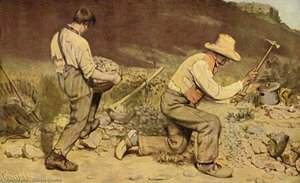
Courbet’s artistic breakthrough arrived with his unwavering commitment to Realism—a movement that fundamentally questioned the accepted aesthetic standards of his time. Rejecting the idealized depictions favored by Romantic painters, he turned his gaze toward the everyday lives of ordinary people—particularly those engaged in labor and rural existence. This decision wasn't merely stylistic; it represented a bold assertion about the inherent dignity and significance of subjects often marginalized within artistic discourse. Early canvases explored landscapes and portraits, yet soon Courbet’s focus shifted decisively towards scenes depicting working-class life—executed on monumental scales traditionally reserved for grand historical or religious paintings. Critics initially scorned his audacious choice, perceiving it as disrespectful to established hierarchies and conventions. Yet, Courbet remained steadfast in his conviction that art should reflect the realities of human experience, unburdened by preconceived notions of beauty or grandeur. The Stone Breakers (1849), tragically destroyed during World War II, epitomized this ethos—a stark portrayal of two laborers toiling under oppressive conditions, their faces obscured by exhaustion and grime. The painting’s deliberate lack of idealized features served as a powerful rebuke to the prevailing artistic preoccupation with heroic narratives and sublime landscapes. Courbet's technique mirrored his philosophical stance: he favored an impasto style—applying paint thickly onto the canvas—that emphasized the materiality of the medium itself, mirroring the textures and colors of the subjects he depicted. This approach was revolutionary in its rejection of academic polish and celebrated instead the raw beauty of unfiltered observation.Major Works and Artistic Philosophy
Courbet’s oeuvre encompasses a remarkable range of artistic endeavors, reflecting his multifaceted intellect and unwavering dedication to exploring diverse themes. Among his most iconic creations are A Burial at Ornans (1850–51), a monumental canvas depicting a rural funeral—a scene rendered with unflinching realism that provoked considerable controversy among Parisian audiences accustomed to idealized representations of death and mourning. The painting’s sheer scale—typically reserved for historical canvases—combined with its uncompromising depiction of human emotion challenged the conventions of academic artmaking. Courbet deliberately eschewed sentimentalism, presenting mourners as ordinary individuals grappling with grief—a poignant reminder that beauty could be found in confronting uncomfortable truths. Furthermore, The Painter’s Studio (1855) stands as a symbolic meditation on artistic identity and engagement with contemporary social issues—a work imbued with Courbet's conviction that art should serve as a catalyst for societal transformation. Like his landscapes—particularly View in the Forest of Fontainebleau (1855)—Courbet’s paintings were characterized by meticulous attention to detail, capturing the natural world without romantic embellishment. His artistic philosophy extended beyond mere visual representation; it encompassed a profound belief in the transformative power of art to illuminate human experience and provoke critical reflection.Legacy and Historical Significance
Gustave Courbet's influence on subsequent generations of artists is undeniable—a testament to his enduring legacy as a pioneer of Realism and a champion of artistic freedom. While acknowledging influences from earlier masters like Caravaggio for their dramatic realism and masterful use of light and shadow, Courbet’s impact transcended stylistic imitation. He fundamentally reshaped the landscape of art by liberating painters from the constraints of Romantic idealism—encouraging them to embrace new perspectives on depicting the world around them. His unwavering advocacy for social justice resonated deeply with artists who sought to utilize their work as a vehicle for political commentary and reform. Courbet’s participation in the Salon des Refusés in 1863—an audacious act of defiance against the official Salon’s censorship—solidified his reputation as an iconoclastic rebel and cemented his place among the most influential figures in nineteenth-century art history. He died in Paris in 1877, leaving behind a body of work that continues to inspire awe and provoke debate—a legacy characterized by uncompromising honesty, artistic innovation, and an unwavering commitment to portraying reality without compromise.- Pioneer of Realism
- Challenged academic conventions
- Influenced Impressionism & Post-Impressionism
- Advocate for artistic freedom

Gustave Courbet
1819 - 1877 , França
Dados Rápidos
- Artistic Movement Or Style: Realismo
- Artists Or Movements Influenced By This Artist:
- Impressionismo
- Post-Impressionismo
- Artists Who Influenced This Artist:
- Caravaggio
- Delacroix
- Géricault
- Date Of Birth: 31 Jul 1819
- Full Name: Gustave Courbet
- Nationality: Francês
- Notable Artworks:
- A Ponte da Inundação em Optevoz
- O Château du Chillon
- A Onda
- Place Of Birth: Orléans, França
Artigos Relacionados

Evocations of Place: A Historical Journey Through Landscape Art
Explore the rich history of landscape art with OriginalUniqueArt. Discover renowned artists, movements like Impressionism & Romanticism, and expert guidance for collecting timeless pieces. Find your perfect serene escape today!

Os 10 Mestres da Paisagem Romântica: Arte para Inspirar a Sua Casa
Descubra os 10 quadros mais emblemáticos da Paisagem Romântica! Explore a história de Turner, Friedrich e outros mestres. Encontre reproduções de arte exclusivas para inspirar sua decoração em OriginalUniqueArt.com.

Romantic Realism's Finest: 10 Masterpieces for Your Home | OriginalUniqueArt
Explore 10 defining masterpieces of Romantic Realism! Discover Courbet, Millet & Daumier's powerful paintings—capturing emotion and social realities. Find museum-quality reproductions for your home at OriginalUniqueArt.com.

The Sublime and the Picturesque: Exploring Emotion & Nature in Romantic Landscape Painting
Explore the emotional power of Romantic landscape painting! Discover the sublime & picturesque traditions, key artists like Friedrich & Cole, and find your perfect artwork at OriginalUniqueArt.

Gustav Klimt: As 25 Obras-Primas que Definem um Ícone da Arte e Decoração
Descubra as 25 obras-primas de Gustav Klimt, ícone da Secession Vienense e do Art Nouveau. Explore a beleza dourada, o simbolismo e a paixão em cada pintura. Encontre reproduções de arte exclusivas para decorar sua casa com elegância na OriginalUniqueArt.com!