

 Visualizar em escala
 Enviar
 Compartilhar
 Ver detalhes
 Guia de Obras do Aluno

 Baixar imagem
 Semelhantes
 Raio X
 Apresentação de slides
 Estatísticas
Interior (also known as View across the Balcony)


 Ver mais
Reprodução em Óleo Feita à Mão
Óleo sobre tela pintado à mão no tamanho e moldura de sua escolha, feito sob encomenda pelos nossos artistas. ( Alternar para Impressão Ver Imagem Digital)




P118B $10

P118H $10

P118W $10

P438Z $10

P508JH $12

P508YH $12

P805H $10

P805Z $10

P919BZ $10

P919G $10

P919XJ $10

P959ZH $10

P968JZ $12

W106C $8

W218G $10

W218JH $8

W218Y $10

W307PJ $10

W316G $10

W316PJ $8

W316Y $10

W398PJ $8

W4111J $10

W500HY $15

W500JH $15

W692G $12

W849H $8

W940BG $15

W953PJ $8




Escolha entre os nossos tamanhos pré-definidos que respeitam as proporções originais da obra de arte.

Pode inserir as suas próprias dimensões para se adequar a uma moldura ou espaço específico. Se o tamanho selecionado não corresponder às proporções da imagem original, iremos cortar a obra de arte ou estender a pintura com elementos adicionais pintados à mão. Um esboço digital será enviado para sua aprovação antes do início da produção.
Tenha em atenção que a pré-visualização no ecrã não reflete o corte ou extensão real. Apenas o esboço mostrará com precisão a composição final.
Embora tamanhos personalizados estejam disponíveis, recomendamos selecionar uma dimensão da lista predefinida para preservar as proporções originais.
Após o pedido, a equipa OriginalUniqueArt.com enviará um e-mail ao cliente para solicitar instruções e fornecer uma prévia do esboço.
Entrega mundial () em 3 a 4 semanas, em vez das 5 semanas padrão. (25 Setembro). Sem comprometer a qualidade.

Envio expresso gratuito para todo o mundo

Tela de Linho Premium

Seguro de transporte total

Garantia de Reembolso de Impostos Alfandegários

Garantia de Fidelidade de Cor

Política de Devolução em 100 Dias (Apenas para Defeitos)

Garantia de reembolso de 100%

Desconto para múltiplas unidades
 A opção de vidro está disponível apenas para tamanhos inferiores a 110 cm

Interior (also known as View across the Balcony)
Técnica de Reprodução
Dimensões da Reprodução
-


Preço Total
$ 300
The Artist Behind the Masterpiece
Gustave Caillebotte was a French painter and member of the impressionist movement. His works often featured everyday life in Paris, capturing the essence of modernity and urbanization. Interior is a prime example of his ability to transform mundane scenes into thought-provoking art. You can discover more about Gustave Caillebotte's works on OriginalUniqueArt.com, including his notable paintings like A Balcony in Paris and Portrait of Henri Cordier. Key Elements of the Painting The painting features two individuals engaged in conversation or observing something outside, surrounded by potted plants and a vase. The use of natural light pouring in from the window creates a sense of depth and intimacy. The attention to detail and realistic depiction of everyday life are hallmarks of Caillebotte's style.- The painting is characterized by its monochromatic color palette, which adds to the overall sense of calm and serenity.
- The composition of the painting, with its emphasis on geometric shapes and lines, creates a sense of balance and harmony.
- The Musée d'Orsay provides a unique opportunity to view Caillebotte's works in person, including Sailboats in Argenteuil and other notable pieces.
You can also learn more about other artists like Léon Jean-Baptiste Sabatier on OriginalUniqueArt.com.
Biografia do Artista
A Parisian of the New Age: The Life and Art of Gustave Caillebotte
Gustave Caillebotte, born into a prosperous Parisian family in 1848, was an artist uniquely positioned to capture the dramatic transformations reshaping his city. His father, Martial Caillebotte, inherited a successful textile business and served as a judge, providing Gustave with both financial security and a vantage point from which to observe the burgeoning modern world. While initially pursuing legal studies – earning degrees in law in 1868 and 1870 – Caillebotte’s true calling lay within the realm of art. He began serious training under Léon Bonnat, immersing himself in painting while simultaneously developing a keen interest in photography, an emerging medium that would profoundly influence his artistic vision. This early exposure to photographic principles—its framing, perspective, and capturing of fleeting moments—would become hallmarks of his distinctive style. Caillebotte wasn’t merely documenting change; he was actively engaging with the aesthetic possibilities it presented.Realism Infused with Impressionist Light
Caillebotte's artistic path diverged from strict academic tradition, yet he never fully embraced the purely optical explorations of many of his Impressionist contemporaries. He found kinship with artists like Edgar Degas and Giuseppe de Nittis, sharing a fascination with modern life but approaching it through a lens of meticulous realism. His early masterpiece, Les Raboteurs de Parquet (The Floor Scrapers), exhibited at the 1875 Salon, immediately established his reputation as a bold and unconventional painter. The work depicts three laborers painstakingly scraping a wooden floor, rendered with an unflinching honesty that shocked some viewers while captivating others. It wasn’t simply the subject matter—the working class rarely graced the canvases of high art—but also the composition: cropped, almost jarringly direct, and devoid of sentimental idealization. This commitment to portraying contemporary life without embellishment continued in works like View of Rooftops (Snow), where he masterfully captured the industrial landscape of a rapidly changing Paris. However, Caillebotte wasn’t immune to the influence of Impressionism; his palette gradually lightened, and he began experimenting with broken brushstrokes and atmospheric effects, particularly evident in his stunning views of Parisian rooftops blanketed in snow, such as View of Rooftops (Snow). The interplay of light and shadow, combined with a loose, expressive application of paint, hinted at the burgeoning Impressionist movement while retaining Caillebotte’s distinctive realism.A Patron and a Pioneer: Navigating the Art World
Beyond his own artistic endeavors, Caillebotte played a crucial role in supporting the Impressionist movement. His financial independence allowed him to become a significant patron, purchasing works by Monet, Renoir, Pissarro, Cézanne, Degas, and others at a time when their art was largely rejected by the official Salon. He wasn’t merely a collector; he actively championed these artists, organizing and financing several of the Impressionist exhibitions that defied conventional artistic norms. This dedication to fostering innovation extended to his own collection, which he bequeathed to the French state upon his death in 1894—a bequest initially met with resistance but ultimately forming the cornerstone of the Musée d’Orsay's renowned Impressionist holdings. Caillebotte’s unique perspective also manifested in his compositions; works like Boulevard vu d’en haut (Boulevard Seen from Above), painted in 1880, demonstrate a strikingly modern sensibility, employing an elevated viewpoint and dynamic cropping that anticipate the photographic perspectives of the 20th century. This innovative approach to composition, possibly influenced by Japanese prints and his own photographic experiments, set him apart as a true pioneer.Notable Works
- Les Raboteurs de Parquet (The Floor Scrapers) (1875): A groundbreaking work showcasing Caillebotte’s realism and unconventional composition.
- View of Rooftops (Snow) (1878): Demonstrates his use of high vantage points and atmospheric effects, influenced by photography and Japanese prints.
- Boulevard vu d’en haut (Boulevard Seen from Above) (1880): A strikingly modern composition with a dynamic perspective.
- Paris Street; Rainy Day (1877): Perhaps his most famous work, capturing the bustling energy of Parisian life in a unique and evocative manner.
- The Bezique Game(1881) : A captivating Impressionist painting of Parisian leisure.
Legacy and Rediscovery: A Modern Master Reclaimed
For decades following his death, Caillebotte’s work remained relatively obscure, overshadowed by the more celebrated figures of Impressionism. It wasn't until the late 20th century that a comprehensive reassessment of his art began to take place, fueled by scholarly research and major exhibitions. This rediscovery revealed an artist of remarkable technical skill, intellectual depth, and visionary insight. Caillebotte’s paintings are not simply depictions of modern life; they are profound meditations on the complexities of urban existence, the changing social landscape, and the evolving relationship between art and reality. His ability to seamlessly blend realism with Impressionist techniques, his innovative compositions, and his unwavering commitment to portraying the world around him have secured his place as a pivotal figure in 19th-century art. Today, Caillebotte’s works are celebrated for their unique perspective, their masterful execution, and their enduring relevance—a testament to an artist who dared to capture the spirit of a new age.
Gustave Caillebotte
1848 - 1894 , França
Informações Rápidas
- Artistic Movement Or Style: Realismo e Impressionismo
- Artists Or Movements Influenced By This Artist: ['Impressionistas']
- Artists Who Influenced This Artist:
- Bonnat
- Degas
- Date Of Birth: 19 de agosto de 1848
- Date Of Death: 21 de fevereiro de 1894
- Full Name: Gustave Caillebotte
- Nationality: Francês
- Notable Artworks:
- Les Raboteurs
- Rooftops (Neve)
- Boulevard
- Paris Street
- Place Of Birth: Paris, França
Artigos Relacionados

Os 10 Ícones do Impressionismo para Inspirar sua Decoração | OriginalUniqueArt
Descubra os 10 quadros impressionistas mais icônicos de Monet, Renoir e Degas! Explore a história, cores vibrantes e técnicas revolucionárias do Impressionismo. Encontre reproduções de arte exclusivas para inspirar sua decoração em OriginalUniqueArt.com.

Paul Cézanne: As 25 Obras-Primas que Definiram um Gênio da Arte Moderna | OriginalUniqueArt
Descubra as 25 obras-primas de Paul Cézanne, o mestre do pós-impressionismo! Explore a história, técnica e cores vibrantes por trás de quadros icônicos como 'Les Baigneurs' e 'Mont Sainte-Victoire'. Encontre reproduções de arte exclusivas para decorar sua casa com elegância em OriginalUniqueArt.com.

Gustav Klimt: As 25 Obras-Primas que Definem um Ícone da Arte e Decoração
Descubra as 25 obras-primas de Gustav Klimt, ícone da Secession Vienense e do Art Nouveau. Explore a beleza dourada, o simbolismo e a paixão em cada pintura. Encontre reproduções de arte exclusivas para decorar sua casa com elegância na OriginalUniqueArt.com!
Os 10 Mestres do Impressionismo: Obras que Definiram um Movimento Artístico |
Descubra os 10 quadros impressionistas que revolucionaram a arte! Explore Monet, Renoir, Degas e outros mestres. História, técnica e cores vibrantes para inspirar sua decoração. Encontre reproduções de alta qualidade em
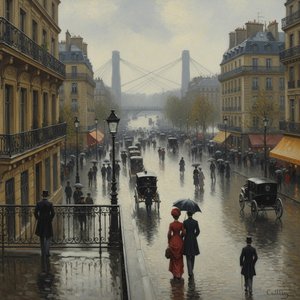
Gustave Caillebotte: Bridging Realism & Modernity in Parisian Life
Explore the life & art of Gustave Caillebotte, a pivotal figure bridging Realism & Impressionism. Discover his iconic Parisian scenes and lasting legacy with OriginalUniqueArt.


