Alternar para Impressão
 Ler mais







































 Para obras de arte ou reproduções com mais de 105 cm (aproximadamente 41 polegadas) em qualquer um dos lados, a moldura será enviada como um kit desmontado. Este método garante uma entrega segura e evita danos durante o transporte.


Grigory Gagarin: A Vision of Faith Embodied in Color
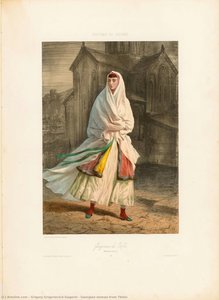
Grigory Grigorievich Gagarin’s “Patriarch of Armenia,” completed in 1855, stands as a testament to the artistic fervor of its time and a poignant reflection on Armenian Orthodox faith. Painted during the tumultuous period of the Caucasian War – a conflict fueled by imperial ambitions and nationalist aspirations – Gagarin's artwork transcends mere historical documentation; it delves into spiritual symbolism and masterful technique.
- Subject Matter: The painting depicts Saint Gregory Mamikonian, Armenia’s Catholicos (spiritual leader), portrayed with regal dignity. He is depicted in a richly ornamented purple robe, symbolizing piety and authority, holding aloft a staff – a traditional emblem of leadership and divine blessing – against a backdrop of earthy tones representing the Armenian landscape.
- Style: Gagarin's style aligns closely with Academic Impressionism, blending elements of realism with expressive brushstrokes that capture light and texture. This approach distinguishes itself from purely representational art by prioritizing emotional resonance over strict adherence to photographic accuracy.
- Technique: Executed in oil on canvas, Gagarin employed a layering technique—glazes—to build up color gradually, achieving luminous effects and conveying depth. The artist’s meticulous attention to detail is evident in the intricate folds of the robe and the expressive rendering of Mamikonian's face, capturing both solemn contemplation and unwavering conviction.
- Historical Context: Created during a period of significant upheaval—the Caucasian War—the painting reflects the anxieties and aspirations of Armenian society grappling with imperial encroachment. Gagarin’s patronage by Mikhail Vorontsov, Governor-General of Caucasus, underscores the importance of Orthodox faith within the region's political landscape.
- Symbolism: The purple robe symbolizes holiness and royal dignity, reflecting Mamikonian’s role as protector of Armenia’s spiritual heritage. The staff represents guidance from God and unwavering devotion—themes central to Armenian Orthodox theology. Gagarin’s depiction aims not merely to portray a figure but to embody the essence of Armenian faith itself.
The artwork resides at the Art Palace of Georgia – Museum of Cultural History in Tbilisi, where it continues to inspire admiration for its artistic merit and historical significance. Its enduring appeal lies in Gagarin’s ability to translate spiritual contemplation into visual splendor—a feat that cements “Patriarch of Armenia” as a cornerstone of Armenian art history.
Size:** 59 x 42 cm Date: 1855Further Research & Artistic Influences
Contemporary accounts describe Gagarin’s artistic vision as profoundly shaped by his exposure to the works of Karl Briullov, a celebrated Russian painter known for his dramatic depictions of historical events and mythological subjects. Briullov's influence is palpable in Gagarin’s masterful use of chiaroscuro—the interplay of light and shadow—creating an atmosphere of solemn grandeur.
The Art Palace Collection
The Art Palace of Georgia holds a remarkable collection of Gagarin’s sketches and drawings documenting his observations during the Caucasian War. These preparatory studies reveal Gagarin's meticulous approach to capturing the spirit of the region—a dedication that mirrors the artistic ambition evident in “Patriarch of Armenia.”
Notable Connections: Alexandre Duma & Mikhail Vorontsov
Alexander Duma’s writings, particularly “The Journey to Caucasus,” provide invaluable insight into Gagarin's artistic milieu. Duma lauded Gagarin’s theatricality—comparing the Tbilisi Sioni Cathedral fresco to Pompey Theatre—highlighting the artist’s ambition to elevate art beyond mere representation and imbue it with emotional depth.
Perguntas e Respostas
Existe um guia para "Padre Patriarca", de Grigório Grigórievich Gagarin?
O guia para "Padre Patriarca" é a página de Ficha informativa da obra — uma ficha informativa imprimível que apresenta a obra com sua legenda, autoria e tabela de identificação (artista, datas, técnica, tamanho original, coleção).
Qual é o tom emocional de "Padre Patriarca", de Grigório Grigórievich Gagarin?
"Padre Patriarca", de Grigório Grigórievich Gagarin transmite um tom emocional Reflexivo.
O que "Padre Patriarca", de Grigório Grigórievich Gagarin retrata e qual é a sua atmosfera?
"Padre Patriarca" apresenta georgian art, religious painting, caucasian landscape, saint petersburg style, biblical figure, armenian culture, 19th century art, e o seu estado de espírito registrado é Sereno.
 Visualizar na parede
 Compartilhar
 Compartilhar
 Detalhes
 Guia
Guia

 Baixar imagem
 Semelhantes
 Raio X
 Ver diaporama
 Perguntas e Respostas
 Estatísticas