
 Visualizar em escala
 Enviar
 Compartilhar
 Ver detalhes
 Guia de Obras do Aluno

 Baixar imagem
 Semelhantes
 Raio X
 Apresentação de slides
 Estatísticas
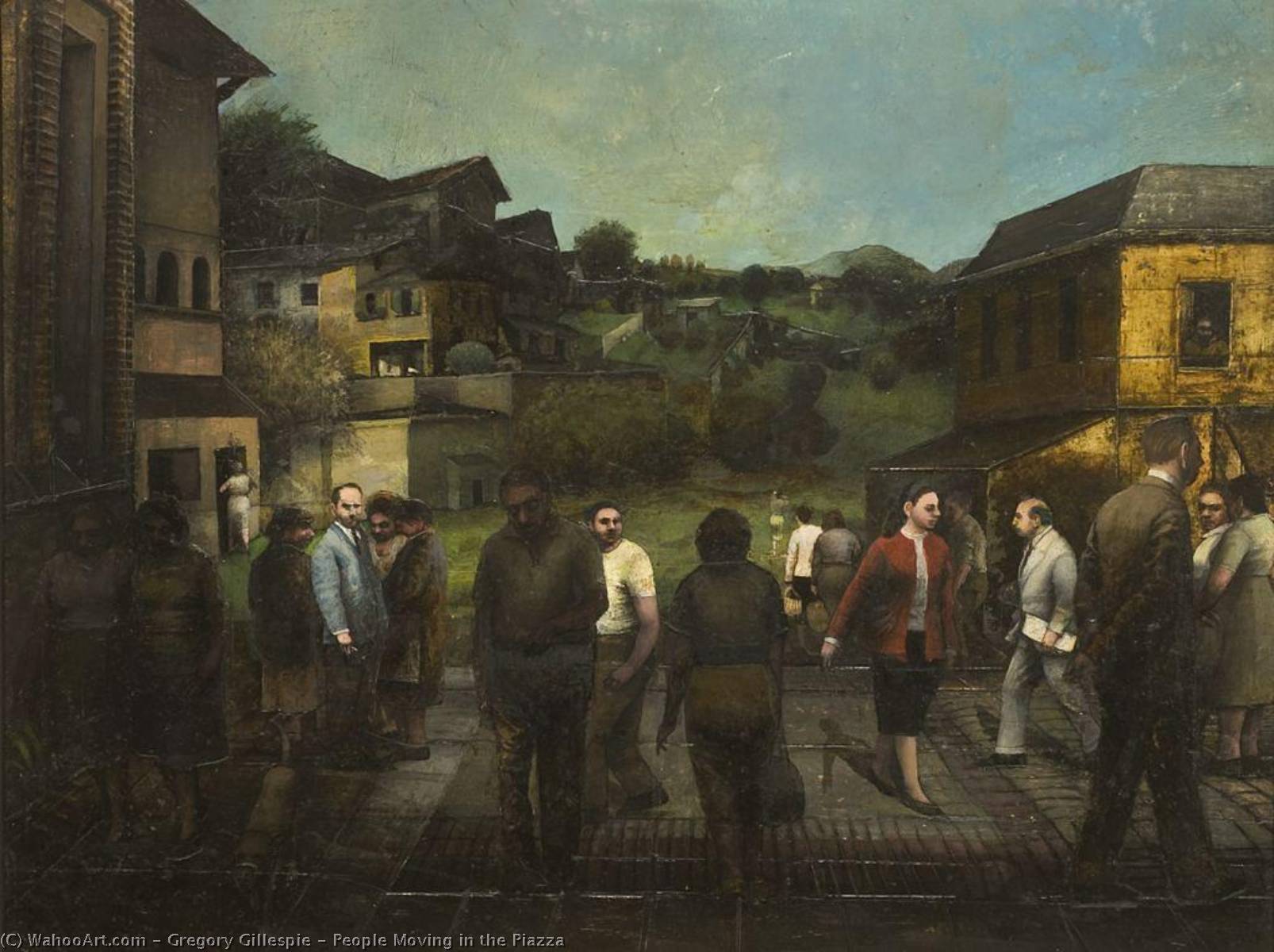
People Moving in the Piazza
 Contemporary Realism
 1963
1963 21.0 x 27.0 cm
 Ver mais
Giclée / Impressão de Arte
Impressão giclée ou em tela de qualidade de museu, com produção rápida e opções flexíveis de acabamento. ( Encomendar reprodução pintada à mão Ver Imagem Digital)




































Escolha entre os nossos tamanhos pré-definidos que respeitam as proporções originais da obra de arte.

Você pode inserir suas próprias dimensões para se ajustar a uma moldura ou espaço específico. Se o tamanho selecionado não corresponder às proporções da imagem original, iremos recortar a obra de arte ou estender a imagem com uma borda espelhada ou preenchimento sólido. Um mockup digital será enviado para sua aprovação antes do início da produção.
Por favor, observe que a visualização na tela não reflete o recorte ou a extensão real. Apenas o mockup mostrará com precisão a composição final.
Embora tamanhos personalizados estejam disponíveis, recomendamos selecionar uma dimensão da lista predefinida para preservar as proporções originais.
Entrega mundial () em 2 semanas, em vez das 4/5 semanas padrão. (3 Outubro)

Envio expresso gratuito para todo o mundo

Tela de Linho Premium

Seguro de transporte total

Garantia de Reembolso de Impostos Alfandegários

Garantia de Fidelidade de Cor

Política de Devolução em 100 Dias (Apenas para Defeitos)

Garantia de reembolso de 100%

Desconto para múltiplas unidades
 A opção de vidro está disponível apenas para tamanhos inferiores a 110 cm

People Moving in the Piazza
Giclée / Impressão de Arte
Dimensões da Reprodução
-


Preço Total
€ 69
The scene takes place on a hillside with buildings surrounding it, creating a sense of depth and dimension to the scene. The black and white depiction of people walking in the street adds an element of simplicity, yet the overall effect is one of liveliness and engagement. A dog can be seen among the crowd, adding an extra layer of energy to the image.
Gregory Gillespie was a master of capturing the essence of everyday life, and People Moving in the Piazza is no exception. The painting is set in a village-like atmosphere, with people walking and interacting with one another. The buildings surrounding the hillside create a sense of community, drawing the viewer into the scene.
Some notable works by Gregory Gillespie include Sunday, also housed at the Smithsonian American Art Museum. For more information on Gregory Gillespie and his works, visit /art/list/?Filter=Gregory-Gillespie.
To explore more artworks like People Moving in the Piazza, visit the Smithsonian American Art Museum collection on https://OriginalUniqueArt.com.
Other notable artists whose works are housed at the Smithsonian American Art Museum include David Levine and Ernest Clifford Peixotto. Their works, such as Old Lady on a Beach and Oriskany, can be found on https://OriginalUniqueArt.com.
For handmade oil painting reproductions of these captivating pieces, visit https://OriginalUniqueArt.com. With a wide range of artworks to choose from, you're sure to find the perfect piece to enhance your space.
Notable Works
- People Moving in the Piazza by Gregory Gillespie
- Sunday by Gregory Gillespie
- Old Lady on a Beach by David Levine
- Oriskany by Ernest Clifford Peixotto
Perguntas e Respostas
Quem criou "People Moving in the Piazza"?
"People Moving in the Piazza" foi criado por Gregory Gillespie. As informações nesta página descrevem a obra original de Gregory Gillespie.
As cores de "People Moving in the Piazza" parecem intensas ou suaves?
A intensidade de cor de "People Moving in the Piazza" é Monochromatic. A intensidade descreve o quão vibrantes as cores parecem ser.
Em que ano foi criado "People Moving in the Piazza" de Gregory Gillespie?
A criação de "People Moving in the Piazza" de Gregory Gillespie data de 1963.
Quão clara é a obra "People Moving in the Piazza" no geral?
A luminosidade percebida de "People Moving in the Piazza" de Gregory Gillespie é deep_shadow. Ela pode ser harmonizada com a iluminação do espaço pretendido.
"People Moving in the Piazza" está disponível como uma impressão fine art?
Uma impressão de "People Moving in the Piazza" de Gregory Gillespie pode ser encomendada diretamente em esta página: uma impressão fine art em tela de algodão ou papel canvas de arquivo.
Qual era a idade de Gregory Gillespie ao criar "People Moving in the Piazza" em 1963?
Gregory Gillespie tinha 27 anos quando criou "People Moving in the Piazza" em 1963. A idade é calculada a partir do ano de nascimento do artista, 1936.
Onde "People Moving in the Piazza" se posiciona dentro da obra de Gregory Gillespie?
Na produção de Gregory Gillespie, "People Moving in the Piazza" insere-se no estilo Contemporary Realism, acompanhando os temas de renaissance detail, post-impressionist brush, american urban life, european village scene, social observation art, daily routine capture, gillespie's human focus, quiet american realism.
Biografia do Artista
The Renaissance Spirit in Modern Shadows
Gregory Gillespie was an artist who lived between worlds, bridging the gap between the meticulous rigor of the Italian Renaissance and the unsettling dreamscapes of contemporary surrealism. Born in Roselle Park, New Jersey, his journey took him from the foundational studies at Cooper Union to the vibrant artistic community of the San Francisco Art Institute. However, it was his transformative period in Italy, fueled by prestigious Fulbright-Hays grants, that truly forged his visual language. Immersed in the works of masters like Masccio, Mantegna, and Carlo Crivelli, Gillespie absorbed a sense of compositional gravity and symbolic depth that would haunt his canvases for decades. His time in Florence and Rome allowed him to cultivate an atmosphere of profound melancholy, where landscapes were never merely scenery but vessels for contemplation and quiet drama.The Alchemy of Image and Layer
Gillespie’s methodology was a fascinating study in transformation, often blurring the line between found reality and painted fiction. In his most evocative early works, he employed a unique collage technique, meticulously cutting images from newspapers and magazines to layer beneath or atop his painted surfaces. This process allowed him to breathe new life into the mundane, turning a simple newsprint fragment into a ghostly inhabitant of a surreal landscape. His ability to blend Flemish realism with elements of the unexpected created a tension that invited viewers to question the boundaries of their own perception. As he returned to the United States in 1970 and settled in Massachusetts, his focus shifted toward working directly from life. This evolution brought about a period of exquisite still lifes and self-portraits that maintained his signature attention to detail while embracing a newfound expressive freedom.A Legacy of Enchanted Realism
The significance of Gillespie’s contribution to American art lies in his ability to sustain the flame of magic realism in a modern era. His career was marked by prestigious recognitions, including his election as an Associate of the National Academy of Design in 1971 and later as a full Academician in 1994. Through exhibitions in the Whitney Biennials and a major retrospective at the Hirshhorn Museum, he established himself as a master of the enigmatic. His oeuvre remains a testament to the power of meticulous craft and the enduring allure of the mysterious, leaving behind a collection of works characterized by:- Symbolic depth derived from classical traditions;
- Atmospheric landscapes that evoke both peace and unease;
- Technical mastery in both collage and direct painting;
- Narrative ambiguity that challenges the viewer's eye.

Gregory Gillespie
1936 - 2000
Informações Rápidas
- Full Name: Gregory Joseph Gillespie
- Nationality: American
- Date Of Birth: 1936
- Date Of Death: 2000
- Place Of Birth: Roselle Park, New Jersey
- Notable Artworks:
- People Moving in the Piazza
- The Party
- Untitled (352)
- Artistic Movement Or Style: Magic Realism
- Artists Who Influenced This Artist:
- Masaccio
- Carlo Crivelli
- Artists Or Movements Influenced By This Artist: ['Renaissance']
Artigos Relacionados

Grant Wood & American Regionalism: Identity, Myth & the Rural Landscape
Explore the world of Grant Wood & American Regionalism with OriginalUniqueArt. Discover the symbolism behind 'American Gothic', recurring themes, and the movement's lasting impact on art history. High-quality reproductions available.

Realismo Americano: 10 Obras-Primas que Moldaram a Arte e Decoram o Lar
Descubra as 10 obras-primas do Realismo Americano! Explore a história de Hopper, Homer e Cassatt. Encontre reproduções de arte com qualidade museológica para decorar sua casa. Inspire-se em cores vibrantes e atmosferas únicas. Explore a coleção completa na OriginalUniqueArt.com.

American Regionalism: The Soul of the Heartland and the Mastery of Grant Wood
Explore the profound history of American Regionalism. Discover how Grant Wood captured the heart of the Midwest through masterpieces like American Gothic. An expert guide to the movement, its cultural impact, and the enduring beauty of American Realism.

As 10 Pinturas Mais Famosas Dominadas pelo Preto: Arte, História e Decoração
Descubra as 10 pinturas mais icônicas dominadas pelo preto! Explore a história, técnica e emoção por trás de obras-primas do Romantismo, Realismo e Expressionismo. Encontre reproduções de arte exclusivas na OriginalUniqueArt.com.

American Regionalism: A Crucible of Identity – Exploring Themes of Place, Labor & Social Commentary
Explore American Regionalism's powerful depiction of the American heartland during the Great Depression. Discover Grant Wood, Thomas Hart Benton & more. Expert analysis & high-quality art reproductions at OriginalUniqueArt.