Menu
Consultoria de arte gratuita
PreviewPreview Comprar impressão Comprar impressãoComprar imagem em alta resolução Comprar imagem em alta resolução EnviarEnviar
Detalhes da obraDetalhes da obra Adicionar aos favoritos Adicionar aos favoritos BaixarBaixar SemelhantesSemelhantes Raio XRaio X SlideshowSlideshow

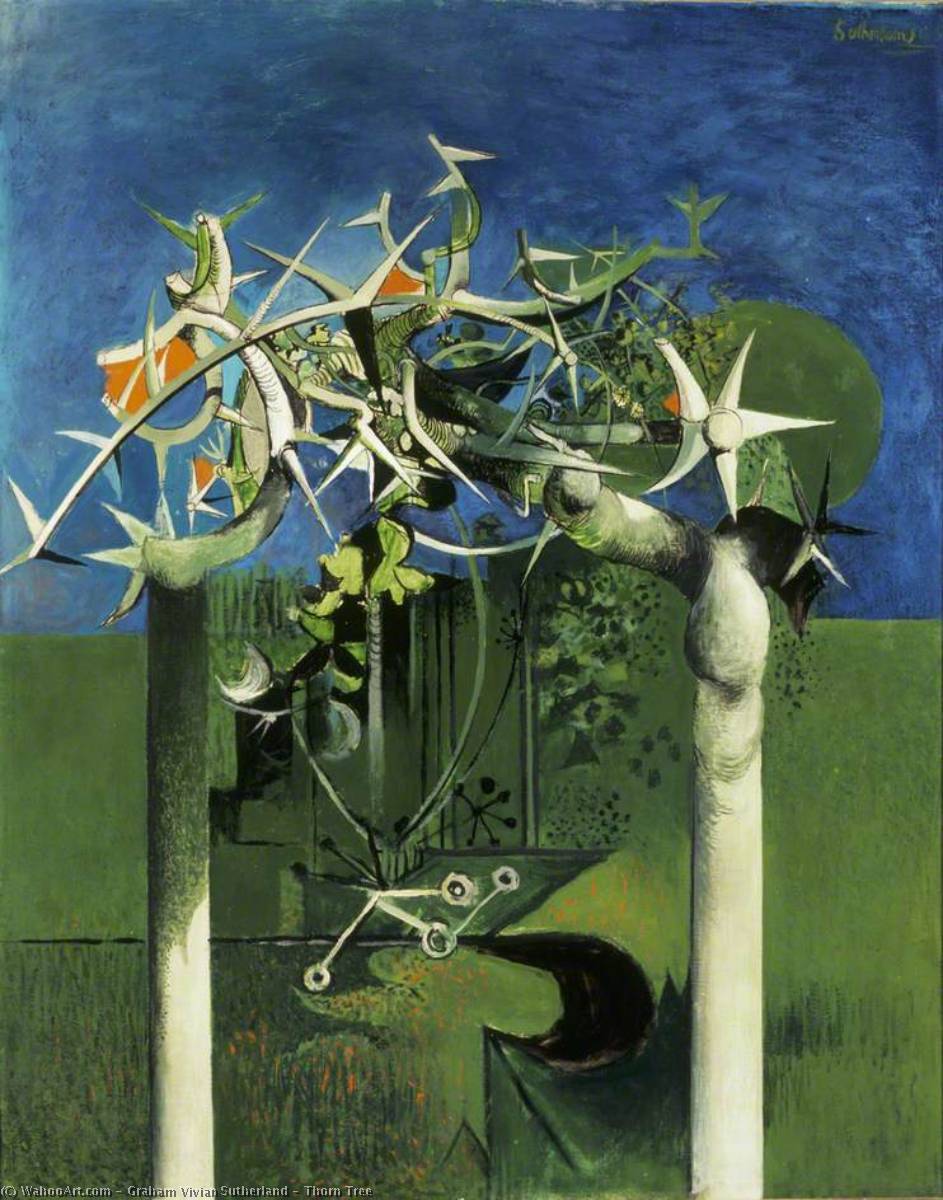
Thorn Tree

Discover 'Thorn Tree' by Graham Sutherland – a captivating oil painting of a windswept tree and birds, showcasing surreal landscapes & evocative nature scenes from 1946.

Graham Vivian Sutherland (1903-1980) foi um artista britânico renomado pela pintura surrealista de paisagens e pelo projeto da catedral de Coventry, símbolo de reconciliação pós-guerra. Explore suas obras gráficas, retratos e arte de guerra que refletem a estranheza da natureza e o impacto artístico do período moderno.

Reprodução em Óleo Feita à Mão

Óleo sobre tela pintado à mão no seu tamanho e moldura, feito sob encomenda pelos nossos artistas.

P118B $10
P118H $10
P118W $10
P438Z $10
P508JH $12
P508YH $12
P805H $10
P805Z $10
P919BZ $10
P919G $10
P919XJ $10
P959ZH $10
P968JZ $12
W106C $8
W218G $10
W218JH $8
W218Y $10
W307PJ $10
W316G $10
W316PJ $8
W316Y $10
W398PJ $8
W4111J $10
W500HY $15
W500JH $15
W692G $12
W849H $8
W940BG $15
W953PJ $8

Standard
custom
CM
INCH

Escolha entre os nossos tamanhos pré-definidos que respeitam as proporções originais da obra de arte.

largura
altura

Pode inserir as suas próprias dimensões para se adequar a uma moldura ou espaço específico. Se o tamanho selecionado não corresponder às proporções da imagem original, iremos cortar a obra de arte ou estender a pintura com elementos adicionais pintados à mão. Um esboço digital será enviado para sua aprovação antes do início da produção.
Tenha em atenção que a pré-visualização no ecrã não reflete o corte ou extensão real. Apenas o esboço mostrará com precisão a composição final.
Embora tamanhos personalizados estejam disponíveis, recomendamos selecionar uma dimensão da lista predefinida para preservar as proporções originais.

Exemplos do que pode ser alterado: Substituir o rosto pela foto do cliente; Adicionar um animal de estimação (ex: substituir gato por cão); Incluir uma mensagem oculta no fundo; Alterar a paisagem ou elementos do fundo.
Após o pedido, a equipa OriginalUniqueArt.com enviará um e-mail ao cliente para solicitar instruções e fornecer uma prévia do esboço.

Entrega Mundial () em 3 a 4 semanas, em vez das 5 semanas padrão. (26 Julho). Sem comprometer a qualidade.

why_choose_icon
Envio Expresso Gratuito para todo o Mundo
why_choose_icon
Tela de Linho Premium
why_choose_icon
Seguro de envio completo
why_choose_icon
Garantia de Reembolso de Impostos Alfandegários
why_choose_icon
Garantia de Fidelidade de Cores
why_choose_icon
Política de Devolução de 60 Dias (Apenas para Defeitos)
why_choose_icon
Garantia de 100% de Reembolso
why_choose_icon
Desconto para múltiplas unidades

Preço Total

-

reproduction

Thorn Tree

Técnica de Reprodução

Dimensões da Reprodução

-

Preço Total Final

-

Dados Rápidos

  • Artistic style: Landscape painting
  • Year: 1946
  • Dimensions: 127 x 102 cm
  • Location: Albright-Knox Art
  • Influences:
    • Surrealism
    • Expressionism
  • Title: Thorn Tree
  • Artist: Graham Sutherland

Teste de Arte

Cada pergunta possui apenas uma resposta correta.

Pergunta 1:
What is the primary subject matter of Graham Vivian Sutherland’s painting, ‘Thorn Tree’?
Pergunta 2:
In what year was ‘Thorn Tree’ painted?
Pergunta 3:
Which artistic movement is most closely associated with Graham Vivian Sutherland’s style as exemplified in ‘Thorn Tree’?
Pergunta 4:
The painting 'Thorn Tree' was created by Graham Vivian Sutherland, who is known for his work in which medium besides painting?
Pergunta 5:
What does the presence of ‘thorns’ in the painting likely symbolize?

Descrição da Obra

A Vision of Verdant Mystery: Graham Vivian Sutherland’s “Thorn Tree”

Graham Vivian Sutherland's "Thorn Tree," painted in 1946, isn’t merely a landscape; it’s an immersion into the heart of Pembrokeshire’s rugged beauty, filtered through the uniquely perceptive eye of one of Britain’s most significant modern artists. This oil on canvas work transcends simple representation, offering instead a deeply layered exploration of nature's inherent strangeness and the quiet drama of the natural world. Sutherland, a master of Neo-Romanticism, skillfully blends the traditional English landscape tradition with the subtle influences of Surrealism and Expressionism – a combination that resulted in powerfully evocative and often unsettling images.

The painting immediately draws the viewer into a dense, almost claustrophobic woodland scene. Towering trees dominate the composition, their branches intertwining to create a complex network of shadows and light. The leaves themselves are rendered with meticulous detail, yet they possess an unnerving quality – not quite realistic, but hinting at something beyond the purely botanical. Birds, perched precariously amongst the foliage, add to the sense of unease and suggest a hidden life within this seemingly still landscape. Sutherland’s use of color is particularly striking; predominantly greens—ranging from deep emerald to muted olive—create an atmosphere of both lushness and melancholy. Subtle hints of brown and grey ground the scene, anchoring it in the earth while simultaneously emphasizing its isolation.

The Painter's Process: Technique and Style

Sutherland’s technique is characterized by a remarkable sensitivity to light and texture. He employed a broken brushstroke method, layering thin washes of paint to build up form and create a shimmering effect that captures the dappled sunlight filtering through the trees. The canvas itself appears almost alive with movement – not in a frenetic way, but rather through the careful manipulation of color and tone. The painting’s surface is rich with impasto—thickly applied paint—particularly around the branches and leaves, giving them a tangible presence. This tactile quality invites the viewer to reach out and touch the scene, blurring the line between observation and participation.

Notably, Sutherland's work during this period reflects his deep connection to Pembrokeshire, a region he revisited repeatedly throughout his career. He wasn’t simply documenting the landscape; he was attempting to capture its essence—its mood, its mystery, and its inherent sense of solitude. The painting embodies a shift in artistic focus away from purely representational art towards a more subjective interpretation of reality.

Symbolism and Interpretation

“Thorn Tree” is rich with symbolic potential. The thorns themselves are a potent motif—representing both defense and pain, beauty and danger. They suggest a world where nature isn’t always benevolent, but rather holds its own secrets and challenges. The birds, often associated with freedom and spirituality, seem trapped within the dense foliage, hinting at a longing for escape. The overall composition can be interpreted as an allegory of the human condition—a struggle to find meaning and connection in a world that is both beautiful and unsettling.

Furthermore, the painting’s creation coincided with post-war Britain, a period marked by uncertainty and social upheaval. Sutherland's exploration of nature’s complexities can be seen as a reflection of this broader sense of disorientation—a search for stability and meaning amidst chaos. The painting’s enduring appeal lies in its ability to resonate with viewers on multiple levels, prompting contemplation about the relationship between humanity and the natural world.

A Timeless Masterpiece: Reproduction and Display

"Thorn Tree" is a captivating work that would be an exceptional addition to any art collection or interior space. Reproductions of this painting capture much of its original power, offering a way to bring Sutherland’s vision into your home. When selecting a reproduction, consider the quality of the print and the canvas material—a fine-art giclée on archival canvas will best preserve the artwork's colors and detail. The painting’s evocative atmosphere would complement a variety of interior styles, from modern minimalist spaces to more traditional settings. Its subtle color palette and complex composition create a focal point that invites contemplation and adds a touch of understated elegance to any room.


Biografia do Artista

Graham Vivian Sutherland (1903–1980): Um Pintor Visionário de Paisagens

Graham Vivian Sutherland OM (24 agosto 1903 – 17 fevereiro 1980) foi um artista inglês prolífico, celebrado por seu estilo distinto que uniu tradições inglesas da pintura pela luz natural com movimentos vanguardistas europeus como o Surrealismo e o Expressionismo, estabelecendo-se como um dos artistas modernos mais influentes da Inglaterra. Sua obra abrangia gravura, design de tapeçaria, arte de vidro e retrato, embora suas paisagens – particularmente aquelas que retratam a beleza agreste do Pembrokeshire – permanecessem sua maior conquista artística. ### Infância e Educação Graham Sutherland nasceu em Streatham, Londres, filho mais velho de George Humphrey Vivian Sutherland, advogado que posteriormente serviu como servidor público no Registro da Terra e na Junta Educacional, e Elsie Sutherland (née Foster). Ambos os pais possuíam inclinações artísticas, fomentando desde cedo o fascínio do filho pelo desenho. Frequentou a Escola Preparatória Homefield em Sutton e depois Epsom College em Surrey até 1919, adquirindo uma sólida formação em educação clássica. Reconhecendo seu talento inato para as artes visuais, Sutherland iniciou um aprendizado na Oficina Ferroviária Midland em Derby – uma decisão que desafiou expectativas sobre a profissão jurídica de sua família – antes de perceber que sua verdadeira paixão residia na exploração artística através dos estudos técnicos. ### Desenvolvimento Artístico e Influências Sutherland embarcou em sua jornada artística com foco na gravura e no recorte, aperfeiçoando suas habilidades na Escola de Arte Goldsmiths entre 1921 e 1926. Seus anos formativos foram marcados pela exposição à paisagem pastoral de Samuel Palmer – uma conexão que profundamente moldou suas sensibilidades estéticas iniciais. Os seus desenhos refletiam o movimento surrealista em ascensão, influenciado por artistas como René Magritte e Giorgio Morandi, demonstrando disposição para experimentar técnicas e imagens não convencionais. Ele abraçou o abstracionismo como meio de transmitir emoção e capturar a essência da complexidade da natureza. Sua obra foi profundamente afetada pela estética de Edvard Munch e pelo trabalho de outros artistas expressionistas que exploravam temas psicológicos e emocionais. Além disso, Sutherland admirava o estilo de paisagem de Paul Nash, um pintor inglês conhecido por suas obras simbolistas e surrealistas. ### Principais Conquistas: Pintura Paisagística e Tapeçaria da Catedral de Coventry O ponto alto artístico de Sutherland chegou em 1938 com sua visita ao Pembrokeshire, País de Gales – uma experiência transformadora que inflamou sua devoção permanente à região por toda a vida. Inspirado por Nash e Munch, ele produziu uma série de pinturas a óleo capturando a beleza etérea da costa galês, caracterizada por pinceladas ousadas e paletas de cores evocativas. Essas paisagens tornaram-se emblemáticas da visão artística de Sutherland, refletindo profundidade psicológica e inovação formal. Sua maior conquista monumental foi projetar a tapeçaria central da Catedral de Coventry – um esforço colaborativo que simbolizava reconciliação após a devastação da Segunda Guerra Mundial. Este ambicioso projeto demonstrou maestria em arte têxtil e consolidou seu legado como ícone cultural. ### Retrato e Últimos Anos Sutherland continuou produzindo retratos impressionantes ao longo de sua carreira, destacando Winston Churchill – uma representação controversa que provocou amplo debate sobre interpretação artística e representação histórica. Ele lecionou gravura na Escola de Arte Goldsmiths e na Escola Técnica de Londres, nutrindo os talentos de jovens artistas e disseminando seu conhecimento dos princípios artísticos. Em 1955, Sutherland adquiriu uma propriedade perto de Nice, abraçando uma vida estrangeira que permitiu que ele reconectasse-se com sua inspiração artística até sua morte em 1980, deixando para trás um corpo de trabalho duradouro celebrado por sua originalidade e ressonância emocional. Sua obra é considerada um marco da arte moderna britânica e continua a inspirar artistas e estudiosos hoje em dia. Ele recebeu o Mérito Britânico em 1960 pelo seu trabalho artístico e intelectual. Sua coleção inclui obras importantes de artistas ingleses e internacionais, como pinturas de paisagens impressionistas e obras abstratas que exploram temas filosóficos e espirituais. ### Instrução: Sutherland dedicou-se à educação artística por toda a vida, compartilhando seu conhecimento e paixão pela arte com estudantes e colegas. Sua abordagem pedagógica enfatizou o desenvolvimento da visão artística e habilidades técnicas, buscando estimular o pensamento crítico e promover uma compreensão profunda dos princípios estéticos. Ele acreditava que a arte desempenhava um papel fundamental na formação humana e na expressão cultural, inspirando indivíduos a explorar suas emoções e ideias de maneira criativa. Além disso, Sutherland promoveu o diálogo entre diferentes tradições artísticas e culturais, incentivando os alunos a apreciar a beleza e o significado das obras de arte de diversas épocas e estilos. Sua influência como educador permanece significativa na história da arte britânica e continua a inspirar artistas contemporâneos.



Graham Vivian Sutherland

Graham Vivian Sutherland

1903 - 1980 , Reino Unido

Informações Rápidas

  • Artistic Movement Or Style: Surrealismo
  • Artists Or Movements Influenced By This Artist: ['Paul Nash']
  • Artists Who Influenced This Artist:
    • Samuel Palmer
    • F.L. Griggs
  • Date Of Birth: 24 Agosto 1903
  • Date Of Death: 17 Febbraio 1980
  • Full Name: Graham Vivian Sutherland
  • Nationality: Britânica
  • Notable Artworks:
    • Flying Bomb Depot
    • Entrance to a Lane
  • Place Of Birth: Londra, Inglaterra
Explore obras de arte organizadas por temas, estilos e características.