Visualizar na parede
 Compartilhar
 Compartilhar
 Detalhes
 Guia
Guia

 Baixar imagem
 Semelhantes
 Raio X
 Ver diaporama
 Perguntas e Respostas
 Estatísticas
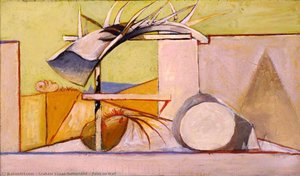
Flying Bomb Depot (recto)

- 95.0 x 89.0 cm


 Ler mais
A obra de arte exibida nesta página é protegida por leis de direitos autorais, o que significa que não podemos criar ou vender legalmente uma reprodução idêntica. Esta proteção é aplicada por meio de acordos internacionais, tais como a Convenção de Berna e pelas leis nacionais, incluindo as estabelecidas por Lei de Direitos Autorais dos EUA - Título 17.
Este método cumpre plenamente as regulamentações de direitos autorais, pois não envolve a cópia ou duplicação da obra protegida. Em vez disso, trata-se de uma reinterpretação criativa — uma nova pintura que é influenciada pela original, mas não idêntica a ela.
Giclée / Impressão de Arte
Impressão giclée ou em tela de qualidade de museu, com produção rápida e opções flexíveis de acabamento. ( Comprar pintura feita à mão Alternar para Imagem Digital)




P118B €10

P118H €10

P118W €10

P438Z €10

P508JH €12

P508YH €12

P805H €10

P805Z €10

P919BZ €10

P919G €10

P919XJ €10

P959ZH €10

P968JZ €12

W106C €8

W218G €10

W218JH €8

W218Y €10

W307PJ €10

W316G €10

W316PJ €8

W316Y €10

W398PJ €8

W4111J €10

W500HY €15

W500JH €15

W692G €12

W849H €8

W940BG €15

W953PJ €8




Escolha entre os nossos tamanhos pré-definidos que respeitam as proporções originais da obra de arte.

Insira a largura e a altura desejadas para se ajustarem à sua moldura ou parede. Uma impressão pode ser apenas cortada, nunca ampliada além da imagem original; portanto, um tamanho com proporções diferentes resultará na perda de parte da imagem. Enviamos uma maquete digital para sua aprovação antes de realizarmos a impressão. A imagem exibida nesta página não mostra o corte real — apenas a maquete o faz.
Entrega mundial () em 2 semanas, em vez das 4/5 semanas padrão. (5 Novembro)

Envio expresso gratuito para todo o mundo

Tela de Linho de Alta Qualidade

Seguro de transporte completo

Garantia de Reembolso de Impostos Alfandegários

Garantia de Fidelidade Cromática

Política de Devolução em 100 Dias (Apenas para Defeitos)

Garantia de reembolso de 100%

Oferta de desconto por quantidade
 A opção de vidro está disponível apenas para tamanhos inferiores a 110 cm

Flying Bomb Depot (recto)
Giclée / Impressão de Arte
Tamanho da Reprodução
-


Preço Total
€ 72
A Haunting Echo of War: Exploring Sutherland’s “Flying Bomb Depot”
Graham Vivian Sutherland's "Flying Bomb Depot (recto)," painted in 1945, isn’t merely a depiction of wartime architecture; it’s a profound meditation on destruction, isolation, and the unsettling beauty born from devastation. Created during the tumultuous years of World War II, this oil painting offers a starkly evocative glimpse into the hidden realities of Britain's defense efforts – specifically, the clandestine network of caves used to house German flying bombs. Sutherland, an Official War Artist tasked with documenting the home front, moved beyond straightforward military scenes, instead choosing to capture the psychological and atmospheric weight of these subterranean installations.
The painting’s immediate impact is one of muted drama. Dominated by a palette of somber grays, browns, and ochres, it eschews vibrant color in favor of a restrained, almost melancholic tone. The composition centers on a partially collapsed brick structure – the entrance to a cave complex – its jagged edges and broken walls hinting at recent bombardment. The strategic placement of sparse trees, rendered with an unsettlingly organic quality, further amplifies the sense of desolation and the intrusion of nature reclaiming man-made structures. It’s not a heroic portrayal of victory; rather, it's a quiet acknowledgment of loss and the enduring scars left by conflict.
Neo-Romanticism and the Pembrokeshire Landscape
Sutherland’s style in “Flying Bomb Depot” firmly places it within the realm of Neo-Romanticism. This movement, flourishing in Britain during the interwar period and continuing through the war years, sought to reconnect with nature while simultaneously exploring themes of emotion, spirituality, and the sublime. Sutherland's work shares this dual focus – he imbues his landscapes with a sense of profound emotional resonance, mirroring the anxieties and uncertainties of the era. His earlier Pembrokeshire paintings, which profoundly influenced this piece, demonstrated a fascination with the rugged beauty of the Welsh coastline, but here, that interest is filtered through the lens of wartime experience.
Technically, Sutherland employs a layered approach, building up his image through multiple glazes and scumbles. This creates a remarkable sense of texture and depth, particularly evident in the rough-hewn brickwork and the tangled undergrowth. The brushstrokes are loose and expressive, contributing to the painting’s overall feeling of immediacy and vulnerability. He utilizes a technique reminiscent of Impressionism, capturing fleeting moments of light and shadow, yet his subject matter—a scene of destruction—elevates it beyond mere observation.
Symbolism and the Weight of History
Beyond its immediate depiction of wartime infrastructure, “Flying Bomb Depot” is rich in symbolic meaning. The caves themselves represent a hidden world – a space removed from everyday life, shrouded in secrecy and danger. The broken walls symbolize not just physical damage but also the shattered foundations of society during wartime. The lone bird perched on a branch adds an element of unsettling beauty to the scene, suggesting both resilience and vulnerability amidst the ruins. It’s a poignant reminder that even in the darkest of times, life persists.
Considering its creation in 1945, immediately following intense aerial bombardment, the painting serves as a powerful testament to the psychological impact of war on civilians. It's a far cry from celebratory wartime propaganda; instead, it offers a raw and honest portrayal of the human cost of conflict. The work’s enduring power lies in its ability to evoke a sense of unease and contemplation, prompting viewers to reflect on the complexities of history and the fragility of peace.
Collecting a Piece of History
Reproductions of “Flying Bomb Depot” offer a compelling way to bring this evocative artwork into your home or office. Available in various sizes and mediums – from high-quality prints to meticulously crafted oil paintings – it’s a unique addition to any collection. This piece is more than just decoration; it's a window into the past, a reminder of a pivotal moment in history, and a testament to the enduring power of art to capture both beauty and sorrow.
Perguntas e Respostas
Por quais outros nomes ou pseudônimos Graham Vivian Sutherland é conhecido?
Outros nomes registrados para Graham Vivian Sutherland, criador de "Flying Bomb Depot (recto)", incluem GV Sutherland.
Onde e para qual finalidade é recomendado "Flying Bomb Depot (recto)"?
"Flying Bomb Depot (recto)", de Graham Vivian Sutherland é recomendado para Statement, idealmente em um(a) Living Room. O uso e o espaço juntos orientam onde uma reprodução se encaixa.
Posso encomendar uma reprodução a óleo de "Flying Bomb Depot (recto)"?
Você pode encomendar uma reprodução pintada à mão de "Flying Bomb Depot (recto)", de Graham Vivian Sutherland diretamente em sua página de Reprodução Pintada à Mão: uma reprodução a óleo pintada à mão sobre tela de linho, feita sob encomenda.
Biografia do Artista
As Paisagens Visionárias de Graham Vivian Sutherland
Graham Vivian Sutherland, um titã do Modernismo britânico, possuía a rara habilidade de transformar os contornos familiares do mundo natural em algo profundamente inquietante e espiritual. Nascido em Streatham, Londres, em 1903, a jornada de Sutherland foi de constante metamorfose. Embora seus primeiros anos tenham sido moldados por uma educação clássica no Epsom College, sua verdadeira vocação surgiu longe dos círculos jurídicos de sua família. Sua incursão inicial no mundo técnico de um aprendizado nas oficinas de locomotivas da Midland Railway proporcionou uma base de precisão que mais tarde se manifestaria em suas intrincadas gravuras e pinturas a óleo texturizadas. Ao transitar para a Goldsmiths' School of Árt, Sutherland começou a se afastar da representação tradicional, sentindo-se atraído pelo poder evocativo da gravura e da água-forte.
A estética inicial do artista estava profundamente enraizada no romantismo de Samuel Palmer, mas ele recusou-se a permanecer ancorado ao passado. Em vez disso, Sutherland atuou como uma ponte entre a tradição pastoral inglesa e a energia radical dos movimentos de vanguarda europeus. Ao absorver a lógica onírica do Surrealismo e a emocionalidade crua do Expressionismo, ele desenvolveu uma linguagem visual capaz de capturar tanto a paisagem física quanto o estado psicológico. Suas primeiras gravuras, caracterizadas por um senso de mistério e forma orgânica, lançaram as bases para uma carreira definida pela obsessão com a "estranheza" da natureza — um tema que se tornaria seu legado mais duradouro.
A Sombra da Natureza e os Anos de Guerra
A década de 1940 marcou uma era crucial no desenvolvimento de Sutherland, à medida que seu foco mudava do delicado meio da gravura para as texturas viscerais e impasto da pintura a óleo. Foi durante este período que as paisagens áridas e ventosas de Pembrokes_keshire tornaram-se sua musa principal. Em obras como Thorn Tree, pode-se testemunhar a maestria do artista em fundir a realidade botânica com a distorção surrealista. Ele não apenas pintava árvores; ele pintava a tensão, a luta e a arquitetura esquelética da própria vida. Este período o viu mover-se em direção a uma forma de ver mais abstrata, porém profundamente simbólica, onde espinhos, raízes e ramos retorcidos serviam como metáforas para a vulnerabilidade e a resiliência humana.
A Segunda Guerra Mundial trouxe uma dimensão diferente e mais sombria ao seu trabalho. Servindo como artista de guerra oficial, Sutherland voltou seu olhar para as cenas industriais e muitas vezes assombrosas da frente interna britânica. Suas pinturas desta era, como Flying Bomb Depot The Caverns, são aulas magistrais de atmosfera. Através de texturas pesadas e uma paleta que evoca tanto a decadência quanto o pavor, ele capturou a desolação sinistra dos interiores de tempos de guerra. Estas obras não eram meramente documentação; eram retratos psicológicos de uma era marcada pela ansiedade e pela presença iminente da destruição, refletindo a realidade fraturada de um mundo em guerra.
Um Legado de Simbolismo e Grandiosidade
Nos anos pós-guerra, o trabalho de Sutherland ascendeu a novos patamares de significância espiritual e pública. Ele começou a integrar o simbolismo religioso com seus motivos orgânicos, criando uma síntese poderosa entre o sagrado e o natural. Isso culminou em uma de suas conquistas mais monumentais: o design da enorme tapeçaria central para a nova Catedral de Coventry, intitulada Christ in Glory in the Tetramorph. Esta obra, que utilizou sua habilidade de manipular forma e cor em grande escala, permanece como um testemunho de seu papel na reconstrução cultural da Grã-Bretanha do pós-guerra.
Ao longo de sua carreira prolífica, a versatilidade de Sutherland permitiu-lhe deixar uma marca indelével em múltiplas disciplinas:
- Retratística: Sua habilidade de capturar a profundidade psicológica de figuras públicas, como seu digno e melancólico Somerset Maugham.
- Gravura: Uma dedicação vitalícia à precisão da água-forte e da gravura que informou seu senso de linha e estrutura.
- Artes Decorativas: Suas contribuições para o design de tapeçarias e arte em vidro, trazendo a abstração moderna para o reino da beleza funcional.
Em última análise, Graham Sutherland permanece como uma pedra angular da arte do século XX porque ousou olhar abaixo da superfície da paisagem. Ele encontrou o surreal dentro do real e o divino dentro do orgânico. Seu legado não é encontrado apenas em museus, mas na maneira como percebemos a beleza oculta e muitas vezes irregular do mundo ao nosso redor — um mundo onde cada espinho guarda uma história e cada sombra contém um mistério.

Graham Vivian Sutherland
1903 - 1980 , Reino Unido
Dados Rápidos
- Artistic Movement Or Style: Surrealismo
- Artists Or Movements Influenced By This Artist: ['Paul Nash']
- Artists Who Influenced This Artist:
- Samuel Palmer
- F.L. Griggs
- Date Of Birth: 24 Agosto 1903
- Date Of Death: 17 Febbraio 1980
- Full Name: Graham Vivian Sutherland
- Nationality: Britânica
- Notable Artworks:
- Flying Bomb Depot
- Entrance to a Lane
- Place Of Birth: Londra, Inglaterra
Artigos Relacionados

Evoking Nature's Sublime: A Comprehensive Exploration of 19th-Century Landscape Painting
Explore the captivating world of 19th-century landscape painting! Discover renowned artists like Friedrich & Monet, key movements, and find the perfect artwork to bring nature's serenity into your home. Expert insights at OriginalUniqueArt.

Os 10 Mestres da Paisagem Romântica: Arte para Inspirar a Sua Casa
Descubra os 10 quadros mais emblemáticos da Paisagem Romântica! Explore a história de Turner, Friedrich e outros mestres. Encontre reproduções de arte exclusivas para inspirar sua decoração em OriginalUniqueArt.com.

John Constable: As 25 Obras-Primas que Definem o Mestre da Paisagem Inglesa | OriginalUniqueArt
Descubra as 25 obras-primas de John Constable, o mestre da paisagem inglesa! Explore a arte romântica, cores vibrantes e histórias fascinantes por trás de 'Hay Wain' e outras pinturas icônicas. Encontre reproduções de alta qualidade para decorar sua casa com OriginalUniqueArt.com.

Evocations of Place: A Historical Journey Through Landscape Art
Explore the rich history of landscape art with OriginalUniqueArt. Discover renowned artists, movements like Impressionism & tonalism, and expert guidance for collecting timeless pieces. Find your perfect serene escape today!

Evocations of Place: A Historical Journey Through Landscape Art
Explore the rich history of landscape art with OriginalUniqueArt. Discover renowned artists, movements like Impressionism & Romanticism, and expert guidance for collecting timeless pieces. Find your perfect serene escape today!