
 Visualizar na parede
 Compartilhar
 Compartilhar
 Detalhes
 Guia
Guia

 Baixar imagem
 Semelhantes
 Raio X
 Ver diaporama
 Perguntas e Respostas
 Estatísticas
Cephalus and Procris

- 65.0 x 80.0 cm


 Ler mais
Giclée / Impressão de Arte
Impressão giclée ou em tela de qualidade de museu, com produção rápida e opções flexíveis de acabamento. ( Comprar pintura feita à mão Alternar para Imagem Digital)




P118B €10

P118H €10

P118W €10

P438Z €10

P508JH €12

P508YH €12

P805H €10

P805Z €10

P919BZ €10

P919G €10

P919XJ €10

P959ZH €10

P968JZ €12

W106C €8

W218G €10

W218JH €8

W218Y €10

W307PJ €10

W316G €10

W316PJ €8

W316Y €10

W398PJ €8

W4111J €10

W500HY €15

W500JH €15

W692G €12

W849H €8

W940BG €15

W953PJ €8




Escolha entre os nossos tamanhos pré-definidos que respeitam as proporções originais da obra de arte.

Insira a largura e a altura desejadas para se ajustarem à sua moldura ou parede. Uma impressão pode ser apenas cortada, nunca ampliada além da imagem original; portanto, um tamanho com proporções diferentes resultará na perda de parte da imagem. Enviamos uma maquete digital para sua aprovação antes de realizarmos a impressão. A imagem exibida nesta página não mostra o corte real — apenas a maquete o faz.
Entrega mundial () em 2 semanas, em vez das 4/5 semanas padrão. (11 Novembro)

Envio expresso gratuito para todo o mundo

Tela de Linho de Alta Qualidade

Seguro de transporte completo

Garantia de Reembolso de Impostos Alfandegários

Garantia de Fidelidade Cromática

Política de Devolução em 100 Dias (Apenas para Defeitos)

Garantia de reembolso de 100%

Oferta de desconto por quantidade
 A opção de vidro está disponível apenas para tamanhos inferiores a 110 cm

Cephalus and Procris
Giclée / Impressão de Arte
Tamanho da Reprodução
-


Preço Total
€ 73
A Dance in Shadow: Godfried Schalcken’s “Cephalus and Procris”
Godfried Schalcken's "Cephalus and Procris," painted around 1680, isn’t merely a depiction of a tragic myth; it’s a masterclass in atmospheric storytelling rendered with the subtle grace characteristic of the Leiden *fijnschilders*. This intimate genre scene, now meticulously reproduced, transports us to a moonlit forest, where the drama unfolds not through grand gestures but through carefully observed details and an exquisite manipulation of light. The painting captures a pivotal moment – Procris’s final moments after being fatally wounded by Cephalus's spear – yet it avoids sensationalism, instead offering a poignant meditation on love, betrayal, and the devastating consequences of suspicion.
Schalcken’s genius lies in his ability to evoke a profound sense of melancholy through the masterful use of candlelight. The scene is bathed in a cool, diffused glow emanating from unseen sources, casting long, dramatic shadows that engulf the figures and heighten the feeling of isolation. Notice how he renders the texture of the forest floor – not with stark realism but with a delicate layering of browns and greens, suggesting damp earth and fallen leaves. This isn’t a landscape designed for immediate recognition; it's an environment imbued with mood and atmosphere, acting as a silent witness to the unfolding tragedy.
The Mythic Core: Echoes of Ovid
The painting draws directly from Ovid’s *Metamorphoses*, one of the most influential narratives of Roman literature. The myth itself is a cautionary tale – a demonstration of how unfounded suspicion can destroy even the purest love. Cephalus, a respected Athenian prince, becomes consumed by jealousy and paranoia after hearing rumors that his wife, Procris, is unfaithful. Driven by this irrational fear, he impulsively kills her with his spear, unaware of the devastating consequences of his actions.
Schalcken doesn’t shy away from the brutality of the event, but he tempers it with a profound sense of sorrow. The composition focuses on Procris's vulnerability – she lies prone on the forest floor, her body partially obscured by shadow, while Cephalus cradles her lifeless form in his arms. His expression is one of anguish and regret, conveying the weight of his irreversible mistake. The subtle details—the delicate folds of her dress, the gentle curve of her hand—underscore her beauty and innocence, making her death all the more heartbreaking.
Technique and Style: A Master of Light
Schalcken’s technical skill is evident in every brushstroke. He employs a meticulous layering technique, building up color gradually to create a sense of depth and realism. The fabrics—Cephalus's cloak and Procris’s dress—are rendered with remarkable detail, showcasing the texture and sheen of the materials. His use of *chiaroscuro* – the dramatic contrast between light and shadow – is particularly noteworthy. It’s not merely a stylistic device; it serves to heighten the emotional impact of the scene, drawing our attention to key elements and creating a sense of drama.
Schalcken was deeply influenced by Gerrit Dou, another prominent Leiden painter known for his atmospheric lighting effects. Like Dou, Schalcken sought to capture the fleeting quality of light and shadow, imbuing his paintings with a sense of immediacy and realism. His work reflects the broader artistic trends of the Dutch Golden Age, characterized by a focus on intimate scenes, psychological depth, and a sophisticated understanding of color and composition.
Symbolism and Emotional Resonance
Beyond the literal depiction of the myth, “Cephalus and Procris” is rich in symbolism. The forest itself represents the unknown—a place of danger and uncertainty. The candlelight symbolizes hope and love, but also the potential for deception and betrayal. The act of killing – a violent intrusion into the quiet beauty of nature – underscores the destructive power of jealousy and suspicion.
Ultimately, Schalcken’s painting is a powerful meditation on human emotions—love, loss, regret, and the devastating consequences of unchecked passion. It's a work that continues to resonate with viewers today, reminding us of the fragility of relationships and the importance of trust. The reproduction captures this emotional depth, allowing you to experience the painting's haunting beauty in your own home.
Perguntas e Respostas
Que tipo de obra de arte é "Cephalus and Procris", de Godfried Schalcken?
"Cephalus and Procris", de Godfried Schalcken é classificado como WallArt. A categoria descreve o tipo de obra de arte que a peça original representa.
Onde posso comprar reproduções pintadas à mão de "Cephalus and Procris", de Godfried Schalcken?
Você pode encomendar uma reprodução pintada à mão de "Cephalus and Procris", de Godfried Schalcken diretamente em sua página de Reprodução Pintada à Mão: uma reprodução a óleo pintada à mão sobre tela de linho, feita sob encomenda.
Qual é a situação dos direitos autorais de "Cephalus and Procris", de Godfried Schalcken?
"Cephalus and Procris", de Godfried Schalcken, está em em domínio público — seus direitos autorais expiraram. Os termos de direitos autorais são calculados a partir do falecimento do artista, e Godfried Schalcken faleceu em 1706.
Biografia do Artista
Godfried Schalcken: O Mestre da Luz de Velas e do Refinamento Holandês
Godfried Schalcken (1643 – 1706) ergue-se como uma figura silenciosamente significativa na história da pintura holandesa, um mestre cuja técnica meticulosa e iluminação evocativa lhe renderam reconhecimento dentro do prestigiado círculo dos fijnschilders de Leiden. Frequentemente eclipsado pelas reputações imponentes de Rembrandt e Vermeer, o legado de Schalcken reside em suas requintadas cenas de gênero e retratos, particularmente sua habilidade extraordinária de capturar o drama sutil da luz de velas – uma destreza que consolidou seu lugar como um dos artistas mais polidos de sua era. Sua vida desenrolou-se sob o pano de fundo de uma República Holandesa em rápida transformação, um período marcado tanto pela inovação artística quanto por agitações políticas, moldando a trajetória de sua carreira e, em última análise, contribuindo para sua existência algo isolada.
Nascido em Dordrecht, filho de Cornelis Schalcken e Aletta Lydius, a infância de Godfried foi imersa no mundo das artes. Seu pai, um respeitado reitor de escola latina, proporcionou um ambiente propício ao desenvolvimento artístico. Ele recebeu seu treinamento inicial sob a tutela de Samuel van Hoogstraten em Dordrecht, absorvendo os princípios do disegno, a ênfase no desenho e na observação cuidadosa que caracterizava a pintura holandesa da época. Esta educação fundamental provou ser crucial quando, mais tarde, ele buscou o aprendizado com Gerard Dou (1613–1675), um dos alunos mais célebulos de Rembrandt, em Leiden. A influência de Dou é profundamente evidente nas primeiras obras de Schalcken – uma atenção meticulosa aos detalhes, uma paleta contida e uma manipulação magistral da luz que ecoava imediatamente o estilo inconfundível do mestre. Estas pinturas iniciais de gênero espelhavam de perto a abordagem de Dou, demonstrando um claro aprendizado e um profundo respeito pelas técnicas de seu mentor.
A carreira de Schalcken progrediu através de vários períodos fundamentais. Ele passou um tempo considerável em Leiden até aproximadamente 1675, aperfeiçoando suas habilidades e desenvolvendo seu estilo distintivo. Seu trabalho durante este período é caracterizado por uma elegância refinada e um realismo quase fotográfico – a marca registrada dos fijnschilders de Leiden. No entanto, ele logo retornou a Dordrecht (1675-1691) antes de se estabelecer em Haia por volta de 1691, onde continuou sua prática artística até sua morte em 1706. Um desvio notável ocorreu entre 1692 e 1697, quando viajou para a Inglaterra, uma jornada que se provou amplamente malsucedida devido ao seu temperamento notoriamente difícil e modos rudes, o que o afastou do mundo da arte inglesa.
A Arte da Luz de Velas
A conquista mais celebrada de Schaltten reside em seu comando inigualável da luz. Ele possuía uma capacidade extraordinária de renderizar as sutis nuances da luz de velas – sua intensidade oscilante, seu brilho quente e suas sombras dramáticas – com uma precisão de tirar o fôlego. Isso não era meramente uma habilidade técnica; era uma sensibilidade estética profundamente sentida. Ele compreendia que a luz de velas não era simplesmente iluminação; era uma fonte de atmosfera, emoção e profundidade narrativa. Suas pinturas frequentemente retratam cenas íntimas banhadas por esta luz etérea, criando um senso de drama silencioso e percepção psicológica.
Esta fascinação pela luz de velas é evidente em inúmeras obras, incluindo retratos onde o brilho suave ilumina o rosto do sujeito, revelando seu caráter e emoções. Sua habilidade de capturar o jogo da luz sobre as superfícies – tecidos, metais e a pele – era verdadeiramente notável. Ele frequentemente empregava uma técnica conhecida como chiaroscuro, utilizando contrastes marcantes entre claro e escuro para intensificar o drama e criar uma sensação de tridimensionalidade. Esta destreza o diferenciou de muitos de seus contemporâneos, estabelecendo-o como uma figura de liderança na tradição holandesa da pintura luminosa.
Obras Notáveis e Influências
Entre as obras mais significativas de Schalcken estão vários retratos que exibem seu brilho técnico e sensibilidade artística. O retrato de meio corpo de Guilherme III da Inglaterra, agora guardado no Rijksmuseum em Amsterdã, é um exemplo primordial de seu estilo refinado – uma representação meticulosamente executada do semblante do Rei, banhado pelo calor suave da luz de velas. Suas pinturas também residem em coleções prestigiadas como o Palácio de Buckingham, o Louvre, Viena e Dresden, testemunhando seu apelo duradendo.
O desenvolvimento artístico de Schalcken foi profundamente influenciado por Gerard Dou, mas ele também buscou inspiração em outros mestres, incluindo o próprio Rembrandt. Embora inicialmente espelhasse o estilo de Dou, Schalcken gradualmente desenvolveu sua própria voz única, incorporando elementos do caravaggismo – o uso dramático de luz e sombra defendido por Caravaggio – em suas composições. Esta síntese de influências resultou em um estilo artístico distinto, que era ao mesmo tempo elegante e emocionalmente ressonante.
Legado e Contexto Histórico
A carreira de Godfried Schalcken desenrolou-se durante um período de significativa mudança artística e social na República Holandesa. A ascensão dos fijnschilders, um grupo de artistas que enfatizava o refinamento, a precisão e a técnica meticulosa, refletia uma mudança cultural mais ampla em direção a uma maior sofisticação e elegância. O compromisso de Schalcken com esses valores solidificou sua posição dentro deste círculo influente.
Apesar de seu domínio técnico e conquistas artísticas, o legado de Schalcken foi frequentemente ofuscado pelo brilho de Rembrandt e Vermeer. No entanto, estudos acadêmicos recentes começaram a reconhecer as contribuições únicas de artistas como Schalcken, destacando sua habilidade extraordinária em capturar as sutilezas da luz e seu papel significativo na formação do desenvolvimento da pintura holandesa. Suas pinturas continuam a cativar os espectadores com sua beleza silenciosa, precisão técnica e atmosfera evocativa – um testemunho do poder duradouro da luz de velas e da maestria artística de Godfried Schalcken.

Godfried Schalcken
1643 - 1706 , Países Baixos
Dados Rápidos
- Artistas Ou Movimentos Influenciados Por Este Artista: ['Rembrandt']
- Artistas Que Influenciaram Este Artista: ['Gerard Dou']
- Data De Falecimento: 1706-11-16
- Data De Nascimento: 1643-10-08
- Local De Nascimento: Dordrecht, Países Baixos
- Movimento Ou Estilo Artístico: Leiden fijnschilders
- Nacionalidade: Holandesa
- Nome Completo: Godfried van Schalcken
- Obras De Arte Notáveis:
- Lady, Come into the Garden
- Old Woman Scouring a Pan
Artigos Relacionados

Golden Age Reflections: Dutch Baroque Painting & Cultural Innovation
Explore the Dutch Golden Age of painting! Discover key artists like Vermeer & ter Borch, their innovative techniques, and the rich cultural context behind these Baroque masterpieces. Learn about collecting & appreciating this iconic art period.

Mastering Light & Shadow: A Journey Through the Dutch Golden Age's Luminous Legacy
Embark on a cultural journey through the Dutch Golden Age. Explore the masterful interplay of light and shadow in 17th-century masterpieces, from Rembrandt to Vermeer, and discover how this era of profound realism continues to inspire fine art collectors today.

Golden Light & Dutch Skies: The Timeless Magic of Dutch Golden Age Landscapes
Discover the breathtaking beauty of Dutch Golden Age landscapes. Explore the mastery of light, chiaroscuro, and 17th-century realism through an expert art history lens, celebrating the enduring legacy of the Dutch Masters for discerning collectors and art lovers.
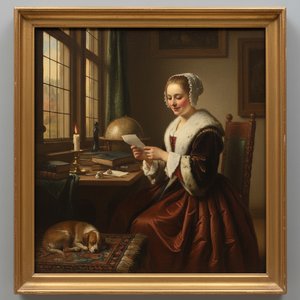
Gerrit Dou: Intimacy & Light in the Dutch Golden Age
Explore the exquisite world of Gerrit Dou, a master of Dutch Golden Age painting. Discover his intimate genre scenes, signature use of light, and lasting legacy. Learn about collecting Dou's works & their value.

Illuminating Realism: Exploring the Dutch Golden Age of Painting (1600-1700)
Explore the Dutch Golden Age of painting (1600-1700) with OriginalUniqueArt. Discover Rembrandt, Vermeer & other masters. Learn about techniques, history & find museum-quality reproductions.