Visualizar em escala
 Enviar
 Compartilhar
 Ver detalhes
 Guia de Obras do Aluno

 Baixar imagem
 Semelhantes
 Raio X
 Apresentação de slides
 Estatísticas
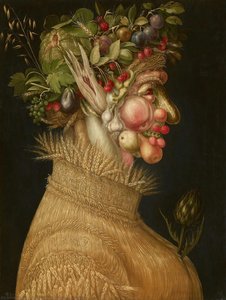
Summer (detail)


 Ver mais
Reprodução em Óleo Feita à Mão
Óleo sobre tela pintado à mão no tamanho e moldura de sua escolha, feito sob encomenda pelos nossos artistas. ( Alternar para Impressão Ver Imagem Digital)




P118B €10

P118H €10

P118W €10

P438Z €10

P508JH €12

P508YH €12

P805H €10

P805Z €10

P919BZ €10

P919G €10

P919XJ €10

P959ZH €10

P968JZ €12

W106C €8

W218G €10

W218JH €8

W218Y €10

W307PJ €10

W316G €10

W316PJ €8

W316Y €10

W398PJ €8

W4111J €10

W500HY €15

W500JH €15

W692G €12

W849H €8

W940BG €15

W953PJ €8




Escolha entre os nossos tamanhos pré-definidos que respeitam as proporções originais da obra de arte.

Pode inserir as suas próprias dimensões para se adequar a uma moldura ou espaço específico. Se o tamanho selecionado não corresponder às proporções da imagem original, iremos cortar a obra de arte ou estender a pintura com elementos adicionais pintados à mão. Um esboço digital será enviado para sua aprovação antes do início da produção.
Tenha em atenção que a pré-visualização no ecrã não reflete o corte ou extensão real. Apenas o esboço mostrará com precisão a composição final.
Embora tamanhos personalizados estejam disponíveis, recomendamos selecionar uma dimensão da lista predefinida para preservar as proporções originais.
Após o pedido, a equipa OriginalUniqueArt.com enviará um e-mail ao cliente para solicitar instruções e fornecer uma prévia do esboço.
Entrega mundial () em 3 a 4 semanas, em vez das 5 semanas padrão. (11 Outubro). Sem comprometer a qualidade.

Envio expresso gratuito para todo o mundo

Tela de Linho Premium

Seguro de transporte total

Garantia de Reembolso de Impostos Alfandegários

Garantia de Fidelidade de Cor

Política de Devolução em 100 Dias (Apenas para Defeitos)

Garantia de reembolso de 100%

Desconto para múltiplas unidades
 A opção de vidro está disponível apenas para tamanhos inferiores a 110 cm

Summer (detail)
Técnica de Reprodução
Dimensões da Reprodução
-


Preço Total
€ 259
A World Reimagined: The Enigmatic Art of Giuseppe Arcimboldo
Giuseppe Arcimboldo, a name that conjures images both whimsical and profoundly strange, remains one of the most singular figures in Renaissance art. Born in Milan in 1527, his career unfolded against the backdrop of a Europe steeped in intellectual ferment, religious upheaval, and an insatiable curiosity about the natural world. While initially recognized for more conventional works – frescoes adorning cathedrals and portraits adhering to established courtly standards – Arcimboldo’s enduring legacy rests upon a series of composite heads constructed entirely from meticulously arranged objects: fruits, vegetables, flowers, even musical instruments. These weren't mere playful exercises in visual trickery; they were complex allegories, imbued with symbolism that resonated deeply within the Renaissance worldview and continue to fascinate audiences today. His father, Biagio Arcimboldo, was an artist himself, providing young Giuseppe with a foundational understanding of artistic principles and fostering his innate fascination for observation—a trait that would prove crucial in shaping his revolutionary approach to portraiture.The Mannerist Marvel: Style and Technique
Arcimboldo’s distinctive style belongs firmly within the Mannerist movement, which emerged in Italy during the mid-16th century as a reaction against the idealized beauty of High Renaissance art. Unlike his predecessors who sought to capture likeness with meticulous realism, Arcimboldo deliberately distorted proportions and employed unsettling juxtapositions—a hallmark of Mannerism’s aesthetic sensibility. He achieved this extraordinary feat through painstaking layering techniques, utilizing oil paint on canvas to create an illusionistic surface that convincingly mimics the textures and forms of natural elements. Each fruit, vegetable, or flower was painstakingly positioned to contribute to the overall composition, demanding immense patience and precision from the artist. The result is a captivating interplay between reality and imagination—a visual paradox designed to provoke contemplation and delight.Symbolism Rooted in Renaissance Thought
Beyond its artistic brilliance, Arcimboldo’s “Summer” is laden with symbolic meaning reflecting the intellectual currents of the time. The Renaissance humanist preoccupation with the interconnectedness of nature and human intellect found expression in these fantastical portraits. Fruit—particularly apples, oranges, and bananas—represented vitality, abundance, and knowledge—concepts central to humanist philosophy. The careful arrangement of these objects served as a visual metaphor for the harmonious balance between earthly pleasures and spiritual contemplation. Furthermore, Arcimboldo’s use of musical instruments subtly alluded to the importance of reason and intellect within the Renaissance ideal of human flourishing. Each element was deliberately chosen to convey a specific message—a testament to Arcimboldo's mastery of allegory and his ability to communicate profound ideas through deceptively simple visual forms.A Timeless Vision: Emotional Impact
“Summer” transcends mere representation; it invites viewers into a realm of dreamlike beauty and intellectual curiosity. The unsettling juxtaposition of organic matter and human form compels us to reconsider our perceptions of identity and appearance. Arcimboldo’s work possesses an undeniable emotional resonance—a sense of wonder and delight at the transformative power of artistic imagination. It speaks to our innate fascination with puzzles and challenges, prompting us to decipher the hidden layers of meaning embedded within its intricate visual structure. More than four centuries after its creation, “Summer” continues to captivate audiences worldwide, cementing Arcimboldo’s place as a visionary artist who dared to redefine the boundaries of portraiture and elevate art beyond mere imitation into a vehicle for profound philosophical contemplation.Reproductions Available
OriginalUniqueArt.com offers exceptional high-quality reproductions of Giuseppe Arcimboldo's “Summer,” allowing you to bring this iconic Renaissance masterpiece into your home or office. Explore our curated collection and discover the perfect print to inspire your space!Perguntas e Respostas
"Summer (detail)" permaneceu no país de origem do seu artista?
Não – a obra de arte encontra-se no exterior. Giuseppe Arcimboldo nasceu em Itália, e o original de "Summer (detail)" encontra-se num museu em Austria.
Em que ano foi criado "Summer (detail)"?
"Summer (detail)" de Giuseppe Arcimboldo foi criado em 1563.
Que emoção transmite "Summer (detail)" de Giuseppe Arcimboldo?
"Summer (detail)" está associada a um sentimento Serenidade. O tom emocional descreve a impressão que a obra transmite.
Qual disposição melhor se adapta ao formato de "Summer (detail)" de Giuseppe Arcimboldo?
O formato (Retrato) e o espaço recomendado (Sala de Estar) são os dois detalhes de posicionamento registrados para "Summer (detail)" de Giuseppe Arcimboldo.
Qual nível de contraste apresenta "Summer (detail)" de Giuseppe Arcimboldo?
"Summer (detail)" de Giuseppe Arcimboldo apresenta um contraste Declaração entre suas áreas claras e escuras.
Quem criou "Summer (detail)"?
"Summer (detail)" foi criado por Giuseppe Arcimboldo. As informações nesta página descrevem a obra original de Giuseppe Arcimboldo.
Qual era a idade de Giuseppe Arcimboldo quando "Summer (detail)" foi criada?
Giuseppe Arcimboldo tinha 36 anos quando criou "Summer (detail)" em 1563. A idade é calculada a partir do ano de nascimento do artista, 1527.
Biografia do Artista
Giuseppe Arcimboldo: A Master of Illusion and Symbol
Giuseppe Arcimboldo, a name synonymous with playful paradox and profound symbolism, remains one of the most singular figures in the history of Renaissance art. Born in Milan in 1527, his career unfolded against a backdrop of intellectual ferment, religious upheaval, and an unprecedented curiosity about the natural world – a confluence that profoundly shaped his unique artistic vision. Initially recognized for more conventional works—frescoes adorning grand cathedrals and portraits adhering to the established conventions of courtly portraiture—Arcimboldo’s enduring legacy rests upon a series of astonishing composite heads constructed entirely from meticulously arranged objects: fruits, vegetables, flowers, books, musical instruments, even entire animals. These weren't mere whimsical diversions; they were complex allegories, imbued with layers of symbolism that resonated deeply within the Renaissance worldview and continue to captivate audiences today. His father, Biagio Arcimboldo, a skilled painter in his own right, provided young Giuseppe with an early artistic foundation, likely influencing his initial explorations into design work for stained glass windows and frescoes at Milan Cathedral beginning around 1549 – experiences that honed his technical skill and eye for detail, qualities that would become the cornerstones of his later, more unconventional creations.Courtly Patronage and the Birth of a Unique Style
Arcimboldo’s trajectory took a dramatic turn in 1562 when he was appointed court portraitist to Ferdinand I at the Habsburg court in Vienna. This appointment marked a pivotal moment, catapulting him into the heart of European power and providing him with an environment ripe for experimentation. Over the next two decades, he served as a multifaceted artistic polymath for three successive Habsburg rulers: Maximilian II and his son, Rudolf II – a period during which he moved far beyond traditional portraiture, embracing roles as costume designer, festival decorator, and even chief organizer of imperial collections. It was within this atmosphere of refined taste, intellectual curiosity, and the constant demand for spectacle that Arcimboldo’s signature style began to blossom. The Habsburg court, renowned for its lavish celebrations and intricate rituals, provided a fertile ground for his inventive spirit, allowing him to push the boundaries of artistic convention and explore new ways of representing human form. He wasn't simply creating portraits; he was crafting elaborate visual metaphors—statements about power, status, and the interconnectedness of nature and humanity. The influence of earlier artists who experimented with *trompe l’oeil* effects and distorted perspectives can be detected in his work, yet Arcimboldo synthesized these elements into something entirely his own – a unique visual language that challenged conventional notions of representation and invited viewers to engage in a process of interpretation.Decoding the Symbolism: More Than Meets the Eye
To dismiss Arcimboldo’s work as mere whimsicality is to fundamentally misunderstand its profound intellectual depth. Each object within his composite portraits—whether a single peach, a stack of books, or a cluster of flowers—was deliberately chosen, laden with symbolic meaning related to the sitter's character, profession, or social status. *The Librarian*, for example, isn’t simply a face constructed from books; it’s a subtle and witty critique of scholarly pretension – a commentary on those who amass knowledge without truly engaging with its content. The animal tails forming the beard represent dusters, hinting at neglected volumes gathering dust on shelves. Similarly, his portraits of the seasons—particularly *Vertumnus*, depicting Emperor Rudolf II as the Roman god of gardens and change—are rich in botanical symbolism, reflecting the emperor’s patronage of science and natural history. These weren't intended to be immediately deciphered; they were designed to provoke contemplation, inviting viewers to unravel layers of meaning hidden within the seemingly playful arrangement of objects. The very act of constructing a human likeness from inanimate matter served as a meditation on the interconnectedness of all things—a reflection of Renaissance Neoplatonism’s belief in the underlying harmony of the universe. The Habsburg emperors, particularly Rudolf II, were fascinated by such intricate and layered works, appreciating their intellectual complexity and visual ingenuity.Major Achievements and Artistic Innovations
Arcimboldo's most celebrated achievements include his series of “composite heads,” which became a defining feature of his artistic legacy. These portraits—*The Librarian*, *Vertumnus*, *Winter*, *Summer*, and others—demonstrate his mastery of composition, color, and symbolism. Beyond these iconic works, Arcimboldo also produced numerous religious paintings, still lifes, and decorative panels for the Habsburg court. He was a skilled designer of costumes and stage sets, contributing to elaborate festivities and imperial processions. His innovative use of perspective, his ability to create convincing illusions through the arrangement of objects, and his profound understanding of symbolism set him apart from his contemporaries. Notably, he developed the technique of the “Arcimboldo palindrome”—a reversible image that retains its visual coherence when viewed from either side—demonstrating a sophisticated awareness of artistic principles and a playful engagement with the viewer. His work was highly sought after by European royalty and nobility, solidifying his reputation as one of the most inventive and influential artists of his time.Legacy and Rediscovery: A Precursor to Surrealism
Despite achieving considerable success during his lifetime, Arcimboldo’s reputation waned in the centuries following his death in 1593. His work was often relegated to the realm of curiosities—appreciated for its technical skill but dismissed as lacking serious artistic merit. It wasn't until the early 20th century that a renewed appreciation for his art emerged, fueled by the rise of Surrealism. Artists like Salvador Dalí recognized in Arcimboldo a kindred spirit – a visionary who dared to challenge conventional perceptions and explore the subconscious through unexpected juxtapositions of imagery. The influence of Arcimboldo can be seen in Dalí’s own dreamlike compositions and his fascination with metamorphosis and illusion. Today, Giuseppe Arcimboldo is celebrated as a pivotal figure in art history—a precursor to Surrealism whose innovative use of symbolism and playful distortion continues to inspire artists and captivate audiences worldwide. His paintings are housed in prestigious museums such as the Kunsthistorisches Museum in Vienna and the Louvre in Paris, ensuring that his unique vision will continue to resonate for generations to come. *His legacy is a testament to the enduring power of imagination and the ability of art to transform our understanding of the world around us.*
Giuseppe Arcimboldo
1527 - 1593 , Itália
Informações Rápidas
- Artistic Movement Or Style: Mannerismo, Surrealismo
- Artists Or Movements Influenced By This Artist: ['Salvador Dalí']
- Artists Who Influenced This Artist: ['Leonardo da Vinci']
- Date Of Birth: 5 Abril 1527
- Date Of Death: 11 Julho 1593
- Full Name: Giuseppe Arcimboldo
- Nationality: Italiano
- Notable Artworks:
- As Quatro Estações
- Vertumnus
- O Bibliotecário
- Place Of Birth: Milão, Itália
Artigos Relacionados
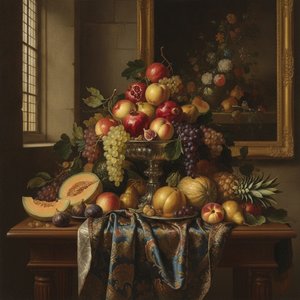
Nature's Bounty: The Art History of Fruit Arrangement Masterpieces and the Baroque Still Life Tradition
Explore the profound beauty of fruit arrangement masterpieces. From Dutch Golden Age opulence to Baroque chiaroscuro, discover the art history, symbolism, and timeless elegance of classical still life paintings for the discerning collector.

Paul Cézanne: As 25 Obras-Primas que Definiram um Gênio da Arte Moderna | OriginalUniqueArt
Descubra as 25 obras-primas de Paul Cézanne, o mestre do pós-impressionismo! Explore a história, técnica e cores vibrantes por trás de quadros icônicos como 'Les Baigneurs' e 'Mont Sainte-Victoire'. Encontre reproduções de arte exclusivas para decorar sua casa com elegância em OriginalUniqueArt.com.

Silent Narratives: Exploring the Enduring Appeal of Still Life Painting Across Centuries
Explore the rich history of still life painting with OriginalUniqueArt. Discover Dutch Masters, decode vanitas symbolism & learn about collecting timeless art. Expert insights and museum-quality reproductions.
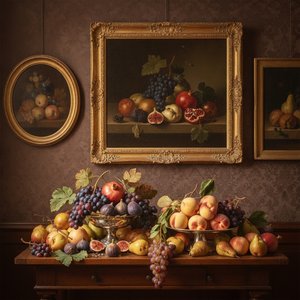
Nature's Bounty: The Timeless Allure and Art History of Fruit Still Life Paintings
Discover the profound beauty of fruit still life paintings. Explore the rich symbolism, Baroque mastery, and timeless allure of nature's bounty through an art-historical lens, perfect for collectors and enthusiasts of classical fine art.

The Bountiful Still Life: Symbolism & Artistic Representation of Fruit Across Art History
Explore the rich history of still life painting & the symbolism of fruit across art movements. Discover masterpieces from Caravaggio to Cézanne with OriginalUniqueArt – expert guidance & museum-quality reproductions.