Tamanho do texto

() ·

Uma pintura feita para você, à mão

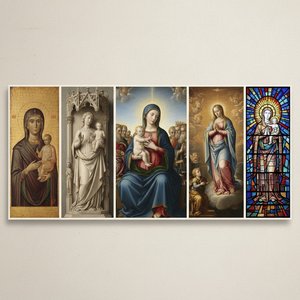
Virgin with the Child

Reprodução em Óleo Feita à Mão

Óleo sobre tela pintado à mão no tamanho e moldura de sua escolha, feito sob encomenda pelos nossos artistas. ( Alternar para Impressão Alternar para Imagem Digital)

Descrição do Item

Admire 'Virgin with the Child' by Giulio Romano (1520). A stunning High Renaissance masterpiece featuring Mary and infant Jesus, showcasing intricate details & masterful artistry. Explore a timeless classic!

Biografia do Artista

Giulio Romano (1499-1546) foi um pintor e arquiteto maneirista, conhecido por suas obras inovadoras em Palazzo Te e Villa Madama. Sua arte desafia a harmonia renascentista com figuras alongadas e composições dinâmicas, influenciando gerações de artistas.

de ·

Capítulo 1

Qual deve ser o tamanho?

Deslize para alterar o tamanho; a imagem à esquerda mostra a moldura em sua largura real. As proporções originais são mantidas.

Tamanho padrão
personalizado
CM
INCH

Escolha entre os nossos tamanhos pré-definidos que respeitam as proporções originais da obra de arte.

largura
altura

Insira a largura e a altura desejadas para se ajustarem à sua moldura ou parede. Como esta obra é pintada à mão, para um tamanho com proporções diferentes, o artista poderá pintar um pouco mais ao redor da imagem ou reduzir ligeiramente a composição — você escolhe. Enviamos uma maquete digital para sua aprovação antes de iniciar a pintura. A imagem exibida nesta página não representa o resultado real — apenas a maquete mostra o resultado final.

Capítulo 2

Como deve chegar?

Escolha as bordas da tela esticada

Escolha sua moldura

Corner sample of the WhiteWrap canvas edge finish, stretched on madeira maciça bars
Branco €1
Corner sample of the BlurSideWrap canvas edge finish, stretched on madeira maciça bars
Bordas esfumaçadas €1
Corner sample of the ExtendedWrap canvas edge finish, stretched on madeira maciça bars
Bordas estendidas €1
Corner sample of the P118B picture frame: poliestireno moldado, 5 cm wide and 3 cm thick
P118B €10
Corner sample of the P118H picture frame: poliestireno moldado, 5 cm wide and 3 cm thick
P118H €10
Corner sample of the P118W picture frame: poliestireno moldado, 5 cm wide and 3 cm thick
P118W €10
Corner sample of the P438Z picture frame: poliestireno moldado, 5.5 cm wide and 3.5 cm thick
P438Z €10
Corner sample of the P508JH picture frame: poliestireno moldado, 7 cm wide and 3.5 cm thick
P508JH €12
Corner sample of the P508YH picture frame: poliestireno moldado, 7 cm wide and 3.5 cm thick
P508YH €12
Corner sample of the P805H picture frame: poliestireno moldado, 5 cm wide and 3.5 cm thick
P805H €10
Corner sample of the P805Z picture frame: poliestireno moldado, 5 cm wide and 3.5 cm thick
P805Z €10
Corner sample of the P919BZ picture frame: poliestireno moldado, 7 cm wide and 3.5 cm thick
P919BZ €10
Corner sample of the P919G picture frame: poliestireno moldado, 7 cm wide and 3.5 cm thick
P919G €10
Corner sample of the P919XJ picture frame: poliestireno moldado, 7 cm wide and 3.5 cm thick
P919XJ €10
Corner sample of the P959ZH picture frame: poliestireno moldado, 5 cm wide and 3 cm thick
P959ZH €10
Corner sample of the P968JZ picture frame: poliestireno moldado, 6 cm wide and 4 cm thick
P968JZ €12
Corner sample of the W106C picture frame: madeira maciça, 5 cm wide and 3 cm thick
W106C €8
Corner sample of the W218G picture frame: madeira maciça, 5 cm wide and 3 cm thick
W218G €10
Corner sample of the W218JH picture frame: madeira maciça, 5 cm wide and 3 cm thick
W218JH €8
Corner sample of the W218Y picture frame: madeira maciça, 5 cm wide and 3 cm thick
W218Y €10
Corner sample of the W307PJ picture frame: madeira maciça, 6 cm wide and 3 cm thick
W307PJ €10
Corner sample of the W316G picture frame: madeira maciça, 6 cm wide and 3 cm thick
W316G €10
Corner sample of the W316PJ picture frame: madeira maciça, 6 cm wide and 3 cm thick
W316PJ €8
Corner sample of the W316Y picture frame: madeira maciça, 6 cm wide and 3 cm thick
W316Y €10
Corner sample of the W398PJ picture frame: madeira maciça, 5 cm wide and 3 cm thick
W398PJ €8
Corner sample of the W4111J picture frame: madeira maciça, 6.5 cm wide and 3.5 cm thick
W4111J €10
Corner sample of the W500HY picture frame: madeira maciça, 7 cm wide and 5 cm thick
W500HY €15
Corner sample of the W500JH picture frame: madeira maciça, 7 cm wide and 5 cm thick
W500JH €15
Corner sample of the W692G picture frame: madeira maciça, 8 cm wide and 4 cm thick
W692G €12
Corner sample of the W849H picture frame: madeira maciça, 5 cm wide and 3 cm thick
W849H €8
Corner sample of the W940BG picture frame: madeira maciça, 7.5 cm wide and 4.5 cm thick
W940BG €15
Corner sample of the W953PJ picture frame: madeira maciça, 6 cm wide and 3.5 cm thick
W953PJ €8
Corner sample of the H24-GOLD picture frame: madeira entalhada com gesso, 10 cm wide and 6 cm thick
H24-GOLD €30
Corner sample of the H24-SILVER picture frame: madeira entalhada com gesso, 10 cm wide and 6 cm thick
H24-SILVER €30
Corner sample of the H36-GOLD picture frame: madeira entalhada com gesso, 15 cm wide and 6.5 cm thick
H36-GOLD €45
Corner sample of the H36-SILVER picture frame: madeira entalhada com gesso, 15 cm wide and 6.5 cm thick
H36-SILVER €45
Prévia da moldura
Com moldura

Moldura: . Dimensões totais com a moldura: .

Capítulo 3

Quem o pinta, e deveria algo mudar?

Exemplos do que pode ser alterado: Substituir o rosto pela foto do cliente; Adicionar um animal de estimação (ex: substituir gato por cachorro); Incluir uma mensagem oculta no fundo; Alterar a paisagem ou elementos do fundo.
Após o pedido, a equipe da OriginalUniqueArt.com enviará um e-mail ao cliente para instruções e fornecerá uma prévia da montagem

Entrega mundial () em 3 a 4 semanas, em vez das 5 semanas padrão. (5 Novembro). Sem comprometer a qualidade.

Capítulo 4

Os retoques finais

Uma placa de identificação, como em um museu?

Detalhes da Placa de Bronze Gravada

This elegant plaque features the artist's name and the title of the artwork, finely engraved for a timeless presentation.

It is made from bronze with a refined, elegant finish. The text is precisely laser-engraved for a sharp and permanent result. Measuring 9x2 cm, the plaque is compact yet easy to read. It's built to be durable and scratch-resistant, offering a professional, museum-quality look. Mounting is simple thanks to the included adhesive backing.

Detalhes da Placa de Acrílico Transparente

The plaque includes essential engraved details such as the artist's name, the title of the artwork, the date it was created, the type of media used-like oil on canvas or watercolor-a brief description of the piece, and a QR code that links to the complete artwork information.

It is crafted from clear acrylic, offering a sleek, modern appearance. The text is UV-engraved in black to ensure strong visual contrast. With a size of 10x15 cm, it ensures optimal readability. It comes equipped with two metal hooks for secure wall mounting. The plaque is designed to be weather-resistant, making it suitable for various environments, and it includes interactive features that work seamlessly with smartphone scanning.

Detalhes da Placa de Acrílico Preto

This elegant plaque includes engraved information such as the artist's name, the title of the artwork, the date it was created, the type of media used (like oil on canvas or watercolor), a short description of the artwork, and a QR code for quick access to more information.

The plaque itself is made from refined black acrylic with a premium finish. The text is laser-engraved in white for high contrast and readability. Its size is 10x15 cm, designed to be easy to read. It comes with two metal hooks for professional mounting. The design is sleek and fits any interior style. It is also weather-resistant and durable, with built-in digital integration for mobile compatibility.

Um verniz protetor?

Para quando você precisa?

Capítulo 5

A sua pintura, conforme encomendada

Virgin with the Child

Técnica de Reprodução

Tamanho da Reprodução

-

Artista Sênior de Elite

Mais detalhes, refinamento e tempo de produção adicional

-

Moldura para Reprodução

-

-

Para obras de arte ou reproduções com mais de 105 cm (aproximadamente 41 polegadas) em qualquer um dos lados, a moldura será enviada como um kit desmontado. Este método garante uma entrega segura e evita danos durante o transporte.

Montagem profissional necessária — este não é um produto DIY (faça você mesmo).
O kit deve ser montado e a tela esticada por um profissional de molduraria experiente, utilizando cola de madeira (não inclusa), um alicate de esticar tela e grampos para manter as travessas alinhadas enquanto a cola seca. A montagem incorreta ou a tensão desigual da tela podem danificar permanentemente a obra de arte e não estão cobertas pela nossa garantia.

  • Todas as barras de madeira maciça estão incluídas, precisamente cortadas ao tamanho certo.

  • Montado com os parafusos fornecidos, além de cola para madeira para as junções dos cantos, que não está inclusa e deve ser providenciada pelo seu moldurista.

  • São necessárias ferramentas profissionais não incluídas: um alicate de estiramento de tela (esticador) e grampos para manter as ripas alinhadas enquanto a cola seca.

Importante:
As junções dos cantos requerem cola para madeira, as ripas devem ser mantidas com grampos até que a cola esteja completamente seca, e o estiramento da tela na moldura montada requer um alicate de esticar tela. Nenhum destes itens está incluído no kit. Por favor, certifique-se de contar com um profissional de molduraria experiente antes de encomendar este tamanho.

Etiqueta de identificação

-

-

Verniz de Proteção

Verniz brilhante (realça as cores e protege contra a luz e a umidade)

-

Personalizar minha obra

Exemplos de alterações possíveis: Substituir o rosto por uma foto do cliente; Adicionar um animal de estimação (ex.: substituir gato por cachorro); Incluir uma mensagem oculta no fundo; Alterar a paisagem ou os elementos do fundo.

-

Urgente

Entrega mundial () em 3 a 4 semanas, em vez das 5 semanas padrão. (5 Novembro). Sem comprometer a qualidade.

-

Envio Expresso

Entrega mundial para em 5 semanas. (12 Novembro).

Com envio incluído

Preço Total

€ 268

Preço Total € 268

A opção de vidro está disponível apenas para tamanhos inferiores a 110 cm

Incluído em todos os pedidos

  • Envio expresso gratuito para todo o mundo
  • Tela de Linho de Alta Qualidade
  • Seguro de transporte completo
  • Garantia de Reembolso de Impostos Alfandegários
  • Garantia de Fidelidade Cromática
  • Política de Devolução em 100 Dias (Apenas para Defeitos)
  • Garantia de reembolso de 100%
  • Oferta de desconto por quantidade

A Divine Encounter: Giulio Romano’s ‘Virgin with the Child’

Giulio Romano's “Virgin with the Child,” painted in Rome around 1520, is more than just a depiction of Mary and infant Jesus; it’s a profound exploration of faith, power, and the nascent complexities of Mannerism. Emerging from the shadow of Raphael’s High Renaissance legacy, Romano boldly pushed beyond idealized beauty, embracing a style characterized by dramatic contrasts, unsettling perspectives, and an intense psychological depth – hallmarks that would define the era of Mannerism. This particular work, housed within a 105 x 77 cm canvas, offers a captivating glimpse into this pivotal moment in art history, showcasing Romano’s evolving artistic voice and his masterful command of color, form, and narrative.

The painting immediately draws the eye to the central figures. Mary, rendered with a subtle yet commanding presence, is not presented as a serene Madonna but rather as a woman imbued with authority and a quiet strength. Her blue dress, rich in texture and subtly shimmering, contrasts dramatically with the gold of her crown – a visual declaration of her divine status while simultaneously hinting at worldly power. The infant Jesus, equally captivating, wears his own miniature crown, mirroring his mother’s adornment and suggesting an immediate equality within their sacred bond. The composition is carefully orchestrated; the figures are not simply placed within a space but actively engaged in a dynamic interaction, creating a sense of movement and narrative tension.

Mannerist Innovation: Style and Technique

Romano’s style in “Virgin with the Child” is distinctly Mannerist. He departs from the balanced compositions and harmonious colors of Raphael, favoring instead elongated figures, distorted perspectives, and an almost theatrical use of light and shadow. Notice how the background recedes sharply, creating a sense of spatial ambiguity – a technique known as *sprezzatura*, intended to evoke a feeling of surprise and disorientation. The artist employs a sophisticated layering of pigments, utilizing glazes and scumbles to build up texture and create a luminous quality that is both ethereal and intensely realistic. The use of gold leaf, particularly in the crown and details of the clothing, adds to the painting’s opulence and reinforces its symbolic weight.

Technically, Romano demonstrates a remarkable understanding of anatomy and drapery – skills honed during his apprenticeship with Raphael. However, he deliberately manipulates these elements to achieve a desired expressive effect. The folds of Mary's dress are not simply decorative; they seem to flow and ripple with an inner energy, mirroring the emotional intensity of the scene. Similarly, the infant Jesus’s pose is subtly unsettling, hinting at a vulnerability beneath his angelic appearance.

Historical Context: Rome in Transition

The creation of “Virgin with the Child” coincides with a period of immense upheaval and transformation in Rome. The Sack of 1527 had shattered the city's artistic and political stability, scattering its artists and patrons. Raphael’s untimely death further compounded this crisis, leaving a void that Romano was uniquely positioned to fill. He inherited not only the responsibility for completing unfinished commissions but also the daunting task of redefining the visual language of High Renaissance art. This painting can be viewed as a deliberate assertion of Romano's artistic independence – a bold departure from his master’s style while retaining a deep respect for his legacy.

The presence of the two secondary figures in the background adds another layer of complexity to the scene. Their identities remain ambiguous, perhaps representing the theological or political forces that shaped Mary’s life and role within the Christian narrative. The small object on the ground – resembling a book or scroll – could symbolize divine revelation or the transmission of sacred knowledge. These subtle details invite viewers to engage in a deeper interpretation of the work, moving beyond a simple representation of a religious subject.

Symbolism and Emotional Resonance

Beyond its technical brilliance, “Virgin with the Child” is rich in symbolic meaning. The crown worn by both Mary and Jesus represents their divine authority and connection to God. The blue color associated with Mary often symbolizes purity, loyalty, and truth – qualities essential to her role as the Mother of God. The painting’s overall effect is one of profound emotional resonance. It evokes a sense of reverence, mystery, and perhaps even a touch of melancholy—a recognition of both the beauty and the challenges inherent in faith. This reproduction captures that same evocative power, offering a stunning addition to any art collection or interior space.

Perguntas e Respostas

O que "Virgin with the Child", de Giulio Romano retrata e qual é a sua atmosfera?

"Virgin with the Child", de Giulio Romano combina virgin mary, child jesus, renaissance, halo, crown, religious, composition, romano com uma atmosfera Elegant.

As cores de "Virgin with the Child" são vibrantes ou suaves?

As cores de "Virgin with the Child", de Giulio Romano apresentam uma saturação Muted com uma intensidade Monochromatic.

Em que fase da carreira de Giulio Romano se situa "Virgin with the Child", considerando a sua data?

Dada a sua data de 1520, "Virgin with the Child" insere-se no período Mature Period de Giulio Romano.

Saiba mais sobre esta pintura

Visualizar na parede Visualizar em RA Alternar para Impressão Alternar para Imagem Digital Compartilhar
Detalhes Guia Adicionar aos favoritos Baixar imagem Semelhantes Raio X Ver diaporama Perguntas e Respostas Estatísticas

Em números

  • 1520o ano em que foi pintada
  • 29molduras para escolher
  • tamanhos padrão, em suas próprias proporções
  • 5semanas para pintar e entregar
Giulio Romano

Giulio Romano

1499 - 1546, Itália

Informações rápidas sobre Giulio Romano

  • Artistic Movement Or Style: Mannerismo
  • Artists Or Movements Influenced By This Artist: ['Maneiristas']
  • Artists Who Influenced This Artist:
    • Rafael
    • Michelangelo
  • Date Of Birth: c. 1499
  • Date Of Death: 1546
  • Full Name: Giulio Romano
  • Nationality: Italiano
  • Notable Artworks:
    • Palazzo Te
    • Fire Borgo
  • Place Of Birth: Roma, Itália

Biografia do Artista

A Roman Beginning and Apprenticeship Under a Master

Giulio Romano, born Giulio Pippi around 1499 in Rome, emerged during a period of intense artistic transformation. Details surrounding his early life remain somewhat shrouded in mystery, yet it’s known he swiftly entered the orbit of Raphael Sanzio, arguably the most celebrated painter of the High Renaissance. This apprenticeship proved to be profoundly formative, shaping not only his technical skills but also laying the foundation for his future stylistic explorations. He wasn't merely a studio assistant; Giulio rapidly evolved into an indispensable collaborator, contributing significantly to projects of immense importance, notably the decoration of the Vatican Stanze – those magnificent rooms commissioned by Popes Julius II and Leo X. His hand is readily identifiable in *The Fire in the Borgo*, where he assisted Raphael in depicting a dramatic scene of miraculous intervention, a work brimming with dynamic energy and unsettling realism. Following Raphael’s untimely death in 1520, Giulio inherited responsibility for completing numerous unfinished commissions, including the ambitious decoration of Villa Madama for Cardinal Giuliano de' Medici – a project that would become a cornerstone of his career. This early exposure to large-scale projects and the demands of aristocratic patronage instilled within him a remarkable confidence and ambition, qualities that would define his later artistic endeavors.

The Birth of Mannerism: A Departure from Classical Harmony

While firmly rooted in the Renaissance tradition, Giulio Romano’s artistic trajectory soon diverged significantly from the prevailing emphasis on classical balance and harmony. He became a pivotal figure in the development of Mannerism – a style characterized by its deliberate artificiality, elegant distortions, and often unsettling psychological depth. Heavily influenced by Michelangelo's powerful figures and dynamic compositions—particularly his use of dramatic foreshortening—as well as a broader climate of artistic experimentation within Rome, Giulio began to embrace asymmetry, tension, and emotional intensity in his work. This wasn’t a rejection of Renaissance ideals so much as a deliberate exploration of their limits, pushing beyond the constraints of naturalism to create works that were more expressive and intellectually stimulating. He increasingly modified Raphael's plans, injecting a new sensibility into Roman art—a statement of Mannerism on a grand scale. His drawings are particularly revealing, exhibiting a remarkable freedom of line and a penchant for dramatic foreshortening, hinting at the complex spatial arrangements he would later employ in his frescoes.

Mantua’s Master: Palazzo Te and Architectural Innovation

In 1524, Giulio accepted the invitation of Federico Gonzaga, Duke of Mantua, to become court painter and architect – a move that fundamentally altered the course of his career. This provided him with unprecedented creative freedom and resources, effectively transforming him into the principal artistic force within the duchy. He oversaw not only paintings and frescoes but also architectural projects, garden designs, and even theatrical productions, leaving an indelible mark on Mantua’s cultural landscape. His most celebrated achievement during this period is undoubtedly Palazzo Te, an extraordinary suburban villa that stands as a testament to his innovative genius. The palace's interiors are adorned with illusionistic frescoes of breathtaking complexity and psychological depth—a veritable feast for the eyes and mind. *The Sala dei Giganti* (Hall of the Giants), for example, depicts a chaotic battle between gods and giants, engulfing the viewer in a swirling vortex of figures and architectural fragments, creating an immersive experience that is both awe-inspiring and unsettling. Beyond Palazzo Te, Giulio also undertook significant renovations to Mantua’s ducal palace and cathedral, shaping the city's urban fabric with his distinctive vision.

Legacy and Lasting Influence

Giulio Romano died in Mantua in 1546, leaving behind a legacy that extended far beyond Italy’s borders. His drawings were highly prized by collectors throughout Europe, and engravings based on his work—particularly those by Marcantonio Raimondi—played a crucial role in disseminating Italian artistic styles. He was so renowned after his death that he is the only “modern” artist mentioned by William Shakespeare in *Cymbeline*, a testament to his widespread renown. His influence can be seen in the works of numerous subsequent artists, who adopted his dynamic compositions, elongated figures, and expressive use of color. While Mannerism eventually gave way to other stylistic movements, Giulio Romano’s contributions remain essential to understanding the evolution of Western art. He represents a pivotal moment—a transition from the harmonious ideals of the High Renaissance to the more complex and emotionally charged aesthetic of the late 16th century. His work continues to captivate and challenge viewers today, reminding us of the power of art to both reflect and shape our understanding of the world.
  • Key Works: *The Fire in the Borgo*, Palazzo Te (including *Sala dei Giganti*), Villa Madama
  • Influences: Raphael, Michelangelo, and the broader artistic climate of Rome during the High Renaissance.
  • Style: Mannerism – characterized by asymmetry, tension, emotional intensity, and illusionistic techniques.

Informações Rápidas

  • Subject or theme: Religious painting
  • Medium: Fresco
  • Movement: High Renaissance
  • Influences: Raphael
  • Artistic style: Mannerism

Quiz de Arte

Cada pergunta possui apenas uma resposta correta.

Pergunta 1:
What is the primary subject depicted in this painting?
Pergunta 2:
According to the description, what is prominent on the Virgin Mary's head?
Pergunta 3:
In what year was this painting likely created, based on the provided information?
Pergunta 4:
The artist Giulio Romano is most closely associated with which artistic movement?
Pergunta 5:
Based on the description, what other figures are present in the painting besides the Virgin Mary and infant Jesus?
Explore obras de arte organizadas por temas, estilos e características.