Italian Renaissance · 1550
Pietà (Giulio Clovio, 1550)
Giulio Clovio (1498–1578) criou Pietà. Data de 1550. Pertence ao movimento Italian Renaissance. É feito em Manuscript. Está conservada no Galleria degli Uffizi, em Florença, Itália. Mede 368 × 257 cm.
- 1550
- Manuscript
- 368 × 257 cm
- Galleria degli Uffizi, Florença

 Visualizar na parede

 Pintura a Óleo Feita à Mão
 Compartilhar
 Compartilhar
 Ficha técnica


 Baixar imagem
 Semelhantes
 Raio X
 Ver diaporama
 Perguntas e Respostas

 Estatísticas
Pietà, em resumo
- Título
- Pietà
- Artista
- Giulio Clovio (1498–1578)
- Artista nascido em
- Grižane-Belgrad, Croácia
- Data
- 1550
- Técnica
- Manuscript
- Dimensões
- 368 × 257 cm
- Onde ver
- Galleria degli Uffizi, Florença, Itália
- Movimento
- Italian Renaissance
- Período
- Renaissance
- Tema
- virgin mary, jesus christ, religious iconography, renaissance art, classical composition, emotional depth
O que Pietà retrata?
A Testament to Sorrow and Divine Grace
In the quiet, hallowed corridors of art history, few images resonate with the profound emotional gravity found in Giulio Clovio’s Pietà. Created around 1550, this masterpiece serves as a breathtaking bridge between the fading echoes of the Gothic tradition and the luminous dawn of the High Renaissance. The scene captures the quintessential moment of Christian sorrow: the Virgin Mary cradling the lifeless body of Jesus Christ following his crucifixion. It is not merely a depiction of death, but a profound meditation on compassion—the very meaning of the word Pietà. Through Clovio’s masterful hand, the heavy weight of mortality is balanced by an ethereal sense of divine grace, inviting the viewer into a space of deep, contemplative mourning.
The composition is a masterclass in Renaissance balance and narrative depth. At the heart of the work, Mary sits as a pillar of strength and grief, her blue cloak—a color traditionally symbolizing her heavenly connection—draped with a weight that mirrors her sorrow. The figure of Christ, depicted with a serene, almost peaceful countenance despite his recent agony, rests heavily in her lap, creating a poignant focal point that draws the eye through its sheer vulnerability. Surrounding this central tragedy, celestial beings and saints emerge from the shadows; angels with active, reaching gestures and observers in prayerful poses create a sense of a cosmic event unfolding. This layering of figures ensures that the viewer’s gaze wanders through a complex web of devotion, from the intimate touch of a mother to the collective mourning of the heavens.
Technique and the Radiance of Light
What truly distinguishes Clovio’s work is his unparalleled ability to manipulate light and color, a skill honed during his time as one of history's greatest manuscript illuminators. Though this piece possesses the scale and grandeur of a monumental painting, it retains the meticulous, jewel-like precision of a miniature. Clovio employed a sophisticated technique of layering translucent glazes over gold leaf, a method that allows light to penetrate the surface and reflect back, creating an inner luminosity that seems to emanate from within the figures themselves. The use of ultramarine blue, derived from the precious stone lapis lazuli, provides a depth of color that is both regal and somber, anchoring the composition in a palette of earth tones and celestial blues.
The interplay of light and shadow—chiaroscuro—is used here not just for anatomical realism, but to direct the emotional narrative. Light strikes Mary’s face from the side, carving her features out of the darkness and highlighting the subtle lines of grief and devotion. This dramatic contrast creates a sculptural quality, giving the figures a tangible presence that commands the room. For the discerning collector or interior designer, such a work offers more than mere decoration; it provides a focal point of immense character. A high-quality reproduction of this Pietà brings with it an atmosphere of timelessness and intellectual depth, making it an exquisite addition to a curated space that values historical resonance and the profound beauty of the human spirit.
Em qual museu se encontra Pietà?
Galleria degli Uffizi
Florença, Itália
A História e as Origens da Galleria degli Uffizi A Galleria degli Uffizi encontra-se no coração de Florença, na Itália. A instituição foi estabelecida em 1560, um período em que o edifício foi originalmente concebido por Giorgio Vasari para servir aos magistrados florentinos. A construção da estrutura desenrolou-se entre 1560 e 1580, tendo estes escritórios administrativos sido projetados para centralizar os diversos comitês e agências do governo da cidade.


Imagens em alta resolução de Pietà

Giulio Clovio, Pietà (1550), Galleria degli Uffizi. Domínio público.
Perguntas sobre Pietà respondidas
Em qual museu se encontra a obra original de "Pietà"?
"Pietà", de Giulio Clovio está em exibição no Galleria degli Uffizi, Florença, Itália. A referência ao museu diz respeito à obra original, não a reproduções.
Em que ano foi criada a obra "Pietà", de Giulio Clovio?
"Pietà" data de 1550. A data situa a obra na carreira de Giulio Clovio e em sua época.
Qual é a técnica utilizada em "Pietà", de Giulio Clovio?
A técnica de "Pietà", de Giulio Clovio é Manuscript. As reproduções visam reproduzir a aparência desta técnica.
Quais são as dimensões da obra original "Pietà"?
A obra original "Pietà", de Giulio Clovio mede 368 x 257 cm.
O que representa "Pietà"?
"Pietà", de Giulio Clovio retrata: virgin mary, jesus christ, religious iconography, renaissance art, classical composition, emotional depth, medieval influence.
"Pietà" está em domínio público?
Informação de direitos autorais para "Pietà", de Giulio Clovio: a obra está em em domínio público — seus direitos autorais expiraram. Isso determina se reproduções da imagem podem ser feitas livremente.
A qual artista "Pietà" é atribuída?
O artista por trás de "Pietà" é Giulio Clovio. A obra está catalogada sob o nome de Giulio Clovio.
A qual movimento artístico pertence "Pietà", de Giulio Clovio?
O movimento associado a "Pietà", de Giulio Clovio é Italian Renaissance. Esta classificação situa a obra entre artistas e obras de arte relacionados.
A que período da carreira de Giulio Clovio pertence "Pietà"?
Dentro da trajetória de Giulio Clovio, "Pietà" pertence ao período Mature Period. Esta fase permite compará-la com outras obras do artista.
Sobre o artista, Giulio Clovio

1498–1578, Croácia
Giulio Clovio
Um Luminar Croata do Renascimento Italiano Giulio Clovio, nascido Juraj Julije Klović em 1498, entre as colinas ondulantes de Grižane, na Croácia, ergue-se como uma figura fundamental que estabeleceu a ponte entre a tradição gótica tardia da iluminura de manuscritos e o florescente Renascimento Pleno. Embora suas origens estivessem no Reino da Croácia, foi na Itália que o génio artístico de Clovio verdadeiramente floresceu, rendendo-lhe renome como, possivelmente, o maior iluminador de sua era e o último mestre significativo de uma linhagem que remontava séculos. Sua história é uma narrativa de talento extraordinário, patrocínios astutos e uma dedicação inabalável em transformar a miniatura em uma forma de arte de uma sofisticação arrebatadora. Os primeiros anos da vida de Clovio permanecem envoltos em mistério.
Também de Giulio Clovio
 The Rape of Ganymede
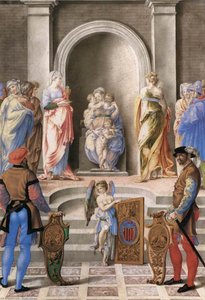 The Three Theological Virtues
 Holy Family with Santa Isabel and San Juanito1556
 Pages from the Farnese Hours1538
Ensaios sobre Pietà
 Masterpieces of Giotto: The Top 25 Essential Artworks of the Renaissance PioneerExplore Giotto's greatest masterpieces and his role in the Renaissance. Discover the full collection online at OriginalUniqueArt.com.
 Mastering Color and Light: The Timeless Brilliance of Titian's Venetian MasterpiecesExplore the luminous mastery of Titian. Discover how the Venetian master revolutionized color and light through breathtaking Renaissance te…
 Michelangelo Buonarroti: A Renaissance Titan – Life, Works & Enduring LegacyExplore the life, works & enduring legacy of Michelangelo Buonarroti, a Renaissance titan. Discover his iconic sculptures, frescoes, and ar…