

 Enviar
 Compartilhar
 Ver detalhes
 Guia de Obras do Aluno

 Baixar imagem
 Semelhantes
 Apresentação de slides
 Estatísticas
Camera obscura


 Ver mais
Giclée / Impressão de Arte
Impressão giclée ou em tela de qualidade de museu, com produção rápida e opções flexíveis de acabamento. ( Encomendar reprodução pintada à mão Ver Imagem Digital)




































Escolha entre os nossos tamanhos pré-definidos que respeitam as proporções originais da obra de arte.

Digite a largura e a altura de que necessita, para se ajustar à sua moldura ou à sua parede. Uma impressão só pode ser cortada, nunca ampliada além da imagem original, pelo que um tamanho com uma proporção diferente perderá parte da imagem. Enviamos-lhe uma maquete digital para aprovação antes de imprimirmos qualquer coisa. A imagem apresentada nesta página não mostra o corte real — apenas a maquete o faz.
Entrega mundial () em 2 semanas, em vez das 4/5 semanas padrão. (24 Outubro)

Envio expresso gratuito para todo o mundo

Tela de Linho Premium

Seguro de transporte total

Garantia de Reembolso de Impostos Alfandegários

Garantia de Fidelidade de Cor

Política de Devolução em 100 Dias (Apenas para Defeitos)

Garantia de reembolso de 100%

Desconto para múltiplas unidades
 A opção de vidro está disponível apenas para tamanhos inferiores a 110 cm

Camera obscura
Giclée / Impressão de Arte
Dimensões da Reprodução
-


Preço Total
€ 70
Canaletto's Intimate Glimpse: The Camera Obscura
Giovanni Antonio Canal, better known as Canaletto, was a master of observation, a chronicler of Venice and its surrounding landscapes with an unparalleled eye for detail. This remarkable painting, depicting a camera obscura – a device he himself possessed and meticulously documented – offers a rare and intimate window into the artist’s creative process and the burgeoning science of optics in the early 18th century. The image, currently housed within the Museo Correr in Venice, isn't merely a representation of a scientific instrument; it’s a testament to Canaletto’s intellectual curiosity and his pioneering approach to landscape painting.
- The Mechanics of Vision: The camera obscura, essentially a darkened room with a pinhole lens, projected an inverted image of the outside world onto its walls. Canaletto's depiction captures this phenomenon precisely – a wooden box constructed with a glass front, meticulously arranged to capture and display this ethereal projection.
- A Tool for Observation: Canaletto utilized the camera obscura not just as a scientific curiosity but as an invaluable tool for his artistic practice. It allowed him to study light, shadow, perspective, and composition before committing them to canvas, resulting in the remarkably accurate and detailed renderings that define his style.
- Historical Context: Created around 1700, this painting reflects a period of intense scientific inquiry into optics and visual perception. The camera obscura was gaining popularity among artists and scientists alike, offering a new method for understanding and replicating the natural world.
Canaletto’s Topographical Style & Artistic Technique
Canaletto's artistic style is immediately recognizable – characterized by its meticulous detail, precise perspective, and atmospheric clarity. This particular depiction of the camera obscura exemplifies his mastery of topographical painting, a genre he essentially invented. The artist employed a technique of layering thin glazes of oil paint, building up color gradually to achieve remarkable luminosity and depth. Note the subtle gradations in tone, particularly within the wooden construction of the device itself, demonstrating Canaletto’s painstaking attention to texture and form. The inverted projection is rendered with astonishing accuracy, showcasing his keen observational skills and his ability to translate three-dimensional reality onto a two-dimensional surface.
- Oil on Panel: The artwork is executed in oil paint on a wooden panel, a common medium for Canaletto’s work during this period.
- Layered Glazes: The use of numerous thin layers of translucent paint creates a rich and luminous effect, characteristic of Canaletto's style.
- Precise Perspective: The meticulous rendering of perspective demonstrates Canaletto’s mastery of linear perspective, a key element in creating the illusion of depth and realism.
Symbolism & Emotional Resonance
Beyond its technical brilliance, the painting carries symbolic weight. It represents not just a scientific instrument but also the artist's relentless pursuit of knowledge and his desire to capture the beauty and complexity of the world around him. The camera obscura itself can be interpreted as a metaphor for artistic creation – a device that transforms an external reality into an internal representation. The image evokes a sense of quiet contemplation, inviting viewers to consider the fundamental principles of vision and the creative process. Canaletto’s work consistently conveys a feeling of serene order and intellectual curiosity, reflecting his deep connection to Venice and its rich cultural heritage.
A Legacy of Observation
This reproduction offers an exceptional opportunity to own a piece of art history – a tangible link to one of the most celebrated topographical painters of all time. Whether you are an art collector seeking to expand your collection, an interior designer looking for a unique and historically significant artwork to adorn your space, or simply someone captivated by Canaletto’s genius, this painting provides a profound connection to the artist's world and his remarkable ability to capture the essence of Venice.
Perguntas e Respostas
Onde posso ver uma prévia de "Camera obscura"?
A página de Visualização de "Camera obscura" permite que você visualize a obra de arte antes de fazer o pedido.
"Camera obscura" apresenta contrastes fortes entre luz e sombra?
O contraste entre claro e escuro de "Camera obscura" é registrado como Statement. O contraste descreve a intensidade da diferença entre as áreas claras e escuras.
As cores de "Camera obscura" de Canaletto são saturadas ou suaves?
As cores de "Camera obscura" de Canaletto possuem uma saturação Muted. A saturação descreve o quão vívidas ou suaves são as cores.
Biografia do Artista
Giovanni Antonio Canal: The Master of Venetian Light and Shadow
Born in the heart of Venice on October 18, 1697, Giovanni Antonio Canal – better known as Canaletto – emerged from a lineage steeped in artistic tradition. His father, Bernardo Canal, was a respected scene painter for theatrical productions, instilling in young Giovanni an early appreciation for composition and visual storytelling. This foundation, combined with the influence of his mother, Artemisia Barbieri, a talented artist herself, laid the groundwork for a career that would forever capture the essence of Venetian life and its captivating atmosphere. Canaletto’s artistic journey began not with grand palaces or historical events, but with the humble world of theatrical scenery – a demanding apprenticeship that honed his observational skills and understanding of perspective, crucial elements in his later success.
In 1718, seeking further refinement, Canaletto embarked on a transformative period in Rome. Here, he immersed himself in the works of Luca Carlevaris, a renowned topographical painter known for his meticulous depictions of Roman ruins and monuments. This encounter proved pivotal, exposing Canaletto to the principles of accurate representation and the art of capturing architectural detail with remarkable precision. He spent years meticulously sketching ancient structures, absorbing the techniques of perspective and mastering the subtle nuances of light and shadow – skills that would later define his unique style.
The Rise of a Veduta Painter
Returning to Venice in 1725, Canaletto swiftly established himself as a leading artist specializing in *vedute* – Italian for “views.” Unlike the grand historical paintings popular at the time, *vedute* focused on capturing the everyday realities of urban life. Canaletto’s canvases became windows into the bustling streets, vibrant markets, and elegant squares of his beloved city. He wasn't merely recording scenes; he was translating them onto canvas with a remarkable sensitivity to light, color, and atmosphere. His early works, such as “The Stonemason’s Yard” (circa 1725), demonstrate this skill perfectly – a vibrant snapshot of daily life brimming with detail and imbued with a palpable sense of energy.
Canaletto's artistic vision extended beyond the confines of Venice. In 1746, he journeyed to England, invited by Joseph Smith, a prominent British merchant who recognized Canaletto’s talent and commissioned numerous paintings of London landmarks. This period marked a significant shift in his style, as he adapted his techniques to capture the grandeur of English architecture and landscapes. Works like “Eton College” (1746-1756) showcase his ability to translate Venetian sensibilities into a distinctly British aesthetic, while retaining his signature meticulousness and atmospheric depth.
Technique and Innovation
Canaletto’s artistic approach was characterized by an extraordinary blend of observation, technical skill, and innovative techniques. While the question of whether he employed a camera obscura to aid in his topographical accuracy remains debated among scholars, there's no doubt that Canaletto possessed an unparalleled ability to capture perspective and create convincing illusions of depth. His preparatory drawings were legendary for their detail and precision, serving as invaluable guides for his finished paintings. He was a master of light and shadow, skillfully manipulating color and tone to evoke the mood and atmosphere of each scene. His use of layering and glazing created a luminous quality that is instantly recognizable in his work.
Legacy and Influence
Canaletto’s impact on art history is profound. He elevated the *veduta* genre to new heights, establishing it as a respected form of landscape painting. His meticulous depictions of Venice served as models for generations of artists, influencing not only painters but also printmakers who sought to reproduce his captivating views. His work can be found in prestigious collections worldwide, including the National Gallery in London and the Palazzo Ducale in Venice. Canaletto’s legacy extends beyond individual artworks; he represents a pivotal moment in the development of topographical painting, demonstrating how art could simultaneously document reality and capture its essence with remarkable beauty and skill. His paintings continue to enchant viewers today, offering a timeless glimpse into the vibrant heart of Venice and the artistic genius of Giovanni Antonio Canal.
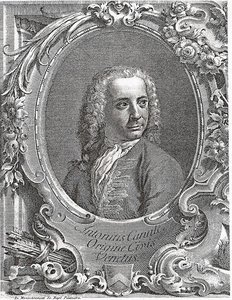
Canaletto
1697 - 1768 , Itália
Informações Rápidas
- Artistic Movement Or Style: Vedute Veneza
- Artists Or Movements Influenced By This Artist: ['Tintoretto']
- Artists Who Influenced This Artist: ['Luca Carlevaris']
- Date Of Birth: 18 de outubro de 1697
- Date Of Death: 19 de abril de 1768
- Full Name: Giovanni Antonio Canal
- Nationality: Italiano
- Notable Artworks:
- Estalagem da Pedra
- Regata no Canal Grande
- Eton College
- Place Of Birth: Veneza, Itália
Artigos Relacionados

Giovanni Antonio Canal (Canaletto): A Venetian Master of Light, Space & Societal Observation
Explore the life & art of Giovanni Antonio Canal (Canaletto), a Venetian master renowned for his breathtaking cityscapes. Discover his techniques, legacy, and captivating depictions of 18th-century Venice & London.

The Dramatic Flourish: Exploring the Baroque Movement's Enduring Legacy in Art History
Explore the dramatic world of Baroque art! Discover iconic artists like Caravaggio & Rubens, defining techniques, and its lasting impact on art history. Expert insights for collectors & enthusiasts at OriginalUniqueArt.

Barroco Brasileiro: Opulência e Emoção para Interiores Contemporâneos
Descubra como o Barroco brasileiro pode transformar seus interiores! Explore a história, elementos-chave e dicas para integrar este estilo luxuoso e cheio de emoção em sua casa.

Pietro Longhi's Venetian Scenes: A Study of Rococo Society & Domestic Life
Explore the captivating world of Pietro Longhi's Venetian scenes! Discover insightful analysis of his Rococo masterpieces & social commentary on 18th-century life. Learn about this 'Venetian Hogarth' and his lasting artistic legacy.
Jacopo Tintoretto: As 25 Obras-Primas do Mestre da Luz e Drama | OriginalUniqueArt
Descubra as 25 obras-primas de Jacopo Tintoretto, o mestre veneziano do Renascimento! Explore a história, técnica e emoção por trás de pinturas icônicas como 'O Milagre de São Marcos'. Encontre reproduções de arte exclusivas para decorar sua casa com OriginalUniqueArt.com.


