

 Visualizar em escala
 Enviar
 Compartilhar
 Ver detalhes
 Guia de Obras do Aluno

 Baixar imagem
 Semelhantes
 Raio X
 Apresentação de slides
 Estatísticas
Camera obscura
 Acrylic
- WallArt
- Impressionism
 1700
1700 22.0 x 38.0 cm
 Museo Correr
 Ver mais
Giclée / Impressão de Arte
Impressão giclée ou em tela de qualidade de museu, com produção rápida e opções flexíveis de acabamento. ( Encomendar reprodução pintada à mão Ver Imagem Digital)




P118B €10

P118H €10

P118W €10

P438Z €10

P508JH €12

P508YH €12

P805H €10

P805Z €10

P919BZ €10

P919G €10

P919XJ €10

P959ZH €10

P968JZ €12

W106C €8

W218G €10

W218JH €8

W218Y €10

W307PJ €10

W316G €10

W316PJ €8

W316Y €10

W398PJ €8

W4111J €10

W500HY €15

W500JH €15

W692G €12

W849H €8

W940BG €15

W953PJ €8




Escolha entre os nossos tamanhos pré-definidos que respeitam as proporções originais da obra de arte.

Digite a largura e a altura de que necessita, para se ajustar à sua moldura ou à sua parede. Uma impressão só pode ser cortada, nunca ampliada além da imagem original, pelo que um tamanho com uma proporção diferente perderá parte da imagem. Enviamos-lhe uma maquete digital para aprovação antes de imprimirmos qualquer coisa. A imagem apresentada nesta página não mostra o corte real — apenas a maquete o faz.
Entrega mundial () em 2 semanas, em vez das 4/5 semanas padrão. (25 Outubro)

Envio expresso gratuito para todo o mundo

Tela de Linho Premium

Seguro de transporte total

Garantia de Reembolso de Impostos Alfandegários

Garantia de Fidelidade de Cor

Política de Devolução em 100 Dias (Apenas para Defeitos)

Garantia de reembolso de 100%

Desconto para múltiplas unidades
 A opção de vidro está disponível apenas para tamanhos inferiores a 110 cm

Camera obscura
Giclée / Impressão de Arte
Dimensões da Reprodução
-


Preço Total
€ 70
Canaletto’s Camera Obscura: A Window Into Venetian Vision
The artist Giovanni Antonio Canaletto, commonly known as Canaletto (1697 – 1768), stands as one of the most celebrated figures in eighteenth-century Venetian painting. His meticulous depictions of Venice—the canals shimmering under sunlight, the palaces adorned with opulent decoration—captivate viewers even today. But beyond their aesthetic beauty lies a fascinating secret: Canaletto’s unparalleled accuracy stems from a technique that predates photography – the camera obscura. This ingenious device, essentially a darkened room equipped with a pinhole aperture and a mirror, allowed him to capture the essence of his surroundings with remarkable precision, shaping not only his artistic output but also influencing the broader understanding of perspective and visual representation.- The Device Itself: Canaletto’s camera obscura wasn't merely a tool; it was a conceptual breakthrough. Constructed from wood and glass, it functioned by projecting an inverted image of the outside world onto a surface within—typically tracing paper or canvas—positioned opposite to the pinhole. This method ensured that the artist could faithfully reproduce architectural details and atmospheric effects without resorting to laborious sketching techniques.
- A Reflection of Scientific Curiosity: Canaletto’s embrace of the camera obscura reflects the burgeoning scientific interest in optics during his lifetime. Astronomers and mathematicians alike were experimenting with similar instruments, attempting to unravel the mysteries of light and vision. Canaletto's use of this technique wasn't simply artistic expediency; it represented a conscious engagement with contemporary intellectual debates about how we perceive reality.
- Venetian Landscape Painting: The camera obscura profoundly impacted Canaletto’s style. By allowing him to observe the scene from multiple viewpoints simultaneously, he achieved a level of realism previously unattainable. His paintings—particularly those capturing the grandeur of St Mark's Square and the Doge’s Palace—are characterized by subtle gradations of color, masterful shading, and an astonishingly accurate depiction of architectural proportions.
- Symbolism Beyond Technique: Canaletto’s camera obscura technique wasn’t just about achieving visual accuracy; it also conveyed a deeper symbolic message. The darkened room represented introspection and contemplation—a deliberate distancing from the immediate sensory experience to gain access to a more profound understanding of the world around him. This approach mirrored the philosophical currents of the Enlightenment, emphasizing reason and observation as pathways to knowledge.
- Legacy in Photography: Canaletto’s pioneering use of the camera obscura foreshadowed the invention of photography centuries later. By demonstrating that it was possible to capture an image without direct contact with the subject matter—a feat previously considered impossible—he fundamentally altered our conception of artistic representation and paved the way for a new era of visual art.
Notable Works Featuring Camera Obscura Technique
Canaletto’s mastery of perspective is evident in several iconic paintings, including “The Stonemason’s Yard” (c. 1725), where he meticulously rendered the textures and colors of the building materials with astonishing detail. Similarly, his depiction of St Mark's Square—particularly the Doge’s Palace—captures the shimmering light reflecting off the facades and windows, achieved through careful observation and skillful blending of pigments. These paintings stand as testament to Canaletto’s unwavering commitment to capturing the beauty and complexity of Venice with unparalleled accuracy – a feat made possible by his ingenious use of the camera obscura.Exploring Canaletto's Influence on Later Artists
Canaletto’s innovative approach to landscape painting resonated deeply with artists who followed him, notably Francesco Guardi and Michele Marieschi. These painters adopted similar techniques—primarily employing atmospheric perspective and meticulous detail—to convey the grandeur of Venetian vistas. Canaletto’s legacy extends beyond his own artistic achievements; he established a precedent for realistic representation that continues to inspire artists today, demonstrating that observation and careful technique can unlock profound insights into capturing the essence of visual experience.Reproductions & Inspiration
High-quality reproductions of Canaletto's paintings offer an exceptional opportunity to appreciate his artistic genius and immerse oneself in the atmosphere of eighteenth-century Venice. Consider framing a print alongside a photograph taken from one of Canaletto’s original viewpoints—a powerful gesture that honors both the artist’s pioneering technique and the enduring beauty of Venetian landscapes. Let Canaletto's Camera Obscura serve as a reminder that true artistic vision requires not only skill but also an unwavering dedication to observing and interpreting the world around us.Perguntas e Respostas
Para qual ambiente "Camera obscura" de Canaletto é recomendado?
O espaço recomendado para "Camera obscura" de Canaletto é uma Living Room. A sugestão pode, naturalmente, ser adaptada ao seu interior.
Qual é a intensidade do contraste em "Camera obscura" de Canaletto?
"Camera obscura" de Canaletto apresenta um contraste Statement entre suas áreas claras e escuras.
Quão saturada é a paleta de "Camera obscura"?
"Camera obscura" de Canaletto é registrado com uma saturação de Muted.
Biografia do Artista
Giovanni Antonio Canal: The Master of Venetian Light and Shadow
Born in the heart of Venice on October 18, 1697, Giovanni Antonio Canal – better known as Canaletto – emerged from a lineage steeped in artistic tradition. His father, Bernardo Canal, was a respected scene painter for theatrical productions, instilling in young Giovanni an early appreciation for composition and visual storytelling. This foundation, combined with the influence of his mother, Artemisia Barbieri, a talented artist herself, laid the groundwork for a career that would forever capture the essence of Venetian life and its captivating atmosphere. Canaletto’s artistic journey began not with grand palaces or historical events, but with the humble world of theatrical scenery – a demanding apprenticeship that honed his observational skills and understanding of perspective, crucial elements in his later success.
In 1718, seeking further refinement, Canaletto embarked on a transformative period in Rome. Here, he immersed himself in the works of Luca Carlevaris, a renowned topographical painter known for his meticulous depictions of Roman ruins and monuments. This encounter proved pivotal, exposing Canaletto to the principles of accurate representation and the art of capturing architectural detail with remarkable precision. He spent years meticulously sketching ancient structures, absorbing the techniques of perspective and mastering the subtle nuances of light and shadow – skills that would later define his unique style.
The Rise of a Veduta Painter
Returning to Venice in 1725, Canaletto swiftly established himself as a leading artist specializing in *vedute* – Italian for “views.” Unlike the grand historical paintings popular at the time, *vedute* focused on capturing the everyday realities of urban life. Canaletto’s canvases became windows into the bustling streets, vibrant markets, and elegant squares of his beloved city. He wasn't merely recording scenes; he was translating them onto canvas with a remarkable sensitivity to light, color, and atmosphere. His early works, such as “The Stonemason’s Yard” (circa 1725), demonstrate this skill perfectly – a vibrant snapshot of daily life brimming with detail and imbued with a palpable sense of energy.
Canaletto's artistic vision extended beyond the confines of Venice. In 1746, he journeyed to England, invited by Joseph Smith, a prominent British merchant who recognized Canaletto’s talent and commissioned numerous paintings of London landmarks. This period marked a significant shift in his style, as he adapted his techniques to capture the grandeur of English architecture and landscapes. Works like “Eton College” (1746-1756) showcase his ability to translate Venetian sensibilities into a distinctly British aesthetic, while retaining his signature meticulousness and atmospheric depth.
Technique and Innovation
Canaletto’s artistic approach was characterized by an extraordinary blend of observation, technical skill, and innovative techniques. While the question of whether he employed a camera obscura to aid in his topographical accuracy remains debated among scholars, there's no doubt that Canaletto possessed an unparalleled ability to capture perspective and create convincing illusions of depth. His preparatory drawings were legendary for their detail and precision, serving as invaluable guides for his finished paintings. He was a master of light and shadow, skillfully manipulating color and tone to evoke the mood and atmosphere of each scene. His use of layering and glazing created a luminous quality that is instantly recognizable in his work.
Legacy and Influence
Canaletto’s impact on art history is profound. He elevated the *veduta* genre to new heights, establishing it as a respected form of landscape painting. His meticulous depictions of Venice served as models for generations of artists, influencing not only painters but also printmakers who sought to reproduce his captivating views. His work can be found in prestigious collections worldwide, including the National Gallery in London and the Palazzo Ducale in Venice. Canaletto’s legacy extends beyond individual artworks; he represents a pivotal moment in the development of topographical painting, demonstrating how art could simultaneously document reality and capture its essence with remarkable beauty and skill. His paintings continue to enchant viewers today, offering a timeless glimpse into the vibrant heart of Venice and the artistic genius of Giovanni Antonio Canal.
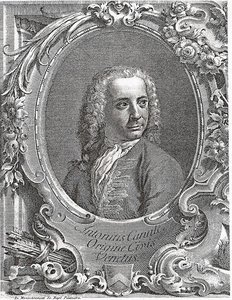
Canaletto
1697 - 1768 , Itália
Informações Rápidas
- Artistic Movement Or Style: Vedute Veneza
- Artists Or Movements Influenced By This Artist: ['Tintoretto']
- Artists Who Influenced This Artist: ['Luca Carlevaris']
- Date Of Birth: 18 de outubro de 1697
- Date Of Death: 19 de abril de 1768
- Full Name: Giovanni Antonio Canal
- Nationality: Italiano
- Notable Artworks:
- Estalagem da Pedra
- Regata no Canal Grande
- Eton College
- Place Of Birth: Veneza, Itália
Artigos Relacionados

The Enduring Legacy of Oil on Canvas: Technique, History & Aesthetic Impact
Explore the rich history & techniques of oil painting – from Renaissance masters to Impressionism. Discover pigments, layering methods, and why this timeless medium endures. Expert insights for artists & art enthusiasts.

Giovanni Antonio Canal (Canaletto): A Venetian Master of Light, Space & Societal Observation
Explore the life & art of Giovanni Antonio Canal (Canaletto), a Venetian master renowned for his breathtaking cityscapes. Discover his techniques, legacy, and captivating depictions of 18th-century Venice & London.

The Dramatic Flourish: Exploring the Baroque Movement's Enduring Legacy in Art History
Explore the dramatic world of Baroque art! Discover iconic artists like Caravaggio & Rubens, defining techniques, and its lasting impact on art history. Expert insights for collectors & enthusiasts at OriginalUniqueArt.

The Enduring Power of Painting: A Historical & Contemporary Exploration of Form and Emotion
Explore the rich history & enduring techniques of oil painting with OriginalUniqueArt. Discover masterpieces, learn about art collecting, and find authentic handmade reproductions crafted by skilled artists.

Barroco Brasileiro: Opulência e Emoção para Interiores Contemporâneos
Descubra como o Barroco brasileiro pode transformar seus interiores! Explore a história, elementos-chave e dicas para integrar este estilo luxuoso e cheio de emoção em sua casa.


