Visualizar na parede
 Compartilhar
 Compartilhar
 Detalhes
 Guia
Guia

 Baixar imagem
 Semelhantes
 Raio X
 Ver diaporama
 Perguntas e Respostas
 Estatísticas
The Three Ages


 Ler mais
Giclée / Impressão de Arte
Impressão giclée ou em tela de qualidade de museu, com produção rápida e opções flexíveis de acabamento. ( Comprar pintura feita à mão Alternar para Imagem Digital)




P118B €10

P118H €10

P118W €10

P438Z €10

P508JH €12

P508YH €12

P805H €10

P805Z €10

P919BZ €10

P919G €10

P919XJ €10

P959ZH €10

P968JZ €12

W106C €8

W218G €10

W218JH €8

W218Y €10

W307PJ €10

W316G €10

W316PJ €8

W316Y €10

W398PJ €8

W4111J €10

W500HY €15

W500JH €15

W692G €12

W849H €8

W940BG €15

W953PJ €8




Escolha entre os nossos tamanhos pré-definidos que respeitam as proporções originais da obra de arte.

Insira a largura e a altura desejadas para se ajustarem à sua moldura ou parede. Uma impressão pode ser apenas cortada, nunca ampliada além da imagem original; portanto, um tamanho com proporções diferentes resultará na perda de parte da imagem. Enviamos uma maquete digital para sua aprovação antes de realizarmos a impressão. A imagem exibida nesta página não mostra o corte real — apenas a maquete o faz.
Entrega mundial () em 2 semanas, em vez das 4/5 semanas padrão. (5 Novembro)

Envio expresso gratuito para todo o mundo

Tela de Linho de Alta Qualidade

Seguro de transporte completo

Garantia de Reembolso de Impostos Alfandegários

Garantia de Fidelidade Cromática

Política de Devolução em 100 Dias (Apenas para Defeitos)

Garantia de reembolso de 100%

Oferta de desconto por quantidade
 A opção de vidro está disponível apenas para tamanhos inferiores a 110 cm

The Three Ages
Giclée / Impressão de Arte
Tamanho da Reprodução
-


Preço Total
€ 72
A Renaissance Dialogue: Unveiling Giorgione’s “The Three Ages”
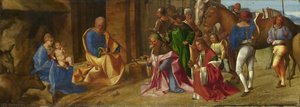
“The Three Ages”, attributed to the enigmatic Venetian master Giorgione (Giorgio Barbarelli da Castelfranco, 1477/78-1510), is a captivating portrait that transcends mere representation, inviting viewers into a world of philosophical contemplation and quiet human connection. Though its precise dating remains debated due to the limited number of definitively attributed works by this artist, it stands as a testament to Giorgione’s innovative approach to Renaissance painting.Subject & Composition: A Study in Human Interaction
The artwork depicts three men engaged in earnest conversation – representing, as the title suggests, youth, maturity, and old age. The composition is skillfully arranged in a triangular form, anchored by the central figure’s head and extending outwards to his companions. This arrangement lends stability and harmony to the scene while subtly directing the viewer's gaze. Each man possesses distinct features that hint at their respective stages of life: the youthful face brimming with potential, the mature countenance reflecting experience, and the aged visage bearing the marks of wisdom and time.Style & Technique: Venetian Lyricalism
“The Three Ages” exemplifies Giorgione’s distinctive style – a hallmark of the emerging Venetian school. Unlike the Florentine emphasis on linear precision, Giorgione prioritized color, atmosphere, and poetic mood. The painting is executed with meticulous brushwork and layered glazes, creating a luminous quality that brings the figures to life. Soft, curved lines contribute to their gentle expressions, while naturalistic shapes accurately depict the human form. Noticeable is the artist’s mastery of texture – from the flowing hair and delicate skin tones to the rich fabrics of their clothing. The dramatic lighting, originating from an unseen source, casts strong shadows that enhance depth and volume.Historical Context: A Bridge Between Eras
Giorgione lived during a pivotal moment in art history—the High Renaissance. He, alongside Titian, laid the foundations for the Venetian painting style, which would profoundly influence generations of artists. His brief career was marked by innovation and a departure from traditional artistic conventions. The early 16th century saw a growing interest in humanism and philosophical inquiry, themes subtly reflected in this artwork. Giorgione’s paintings were not merely decorative; they aimed to evoke emotion and stimulate intellectual curiosity.Symbolism & Interpretation: Wisdom Through the Ages
The symbolism within “The Three Ages” is open to interpretation, adding to its enduring mystique. The three figures can be seen as representing the stages of life – youth’s idealism, maturity’s pragmatism, and old age’s wisdom. Their conversation suggests a transmission of knowledge and experience across generations. Some scholars propose allegorical readings, linking the figures to specific philosophical schools or virtues. Regardless of the precise interpretation, the painting speaks to universal themes of time, mortality, and the pursuit of understanding.Emotional Impact & Aesthetic Appeal
“The Three Ages” evokes a sense of quiet contemplation and intellectual curiosity. The warm color palette and soft lighting create an atmosphere of intimacy and solemnity. The figures’ expressions are nuanced and engaging, inviting viewers to connect with their humanity. This artwork is not merely visually appealing; it resonates on an emotional level, prompting reflection on the human condition. Its timeless quality makes it a compelling addition to any art collection or interior space, offering both aesthetic beauty and intellectual stimulation. It's a piece that invites prolonged viewing and repeated discovery.Perguntas e Respostas
Qual é a atmosfera de "The Three Ages"?
A atmosfera geral de "The Three Ages", de Giorgione é Calm. O clima descreve a sensação predominante da obra.
Que tema e atmosfera combinam em "The Three Ages", de Giorgione?
"The Three Ages", de Giorgione combina renaissance, philosophy, conversation, portraiture, humanism, depth, shadows, symbolism com uma atmosfera Calm.
Onde posso encontrar obras de arte semelhantes a "The Three Ages", de Giorgione?
Obras de arte semelhantes a "The Three Ages", de Giorgione podem ser encontradas na página de Obras semelhantes desta obra.
Biografia do Artista
Um Enigma Veneziano: A Vida e o Legado de Giorgione
Giorgio Barbarelli da Castelfranco, conhecido pelo mundo como Giorgione, permanece como uma das figuras mais esquivas e cativantes da arte renascentista. Nascido na pequena cidade de Castelfranco Veneto, perto de Veneza, por volta de 1477 ou 1478 – o ano exato ainda é alvo de debates – sua vida tragicamente curta, que terminou por volta de 1510 aos trinta e dois ou trinta e três anos, esconde um impacto artístico que continua a ressoar séculos depois. Ao contrário de muitos de seus contemporâneos, cujas vidas são bem documentadas, a história de Giorgione é envolta em mistério, reconstruída a partir de escassos registros históricos e dos relatos frequentemente romantizados de Giorgio Vasari. O que sabemos sugere um homem profundamente imerso na vibrante cultura de Veneza, uma cidade que fomentava tanto a inovação artística quanto uma apreciação sensual pela beleza. É provável que tenha sido aprendiz de Giovanni Bellini, um mestre da pintura veneziana, absorvendo as tradições estabelecidas antes de traçar seu próprio caminho único. Seus primeiros encargos incluíram retratos de figuras proeminentes, como o Doge Agostino Barbarigo, demonstrando um talento imediato para capturar semelhanças e status. No entanto, foi em seu afastamento dos temas convencionais e em sua abordagem revolucionária da pintura que Giorgione verdadeiramente se distinguiu.Visões Poéticas: Estilo e Inovação
O estilo artístico de Giorgione marcou uma ruptura significativa com a ênfase florentina predominante na perspectiva linear e no desenho preciso. Ele defendeu a cor, a atmosfera e uma melancolia evocativa que se tornaram marcas registramente da escola veneziana. Sua técnica envolvia o suavizamento dos contornos, empregando gradações sutis de tom – o sfumato – para criar efeitos atmosféricos, priorizando a harmonia geral em detrimento do detalhe meticuloso. Essa abordagem não era meramente uma escolha técnica; refletia uma sensibilidade artística fundamentalmente diferente. Giorgione não buscava replicar a realidade, mas sim capturar sua essência, suas emoções fugazes e sua ressonância poética. Suas pinturas frequentemente apresentam temas enigmáticos e narrativas ambíguas, convidando os espectadores para um mundo de contemplação em vez de oferecer histórias claras. A Tempestade, talvez sua obra mais famosa, exemplifica isso perfeitamente. A cena – um soldado e uma mãe amamentando em meio a uma paisagem tempestuosa – intriga historiadores da arte há séculos, com seu significado permanecendo tentadoramente fora de alcance. Da mesma forma, Concerto Pastoral (Fête champêtre) apresenta um encontro idílico de músicos em um cenário bucólico, celebrado não por uma narrativa específica, mas por sua composição harmoniosa e qualidade lírica. Essas obras não foram criadas para serem enigmas a serem resolvidos; elas pretendiam evocar sentimentos, estados de espírito e um senso de maravilhamento.Obras-Primas e Influência Duradoura
Embora sua produção tenha sido limitada por sua morte prematura, Giorgione deixou para trás um corpo de trabalho pequeno, mas profundamente influente. Vênus Adormecida, provavelmente concluída com a assistência de Ticiano após o falecimento de Giorgiona, é uma representação icônica da deusa, exibindo seu domínio sobre a cor e a forma. A pose lânguida e os tons suaves da carne encarnam a apreciação veneziana pela sensualidade e pela beleza. Outras obras notáveis incluem Judite, um exemplo precoce de seu estilo em desenvolvimento, e retratos que revelam uma habilidade aguçada para capturar o caráter e a essência de seus modelos. A influência de Giorgione estendeu-se muito além de suas próprias pinturas. Ele foi mentor de Ticiano, que viria a se tornar um dos artistas mais celebrados do Alto Renascimento, levando adiante as inovações de Giorgione na pintura atmosférica e no uso da cor. Essa ênfase na atmosfera impactou profundamente o desenvolvimento da pintura veneziana, distinguindo-a da tradição florentina e estabelecendo Veneza como um grande centro de inovação artística.Um Legado Permanente: A Significância Histórica de Giorgione
Apesar de sua breve carreira, Giorgione ocupa uma posição crucial na história da arte. Ele serviu como ponte entre as tradições venezianas anteriores e as inovações de Ticiano e outros mestres posteriores, alterando fundamentalmente o curso da pintura italiana. Sua ênfase no clima poético, nos efeitos atmosféricos e nas narrativas ambíguas abriu caminho para novas explorações artísticas e inspirou gerações de artistas. O próprio mistério que envolve sua vida e obra contribuiu para seu misticismo e apelo duradouros. Ele permanece como um símbolo da liberdade artística, da inovação e do poder da sugestão – um pintor que ousou priorizar o sentimento sobre a forma, a atmosfera sobre a precisão e a poesia sobre a narrativa.Principais Obras de Giorgione
- A Tempestade (c. 1506-1508)
- Concerto Pastoral (Fête champêtre) (c. 1509)
- Vênus Adormecida (c. 1510)
- Judite (1504)
- Retrato de um Cavalheiro Veneziano

Giorgione
1477 - 1510 , Itália
Dados Rápidos
- Artistic Movement Or Style: Alto Rinascimento veneziano
- Artists Who Influenced This Artist:
- Giovanni Bellini
- Leonardo da Vinci
- Date Of Birth: c. 1477/78 ou 1473/74
- Date Of Death: antes de 7 nov. 1510
- Full Name: Giorgio Barbarelli da Castelfranco
- Nationality: Italiano
- Notable Artworks:
- Il Tramonto
- La Madalena de Castelfranco
- Giuditta
- Place Of Birth: Castelfranco Veneto, Itália
Artigos Relacionados

The Golden Light of Innovation: Exploring the Venetian Renaissance Art Movement (1430–1580)
Explore the Golden Age of Venetian art (1430–1580). Discover Giorgione, Titian & Tintoretto's techniques, the 'colorito' revolution, and lasting influence. Expert insights for collectors & enthusiasts.

Venetian Renaissance: The Golden Age of Color, Light, and Luminous Artistry
Embark on a journey through the Venetian Renaissance. Discover how masters like Giorgione and Titian revolutionized art through luminous color and light. Explore the profound legacy of the Venetian School and its enduring influence on the world of fine art.

Giorgione: Enigma and Innovation in Early Venetian Renaissance Painting
Explore the enigmatic world of Giorgione, a pivotal figure in the Venetian Renaissance. Discover his innovative techniques, iconic paintings like 'The Tempest', and lasting influence on art history. Learn more at OriginalUniqueArt.

Venetian Renaissance: The Mastery of Color, Light, and the Art of Colorito
Explore the luminous mastery of the Venetian Renaissance. Discover how masters like Titian and Giorgione revolutionized art through colorito, light, and atmosphere. An expert guide to the golden age of Italian painting for collectors and enthusiasts.

Oil on Panel: The Ultimate Guide to Bold, High-Impact Texture & Depth
Master the art of impact with our expert guide to oil on panel. Discover how impasto textures and heavy-body pigments create 3D depth and bold visual energy for modern interiors. Elevate your space with high-impact, hand-painted masterpieces designed for maximum aesthetic punch.