

 Visualizar na parede
 Compartilhar
 Compartilhar
 Detalhes
 Guia
Guia

 Baixar imagem
 Semelhantes
 Raio X
 Ver diaporama
 Estatísticas
The Last Judgment (detail)


 Ler mais
Reprodução em Óleo Feita à Mão
Óleo sobre tela pintado à mão no tamanho e moldura de sua escolha, feito sob encomenda pelos nossos artistas. ( Alternar para Impressão Alternar para Imagem Digital)




P118B €10

P118H €10

P118W €10

P438Z €10

P508JH €12

P508YH €12

P805H €10

P805Z €10

P919BZ €10

P919G €10

P919XJ €10

P959ZH €10

P968JZ €12

W106C €8

W218G €10

W218JH €8

W218Y €10

W307PJ €10

W316G €10

W316PJ €8

W316Y €10

W398PJ €8

W4111J €10

W500HY €15

W500JH €15

W692G €12

W849H €8

W940BG €15

W953PJ €8




Escolha entre os nossos tamanhos pré-definidos que respeitam as proporções originais da obra de arte.

Insira a largura e a altura desejadas para se ajustarem à sua moldura ou parede. Como esta obra é pintada à mão, para um tamanho com proporções diferentes, o artista poderá pintar um pouco mais ao redor da imagem ou reduzir ligeiramente a composição — você escolhe. Enviamos uma maquete digital para sua aprovação antes de iniciar a pintura. A imagem exibida nesta página não representa o resultado real — apenas a maquete mostra o resultado final.
Após o pedido, a equipa OriginalUniqueArt.com enviará um e-mail ao cliente para solicitar instruções e fornecer uma prévia do esboço.
Entrega mundial () em 3 a 4 semanas, em vez das 5 semanas padrão. (28 Outubro). Sem comprometer a qualidade.

Envio expresso gratuito para todo o mundo

Tela de Linho de Alta Qualidade

Seguro de transporte completo

Garantia de Reembolso de Impostos Alfandegários

Garantia de Fidelidade Cromática

Política de Devolução em 100 Dias (Apenas para Defeitos)

Garantia de reembolso de 100%

Oferta de desconto por quantidade
 A opção de vidro está disponível apenas para tamanhos inferiores a 110 cm

The Last Judgment (detail)
Técnica de Reprodução
Tamanho da Reprodução
-


Preço Total
€ 264
A Symphony of Divine Drama: The Last Judgment Fresco
Within the soaring dome of Florence’s Duomo, a monumental fresco unfolds – Giorgio Vasari and Federico Zuccari's “The Last Judgment,” completed between 1572 and 1579. More than just a depiction of biblical narrative, it is an immersive experience, a theatrical tableau of judgment, salvation, and the eternal consequences of earthly choices. The sheer scale—over 3,600 square meters—immediately overwhelms the viewer, drawing them into a world of swirling figures, dramatic light, and profound emotional weight. It’s a testament to the Renaissance ambition to capture not just reality but also the very essence of faith and mortality.
The fresco's genesis lies in a commission from Grand Duke Cosimo I de’ Medici, who envisioned a cycle of images that would narrate the entire story of humanity – from creation to judgment. Vasari, already a celebrated architect and painter, spearheaded the project, meticulously planning the composition and overseeing its execution. He initially painted the uppermost registers, employing his signature style characterized by dynamic figures and intricate detail, before Zuccari stepped in to complete the lower sections, bringing his own expertise in dry painting – working on plaster rather than wet fresco – to bear on the monumental undertaking.
A Complex Iconography: Layers of Meaning
The composition is a masterclass in Renaissance iconography. The fresco is organized into eight distinct horizontal bands, each representing a different aspect of the divine judgment. At the apex, twenty-four elders, reminiscent of figures from the Book of Revelation, gaze upon Christ, the central figure presiding over the scene. Below them, a procession of angels bearing instruments of the Passion – swords, spears, and crowns of thorns – underscores the sacrifice of Jesus. The lower registers depict a vibrant array of saints, martyrs, and biblical figures, each embodying virtues and offering their support to those ascending to heaven.
Crucially, the fresco also portrays the depths of hell. The final band showcases seven regions of torment, vividly illustrating the consequences of sin – from the flames of lust to the icy grip of eternal despair. This stark contrast between salvation and damnation is not merely a theological statement; it’s a powerful visual metaphor for the choices that define human existence. The figures themselves are rendered with an astonishing level of realism, capturing a range of emotions—fear, hope, regret, and defiance—that resonate deeply with the viewer.
Technique and Materials: A Monumental Achievement
The fresco’s scale demanded innovative techniques. Vasari and Zuccari employed a complex system of scaffolding and temporary supports to ensure the plaster remained workable throughout the lengthy process. Zuccari's use of *secco* painting – applying pigments directly onto dry plaster – allowed for greater detail and precision in the lower registers, compensating for the limitations of fresco painting on such a vast scale. The vibrant colors were achieved using pigments derived from minerals, plants, and animal products, meticulously ground and mixed with water to create a durable and luminous finish.
The use of light is particularly striking. Vasari masterfully manipulates chiaroscuro – the contrast between light and dark – to draw attention to key figures and dramatic moments. The overall effect is one of overwhelming grandeur, inviting viewers to contemplate their own place within this epic narrative of salvation and judgment. The fresco remains a breathtaking achievement of Renaissance art, a testament to the skill, ambition, and spiritual vision of its creators.
Perguntas e Respostas
Que sentimento transmite "The Last Judgment (detail)", de Giorgio Vasari?
Em "The Last Judgment (detail)", um clima Dramatic acompanha uma emoção Powerful.
"The Last Judgment (detail)" é típico do que Giorgio Vasari costumava criar?
"The Last Judgment (detail)" retrata last judgment, christ, heaven, hell, saints, angels, judgement, resurrection, enquanto os temas recorrentes de Giorgio Vasari são michelangelo’s biblical vision, florentine civic, religious power, roman classical ideals blend, centralized divine judgment theme, sistine chapel's monumental scale. A comparação entre ambos revela como a obra se relaciona com os temas habituais do artista.
Que atmosfera "The Last Judgment (detail)", de Giorgio Vasari traz a um ambiente?
A atmosfera Dramatic de "The Last Judgment (detail)", de Giorgio Vasari combina perfeitamente com o ambiente recomendado: um(a) Living Room.
Biografia do Artista
A Life Woven into the Renaissance Fabric
Giorgio Vasari, born in Arezzo, Tuscany, on July 30, 1511, was more than simply a painter; he was a quintessential embodiment of the Italian Renaissance spirit. His life unfolded as a vibrant tapestry woven with threads of artistic creation, architectural innovation, insightful historical writing, and an unwavering dedication to celebrating the masters who came before him. From his earliest training under Guglielmo da Marsiglia, a skilled artisan in stained glass, young Giorgio’s path was steered towards visual artistry. However, it was his move to Florence at sixteen that truly ignited his potential. Immersing himself within the dynamic circle of Andrea del Sarto and absorbing the influences of Rosso Fiorentino and Jacopo Pontormo, Vasari began a journey that would see him become one of the most influential figures of his era. His formative years were also deeply marked by the patronage and friendship of the powerful Medici family, a relationship that would shape both his career and his perspective on art’s role in society.The Artist's Hand and Eye
Vasari’s artistic style is often categorized as Mannerist, reflecting the prevailing aesthetic trends of the mid-16th century. His paintings are characterized by elongated figures, dynamic compositions, and a sophisticated use of color—qualities highly admired during his lifetime. While perhaps not achieving the same level of enduring fame as some of the artists he chronicled, Vasari’s skill was undeniable. Notable works such as *The Studio of the Painter*, a fresco housed in Casa Vasari in Arezzo, offer a fascinating glimpse into the artistic practices of the time. The sheer scale and ambition of his frescoes for the Palazzo Vecchio in Florence, undertaken between 1555 and 1572, demonstrate his mastery of large-scale decorative schemes. His final monumental undertaking, *The Last Judgement*, adorning the cupola of Florence Cathedral—completed after his death by Federico Zuccari—stands as a testament to his unwavering commitment to grand artistic visions. Beyond painting, Vasari’s architectural contributions were equally significant. He designed the elegant loggia of the Palazzo degli Uffizi, transforming it into a public piazza and creating a vital link within Florence's urban landscape. Perhaps most famously, he conceived and oversaw the construction of the Vasari Corridor, a secret passageway connecting the Uffizi Gallery with the Palazzo Pitti—a feat of engineering and architectural ingenuity that continues to captivate visitors today.A Historian Forging a Legacy
However, it is arguably as an art historian that Giorgio Vasari secured his most lasting legacy. His monumental work, *Lives of the Most Excellent Painters, Sculptors, and Architects*, published in 1550 (with a revised edition in 1568), revolutionized the way art was understood and appreciated. This groundbreaking text wasn’t merely a collection of biographies; it established a narrative framework for the development of Italian Renaissance art, tracing its evolution from the early masters like Cimabue and Giotto to his contemporaries Michelangelo and Raphael. Vasari's work introduced the very concept of the “Renaissance” – a rebirth of classical ideals—and laid the foundation for modern art history as a discipline. While acknowledging that Vasari’s accounts are not without their biases and inaccuracies, particularly concerning artists predating his own time, the impact of *Lives* remains profound. It provided a crucial historical context for artistic creation, elevating the status of artists from skilled craftsmen to intellectual figures worthy of scholarly attention.Influences and Enduring Significance
Vasari’s artistic development was profoundly shaped by his exposure to the works of Renaissance masters. His visit to Rome in 1529, where he studied the art of Raphael and other High Renaissance artists, proved pivotal. He absorbed their principles of composition, anatomical accuracy, and idealized beauty, incorporating them into his own style. Michelangelo, whom Vasari greatly admired, exerted a particularly strong influence on both his painting and architecture. The grandeur and dynamism characteristic of Michelangelo’s work are evident in many of Vasari’s projects. Beyond specific artists, the broader intellectual currents of the Renaissance—humanism, classical learning, and a renewed interest in empirical observation—also informed Vasari's approach to art and history. Giorgio Vasari died on June 27, 1574, in Florence, leaving behind a multifaceted legacy that continues to resonate today. He was not only a talented artist and architect but also a pioneering historian whose writings shaped our understanding of one of the most transformative periods in Western art history. His work remains essential for anyone seeking to explore the rich cultural heritage of the Italian Renaissance.Major Achievements
- Frescoes: *The Studio of the Painter* (Arezzo), frescoes in the Palazzo Vecchio, Florence.
- Architecture: Design of the Uffizi Gallery, Vasari Corridor (Florence), church and monastery complex for the Cavalieri di San Stefano (Pisa).
- Writing: *Lives of the Most Excellent Painters, Sculptors, and Architects* (1550 & 1568) – a foundational text in art history.
Key Relationships
Mentors: Guglielmo da Marsiglia, Andrea del Sarto. Patrons: The Medici family (Cosimo I de’ Medici, Francesco I de’ Medici). Influenced by: Michelangelo, Raphael.
Giorgio Vasari
1511 - 1574 , Itália
Dados Rápidos
- Artistic Movement Or Style: Mannerismo
- Artists Or Movements Influenced By This Artist: ['Renascimento']
- Artists Who Influenced This Artist:
- Michelangelo
- Andrea del Sarto
- Date Of Birth: 30 de julho de 1511
- Date Of Death: 27 de junho de 1574
- Full Name: Giorgio Vasari
- Nationality: Italiano
- Notable Artworks:
- Estúdio do Pintor
- Julgamento Final
- Place Of Birth: Arezzo, Itália
Artigos Relacionados

Michelangelo Buonarroti: As 25 Obras-Primas que Definem um Gênio da Arte Renascentista
Descubra as 25 obras-primas de Michelangelo Buonarroti, o gênio da Renascença! Explore a história por trás do David, Pietà e os afrescos da Capela Sistina. Encontre reproduções de arte exclusivas e inspire sua decoração em OriginalUniqueArt.com.

Mastering the Heavens: A Definitive Guide to the Sistine Chapel's Renaissance Masterpieces
Embark on a sophisticated journey through the Sistine Chapel. Discover the profound artistry of Michelangelo’s frescoes, from the iconic ceiling to the altar wall, through an expert exploration of Renaissance mastery and theological depth.

The Enduring Legacy of Fresco Painting: Techniques, History & Contemporary Relevance
Explore the rich history & enduring artistry of fresco painting – from Giotto to Michelangelo! Discover techniques, conservation efforts, & modern applications. Learn how OriginalUniqueArt brings this timeless art form to your home.
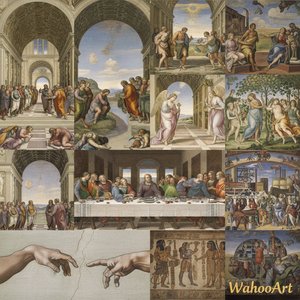
Os 10 Frescos Mais Icônicos da História da Arte | OriginalUniqueArt
Descubra os 10 frescos mais icônicos da história, de Michelangelo a Rafael! Explore a arte renascentista, técnicas milenares e cores vibrantes. Encontre reproduções de alta qualidade para transformar sua casa em uma galeria com OriginalUniqueArt.com.

O Afresco como Legado Familiar: Preservando a Herança Através da Arte Mural
Descubra o afresco como legado familiar! Explore a história, técnica e conservação da pintura mural. Encontre reproduções de alta qualidade em .


