
 Visualizar na parede
 Compartilhar
 Compartilhar
 Detalhes
 Guia
Guia

 Baixar imagem
 Semelhantes
 Raio X
 Ver diaporama
 Perguntas e Respostas
 Estatísticas
Untitled

- 168.0 x 193.0 cm


 Ler mais
A obra de arte exibida nesta página é protegida por leis de direitos autorais, o que significa que não podemos criar ou vender legalmente uma reprodução idêntica. Esta proteção é aplicada por meio de acordos internacionais, tais como a Convenção de Berna e pelas leis nacionais, incluindo as estabelecidas por Lei de Direitos Autorais dos EUA - Título 17.
Este método cumpre plenamente as regulamentações de direitos autorais, pois não envolve a cópia ou duplicação da obra protegida. Em vez disso, trata-se de uma reinterpretação criativa — uma nova pintura que é influenciada pela original, mas não idêntica a ela.
Giclée / Impressão de Arte
Impressão giclée ou em tela de qualidade de museu, com produção rápida e opções flexíveis de acabamento. ( Comprar pintura feita à mão Alternar para Imagem Digital)




P118B €10

P118H €10

P118W €10

P438Z €10

P508JH €12

P508YH €12

P805H €10

P805Z €10

P919BZ €10

P919G €10

P919XJ €10

P959ZH €10

P968JZ €12

W106C €8

W218G €10

W218JH €8

W218Y €10

W307PJ €10

W316G €10

W316PJ €8

W316Y €10

W398PJ €8

W4111J €10

W500HY €15

W500JH €15

W692G €12

W849H €8

W940BG €15

W953PJ €8




Escolha entre os nossos tamanhos pré-definidos que respeitam as proporções originais da obra de arte.

Insira a largura e a altura desejadas para se ajustarem à sua moldura ou parede. Uma impressão pode ser apenas cortada, nunca ampliada além da imagem original; portanto, um tamanho com proporções diferentes resultará na perda de parte da imagem. Enviamos uma maquete digital para sua aprovação antes de realizarmos a impressão. A imagem exibida nesta página não mostra o corte real — apenas a maquete o faz.
Entrega mundial () em 2 semanas, em vez das 4/5 semanas padrão. (15 Novembro)

Envio expresso gratuito para todo o mundo

Tela de Linho de Alta Qualidade

Seguro de transporte completo

Garantia de Reembolso de Impostos Alfandegários

Garantia de Fidelidade Cromática

Política de Devolução em 100 Dias (Apenas para Defeitos)

Garantia de reembolso de 100%

Oferta de desconto por quantidade
 A opção de vidro está disponível apenas para tamanhos inferiores a 110 cm

Untitled
Giclée / Impressão de Arte
Tamanho da Reprodução
-


Preço Total
€ 72
Perguntas e Respostas
Qual é a forma e as dimensões de "Untitled", de Giorgio Cavallon?
"Untitled", de Giorgio Cavallon possui as proporções de uma obra em Landscape de 168 x 193 cm.
"Untitled", de Giorgio Cavallon, está em domínio público? E por quê?
"Untitled", de Giorgio Cavallon está em ainda protegido por direitos autorais. O período de direitos autorais conta a partir do falecimento do artista, ocorrido em 1989.
Qual é a luminância de "Untitled", de Giorgio Cavallon?
A luminância registrada para "Untitled", de Giorgio Cavallon é Bright Balance.
Biografia do Artista
A Life Bridging Worlds: The Artistic Journey of Giorgio Cavallon
Giorgio Cavallon’s story is one of graceful transition and quiet innovation, a testament to the power of artistic vision shaped by both Old World heritage and New World opportunity. Born in 1904 in the small Italian town of Sori, near Vicenza, his early life was uprooted at age sixteen when he immigrated to the United States with his family. This displacement, coupled with a naturalized citizenship achieved in 1929, instilled within him a unique dual perspective – an Italian sensibility filtered through the burgeoning energy of American modernism. He carried this duality not as a conflict, but as a source of nuanced understanding that would subtly permeate his artistic explorations. His initial years were marked by practical necessity; he worked in factories while pursuing private art instruction, demonstrating a dedication to creative growth even amidst challenging circumstances. This commitment led him to the National Academy of Design in New York City in 1926, and subsequently to Provincetown, Massachusetts, where studying under Charles Hawthorne proved pivotal. Hawthorne’s direct painting approach—a focus on observing and capturing light and color directly onto the canvas—laid a foundational element for Cavallon's future style.Formative Influences and the Rise of Abstraction
The 1930s were a period of crucial development for Cavallon, marked by both economic hardship and artistic awakening. His involvement with the Works Progress Administration’s Federal Art Project (WPA/FAP) provided not only employment but also an invaluable mentorship under Arshile Gorky. This exposure to emerging abstract tendencies was transformative, opening his eyes to new possibilities beyond representational art. Simultaneously, he immersed himself in the teachings of Hans Hofmann, attending evening classes from 1934 onwards. Hofmann’s emphasis on the materiality of paint – its texture, weight, and spatial relationships – profoundly shaped Cavallon's understanding of form and color. It was within this intellectual climate that Cavallon co-founded the American Abstract Artists (AAA) in 1936, a group dedicated to championing abstract art at a time when it faced considerable resistance. The AAA’s core belief, articulated by Juan Gris, centered on achieving poetic effect through “beautiful elements” rather than relying on traditional subject matter. This commitment to structural quality and intellectual beauty became a guiding principle in Cavallon's own artistic practice.A Lyrical Geometry: Defining the Cavallon Style
Cavallon’s artistic style evolved gradually, yet consistently demonstrated a lyrical geometric abstraction. He moved away from purely representational imagery, not towards the explosive energy of some of his Abstract Expressionist contemporaries, but toward a more contemplative exploration of form and color. His paintings are characterized by luminous color fields, delicate spatial relationships, and a subtle interplay of light and shadow. While often described as geometric, his abstractions were never rigid or cold; they possessed an organic quality, evoking landscapes and natural phenomena without directly depicting them. There’s a sense of atmosphere and depth in his work, achieved through carefully layered colors and nuanced tonal variations. This ability to suggest rather than state explicitly became a hallmark of his mature style. He wasn't interested in the purely intellectual exercise of geometric form; instead, he sought to imbue those forms with emotional resonance and poetic suggestion.Integration into the New York School and Lasting Legacy
By the late 1940s, Cavallon was firmly integrated into the vibrant artistic community that would become known as the New York School. He joined the “Artists’ Club” in 1949 and participated in the landmark Ninth Street Show in 1951 – a pivotal event that brought national recognition to this new wave of American art. His consistent inclusion in subsequent invitational annuals solidified his position within the movement, though he maintained a distinct artistic voice separate from the more gestural styles of Pollock or de Kooning. Cavallon’s contribution lies not in initiating a radical break with tradition, but in serving as a crucial bridge between earlier abstraction and the full flowering of Abstract Expressionism. He helped pave the way for the acceptance of American art on an international stage, particularly in Paris during the 1950s. Giorgio Cavallon continued to paint and exhibit his work throughout his life, residing in Manhattan until his death in 1989 at the age of eighty-five. His legacy endures as a significant figure in the development of American abstract art—a quiet innovator who demonstrated an unwavering commitment to formal exploration, intellectual rigor, and the enduring power of lyrical abstraction.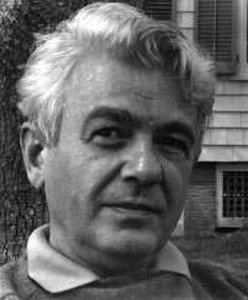
Giorgio Cavallon
1904 - 1989 , Italy
Dados Rápidos
- Full Name: Giorgio Cavallon
- Nationality: Italian-American
- Date Of Birth: 1904
- Date Of Death: 1989
- Place Of Birth: Sori, Italy
- Notable Artworks:
- Country Scene
- Untitled (1958)
- Artistic Movement Or Style: Abstract Expressionism
- Artists Who Influenced This Artist:
- Hans Hofmann
- Arshile Gorky
- Charles Hawthorne
- Artists Or Movements Influenced By This Artist: ['Abstract Expressionism']
Artigos Relacionados

Neo-Abstract Art: The High-Impact Evolution of Modern Visual Energy and Geometric Sophistication
Discover the power of Neo-Abstract art. Explore how bold geometric forms and high-impact visual energy are redefining modern design. Learn to curate sophisticated, high-energy spaces with the latest trends in contemporary abstraction and structural color.

Abstração Geométrica: 10 Obras-Primas que Moldaram a Arte Moderna | OriginalUniqueArt.com
Descubra as 10 obras-primas da Abstração Geométrica que revolucionaram a arte moderna! Explore Kandinsky, Mondrian e outros artistas icônicos. Encontre reproduções de alta qualidade para decorar sua casa com OriginalUniqueArt.com.

Top 10 Obras-Primas do Expressionismo Abstrato: Arte para Decorar e Inspirar | OriginalUniqueArt.com
Descubra as 10 obras-primas do Expressionismo Abstrato com Jackson Pollock, Mark Rothko e mais! Explore a história, técnica e emoção por trás de cada pintura. Encontre reproduções de arte exclusivas para decorar sua casa em OriginalUniqueArt.com.

Color Field Painting: The Emotional Power of Pure Abstraction and Chromatic Depth
Explore the profound emotional depth of Color Field painting. Discover the history of mid-century abstraction, from Rothko to Newman, and learn how pure color transforms the viewer's experience through our expert art history guide.

Kandinsky: As 25 Obras-Primas que Definem o Abstracionismo | OriginalUniqueArt
Descubra as 25 obras-primas de Wassily Kandinsky, pioneiro da arte abstrata! Explore a história, cores e significado por trás de cada pintura. Encontre reproduções de alta qualidade e inspire sua decoração em OriginalUniqueArt.com.