Baroque Landscape
Landscape (Gillis Van Coninxloo)
Gillis Van Coninxloo (1544–1607) criou Landscape. Pertence ao movimento Baroque Landscape. É feito em Oil On Copper. Está conservada no Museu do Prado, em Madrid, Espanha. Mede 24 × 19 cm.
- Oil On Copper
- 24 × 19 cm
- Museu do Prado, Madrid

 Visualizar na parede

 Pintura a Óleo Feita à Mão
 Compartilhar
 Compartilhar
 Ficha técnica


 Baixar imagem
 Semelhantes
 Raio X
 Ver diaporama
 Perguntas e Respostas

 Estatísticas
Landscape, em resumo
- Título
- Landscape
- Artista
- Gillis Van Coninxloo (1544–1607)
- Artista nascido em
- Antuérpia, Bélgica
- Técnica
- Oil On Copper
- Dimensões
- 24 × 19 cm
- Onde ver
- Museu do Prado, Madrid, Espanha
- Movimento
- Baroque Landscape
- Tema
- landscape, flemish style, baroque art, forest scene, castle architecture, atmospheric perspective
O que Landscape retrata?
A Flemish Master’s Woodland Reverie: Gillis van Coninxloo's “Landscape”
Gillis van Coninxloo’s “Landscape,” a captivating oil on copper panel, transports the viewer to a realm of serene contemplation within a meticulously rendered Flemish forest. Painted around 1598, this work stands as a pivotal example of the artist’s mastery in capturing the atmospheric depth and intricate detail characteristic of the early 16th-century Golden Age. More than just a depiction of nature, it's an invitation to lose oneself within a carefully constructed world of light, shadow, and subtle symbolism – a testament to van Coninxloo’s profound understanding of both landscape painting and the human experience.
The scene unfolds before us with remarkable realism. A dense thicket of trees dominates the foreground, their leaves rendered with an almost obsessive attention to detail; each vein, each curl of bark, is painstakingly observed and faithfully reproduced. These trees aren’t merely static elements; they create a palpable sense of depth, drawing the eye into the heart of the forest. Beyond them, a modest collection of buildings – likely farmhouses or small dwellings – nestles amongst the foliage, suggesting a quiet rural existence. The architecture is understated yet solid, reflecting a pragmatic approach to building within this natural setting. In the distance, a formidable castle rises above the horizon, its imposing silhouette anchoring the composition and hinting at notions of power, protection, and perhaps even isolation.
The Alchemy of Light and Shadow: Technique and Style
Van Coninxloo’s technical skill is immediately apparent in his masterful use of oil on copper. This medium allowed for a remarkable level of detail and luminosity – the surface retains a subtle sheen that enhances the richness of the colors and creates an almost three-dimensional effect. The artist employs a technique known as “chiaroscuro,” skillfully manipulating light and shadow to sculpt the forms and create a dramatic sense of depth. Notice how the sunlight filters through the trees, dappling the ground in pools of brightness while simultaneously casting deep shadows beneath the foliage. This interplay of light and dark isn’t merely decorative; it imbues the scene with a palpable atmosphere – a feeling of both tranquility and mystery.
Stylistically, “Landscape” aligns itself with the Flemish tradition of landscape painting, yet van Coninxloo departs from some of the more rigid conventions of the time. While influenced by the Northern Mannerist style—characterized by its emphasis on detail and symbolic imagery—he introduces a greater sense of naturalism and emotional resonance. The composition is carefully balanced, creating a harmonious whole that invites contemplation. The muted color palette – dominated by greens, browns, and grays – contributes to the overall feeling of serenity and timelessness.
A Window into 16th-Century Life and Belief
To fully appreciate “Landscape,” it’s important to consider its historical context. Painted during a period of religious upheaval and political instability in the Netherlands, this work reflects both the anxieties and the enduring values of the era. The castle, for instance, can be interpreted as a symbol of authority – whether representing secular power or divine protection. The humble dwellings nestled within the forest suggest a connection to the land and a reverence for rural life. Furthermore, the dense woodland itself has long been associated with themes of solitude, introspection, and the spiritual realm.
Interestingly, this painting was originally housed in the Museo del Prado in Madrid, Spain, a testament to its enduring appeal across national boundaries. The artist’s biography reveals a fascinating journey – from Antwerp to Germany and eventually Amsterdam—reflecting the shifting political landscape of the time. His work served as a bridge between artistic styles, incorporating elements of Mannerism while embracing the burgeoning realism of the Dutch Golden Age.
A Timeless Masterpiece: Reproduction and Inspiration
Reproductions of “Landscape” capture only a fraction of its original impact. The subtle nuances of light, texture, and atmosphere are difficult to replicate fully, but OriginalUniqueArt’s hand-painted reproductions strive to honor the artist's vision with remarkable fidelity. This piece offers an exceptional opportunity for interior designers seeking to evoke a sense of tranquility and connection to nature – imagine it adorning a study or a living room, providing a focal point that invites contemplation. Collectors will find “Landscape” to be a valuable addition to any art collection, representing a significant moment in the history of Flemish landscape painting.
For further exploration, we encourage you to visit the linked resources:
Em qual museu se encontra Landscape?
Museu do Prado
Madrid, Espanha
A História do Museu do Prado As origens do Museu do Prado estão intrinsecamente ligadas à Coleção Real da Espanha, remontando ao século XVIII. O que começou como uma visão para um Gabinete de História Natural sob o reinado de Fernando VII, acabou por se transformar num santuário dedicado à pintura e à escultura. Esta transição metamorfoseou um empreendimento científico num repositório para os tesouros mais significativos da Coroa Espanhola.


Imagens em alta resolução de Landscape
Gillis Van Coninxloo, Landscape, Museu do Prado. Domínio público.
Perguntas sobre Landscape respondidas
Onde "Landscape", de Gillis Van Coninxloo está em exibição hoje?
A obra original "Landscape", de Gillis Van Coninxloo encontra-se no Museu do Prado, Madrid, Espanha. Uma reprodução permite que a obra seja exibida em sua casa.
Qual técnica foi utilizada em "Landscape", de Gillis Van Coninxloo?
A técnica de "Landscape", de Gillis Van Coninxloo é Oil On Copper. As reproduções visam reproduzir a aparência desta técnica.
Quais são as dimensões da obra original "Landscape"?
As dimensões registradas de "Landscape", de Gillis Van Coninxloo são 24 x 19 cm. Reproduções podem ser encomendadas em outros tamanhos, mantendo as mesmas proporções.
O que "Landscape", de Gillis Van Coninxloo retrata?
"Landscape", de Gillis Van Coninxloo retrata: landscape, flemish style, baroque art, forest scene, castle architecture, atmospheric perspective, detailed rendering.
"Landscape" está em domínio público?
Informação de direitos autorais para "Landscape", de Gillis Van Coninxloo: a obra está em em domínio público — seus direitos autorais expiraram. Isso determina se reproduções da imagem podem ser feitas livremente.
Quem criou "Landscape"?
"Landscape" é atribuída a Gillis Van Coninxloo.
A qual movimento artístico "Landscape", de Gillis Van Coninxloo pertence?
"Landscape" é uma obra do Baroque Landscape. O movimento indica a tradição artística da qual a obra faz parte.
A que período da carreira de Gillis Van Coninxloo pertence "Landscape"?
"Landscape" representa o Late Baroque de Gillis Van Coninxloo.
"Landscape", de Gillis Van Coninxloo, está em domínio público? E por quê?
"Landscape", de Gillis Van Coninxloo, está em em domínio público — seus direitos autorais expiraram. Os termos de direitos autorais são calculados a partir do falecimento do artista, e Gillis Van Coninxloo faleceu em 1607.
Sobre o artista, Gillis Van Coninxloo
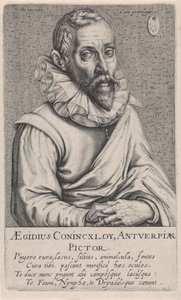
1544–1607, Bélgica
Gillis Van Coninxloo
Um Mestre do Reino Verdejante Gillis Van Coninxloo destaca-se como uma figura fundamental na evolução da arte da paisagem do Norte, servindo como uma ponte vital entre as intrincadas tradições maneiristas e a emergente profundidade atmosférica do início do Barroco. Nascido em Antuérpia, na Bélgica, sua vida esteve profundamente entrelaçada com a rica linhagem artística dos Países Baixos. Filho de um pintor, ele foi imerso em um mundo onde o artesanato e a observação da natureza eram primordiais. Sua formação inicial sob mestres como Pieter Coecke van Aelst, o Jovem, e Lenaert Kroes, proporcionou-lhe uma base rigorosa, mas foi o seu tempo de trabalho no atelier de Gillis Mostaert que realmente permitiu que o seu talento florescesse, permitindo-lhe contribuir para obras profissionais enquanto refinava a sua visão única.
Sobre Gillis Van Coninxloo Obras notáveis de Gillis Van Coninxloo
Também de Gillis Van Coninxloo
 Jonah Preaching to the Ninevites1583
 Woodland with Saint Jerome1583
 Landscape with the judgment of Midas1598
 Landscape with the Judgement of Paris1610
Ensaios sobre Landscape
 Masterpieces of Jan van Goyen: Top 25 Iconic Dutch LandscapesExplore 25 iconic Jan van Goyen landscapes from the Dutch Golden Age. Discover these tonal masterpieces on OriginalUniqueArt.com.
 Chiaroscuro & Shadows: The High-Impact Power of Moonlight in Masterpiece LandscapesMaster the drama of chiaroscuro and moonlight in classical landscapes. Explore the power of light and shadow now.
 Masterpieces of Nature: The Top 25 Artworks by Jacob van RuisdaelExplore 25 iconic Jacob van Ruisdael landscapes. Discover the soul of Dutch Golden Age art. Explore the full collection online at OriginalU…