Northern Renaissance · 1598
Forest Landscape (Gillis Van Coninxloo, 1598)
Gillis Van Coninxloo (1544–1607) criou Forest Landscape. Data de 1598. Pertence ao movimento Northern Renaissance. É feito em Oil On Panel. Está conservada no Liechtenstein Museum, em Viena, Áustria. Mede 42 × 61 cm.
- 1598
- Oil On Panel
- 42 × 61 cm
- Liechtenstein Museum, Viena

 Visualizar na parede

 Pintura a Óleo Feita à Mão
 Compartilhar
 Compartilhar
 Ficha técnica


 Baixar imagem
 Semelhantes
 Raio X
 Ver diaporama
 Perguntas e Respostas

 Estatísticas
Forest Landscape, em resumo
- Título
- Forest Landscape
- Artista
- Gillis Van Coninxloo (1544–1607)
- Artista nascido em
- Antuérpia, Bélgica
- Data
- 1598
- Técnica
- Oil On Panel
- Dimensões
- 42 × 61 cm
- Onde ver
- Liechtenstein Museum, Viena, Áustria
- Movimento
- Northern Renaissance
- Período
- Early Modern
- Tema
- forest landscape, dark woods, path, village view, atmospheric, tranquility
O que Forest Landscape retrata?
Identification of the Forest Landscape Artwork
The artwork titled Forest Landscape is a painting by the Flemish artist Gillis Van Coninxloo. Executed in 1598, this work is an oil on panel. The physical dimensions of the piece are 42 x 61 cm. It is currently held within the Liechtenstein Museum in Vienna, Austria.
This specific composition depicts a dense woodland environment. The scene features a winding path that leads into a thicket of trees. The foliage consists of various shades of green, while the trunks and branches create a heavy canopy overhead. In the background, a small village is visible through the gaps in the trees, providing a sense of distance within the forest setting.
The subject matter focuses on the natural world, specifically the textures of bark, leaves, and moss. A single, small human figure is positioned beneath a tree within the landscape. The composition utilizes a dark palette of browns, greens, and ochres to define the wooded area. Light filters through the upper branches, creating a contrast between the shadowed recesses of the undergrowth and the illuminated patches of the clearing.
Composition and Visual Elements
The composition is largely symmetrical, organized around a winding path that leads the eye toward the center of the image. This path cuts through a dense woodland, where the trunks and branches of trees intertwine to form a thick canopy overhead. Only a few small patches of sky are visible through the gaps in the foliage. Within this enclosed space, a single tiny human figure reclines beneath a tree, positioned near the center of the scene. The scale of the trees and the surrounding undergrowth dwarfs the figure, emphasizing the vastness of the natural environment.
Color is concentrated in the various hues of green found in the leaves and the mossy textures of the forest floor. These greens contrast with the dark browns and ochres of the tree trunks and the earth. In the background, a small village is visible through the trees, providing a sense of distance and depth. The lighting creates a chiaroscuro effect, with strong contrasts between the deep shadows of the thickets and the light that filters through the canopy onto the path and the reclining figure.
Technique and Artistic Style
The artist utilized oil on panel to establish a sense of depth and a tangible texture across the surface. The application of paint likely involves multiple layers and glazing, a method used to achieve a specific luminosity within the darker sections of the composition. This technique allows light to appear as though it is filtering through the canopy, creating a chiaroscuro effect through the deliberate placement of light and shadow. The resulting atmosphere is defined by a palette of dark colors and a high degree of intricate detail.
The composition is built upon a dense arrangement of ancient oaks and thick undergrowth. There is a clear priority placed on the textural richness of the natural elements, specifically the bark of the trees, the individual leaves, and the presence of moss. These organic forms are rendered with meticulous care, contributing to the overall density of the woodland scene. The interplay of light and shadow defines the verticality of the trunks and the irregular shapes of the foliage, emphasizing the physical presence of the forest environment.
Artistic Influence and Legacy
Gillis Van Coninxloo occupied a central position in the evolution of Northern landscape art. His technical approach functioned as a bridge between the intricate traditions of Mannerism and the atmospheric depth characteristic of the early Baroque. Through his development of the forest landscape, he moved away from panoramic vistas toward intimate, enclosed woodland scenes. This shift prioritized the textural details of bark, leaves, and moss, often submerging small human figures within an expansive, detailed natural environment.
The influence of his method extended to several prominent painters of the period. Jan Brueghel the Elder and Pieter Schoubroeck were among those affected by his stylistic developments. His approach to dense, immersive woodland compositions also impacted the work of Roeland Savery and various other Flemish and Dutch landscape painters. This specific work, created about 1598, represents his technical skill and craftsmanship in rendering the natural world.
Em qual museu se encontra Forest Landscape?
Liechtenstein Museum
Viena, Áustria
Uma Joia do Esplendor Barroco Vienense Aninhado no coração da histórica Ringstraße de Viena, o Museu Liechtenstein reside em um cenário que é tão obra-prima quanto os tesouros que protege. Acolhido no magnífico Palais Liechtenstein, o museu oferece uma jornada imersiva na alma da elegância aristocrática e no profundo legado da Casa de Liechtenstein. Ao se aproximarem da estrutura palaciana, os visitantes são recebidos pela grandiosidade arquitetônica de uma era passada, onde cada cornija dourada e escadaria imponente sussurra contos de prestígio imperial.


Imagens em alta resolução de Forest Landscape

Gillis Van Coninxloo, Forest Landscape (1598), Liechtenstein Museum. Domínio público.
Perguntas sobre Forest Landscape respondidas
Onde "Forest Landscape", de Gillis Van Coninxloo está em exibição hoje?
"Forest Landscape", de Gillis Van Coninxloo está em exibição no Liechtenstein Museum, Viena, Áustria. A referência ao museu diz respeito à obra original, não a reproduções.
Em que ano foi criada a obra "Forest Landscape", de Gillis Van Coninxloo?
"Forest Landscape", de Gillis Van Coninxloo foi criado em 1598.
Qual técnica foi utilizada em "Forest Landscape", de Gillis Van Coninxloo?
Gillis Van Coninxloo utilizou a técnica de Oil On Panel para "Forest Landscape". A técnica define a natureza material da obra original.
Quais são as dimensões de "Forest Landscape", de Gillis Van Coninxloo na vida real?
"Forest Landscape" mede 42 x 61 cm em sua forma original. As dimensões originais são uma referência útil ao escolher o tamanho de uma reprodução.
O que representa "Forest Landscape"?
Os temas de "Forest Landscape" são forest landscape, dark woods, path, village view, atmospheric, tranquility, nature scene, 16th century.
"Forest Landscape" está em domínio público?
Quanto aos direitos autorais, "Forest Landscape" está em em domínio público — seus direitos autorais expiraram.
Quem criou "Forest Landscape"?
"Forest Landscape" foi criado por Gillis Van Coninxloo. As informações nesta página descrevem a obra original de Gillis Van Coninxloo.
A qual estilo pertence "Forest Landscape"?
"Forest Landscape" é uma obra do Northern Renaissance. O movimento indica a tradição artística da qual a obra faz parte.
A que fase da trajetória de Gillis Van Coninxloo "Forest Landscape" pertence?
Dentro da trajetória de Gillis Van Coninxloo, "Forest Landscape" pertence ao período Late 16th Century. Esta fase permite compará-la com outras obras do artista.
Sobre o artista, Gillis Van Coninxloo
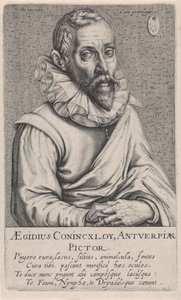
1544–1607, Bélgica
Gillis Van Coninxloo
Um Mestre do Reino Verdejante Gillis Van Coninxloo destaca-se como uma figura fundamental na evolução da arte da paisagem do Norte, servindo como uma ponte vital entre as intrincadas tradições maneiristas e a emergente profundidade atmosférica do início do Barroco. Nascido em Antuérpia, na Bélgica, sua vida esteve profundamente entrelaçada com a rica linhagem artística dos Países Baixos. Filho de um pintor, ele foi imerso em um mundo onde o artesanato e a observação da natureza eram primordiais. Sua formação inicial sob mestres como Pieter Coecke van Aelst, o Jovem, e Lenaert Kroes, proporcionou-lhe uma base rigorosa, mas foi o seu tempo de trabalho no atelier de Gillis Mostaert que realmente permitiu que o seu talento florescesse, permitindo-lhe contribuir para obras profissionais enquanto refinava a sua visão única.
Sobre Gillis Van Coninxloo Obras notáveis de Gillis Van Coninxloo
Também de Gillis Van Coninxloo
 Jonah Preaching to the Ninevites1583
 Woodland with Saint Jerome1583
 Landscape with the judgment of Midas1598
 Landscape with the Judgement of Paris1610
Ensaios sobre Forest Landscape
 French Barbizon paintersMasterpieces by Théodore Rousseau and Daubigny define the Barbizon School. Explore the full collection online at OriginalUniqueArt.com.
 Enchanted Woodlands: 10 Masterpieces That Capture the Magic of the ForestExplore iconic forest art by Shishkin, Klimt, and Van Gogh. Discover museum-quality masterpieces on OriginalUniqueArt.com.
 Mastering the Horizon: An Art Historian’s Guide to the World's Most Iconic Landscape PaintingsExplore the profound history of landscape painting with our expert guide. From Impressionist light to Chinese traditions, discover the tech…