Visualizar na parede
 Compartilhar
 Compartilhar
 Detalhes
 Guia
Guia

 Baixar imagem
 Semelhantes
 Raio X
 Ver diaporama
 Estatísticas
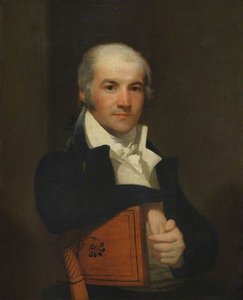
Sir Edward Thornton (1766–1852)
 Acrílico sobre tela
- Arte de Parede
- Neoclassicism
 1799
1799 74.0 x 61.0 cm
 Pembroke College
 Ler mais
Reprodução em Óleo Feita à Mão
Óleo sobre tela pintado à mão no tamanho e moldura de sua escolha, feito sob encomenda pelos nossos artistas. ( Alternar para Impressão Alternar para Imagem Digital)




P118B €10

P118H €10

P118W €10

P438Z €10

P508JH €12

P508YH €12

P805H €10

P805Z €10

P919BZ €10

P919G €10

P919XJ €10

P959ZH €10

P968JZ €12

W106C €8

W218G €10

W218JH €8

W218Y €10

W307PJ €10

W316G €10

W316PJ €8

W316Y €10

W398PJ €8

W4111J €10

W500HY €15

W500JH €15

W692G €12

W849H €8

W940BG €15

W953PJ €8




Escolha entre os nossos tamanhos pré-definidos que respeitam as proporções originais da obra de arte.

Insira a largura e a altura desejadas para se ajustarem à sua moldura ou parede. Como esta obra é pintada à mão, para um tamanho com proporções diferentes, o artista poderá pintar um pouco mais ao redor da imagem ou reduzir ligeiramente a composição — você escolhe. Enviamos uma maquete digital para sua aprovação antes de iniciar a pintura. A imagem exibida nesta página não representa o resultado real — apenas a maquete mostra o resultado final.
Após o pedido, a equipa OriginalUniqueArt.com enviará um e-mail ao cliente para solicitar instruções e fornecer uma prévia do esboço.
Entrega mundial () em 3 a 4 semanas, em vez das 5 semanas padrão. (25 Outubro). Sem comprometer a qualidade.

Envio expresso gratuito para todo o mundo

Tela de Linho de Alta Qualidade

Seguro de transporte completo

Garantia de Reembolso de Impostos Alfandegários

Garantia de Fidelidade Cromática

Política de Devolução em 100 Dias (Apenas para Defeitos)

Garantia de reembolso de 100%

Oferta de desconto por quantidade
 A opção de vidro está disponível apenas para tamanhos inferiores a 110 cm

Sir Edward Thornton (1766–1852)
Técnica de Reprodução
Tamanho da Reprodução
-


Preço Total
€ 263
Sir Edward Thornton (1766–1852): A Portrait of Dignified Resolve
Gilbert Stuart’s depiction of Sir Edward Thornton stands as a testament to the Romantic ideal of dignified portraiture, capturing not merely likeness but also an inner spirit—a quiet contemplation that speaks volumes about the subject's character and status. Executed in 1799, this oil on canvas masterpiece resides within Pembroke College, Cambridge, bearing the accession number PD0094, a symbol of its enduring legacy within British art history.Subject Matter and Composition
The painting portrays Sir Edward Thornton, a prominent figure in British diplomacy during his time—specifically, Count of Cacilhas—with remarkable precision. Stuart skillfully renders Thornton’s face, emphasizing the subtle lines etched by experience and conveying an aura of serene composure. He is positioned centrally within the frame, holding what appears to be a book or sheet of paper, suggesting intellectual pursuits alongside official responsibilities. The inclusion of a wall behind Thornton adds depth to the composition, grounding the figure against a backdrop that subtly reinforces his position as a man of learning and influence.Stylistic Influences: Neoclassicism Revisited
Stuart’s approach aligns closely with the tenets of Neoclassicism, a movement that sought inspiration from classical antiquity—particularly Greek sculpture—to express moral virtue and rational thought. Unlike the exuberant Baroque style prevalent in earlier decades, Stuart opted for restraint and clarity, prioritizing anatomical accuracy and balanced proportions. This stylistic choice reflects the broader cultural climate of the late 18th century, where artists aimed to elevate portraiture beyond mere representation, striving instead to embody ideals of nobility and intellectual refinement.Technique and Detail
Stuart’s mastery is evident in his meticulous attention to detail—particularly in capturing Thornton's facial features and clothing. The artist employed a glazing technique, layering thin translucent washes of pigment over underpaintings to achieve luminous skin tones and subtle gradations of color. Careful brushwork contributes to the painting’s textural richness, conveying both the smoothness of Thornton’s attire and the contours of his face with remarkable subtlety. The artist's skillful manipulation of light and shadow enhances the dramatic effect of the portrait, emphasizing Thornton’s gaze—a direct address to the viewer that invites contemplation on his inner life.Historical Context: Diplomacy and Virtue
Painted during a period marked by significant political upheaval—the Napoleonic Wars—Thornton’s portrait serves as a visual embodiment of British values at the time. Stuart's depiction underscores the importance of intellect, moral integrity, and dignified bearing in upholding national honor amidst turbulent circumstances. The Count of Cacilhas was instrumental in securing Britain’s interests during these conflicts, demonstrating leadership qualities that were celebrated within the artistic circles of London. This artwork remains a poignant reminder of an era defined by both ambition and virtue—a timeless portrait capturing the essence of a distinguished statesman.Emotional Impact: Serenity Amidst Uncertainty
Ultimately, Sir Edward Thornton transcends mere visual representation; it communicates a profound sense of serenity amidst uncertainty. The subject’s gaze—steady yet thoughtful—suggests resilience and inner fortitude—qualities that resonate powerfully with viewers today. Stuart's ability to convey emotion through subtle gestures and facial expressions elevates the portrait beyond a simple likeness, transforming it into an enduring symbol of dignity and contemplation—a masterpiece that continues to inspire admiration for its artistic excellence and intellectual depth.Perguntas e Respostas
Qual técnica foi utilizada para "Sir Edward Thornton (1766–1852)" e quando a obra foi criada?
"Sir Edward Thornton (1766–1852)" foi realizada em 1799, em Acrílico sobre tela.
Qual disposição melhor se adapta ao formato de "Sir Edward Thornton (1766–1852)", de Gilbert Stuart?
O formato Retrato de "Sir Edward Thornton (1766–1852)", de Gilbert Stuart é recomendado para um(a) Sala de Estar. O formato e o espaço juntos orientam a disposição de uma reprodução.
Gilbert Stuart, criador(a) de "Sir Edward Thornton (1766–1852)", é conhecido(a) por outros nomes?
Outros nomes registrados para Gilbert Stuart, criador de "Sir Edward Thornton (1766–1852)", incluem Gilbert Charles Stuart, Gilbert Stewart.
Biografia do Artista
Gilbert Stuart: Uma Vida na Retratística
- Nascimento: 3 de dezembro de 1755, Saunderstown, Rhode Island
- Falecimento: 9 de julho de 1828, Boston, Massachusetts
- Nacionalidade: Americano
- Movimento: Neoclassicismo
- Conhecido por: Retratística, particularmente retratos de figuras proeminentes da história inicial da América.
Primeira Infância e Formação
- Gilbert Stuart nasceu em uma família com raíções escocesas; seu pai, também chamado Gilbert, era um inventor que estabeleceu o primeiro moinho de tabaco em Rhode Island.
- Seu talento artístico emergiu ainda muito jovem, demonstrando habilidade desde a infância.
- Aos 14 anos, ele pintou "Os Spaniels do Dr. Hunter", revelando uma promessa precoce.
- Ele viajou para a Escócia por volta de 1771 para estudar com Cosmo Alexander, mas retornou após a morte de Alexander em 1775.
- Um treinamento mais profundo ocorreu em Londres com Benjamin West, um proeminente pintor americano que residia na Inglaterra, de 1775 a 1780. Este período foi crucial para o desenvolvimento de seu estilo artístico e para ganhar reconhecimento dentro da Royal Academy.
Carreira Artística e Grandes Obras
- A carreira de Stuart enfrentou desafios durante a Revolução Americana, o que o levou a se mudar para a Inglaterra em 1775.
- Ele alcançou o sucesso inicial com "O Patinador" (1782), um retrato que estabeleceu sua reputação.
- Sua obra mais famosa é o retrato inacabado de George Washington, conhecido como o Retrato Athenaeum (iniciado em 1796). Esta imagem tornou-se icônica, aparecendo na moeda dos EUA e em selos postais. Stuart produziu inúmeras cópias deste retrato para patronos em toda a América e Europa.
- Ele pintou retratos de várias outras figuras proeminentes, incluindo John Adams, Thomas Jefferson, James Madison e muitos membros da elite Federalista.
- O estilo de Stuart era caracterizado por uma abordagem Neoclássica, enfatizando o realismo e capturando a semelhança e o caráter de seus modelos. Ele frequentemente empregava um uso dramático de luz e sombra para aumentar o impacto dos retratos.
Influências e Desenvolvimento
- Cosmo Alexander proporcionou o treinamento inicial em técnica e composição.
- A influência de Benjamin West foi significativa, moldando a compreensão de Stuart sobre a retratística e os princípios artísticos.
- O movimento Neoclássico, com sua ênfase em formas e ideais clássicos, influenciou fortemente seu estilo.
- As próprias observações e interações de Stuart com seus modelos contribuíram para a profundidade psicológica e o realismo em seus retratos. Ele buscava capturar não apenas uma semelhança física, mas também o caráter e a personalidade daqueles que pintava.
Significância Histórica e Legado
- Gilbert Stuart é considerado um dos mais importantes retratistas da América, desempenhando um papel vital na documentação dos primeiros anos dos Estados Unidos.
- O Retrato Athenaeum de George Washington tornou-se um símbolo duradouro da identidade e liderança americana.
- Seus retratos oferecem valiosas percepções históricas sobre a vida e a aparência de figuras proeminentes do final do século XVIII e início do século XIX.
- A obra de Stuart está representada em grandes museus nos Estados Unidos e na Europa, garantindo que seu legado continue sendo apreciado por gerações.
- Ele estabeleceu um estilo americano distinto de retratística, que fundiu técnicas europeias com sensibilidades unicamente americanas.

Gilbert Stuart
1755 - 1828 , Reino Unido
Dados Rápidos
- Artistic Movement Or Style: Neoclassicismo
- Artists Who Influenced This Artist:
- Cosmo Alexander
- Benjamin West
- Date Of Birth: 3 de dezembro de 1755
- Date Of Death: 9 de julho de 1828
- Full Name: Gilbert Charles Stuart
- Nationality: Americano
- Notable Artworks:
- O Ateneu e o Retrato inacabado
- George Washington
- Place Of Birth: Saunderstown, Rhode Island
Artigos Relacionados
The Grandeur of Presence: Exploring Representations of Stately Bearing in Western Portraiture
Explore the art of stately bearing in Western portraiture with expert analysis of Renaissance & Baroque masterpieces. Discover symbolism, techniques, and the legacy of iconic portraits – a guide for discerning collectors.
Edward Hopper: As 25 Obras-Primas que Definem a Alma Americana | OriginalUniqueArt
Descubra as 25 obras-primas de Edward Hopper, o mestre do realismo americano. Explore a atmosfera melancólica, luz e sombra em quadros icônicos como 'Nighthawks'. Encontre reproduções de arte exclusivas para decorar sua casa com OriginalUniqueArt.com.
John Graham Gilbert: Rediscovering a Victorian Master of Narrative & Portraiture
Discover the captivating world of John Graham Gilbert, a Victorian master! Explore his portraits, genre scenes & illustrations. Learn about his influences, legacy & find high-quality reproductions at OriginalUniqueArt.

The Enduring Legacy of Formal Portraiture: Power, Identity & Artistic Exploration
Explore the rich history of formal portraiture & its enduring power to capture identity and shape perception. Discover investment-worthy artworks, expert appraisals, and custom reproduction services at OriginalUniqueArt.

The Enduring Gaze: Portraiture's Historical & Psychological Evolution
Explore the rich history of portraiture with expert analysis from OriginalUniqueArt. Discover iconic Renaissance masterpieces, symbolism & techniques that shaped identity. Find museum-quality art for your collection.