
 Visualizar em escala
 Enviar
 Compartilhar
 Ver detalhes

 Baixar
 Semelhantes
 Raio X
 Apresentação de slides
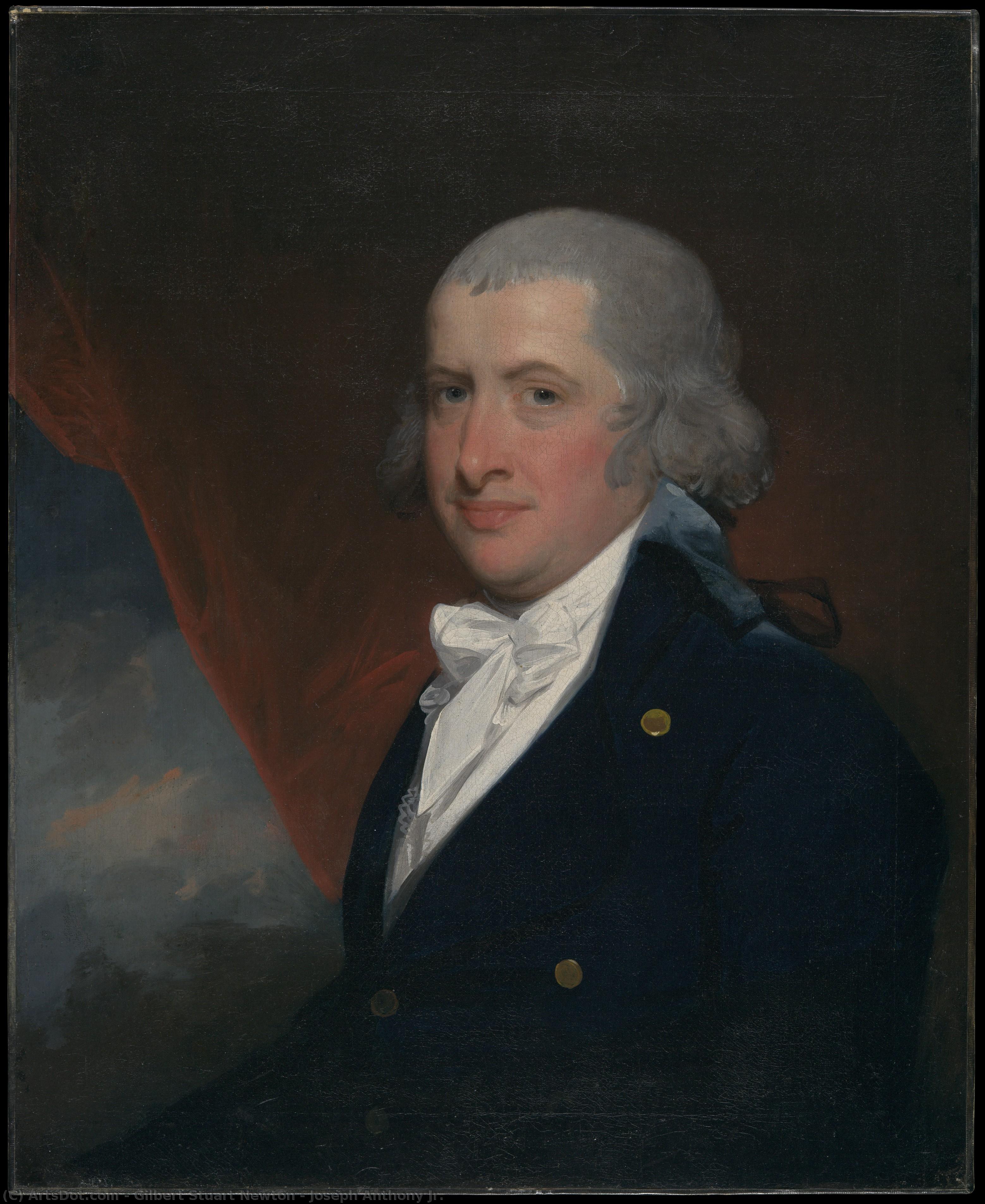
Joseph Anthony Jr.
 Acrylic On Canvas
- WallArt
- Romanticism
 1795
1795 76.0 x 62.0 cm
 Museu Metropolitano de Arte
 Ver mais
Reprodução em Óleo Feita à Mão
Óleo sobre tela pintado à mão no seu tamanho e moldura, feito sob encomenda pelos nossos artistas. ( Encomendar impressão Comprar imagem em alta resolução)




P118B $10

P118H $10

P118W $10

P438Z $10

P508JH $12

P508YH $12

P805H $10

P805Z $10

P919BZ $10

P919G $10

P919XJ $10

P959ZH $10

P968JZ $12

W106C $8

W218G $10

W218JH $8

W218Y $10

W307PJ $10

W316G $10

W316PJ $8

W316Y $10

W398PJ $8

W4111J $10

W500HY $15

W500JH $15

W692G $12

W849H $8

W940BG $15

W953PJ $8




Escolha entre os nossos tamanhos pré-definidos que respeitam as proporções originais da obra de arte.

Pode inserir as suas próprias dimensões para se adequar a uma moldura ou espaço específico. Se o tamanho selecionado não corresponder às proporções da imagem original, iremos cortar a obra de arte ou estender a pintura com elementos adicionais pintados à mão. Um esboço digital será enviado para sua aprovação antes do início da produção.
Tenha em atenção que a pré-visualização no ecrã não reflete o corte ou extensão real. Apenas o esboço mostrará com precisão a composição final.
Embora tamanhos personalizados estejam disponíveis, recomendamos selecionar uma dimensão da lista predefinida para preservar as proporções originais.
Após o pedido, a equipa OriginalUniqueArt.com enviará um e-mail ao cliente para solicitar instruções e fornecer uma prévia do esboço.
Entrega mundial () em 3 a 4 semanas, em vez das 5 semanas padrão. (18 Agosto). Sem comprometer a qualidade.

Envio Expresso Gratuito para todo o Mundo

Tela de Linho Premium

Seguro de transporte total

Garantia de Reembolso de Impostos Alfandegários

Garantia de Fidelidade de Cor

Política de Devolução de 60 Dias (Apenas para Defeitos)

Garantia de reembolso de 100%

Desconto para múltiplas unidades
 A opção de vidro está disponível apenas para tamanhos inferiores a 110 cm

Joseph Anthony Jr.
Técnica de Reprodução
Dimensões da Reprodução
-


Preço Total
$ 300
Descrição da Obra
Joseph Anthony Jr.: A Newport Craftsman’s Confident Portrait
Gilbert Stuart Newton's "Joseph Anthony Jr." is more than just a portrait; it’s a carefully constructed tableau of 18th-century prosperity and quiet self-assurance. Painted in 1795, the artwork captures Joseph Anthony Jr., a native of Newport, Rhode Island, and a direct descendant of Gilbert Stuart, the renowned American portrait painter. Newton, apprenticed to his celebrated uncle, skillfully blends elements of English formal portraiture with a distinctly New England sensibility, creating an image that speaks volumes about its subject’s status and character.
The composition immediately draws the eye to Anthony's figure – a man radiating confidence despite a subtle air of thoughtful contemplation. He is depicted in a richly detailed suit of dark blue velvet, accented with gold embroidery, indicative of his family’s wealth and standing within Newport society. His posture is upright, shoulders squared, conveying an impression of authority and self-possession. The carefully arranged bow tie and the precise cut of his jacket speak to meticulous attention to detail – a hallmark of Newton's artistic approach. The subtle hint of red in his waistcoat adds a touch of warmth and vitality to the otherwise formal attire.
A Window into Newport Society
To fully appreciate “Joseph Anthony Jr.”, it’s crucial to understand the context of 18th-century Newport. The city was a thriving center for trade, shipping, and finance, fueled by the lucrative transatlantic commerce with Britain and France. Families like the Anthony's amassed considerable fortunes through maritime ventures, establishing themselves as prominent figures in the community. Newton’s portrait isn’t merely a likeness; it’s a visual representation of this social hierarchy and the values associated with it – respectability, industry, and familial lineage.
The background subtly reinforces this setting. The red curtains, reminiscent of a gentleman's drawing room, suggest an environment of refinement and leisure. While not explicitly depicted, one can almost imagine the sounds of conversation and music emanating from within, creating a sense of domestic comfort and social engagement. Newton’s use of light is masterful, illuminating Anthony’s face while casting gentle shadows that add depth and dimension to the scene.
Technique and Artistic Style
Newton's style leans heavily toward English portraiture, particularly the work of Thomas Gainsborough and Sir Godfrey Kneller. He employs a meticulous technique, evident in the incredibly detailed rendering of Anthony’s clothing, the subtle play of light and shadow, and the precise brushstrokes that define every feature. The artist skillfully utilizes chiaroscuro – the dramatic contrast between light and dark – to sculpt Anthony's form and create a sense of three-dimensionality.
The painting is executed in oil on canvas, a medium favored by Newton for its ability to capture subtle nuances of color and texture. Newton’s attention to detail extends beyond mere representation; he imbues the portrait with a palpable sense of personality. Anthony's gaze, direct and unwavering, invites the viewer into his world, suggesting an intelligence and quiet dignity.
Symbolism and Emotional Resonance
Beyond its surface appearance, “Joseph Anthony Jr.” is rich in symbolism. The man’s confident posture and carefully chosen attire represent a desire for social acceptance and recognition within Newport society. The subtle smile hints at contentment and self-satisfaction – a reflection of his family's success and his own position within it. Newton masterfully captures not just a likeness, but the essence of a man defined by his heritage and accomplishments.
Ultimately, “Joseph Anthony Jr.” is a testament to Newton’s skill as an artist and his ability to capture the spirit of a bygone era. It offers a captivating glimpse into the world of 18th-century Newport, inviting viewers to contemplate the values, aspirations, and social dynamics that shaped this vibrant community.
Biografia do Artista
Gilbert Stuart Newton: Life & Legacy
Early Life and Family Background
- Birth and Origins: Gilbert Stuart Newton was born on September 2, 1795, in Halifax, Nova Scotia. He was the youngest of twelve children.
- Family Connections: His father, Henry Newton, was a customs official, and his mother, Ann, held a significant artistic lineage – she was the daughter of Gilbert Stuart, the renowned American portrait painter.
- Early Years & Return to America: The family initially resided in Boston but returned to Charlestown near Boston in 1803 following his father’s death.
Artistic Training and Influences
- Initial Path & Uncle's Guidance: Though initially intended for a commercial career, Newton was apprenticed to his uncle, Gilbert Stuart, marking the beginning of his artistic journey.
- European Studies: He traveled to Europe with an elder brother and studied painting in Florence. Later visits to Paris (1817) introduced him to artists like Charles Robert Leslie, Washington Allston, and David Wilkie.
- Royal Academy & Formal Training: Newton continued his education at the Royal Academy in London after a period spent in the Netherlands.
Artistic Style and Major Themes
- Romantic Sensibilities: Newton’s work is generally categorized within the Romantic movement, characterized by emotional intensity and dramatic narratives.
- Literary & Poetic Inspirations: He became particularly known for paintings inspired by literature and poetry. Subjects drawn from works like *Don Quixote* and Shakespeare were prominent in his oeuvre.
- Portraiture & Genre Scenes: While he painted portraits, including those of notable figures such as Washington Irving, Newton also excelled in genre scenes depicting moments from literary narratives.
Key Achievements and Recognition
- Royal Academy Affiliation: Newton was elected an Honorary Academician of the National Academy of Design (1827), an Associate of the Royal Academy (1829), and a full Academician in 1832.
- Exhibitions & Patronage: He regularly exhibited at the Royal Academy from 1818 onwards, gaining recognition and attracting patrons like the Marquis of Lansdowne.
- Public Collections: His works found their way into prominent public collections, including the National Gallery and the South Kensington Museum (now V&A).
Later Life and Legacy
- Mental Health & Final Years: Shortly after his election to the Royal Academy, Newton began to suffer from mental illness. He was admitted to an asylum at Chelsea where he continued to paint until his death on August 5, 1835.
- Burial Site: He is buried in St Mary’s Church Wimbledon, London.
- Historical Significance: Though overshadowed by his uncle Gilbert Stuart, Newton carved a niche for himself as a skilled and imaginative artist of the Romantic period. His literary-inspired paintings offer insights into the cultural tastes and artistic trends of 19th-century Britain.

gilbert stuart newton
1795 - 1835
Informações Rápidas
- Birth_Date: 1795
- Birth_Place: Halifax, Nova Scotia
- Death_Date: 1835
- Influenced_By: Gilbert Stuart (uncle)
- Movement: Romanticism
- Name: Gilbert Stuart Newton
- Nationality: British
- Notable_Works:
- Don Quixote in his Study
- Captain Macheath upbraided by Polly and Lucy
- Yorick and the Grisette
- The Window or the Dutch Girl
- Portia and Bassanio
Artigos Relacionados
Discover the Divine: Inspiring Saint Anthony Artworks to Elevate Your Home Decor
Transform your home with the profound beauty of Saint Anthony artworks. Explore exquisite Baroque reproductions by Murillo and Zurbarán, hand-painted on 100% cotton canvas to bring divine serenity and timeless elegance to your interior design.
John Graham Gilbert: Rediscovering a Victorian Master of Narrative & Portraiture
Discover the captivating world of John Graham Gilbert, a Victorian master! Explore his portraits, genre scenes & illustrations. Learn about his influences, legacy & find high-quality reproductions at OriginalUniqueArt.

John Gilbert: A Comprehensive Exploration of Technique, Context, and Enduring Legacy in Victorian Genre Painting
Explore the life & art of John Gilbert, a prolific Victorian painter renowned for his captivating genre scenes and Venetian-inspired style. Discover his legacy with OriginalUniqueArt.
Joseph Henry Sharp: Capturing the Spirit of the Plains – Life, Art & Legacy
Explore the life & art of Joseph Henry Sharp, a founding member of the Taos Society of Artists renowned for his realistic depictions of Native American culture and Western landscapes. Discover his legacy with OriginalUniqueArt.
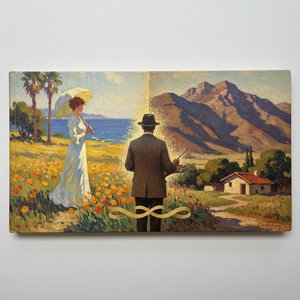
Joseph Kleitsch: Bridging Impressionism & California Regionalism – A Study of Light and Identity
Explore the life & work of Joseph Kleitsch, a pivotal California Impressionist painter. Discover his vibrant landscapes, portraits, and legacy within the Laguna Beach art colony. A comprehensive study for collectors & enthusiasts.

