Preview
 Comprar impressão Comprar imagem em alta resolução
 Enviar
 Compartilhar
 Detalhes da obra
 Adicionar aos favoritos

 Baixar
 Semelhantes
 Raio X
 Slideshow
John Jay


 Ver mais
Reprodução em Óleo Feita à Mão
Óleo sobre tela pintado à mão no seu tamanho e moldura, feito sob encomenda pelos nossos artistas.




P118B $10

P118H $10

P118W $10

P438Z $10

P508JH $12

P508YH $12

P805H $10

P805Z $10

P919BZ $10

P919G $10

P919XJ $10

P959ZH $10

P968JZ $12

W106C $8

W218G $10

W218JH $8

W218Y $10

W307PJ $10

W316G $10

W316PJ $8

W316Y $10

W398PJ $8

W4111J $10

W500HY $15

W500JH $15

W692G $12

W849H $8

W940BG $15

W953PJ $8




Escolha entre os nossos tamanhos pré-definidos que respeitam as proporções originais da obra de arte.

Pode inserir as suas próprias dimensões para se adequar a uma moldura ou espaço específico. Se o tamanho selecionado não corresponder às proporções da imagem original, iremos cortar a obra de arte ou estender a pintura com elementos adicionais pintados à mão. Um esboço digital será enviado para sua aprovação antes do início da produção.
Tenha em atenção que a pré-visualização no ecrã não reflete o corte ou extensão real. Apenas o esboço mostrará com precisão a composição final.
Embora tamanhos personalizados estejam disponíveis, recomendamos selecionar uma dimensão da lista predefinida para preservar as proporções originais.
Após o pedido, a equipa OriginalUniqueArt.com enviará um e-mail ao cliente para solicitar instruções e fornecer uma prévia do esboço.
Entrega Mundial () em 3 a 4 semanas, em vez das 5 semanas padrão. (26 Julho). Sem comprometer a qualidade.

Envio Expresso Gratuito para todo o Mundo

Tela de Linho Premium

Seguro de envio completo

Garantia de Reembolso de Impostos Alfandegários

Garantia de Fidelidade de Cores

Política de Devolução de 60 Dias (Apenas para Defeitos)

Garantia de 100% de Reembolso

Desconto para múltiplas unidades
 A opção de vidro está disponível apenas para tamanhos inferiores a 110 cm

John Jay
Técnica de Reprodução
Dimensões da Reprodução
-


Preço Total Final
-
Descrição da Obra
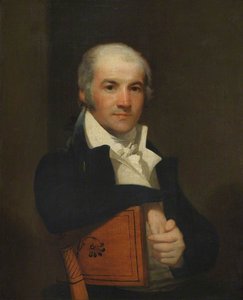
A Portrait of Power and Promise: John Jay by Gilbert Stuart
Gilbert Charles Stuart’s 1794 portrait of John Jay is more than just a likeness; it's a carefully constructed embodiment of the nascent American republic. Housed within the National Gallery of Art in Washington, D.C., this oil on canvas painting transcends mere representation, offering a profound glimpse into the character and ambitions of one of America’s founding fathers. Stuart, already establishing himself as a leading portraitist, masterfully captures Jay's commanding presence – a man simultaneously radiating authority and hinting at the weighty responsibilities he bore in shaping the nation’s future.
The painting immediately draws the eye to Jay’s posture: seated with an air of deliberate composure, his gaze directed downward, seemingly lost in contemplation. This subtle shift in focus – away from direct engagement – speaks volumes about the man himself. Jay was a meticulous and often reserved individual, known for his strategic thinking and cautious approach to governance. Stuart cleverly utilizes this characteristic, suggesting a mind deeply engaged with complex matters of state, yet maintaining an outward sense of dignified restraint. The rich crimson robe, adorned with gold trim, is not merely decorative; it’s a visual declaration of Jay's high office as the first Chief Justice of the United States Supreme Court – a position he held with unwavering dedication for nearly two decades.
The Neoclassical Masterstroke: Technique and Detail
Stuart’s skill is evident in every brushstroke. The painting exemplifies the hallmarks of Neoclassicism, a style deeply rooted in the ideals of ancient Greece and Rome. Notice the meticulous attention to detail – the intricate folds of the robe, the texture of Jay's clothing, the subtle shading that defines his face. Stuart’s use of light is particularly effective, creating a sense of depth and dimensionality that brings the portrait to life. The chiaroscuro technique—the dramatic contrast between light and shadow—highlights Jay’s features, emphasizing his intelligence and gravitas. The artist skillfully employs atmospheric perspective in the background, subtly blurring the details to draw attention to the central figure.
Furthermore, observe how Stuart captures the nuances of Jay's expression. It isn’t a boisterous or overtly enthusiastic portrayal; rather, it’s a quiet confidence, a hint of melancholy, and an underlying sense of duty. This restrained emotionality is characteristic of Neoclassical portraiture, which sought to capture not just physical likeness but also the inner character of the subject.
A Founding Father in Context: John Jay and the American Experiment
To fully appreciate “John Jay,” it’s crucial to understand the historical context in which it was created. The late 1790s were a turbulent period in American history, marked by political divisions between Federalists and Republicans. Jay played a pivotal role as a diplomat during the Revolutionary War and later served as Governor of New York, navigating complex international relations and shaping domestic policy. As Chief Justice, he established many precedents for the Supreme Court, solidifying its authority within the new government.
The portrait itself was commissioned at a time when Jay’s role in securing peace with Great Britain after the war was still fresh in the public's mind. His Treaty of Paris, signed in 1795, averted a potentially devastating conflict and established crucial trade relations between the United States and Great Britain. The painting thus serves as a visual reminder of Jay’s contributions to the nation’s founding and his commitment to preserving its stability.
Symbolism and Enduring Legacy
Beyond its technical brilliance, “John Jay” is rich in symbolism. The seated pose itself conveys authority and wisdom – qualities highly valued in a leader of the new republic. The red robe, signifying judicial office, underscores Jay’s role as a guardian of justice. And the downward gaze suggests a man deeply engaged with the weighty responsibilities of his position. This portrait is not merely a representation of a historical figure; it's an embodiment of the ideals and aspirations of early America – a nation striving to establish itself as a beacon of liberty, justice, and self-governance. Today, reproductions of this iconic work continue to inspire admiration for Jay’s legacy and Stuart’s enduring artistic talent.
Biografia do Artista
Gilbert Stuart: Uma Vida na Retratística
- Nascimento: 3 de dezembro de 1755, Saunderstown, Rhode Island
- Falecimento: 9 de julho de 1828, Boston, Massachusetts
- Nacionalidade: Americano
- Movimento: Neoclassicismo
- Conhecido por: Retratística, particularmente retratos de figuras proeminentes da história inicial da América.
Primeira Infância e Formação
- Gilbert Stuart nasceu em uma família com raíções escocesas; seu pai, também chamado Gilbert, era um inventor que estabeleceu o primeiro moinho de tabaco em Rhode Island.
- Seu talento artístico emergiu ainda muito jovem, demonstrando habilidade desde a infância.
- Aos 14 anos, ele pintou "Os Spaniels do Dr. Hunter", revelando uma promessa precoce.
- Ele viajou para a Escócia por volta de 1771 para estudar com Cosmo Alexander, mas retornou após a morte de Alexander em 1775.
- Um treinamento mais profundo ocorreu em Londres com Benjamin West, um proeminente pintor americano que residia na Inglaterra, de 1775 a 1780. Este período foi crucial para o desenvolvimento de seu estilo artístico e para ganhar reconhecimento dentro da Royal Academy.
Carreira Artística e Grandes Obras
- A carreira de Stuart enfrentou desafios durante a Revolução Americana, o que o levou a se mudar para a Inglaterra em 1775.
- Ele alcançou o sucesso inicial com "O Patinador" (1782), um retrato que estabeleceu sua reputação.
- Sua obra mais famosa é o retrato inacabado de George Washington, conhecido como o Retrato Athenaeum (iniciado em 1796). Esta imagem tornou-se icônica, aparecendo na moeda dos EUA e em selos postais. Stuart produziu inúmeras cópias deste retrato para patronos em toda a América e Europa.
- Ele pintou retratos de várias outras figuras proeminentes, incluindo John Adams, Thomas Jefferson, James Madison e muitos membros da elite Federalista.
- O estilo de Stuart era caracterizado por uma abordagem Neoclássica, enfatizando o realismo e capturando a semelhança e o caráter de seus modelos. Ele frequentemente empregava um uso dramático de luz e sombra para aumentar o impacto dos retratos.
Influências e Desenvolvimento
- Cosmo Alexander proporcionou o treinamento inicial em técnica e composição.
- A influência de Benjamin West foi significativa, moldando a compreensão de Stuart sobre a retratística e os princípios artísticos.
- O movimento Neoclássico, com sua ênfase em formas e ideais clássicos, influenciou fortemente seu estilo.
- As próprias observações e interações de Stuart com seus modelos contribuíram para a profundidade psicológica e o realismo em seus retratos. Ele buscava capturar não apenas uma semelhança física, mas também o caráter e a personalidade daqueles que pintava.
Significância Histórica e Legado
- Gilbert Stuart é considerado um dos mais importantes retratistas da América, desempenhando um papel vital na documentação dos primeiros anos dos Estados Unidos.
- O Retrato Athenaeum de George Washington tornou-se um símbolo duradouro da identidade e liderança americana.
- Seus retratos oferecem valiosas percepções históricas sobre a vida e a aparência de figuras proeminentes do final do século XVIII e início do século XIX.
- A obra de Stuart está representada em grandes museus nos Estados Unidos e na Europa, garantindo que seu legado continue sendo apreciado por gerações.
- Ele estabeleceu um estilo americano distinto de retratística, que fundiu técnicas europeias com sensibilidades unicamente americanas.

Gilbert Stuart
1755 - 1828 , Reino Unido
Informações Rápidas
- Artistic Movement Or Style: Neoclassicismo
- Artists Who Influenced This Artist:
- Cosmo Alexander
- Benjamin West
- Date Of Birth: 3 de dezembro de 1755
- Date Of Death: 9 de julho de 1828
- Full Name: Gilbert Charles Stuart
- Nationality: Americano
- Notable Artworks:
- O Ateneu e o Retrato inacabado
- George Washington
- Place Of Birth: Saunderstown, Rhode Island
Artigos Relacionados

John Singer Sargent: As 25 Obras-Primas que Definem um Ícone da Arte
Descubra as 25 obras-primas de John Singer Sargent, o mestre do retrato e do impressionismo americano. Explore a história, técnica e beleza atemporal de seus quadros mais famosos. Encontre reproduções de arte exclusivas para decorar sua casa com elegância em OriginalUniqueArt.com.
Metropolitan Museum of Art: 25 Obras-Primas Essenciais para Amantes da Arte
Descubra as 25 obras-primas do Metropolitan Museum of Art em Nova York! Explore a história de Van Gogh, Monet e outros artistas renomados. Encontre reproduções de arte exclusivas para decorar sua casa com elegância. OriginalUniqueArt.com – Sua fonte de inspiração artística.

John Constable: As 25 Obras-Primas que Definem o Mestre da Paisagem Inglesa | OriginalUniqueArt
Descubra as 25 obras-primas de John Constable, o mestre da paisagem inglesa! Explore a arte romântica, cores vibrantes e histórias fascinantes por trás de 'Hay Wain' e outras pinturas icônicas. Encontre reproduções de alta qualidade para decorar sua casa com OriginalUniqueArt.com.
Retratos Marcantes: 10 Obras de Arte que Definem a Alma Humana | OriginalUniqueArt
Descubra 10 retratos icônicos da história da arte! Explore as obras de Van Gogh, Mona Lisa e Frida Kahlo. Encontre reproduções de alta qualidade e inspire-se para decorar com arte em OriginalUniqueArt.com.
25 Obras-Primas do DIA: Arte, História e Decoração Inspiradora em Detroit
Descubra as 25 obras-primas do Detroit Institute of Arts! Explore a história de Van Gogh, Monet e outros artistas icônicos. Encontre reproduções de arte de alta qualidade para decorar sua casa com elegância. OriginalUniqueArt.com: A sua fonte de inspiração artística.