Visualizar em escala
 Enviar
 Compartilhar
 Ver detalhes
 Guia de Obras do Aluno

 Baixar imagem
 Semelhantes
 Raio X
 Apresentação de slides
 Estatísticas
James Munroe


 Ver mais
Giclée / Impressão de Arte
Impressão giclée ou em tela de qualidade de museu, com produção rápida e opções flexíveis de acabamento. ( Encomendar reprodução pintada à mão Ver Imagem Digital)




P118B €10

P118H €10

P118W €10

P438Z €10

P508JH €12

P508YH €12

P805H €10

P805Z €10

P919BZ €10

P919G €10

P919XJ €10

P959ZH €10

P968JZ €12

W106C €8

W218G €10

W218JH €8

W218Y €10

W307PJ €10

W316G €10

W316PJ €8

W316Y €10

W398PJ €8

W4111J €10

W500HY €15

W500JH €15

W692G €12

W849H €8

W940BG €15

W953PJ €8




Escolha entre os nossos tamanhos pré-definidos que respeitam as proporções originais da obra de arte.

Digite a largura e a altura de que necessita, para se ajustar à sua moldura ou à sua parede. Uma impressão só pode ser cortada, nunca ampliada além da imagem original, pelo que um tamanho com uma proporção diferente perderá parte da imagem. Enviamos-lhe uma maquete digital para aprovação antes de imprimirmos qualquer coisa. A imagem apresentada nesta página não mostra o corte real — apenas a maquete o faz.
Entrega mundial () em 2 semanas, em vez das 4/5 semanas padrão. (22 Outubro)

Envio expresso gratuito para todo o mundo

Tela de Linho Premium

Seguro de transporte total

Garantia de Reembolso de Impostos Alfandegários

Garantia de Fidelidade de Cor

Política de Devolução em 100 Dias (Apenas para Defeitos)

Garantia de reembolso de 100%

Desconto para múltiplas unidades
 A opção de vidro está disponível apenas para tamanhos inferiores a 110 cm

James Munroe
Giclée / Impressão de Arte
Dimensões da Reprodução
-


Preço Total
€ 70
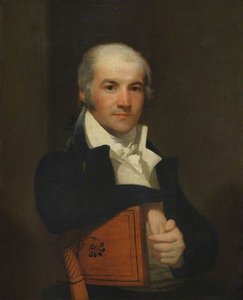
A Portrait of Dignified Reflection
Gilbert Stuart's depiction of James Munroe, completed in 1821, stands as a testament to the artist’s mastery of neoclassical portraiture and his ability to capture not just likeness but also an essence of character. This painting offers a glimpse into the intellectual landscape of early American history—a period defined by burgeoning republican ideals and ambitious aspirations for national identity. The portrait portrays Monroe seated at a table adorned with a crimson curtain backdrop, a deliberate choice that speaks to Stuart’s understanding of visual symbolism.
Monroe himself is presented in formal attire, embodying the aristocratic elegance favored during Stuart's era while simultaneously conveying an air of quiet contemplation. His hands folded calmly on the tabletop suggest deliberation and seriousness, drawing the viewer’s gaze inward toward his inner thoughts. The inclusion of a book reinforces this impression, hinting at Monroe’s scholarly pursuits and intellectual engagement. Stuart skillfully utilizes pyramidal composition to stabilize the figure and create a sense of balance, emphasizing Monroe's dignified posture and conveying an aura of composure.
Adhering rigorously to the principles of Neoclassicism, Stuart prioritized clarity, restraint, and idealized beauty. He employed a glazing technique—applying thin layers of translucent paint over subsequent coats—to achieve luminous skin tones and subtle gradations of color. The artist meticulously observed anatomical accuracy, demonstrating an impressive understanding of human form. Furthermore, Stuart skillfully utilized chiaroscuro—the dramatic interplay between light and shadow—to sculpt Monroe’s face and drapery, enhancing the portrait's depth and creating a captivating visual experience for the viewer.
Visual Composition and Details
The image is a painting of a man in a suit sitting at a table with a red curtain behind him. The man appears to be dressed formally, wearing a white shirt and tie. He has his hands folded on the table as he sits. There are two chairs visible in the scene, one near the man and another further back. A book is also present on the table, possibly indicating that the man was reading or studying before being painted. The overall atmosphere of the painting suggests a sense of formality and elegance.
Perguntas e Respostas
Onde e para qual finalidade é recomendado "James Munroe"?
"James Munroe" é sugerida para Luxury, e o espaço recomendado é um(a) Office.
Posso examinar "James Munroe" com mais detalhes?
A página Raio X de "James Munroe" de Gilbert Stuart é um visualizador interativo que permite percorrer onze camadas ópticas da imagem da obra, incluindo uma visualização em estilo raio-X.
Em que ano foi criado "James Munroe"?
A criação de "James Munroe" de Gilbert Stuart data de 1821.
Biografia do Artista
Gilbert Stuart: Uma Vida na Retratística
- Nascimento: 3 de dezembro de 1755, Saunderstown, Rhode Island
- Falecimento: 9 de julho de 1828, Boston, Massachusetts
- Nacionalidade: Americano
- Movimento: Neoclassicismo
- Conhecido por: Retratística, particularmente retratos de figuras proeminentes da história inicial da América.
Primeira Infância e Formação
- Gilbert Stuart nasceu em uma família com raíções escocesas; seu pai, também chamado Gilbert, era um inventor que estabeleceu o primeiro moinho de tabaco em Rhode Island.
- Seu talento artístico emergiu ainda muito jovem, demonstrando habilidade desde a infância.
- Aos 14 anos, ele pintou "Os Spaniels do Dr. Hunter", revelando uma promessa precoce.
- Ele viajou para a Escócia por volta de 1771 para estudar com Cosmo Alexander, mas retornou após a morte de Alexander em 1775.
- Um treinamento mais profundo ocorreu em Londres com Benjamin West, um proeminente pintor americano que residia na Inglaterra, de 1775 a 1780. Este período foi crucial para o desenvolvimento de seu estilo artístico e para ganhar reconhecimento dentro da Royal Academy.
Carreira Artística e Grandes Obras
- A carreira de Stuart enfrentou desafios durante a Revolução Americana, o que o levou a se mudar para a Inglaterra em 1775.
- Ele alcançou o sucesso inicial com "O Patinador" (1782), um retrato que estabeleceu sua reputação.
- Sua obra mais famosa é o retrato inacabado de George Washington, conhecido como o Retrato Athenaeum (iniciado em 1796). Esta imagem tornou-se icônica, aparecendo na moeda dos EUA e em selos postais. Stuart produziu inúmeras cópias deste retrato para patronos em toda a América e Europa.
- Ele pintou retratos de várias outras figuras proeminentes, incluindo John Adams, Thomas Jefferson, James Madison e muitos membros da elite Federalista.
- O estilo de Stuart era caracterizado por uma abordagem Neoclássica, enfatizando o realismo e capturando a semelhança e o caráter de seus modelos. Ele frequentemente empregava um uso dramático de luz e sombra para aumentar o impacto dos retratos.
Influências e Desenvolvimento
- Cosmo Alexander proporcionou o treinamento inicial em técnica e composição.
- A influência de Benjamin West foi significativa, moldando a compreensão de Stuart sobre a retratística e os princípios artísticos.
- O movimento Neoclássico, com sua ênfase em formas e ideais clássicos, influenciou fortemente seu estilo.
- As próprias observações e interações de Stuart com seus modelos contribuíram para a profundidade psicológica e o realismo em seus retratos. Ele buscava capturar não apenas uma semelhança física, mas também o caráter e a personalidade daqueles que pintava.
Significância Histórica e Legado
- Gilbert Stuart é considerado um dos mais importantes retratistas da América, desempenhando um papel vital na documentação dos primeiros anos dos Estados Unidos.
- O Retrato Athenaeum de George Washington tornou-se um símbolo duradouro da identidade e liderança americana.
- Seus retratos oferecem valiosas percepções históricas sobre a vida e a aparência de figuras proeminentes do final do século XVIII e início do século XIX.
- A obra de Stuart está representada em grandes museus nos Estados Unidos e na Europa, garantindo que seu legado continue sendo apreciado por gerações.
- Ele estabeleceu um estilo americano distinto de retratística, que fundiu técnicas europeias com sensibilidades unicamente americanas.

Gilbert Stuart
1755 - 1828 , Reino Unido
Informações Rápidas
- Artistic Movement Or Style: Neoclassicismo
- Artists Who Influenced This Artist:
- Cosmo Alexander
- Benjamin West
- Date Of Birth: 3 de dezembro de 1755
- Date Of Death: 9 de julho de 1828
- Full Name: Gilbert Charles Stuart
- Nationality: Americano
- Notable Artworks:
- O Ateneu e o Retrato inacabado
- George Washington
- Place Of Birth: Saunderstown, Rhode Island
Artigos Relacionados

Século XIX na Arte: 10 Obras que Definem uma Era | OriginalUniqueArt
Mergulhe no século XIX com 10 obras de arte icônicas! Explore Monet, Renoir e Van Gogh. Descubra a história, técnica e emoção por trás dos mestres do Impressionismo e Realismo. Encontre reproduções de alta qualidade em OriginalUniqueArt.com.

American Regionalism: The Soul of the Heartland and the Mastery of Grant Wood
Explore the profound history of American Regionalism. Discover how Grant Wood captured the heart of the Midwest through masterpieces like American Gothic. An expert guide to the movement, its cultural impact, and the enduring beauty of American Realism.

Benjamin West: Transatlantic Ambition & Shaping American Art
Explore the life & legacy of Benjamin West, pioneering American artist and Royal Academy president. Discover his Neoclassical masterpieces, transatlantic influence, and lasting impact on art history. Learn more at OriginalUniqueArt.

Grant Wood & American Regionalism: Identity, Myth & the Rural Landscape
Explore the world of Grant Wood & American Regionalism with OriginalUniqueArt. Discover the symbolism behind 'American Gothic', recurring themes, and the movement's lasting impact on art history. High-quality reproductions available.

Realismo Americano: 10 Obras-Primas que Moldaram a Arte e Decoram o Lar
Descubra as 10 obras-primas do Realismo Americano! Explore a história de Hopper, Homer e Cassatt. Encontre reproduções de arte com qualidade museológica para decorar sua casa. Inspire-se em cores vibrantes e atmosferas únicas. Explore a coleção completa na OriginalUniqueArt.com.