

 Visualizar na parede
 Compartilhar
 Compartilhar
 Detalhes
 Guia
Guia

 Baixar imagem
 Semelhantes
 Raio X
 Ver diaporama
 Q&A
Q&A Estatísticas
Mount Tamalpais from San Rafael


 Ler mais
Giclée / Impressão de Arte
Impressão giclée ou em tela de qualidade de museu, com produção rápida e opções flexíveis de acabamento. ( Comprar pintura feita à mão Alternar para Imagem Digital)




































Escolha entre os nossos tamanhos pré-definidos que respeitam as proporções originais da obra de arte.

Insira a largura e a altura desejadas para se ajustarem à sua moldura ou parede. Uma impressão pode ser apenas cortada, nunca ampliada além da imagem original; portanto, um tamanho com proporções diferentes resultará na perda de parte da imagem. Enviamos uma maquete digital para sua aprovação antes de realizarmos a impressão. A imagem exibida nesta página não mostra o corte real — apenas a maquete o faz.
Entrega mundial () em 2 semanas, em vez das 4/5 semanas padrão. (30 Outubro)

Envio expresso gratuito para todo o mundo

Tela de Linho de Alta Qualidade

Seguro de transporte completo

Garantia de Reembolso de Impostos Alfandegários

Garantia de Fidelidade Cromática

Política de Devolução em 100 Dias (Apenas para Defeitos)

Garantia de reembolso de 100%

Oferta de desconto por quantidade
 A opção de vidro está disponível apenas para tamanhos inferiores a 110 cm

Mount Tamalpais from San Rafael
Giclée / Impressão de Arte
Tamanho da Reprodução
-


Preço Total
€ 71
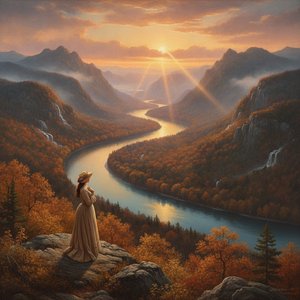
A Majestic Vista: "Mount Tamalpais from San Rafael" by Gilbert Munger
Step into a world of serene grandeur with Gilbert Munger’s captivating landscape, “Mount Tamalpais from San Rafael.” Painted in 1870, this oil on canvas masterpiece transports viewers to the heart of the American West, offering a glimpse of its unspoiled beauty and evoking a profound sense of tranquility. The painting depicts Mount Tamalpais rising majestically against a hazy sky, showcasing Munger’s skill in capturing both the romantic allure and topographical accuracy that defined his artistic style. This work is more than just a scenic view; it's a window into a pivotal moment in American history when the West was being explored and celebrated.Romantic Realism & Atmospheric Perspective
Munger’s approach to landscape painting firmly places him within the Romantic tradition, yet with a keen eye for detail that borders on realism. He masterfully employs atmospheric perspective – a technique where distant objects appear fainter and bluer due to the scattering of light in the atmosphere – to create an incredible sense of depth. Notice how the layers of valleys and forested slopes recede into the distance, drawing your gaze towards the imposing mountain peak. The loose, expressive brushstrokes contribute significantly to the painting’s overall mood, conveying a feeling of vastness and solitude. The soft, diffused lighting, reminiscent of early morning or late afternoon, further enhances the scene's peaceful atmosphere. Key elements include:- Oil on Canvas: Demonstrating Munger's preference for rich color and texture.
- Atmospheric Perspective: Creating a convincing illusion of depth and distance.
- Loose Brushwork: Contributing to the painting’s expressive quality.
Historical Context & The American West
Painted during a period of rapid westward expansion in the United States, “Mount Tamalpais from San Rafael” served as an important visual document for audiences back east. Gilbert Munger's landscapes helped introduce the newly opened West to the American public, showcasing its dramatic scenery and inspiring a sense of adventure and exploration. His work coincided with a growing appreciation for wilderness and the sublime power of nature, reflecting broader cultural shifts in 19th-century America. As someone who began his career producing engravings for scientific reports, Munger brought a unique blend of artistic skill and observational accuracy to his landscapes.Symbolism & Emotional Resonance
Beyond its aesthetic appeal, the painting carries symbolic weight. Mountains have long been associated with strength, resilience, and spiritual aspiration. Mount Tamalpais itself, a prominent landmark in California, represents a connection to the land and perhaps even a sense of the divine. The muted color palette – dominated by greens, browns, and blues – evokes feelings of peace, contemplation, and awe. The overall emotional impact is one of quiet grandeur; an invitation to pause, reflect, and appreciate the enduring beauty of the natural world. This piece offers a timeless escape, ideal for bringing a touch of serenity and artistic sophistication to any space.Perguntas e Respostas
Quão harmoniosas são as cores de "Mount Tamalpais from San Rafael" entre si?
"Mount Tamalpais from San Rafael", de Gilbert Munger apresenta uma harmonia de cores Strong Color Unity.
Qual é a tonalidade predominante de "Mount Tamalpais from San Rafael", de Gilbert Munger?
Um tom Golden Yellow Range percorre "Mount Tamalpais from San Rafael", de Gilbert Munger.
Como posso obter uma versão digital de "Mount Tamalpais from San Rafael", de Gilbert Munger?
Para obter uma versão digital de "Mount Tamalpais from San Rafael", de Gilbert Munger, peça download de imagem digital em alta resolução em sua página Imagem Digital de Alta Resolução.
Biografia do Artista
Early Life and Artistic Training
Gilbert Davis Munger (April 14, 1837 – January 27, 1903) emerged from Connecticut’s Madison County as a child imbued with an ardent passion for artistic pursuits. Born to Sherman and Lucretia Benton Munger—the last of five children—his family recognized his innate talent and nurtured it through unwavering encouragement. They understood that fostering creativity was paramount to unlocking his potential, providing him with the foundational support he would require throughout his life’s journey. Notably, Munger’s distant cousin was George Munger, another artist who explored similar themes of landscape and scientific inquiry—a connection that hinted at a shared artistic lineage and intellectual curiosity. Early influences resonated deeply within him, stemming from the luminism championed by John Ruskin and the pioneering painters of the Hudson River School. These artists instilled in him a profound appreciation for tonal gradation – capturing the subtle nuances of light and shadow to convey mood and atmosphere – skills that would become hallmarks of his distinctive artistic style. Sherman Munger, a farmer with an unwavering dedication to craftsmanship, instilled in Gilbert a love for the natural world and the meticulous execution required to translate its beauty onto canvas. Lucretia Benton Munger’s steadfast belief in Gilbert’s abilities served as an indispensable catalyst for his artistic ambitions—a testament to her profound understanding of nurturing talent and fostering dreams. William H. Dougal, senior engraver at the Smithsonian Institution, played a pivotal role in shaping Gilbert's formative years. Recognizing his prodigious aptitude, Dougal apprenticed him at just thirteen, providing invaluable technical training that solidified his foundational skills in engraving—a craft he would revisit later in life to refine his artistic vision. This apprenticeship instilled not only precision and accuracy but also a deep respect for observation – qualities that would guide him throughout his artistic career.Engraving Commissions and Scientific Observation
Gilbert Munger’s professional trajectory commenced with engraving commissions primarily focused on documenting geological expeditions led by Clarence King—a collaboration that fused artistic skill with scientific rigor. These assignments demanded meticulous attention to detail, mirroring the precision honed during his apprenticeship, and exposed him to the burgeoning field of geology. He painstakingly reproduced illustrations of animals, plants, and rock formations – faithfully representing the wonders of the natural world as perceived through a scientific lens. His work for the Smithsonian Institution showcased his engraving prowess while deepening his comprehension of geological concepts—a testament to his intellectual curiosity and commitment to artistic representation informed by scientific understanding. Collaborations with Clarence King’s Geologic Survey fostered an appreciation for geological observation and artistic interpretation, resulting in stunning depictions that captured the grandeur of American wilderness.The Hudson River School Influence and Early Landscapes
Gilbert Munger's artistic style was decisively shaped by the Hudson River School—a movement characterized by its romantic idealism and masterful depiction of American landscapes bathed in luminous light. Artists like John Ruskin served as inspiration for Munger who studied their techniques – particularly their use of tonal gradation to convey mood and atmosphere – establishing a precedent for capturing the sublime beauty of nature with emotional resonance. Ruskin’s advocacy for tonal harmony influenced Munger's approach to color and composition, emphasizing the importance of conveying feeling through subtle shifts in hue and shade. The Hudson River School painters championed a style that prioritized atmospheric perspective—creating depth and realism by simulating how light scatters in air—a technique that would become integral to Munger’s artistic vocabulary.Service in the Civil War and Artistic Development
During the tumultuous years of the Civil War, Gilbert Munger served as a military engineer assisting in the defense of Washington D.C.—demonstrating courage and dedication alongside his fellow soldiers. His involvement in the Union Army provided him with firsthand experience of American society during wartime—a formative period that spurred artistic innovation and refined his observational skills. The challenges posed by the conflict demanded resilience and adaptability, qualities he brought to bear on both his military duties and his artistic pursuits.Western Landscapes and Recognition
Gilbert Munger’s most celebrated achievements lie in his breathtaking landscapes of the American West—particularly those created during Clarence King's Fortieth Parallel Survey. Collaborating closely with photographer Timothy H. O’Sullivan, he captured iconic vistas such as Yosemite Valley and Donner Pass – meticulously documenting geological formations and conveying their sublime beauty. His partnership with O’Sullivan resulted in groundbreaking photographic landscapes that cemented Munger’s reputation as a pioneer of Western art—a testament to his ability to synthesize scientific observation with artistic expression. Ten chromolithographs produced from his survey paintings gained widespread acclaim—establishing him as one of the foremost landscape painters of his generation and securing his place within the annals of American art history.
Gilbert Munger
1837 - 1903 , Estados Unidos da América
Dados Rápidos
- Artistic Movement Or Style: Hudson River School
- Artists Or Movements Influenced By This Artist: ['Albert Bierstadt']
- Artists Who Influenced This Artist:
- John Ruskin
- William H. Dougal
- Date Of Birth: 14 de abril de 1837
- Full Name: Gilbert Davis Munger
- Nationality: Americano
- Notable Artworks:
- Niagara Horseshoe Falls com Arco-Íris
- Niagara Falls
- Place Of Birth: Madison, Connecticut
Artigos Relacionados
Capturing the Soul of Nature: A Journey Through the Sublime Majesty of American Romanticism
Explore the breathtaking beauty of American Romanticism. Discover how Hudson River School masters captured the sublime spirit of the wilderness through luminous oil landscapes and emotional depth. A journey into the soul of nature for the true art enthusiast.

Benjamin West: Transatlantic Ambition & Shaping American Art
Explore the life & legacy of Benjamin West, pioneering American artist and Royal Academy president. Discover his Neoclassical masterpieces, transatlantic influence, and lasting impact on art history. Learn more at OriginalUniqueArt.

Grant Wood & American Regionalism: Identity, Myth & the Rural Landscape
Explore the world of Grant Wood & American Regionalism with OriginalUniqueArt. Discover the symbolism behind 'American Gothic', recurring themes, and the movement's lasting impact on art history. High-quality reproductions available.

Evocations of Place: A Historical Journey Through Landscape Art
Explore the rich history of landscape art with OriginalUniqueArt. Discover renowned artists, movements like Impressionism & Romanticism, and expert guidance for collecting timeless pieces. Find your perfect serene escape today!

Albert Bierstadt: Luminosity, Landscape & the American Ideal
Explore the breathtaking landscapes of Albert Bierstadt, master of the American West & a leading figure in the Hudson River School. Discover his luminous style and iconic paintings – a timeless investment for art lovers.